RENÉ
Современный ресторан в стиле шале
Концепция ресторана — современная интерпретация стиля шале.
В ходе работы над проектом концепция развивалась и уточнялась, адаптируясь к пространству и амбициям заведения. Наша цель заключалась в создании интерьера, который сочетает роскошь и комфорт, объединяя изысканную элегантность с ощущением уюта.
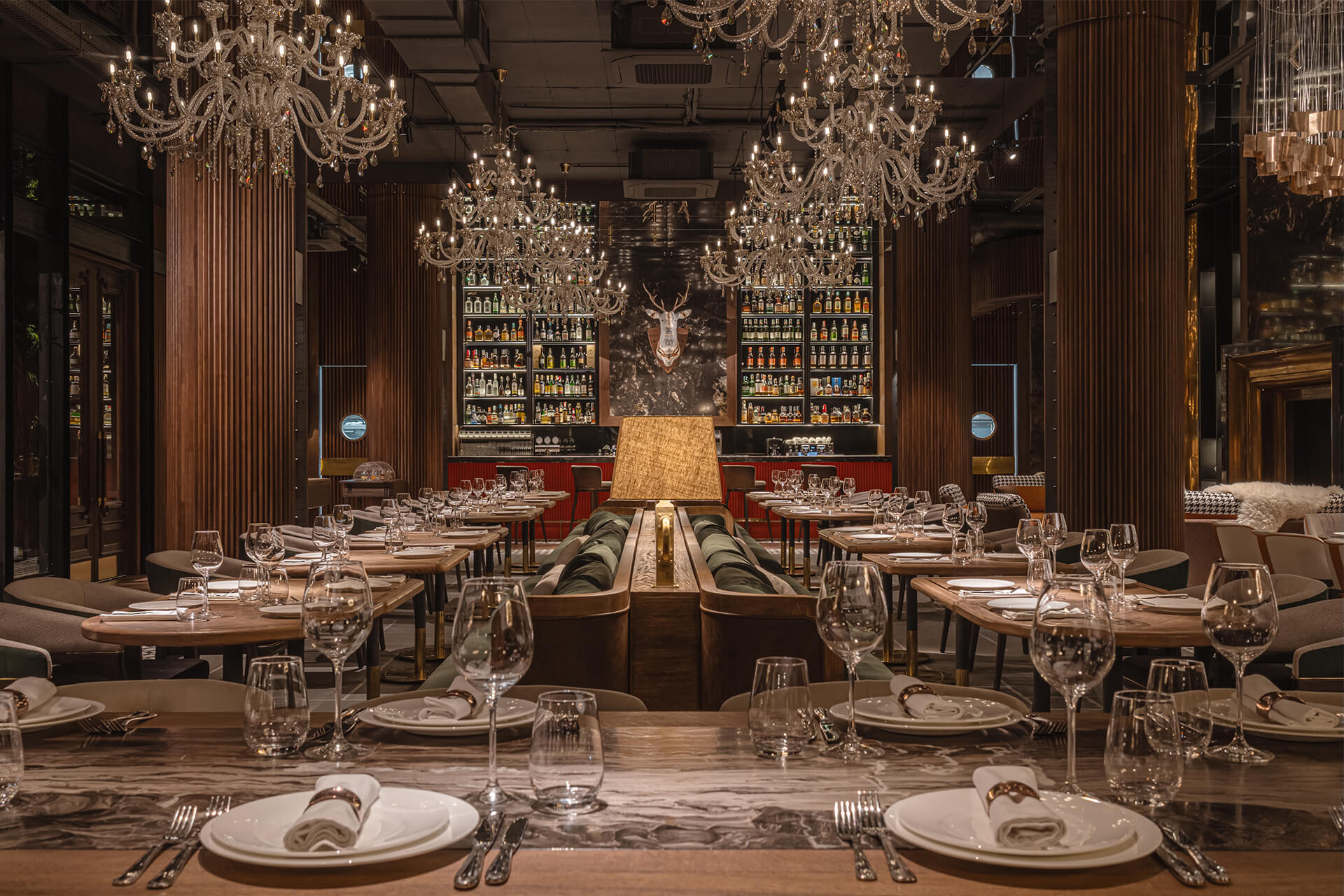
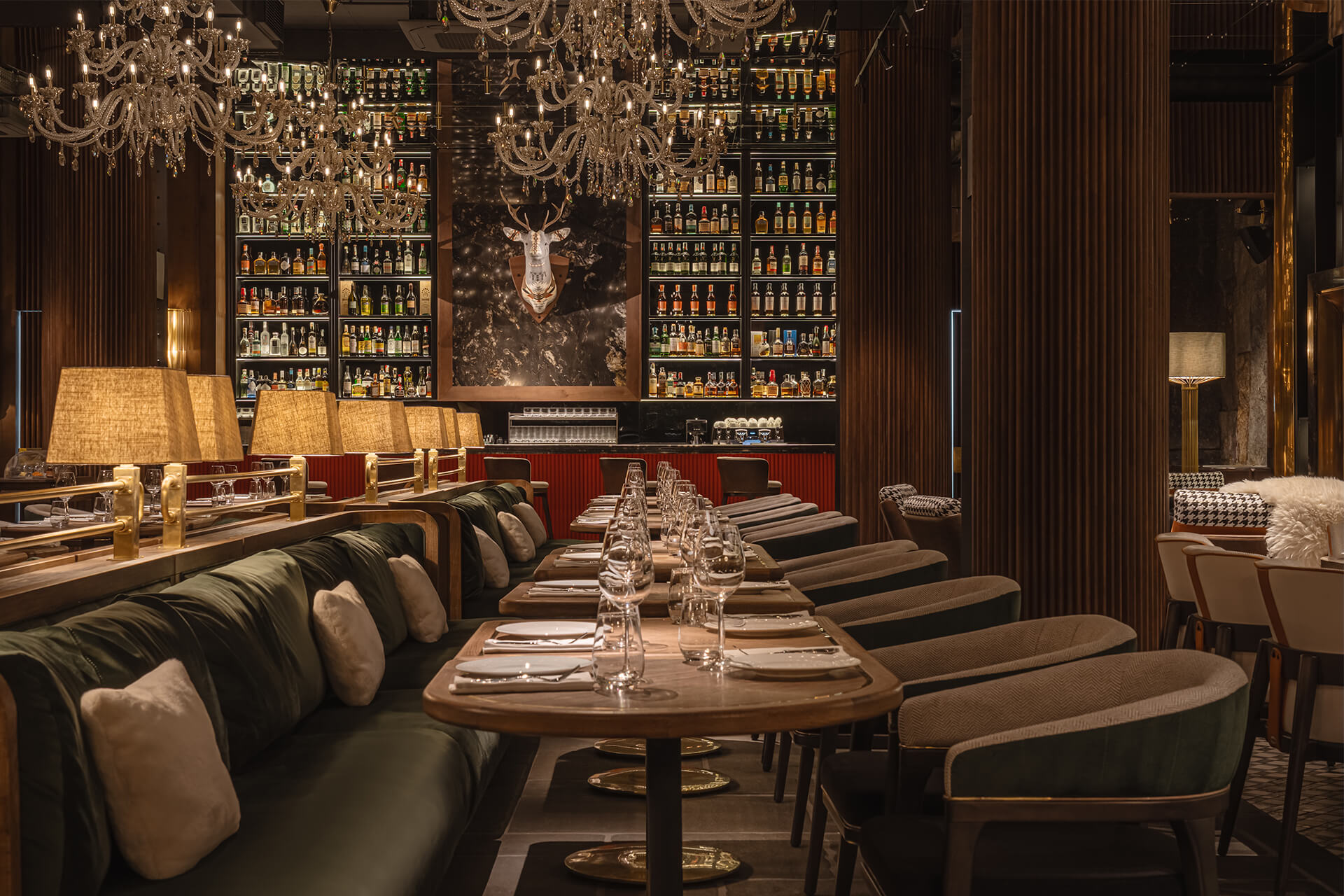
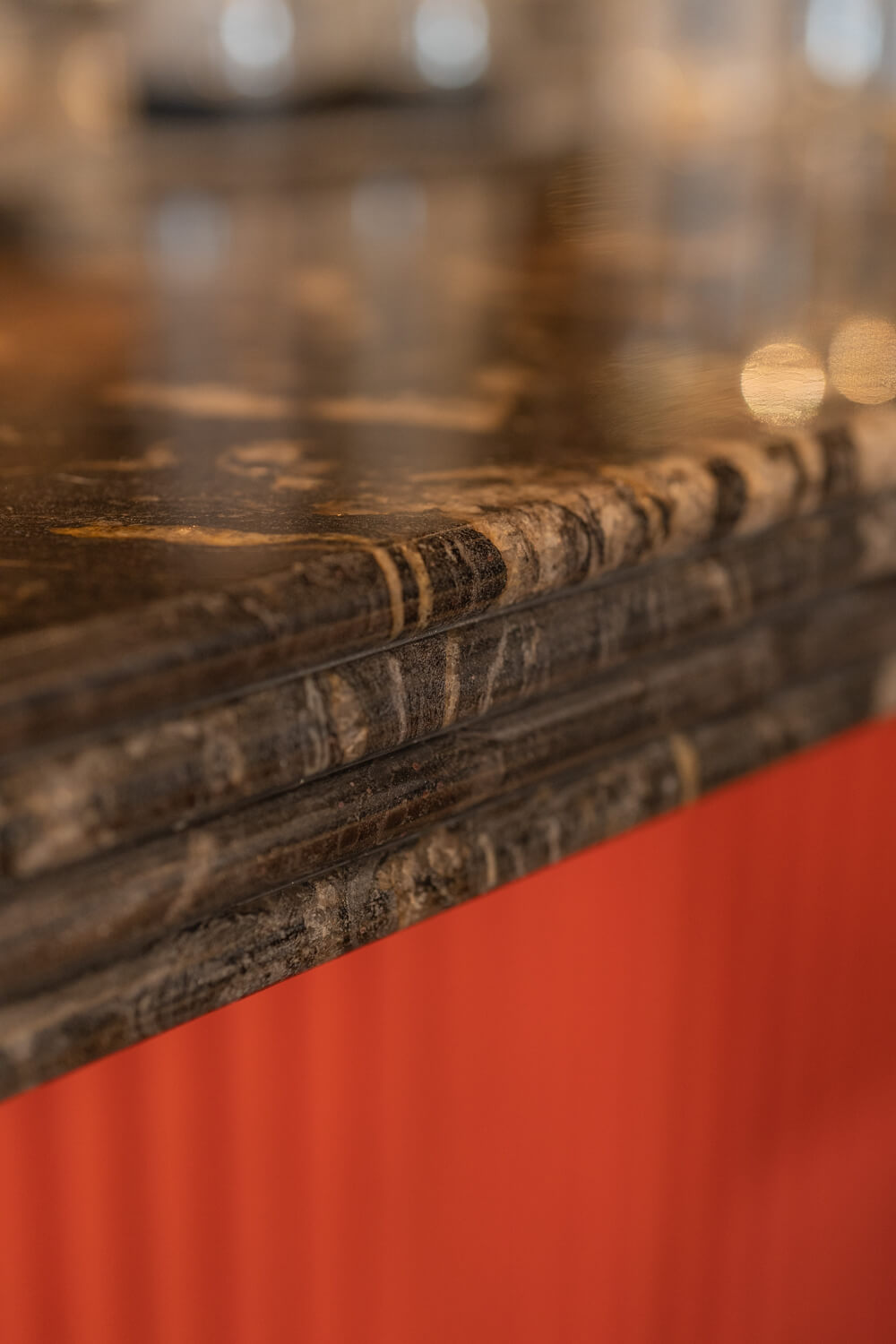
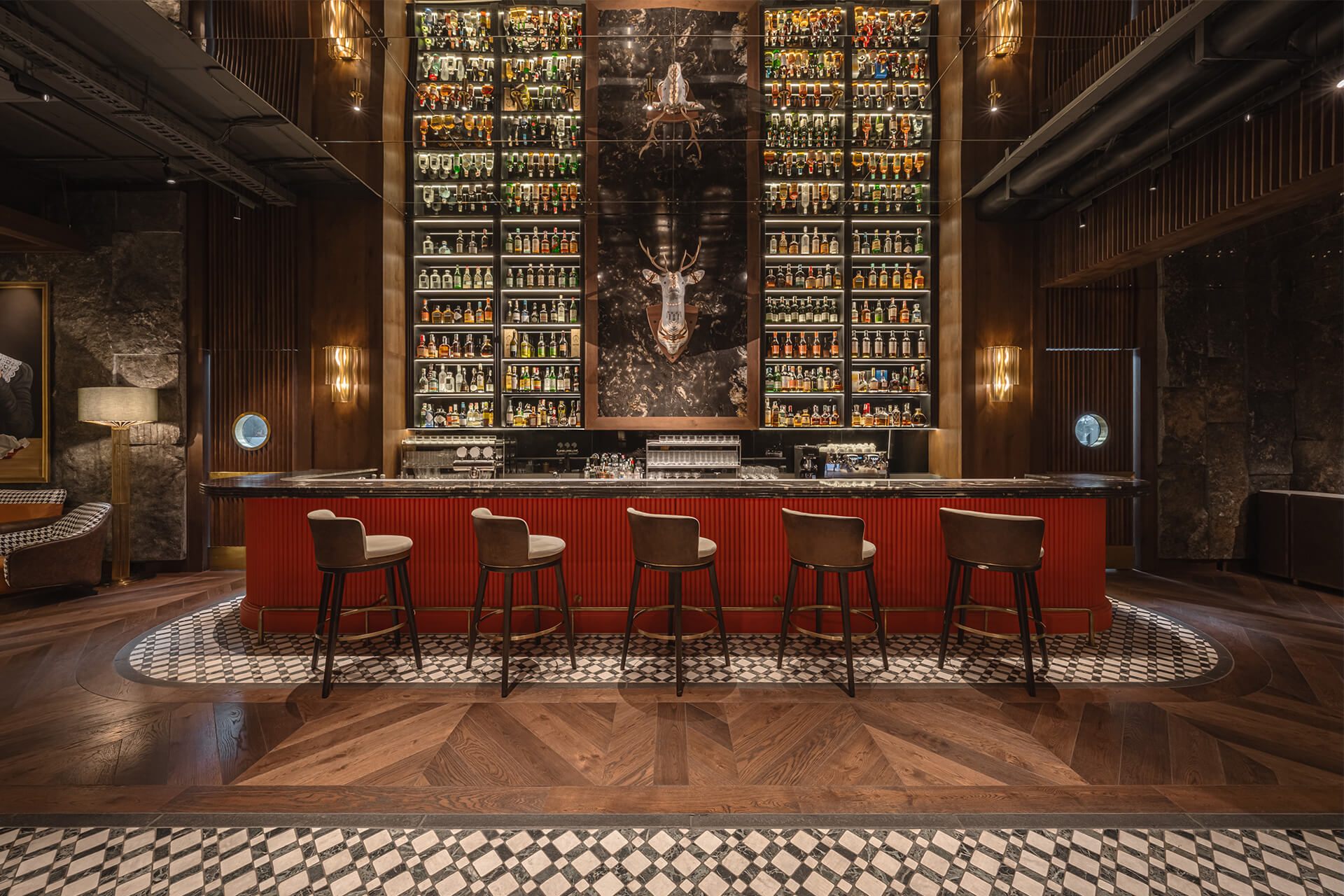
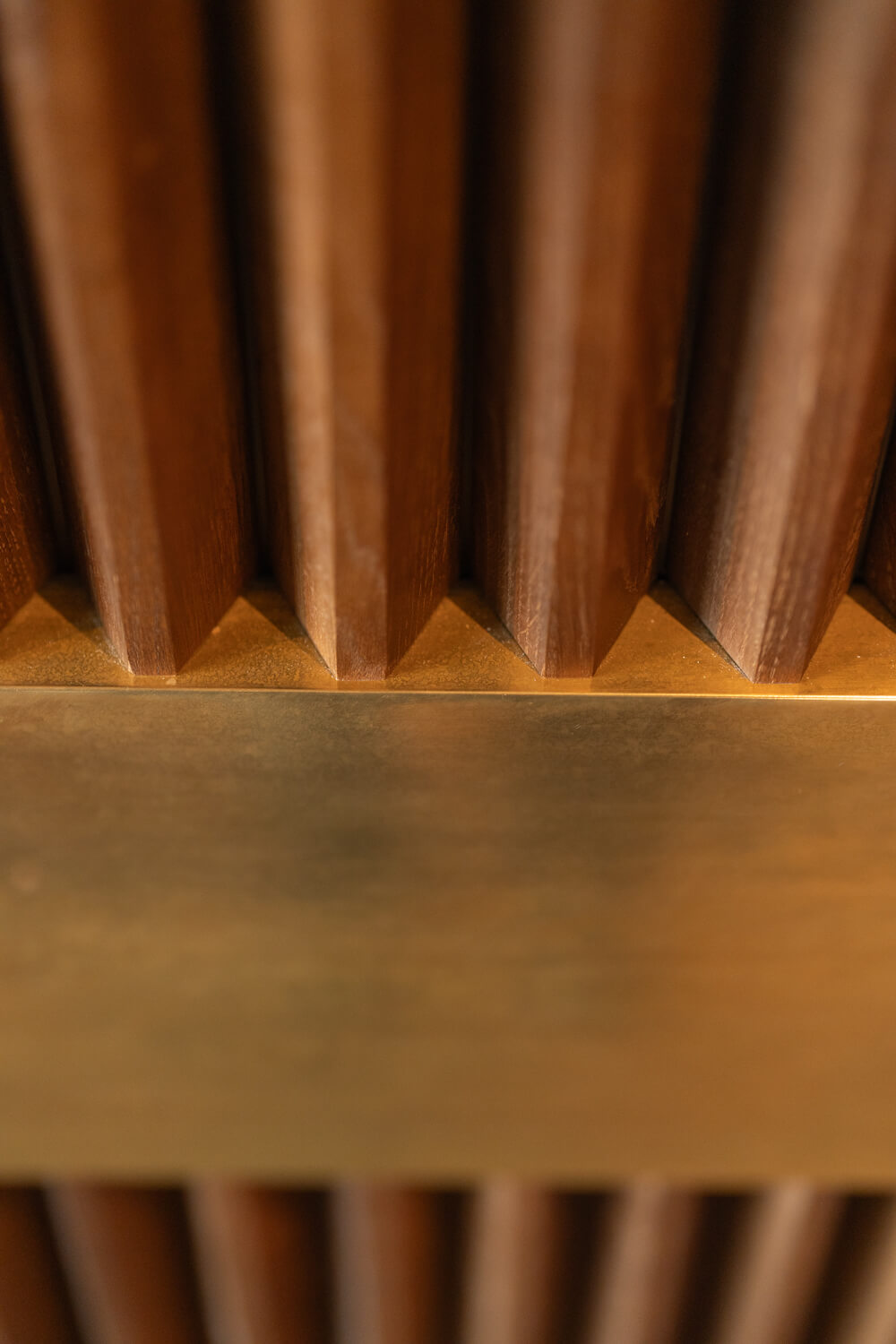
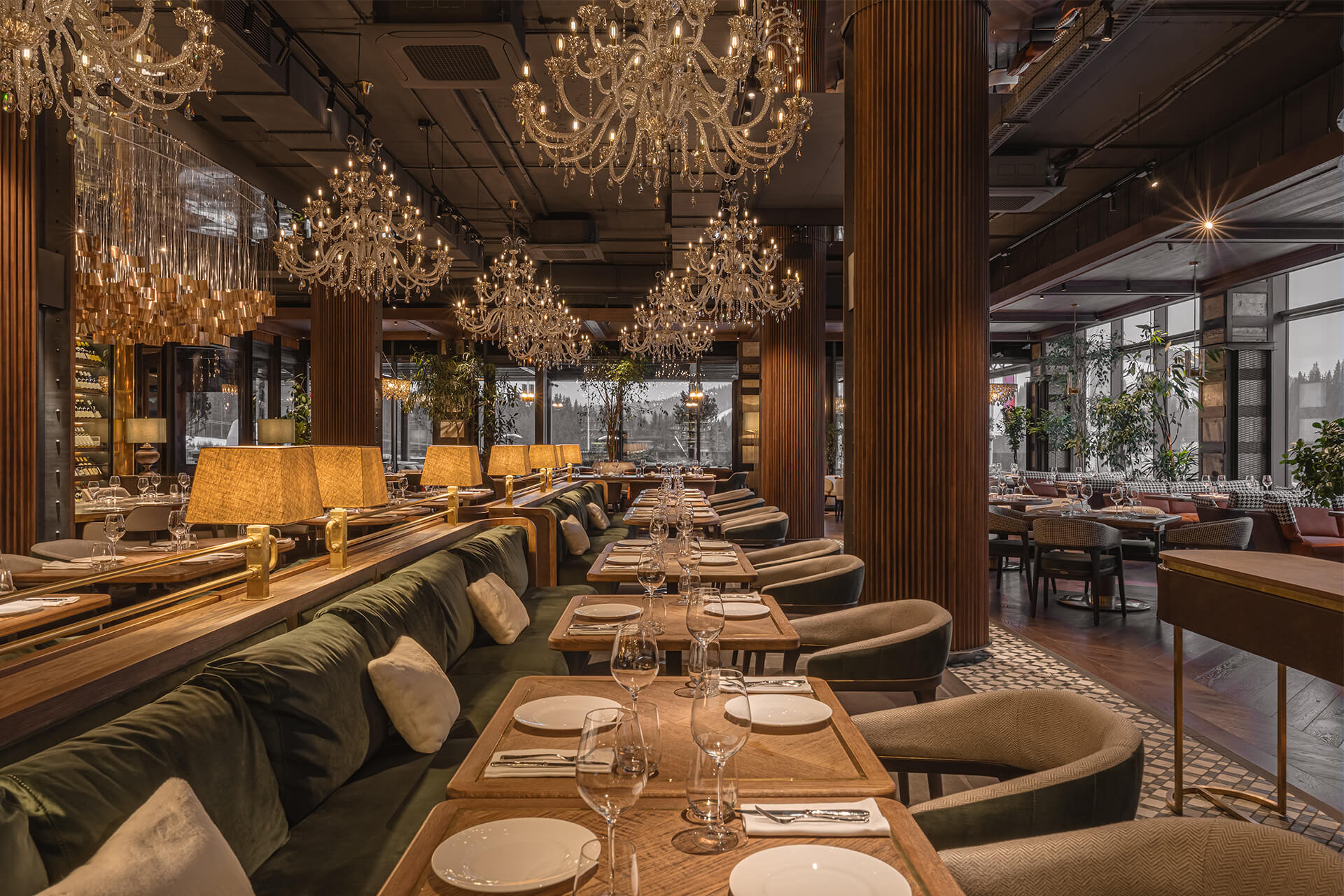
Пространство построено на контрастах: обилие дерева и металла в сочетании с индустриальным потолком в центре зала создаёт атмосферу сдержанной, брутальной роскоши. При этом индустриальные элементы смягчаются классическими и неоклассическими деталями, что формирует многослойный и визуально насыщенный интерьер.
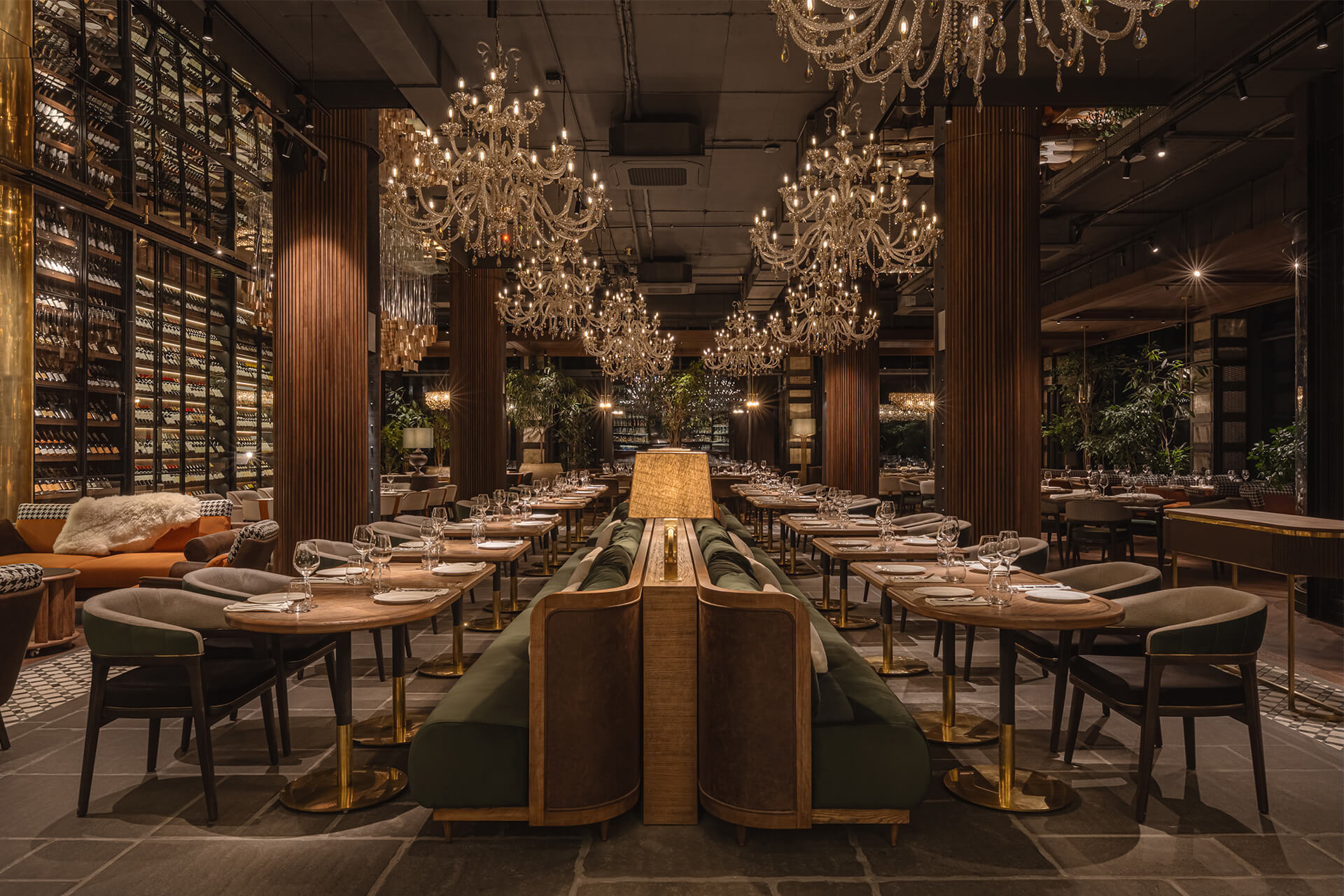
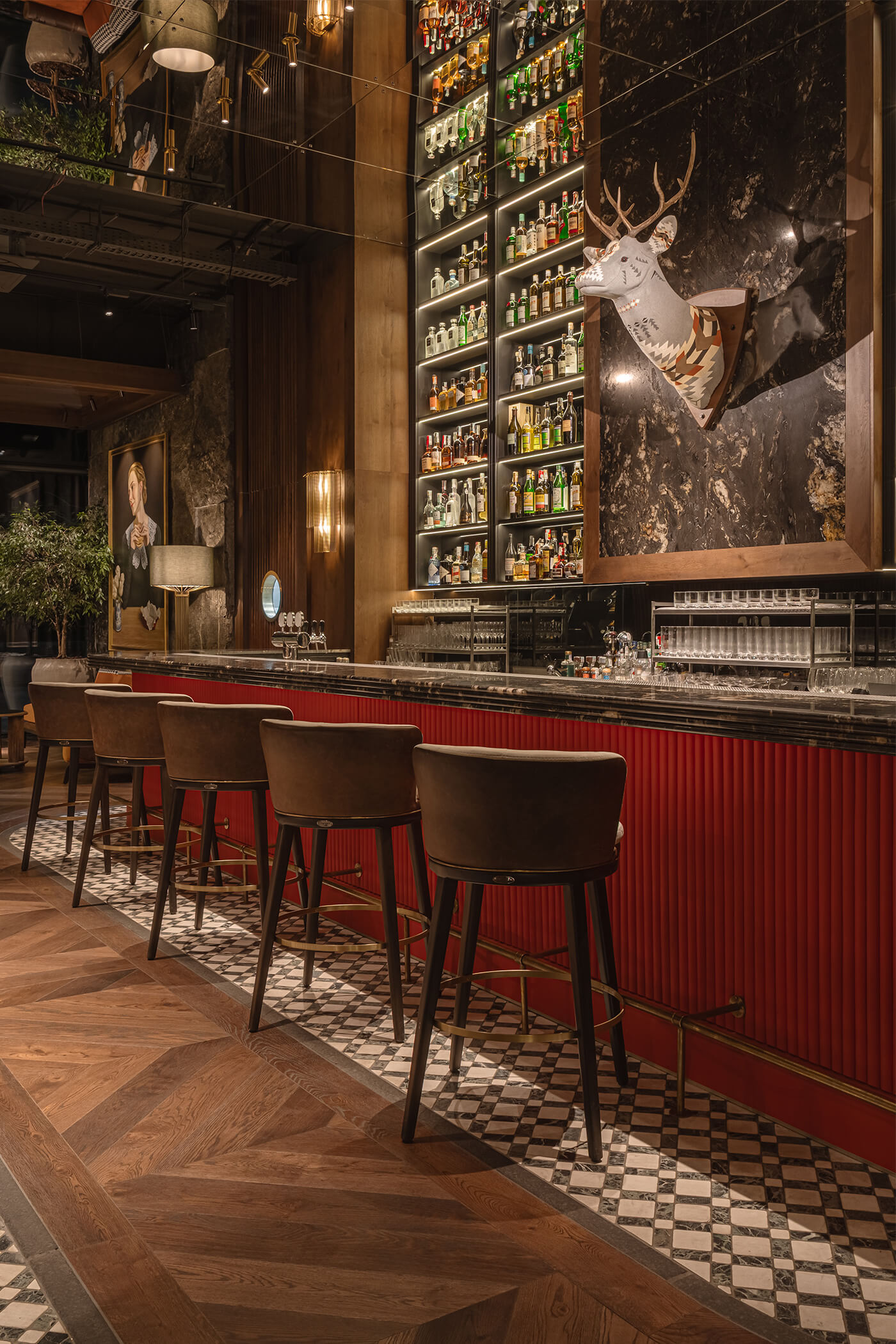
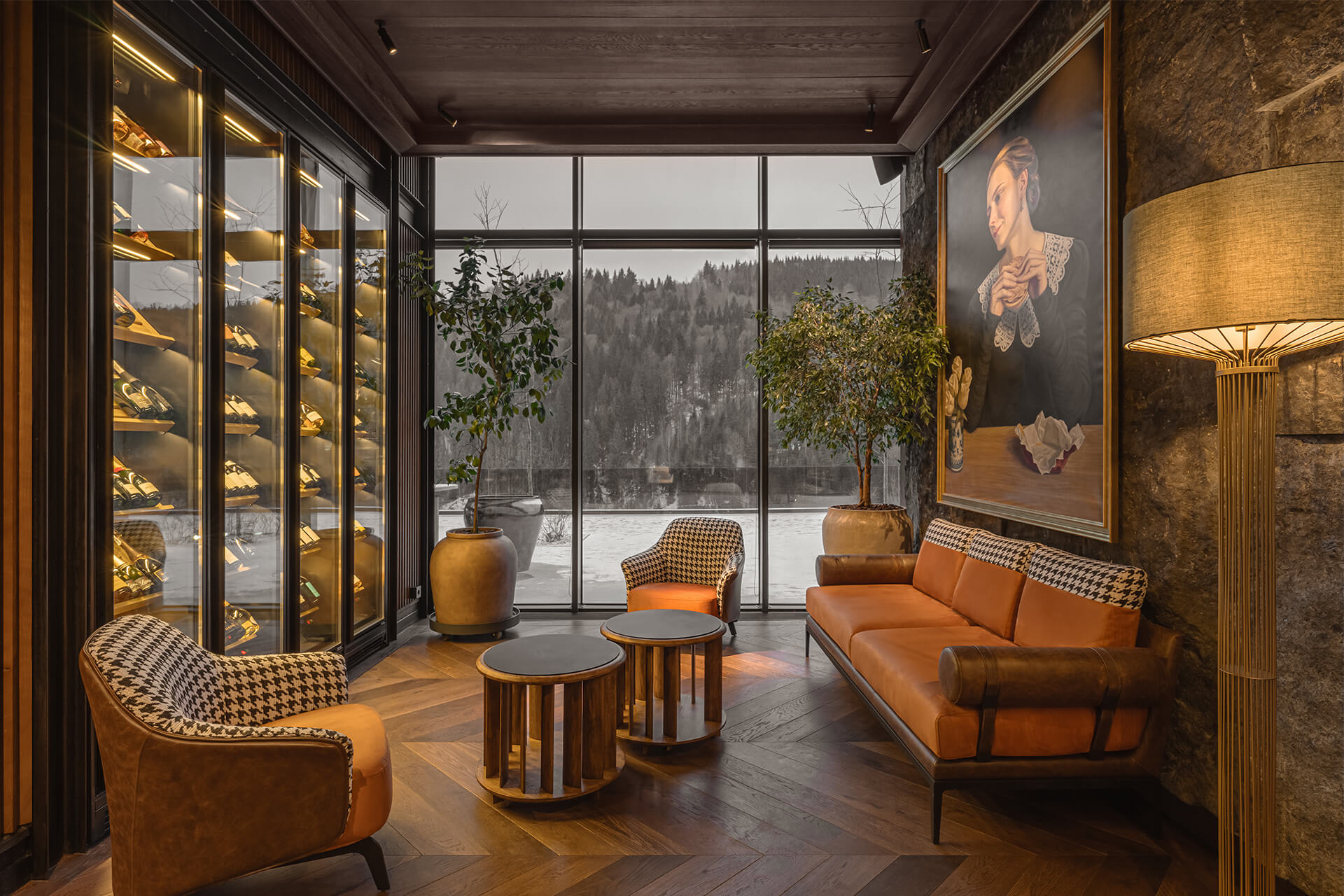
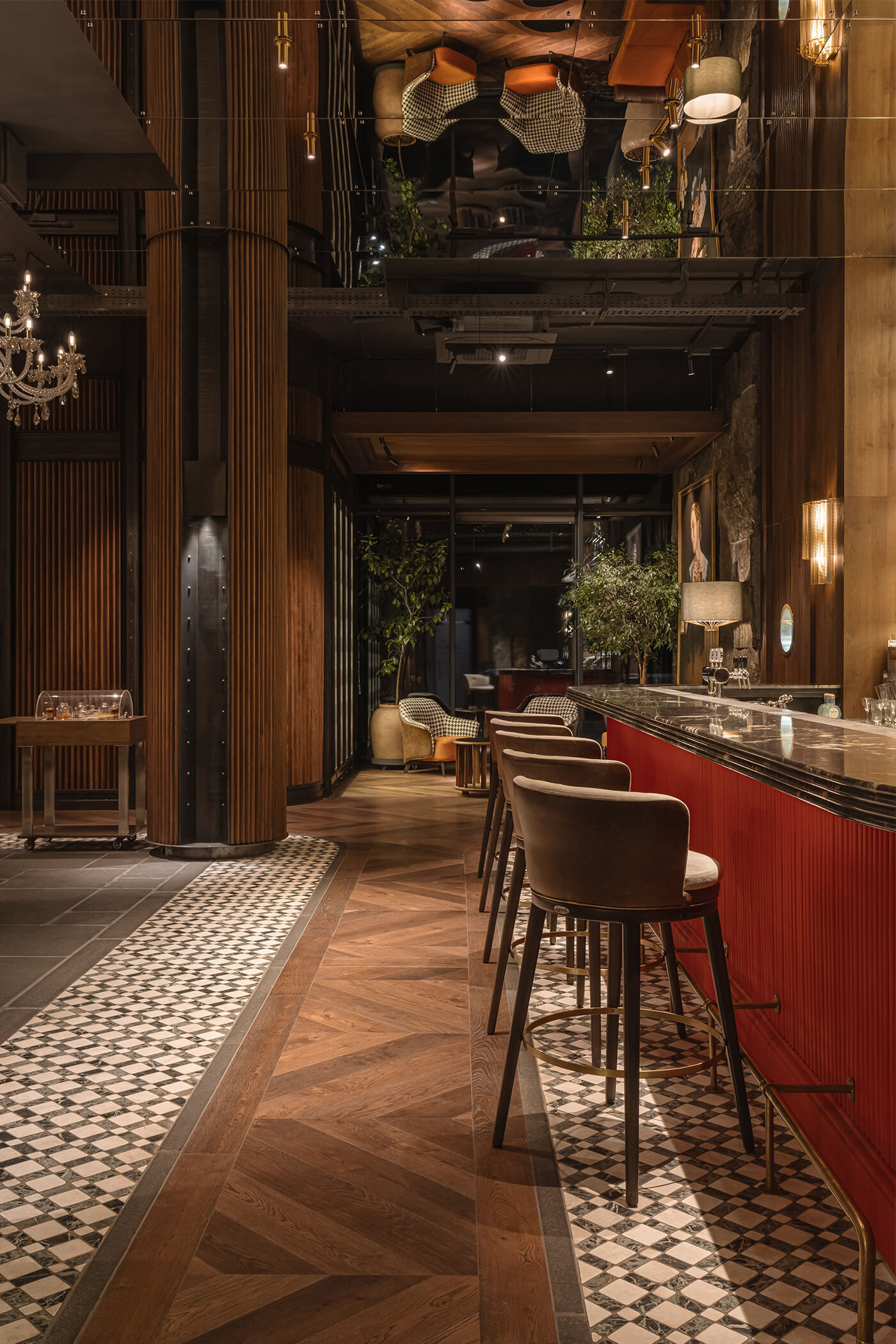
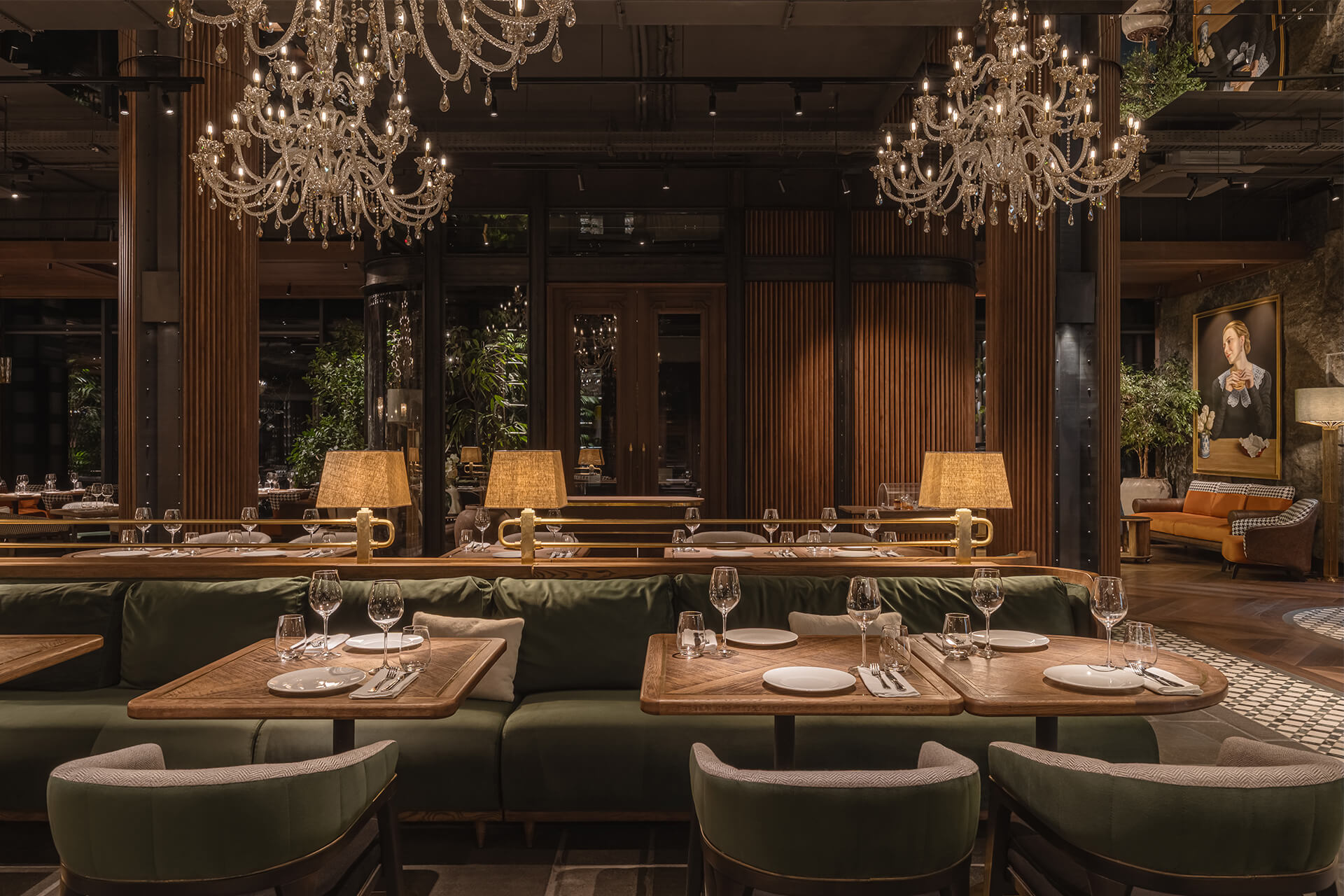
Мы уделили большое внимание каждой детали, формируя сложную и многогранную композицию. Интерьер ресторана задуман как насыщенное и многослойное пространство — такое, которое невозможно полностью раскрыть за один визит. Эта осознанная сложность поддерживает интерес гостей и подчёркивает уникальную идентичность заведения.
Особую роль играет потолок, где сочетаются три типа отделки.
В центре зала расположен индустриальный потолок, который придаёт пространству современный и брутальный характер. По периметру он контрастирует с классическими деревянными кессонами — тёплыми, уютными и более традиционными. Такое сочетание создаёт выразительный визуальный контраст и добавляет пространству пластичности и чёткого зонирования.
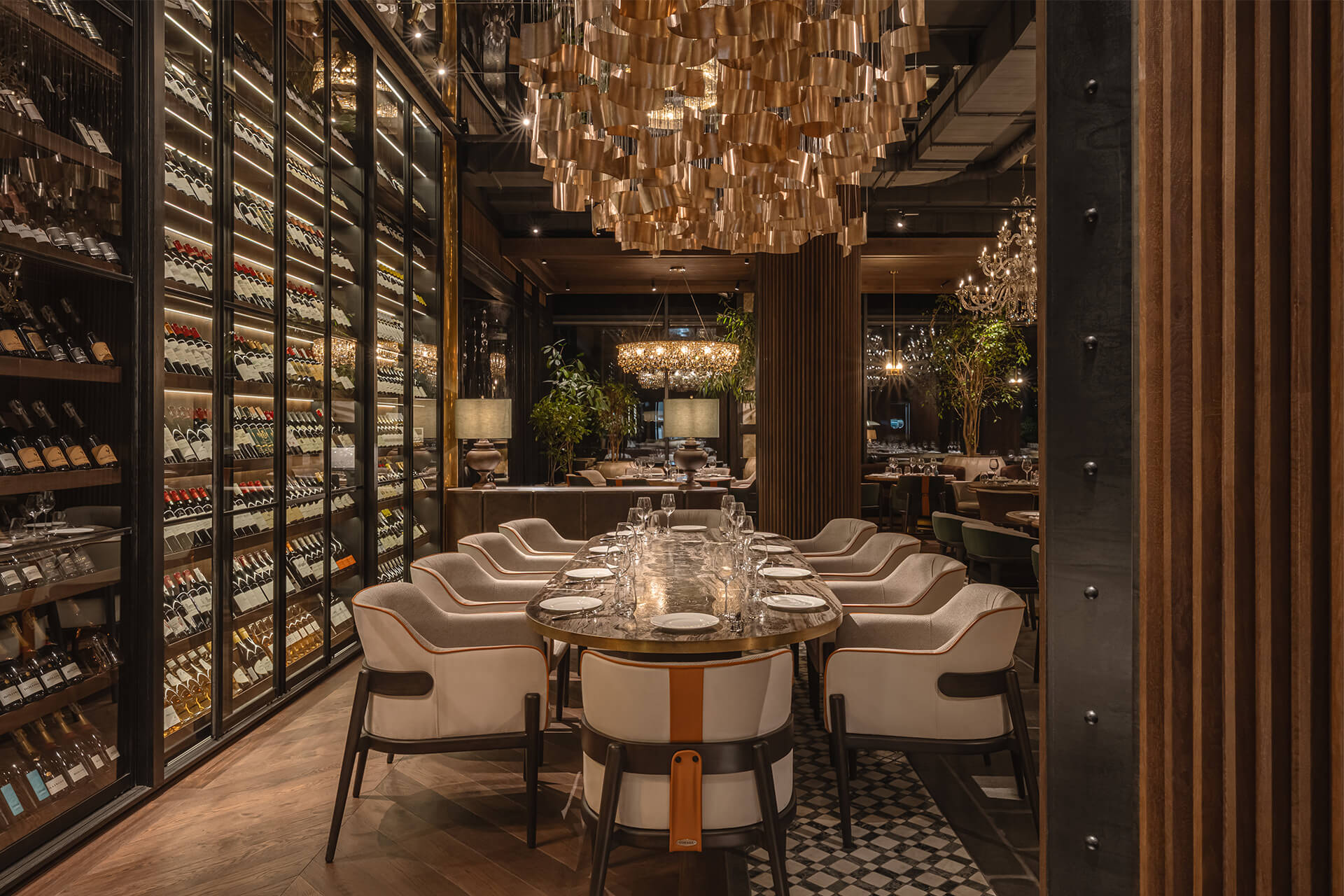
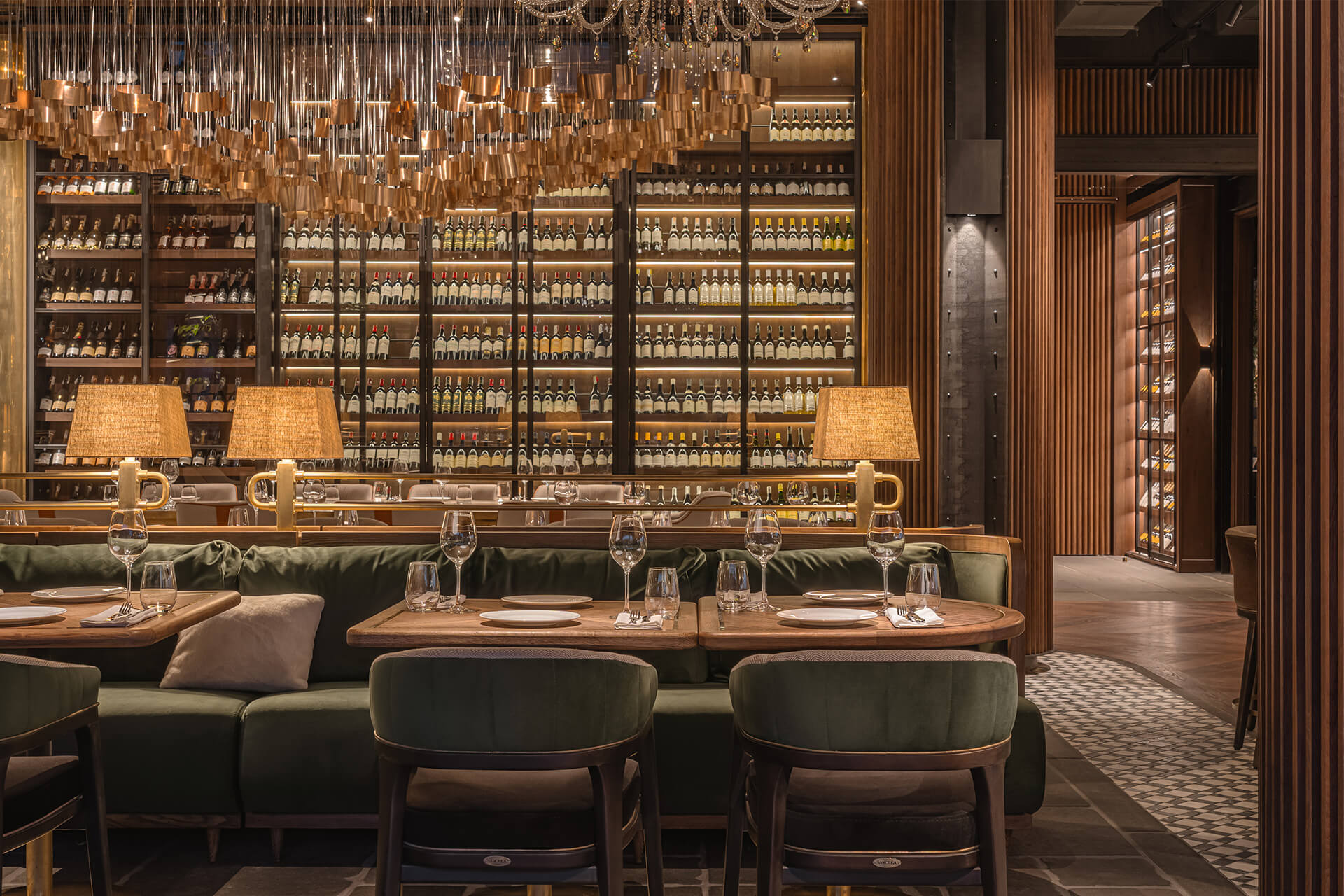
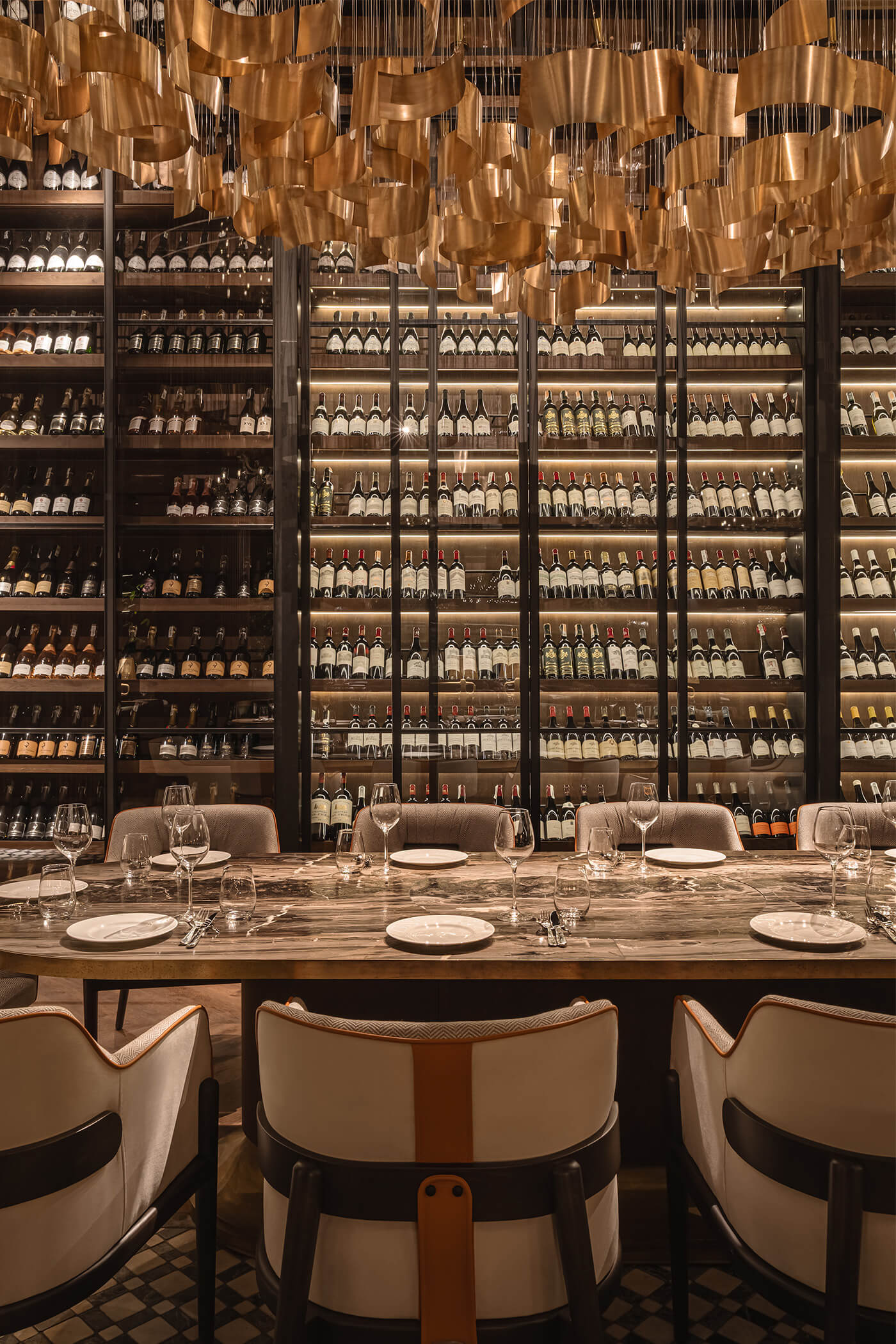
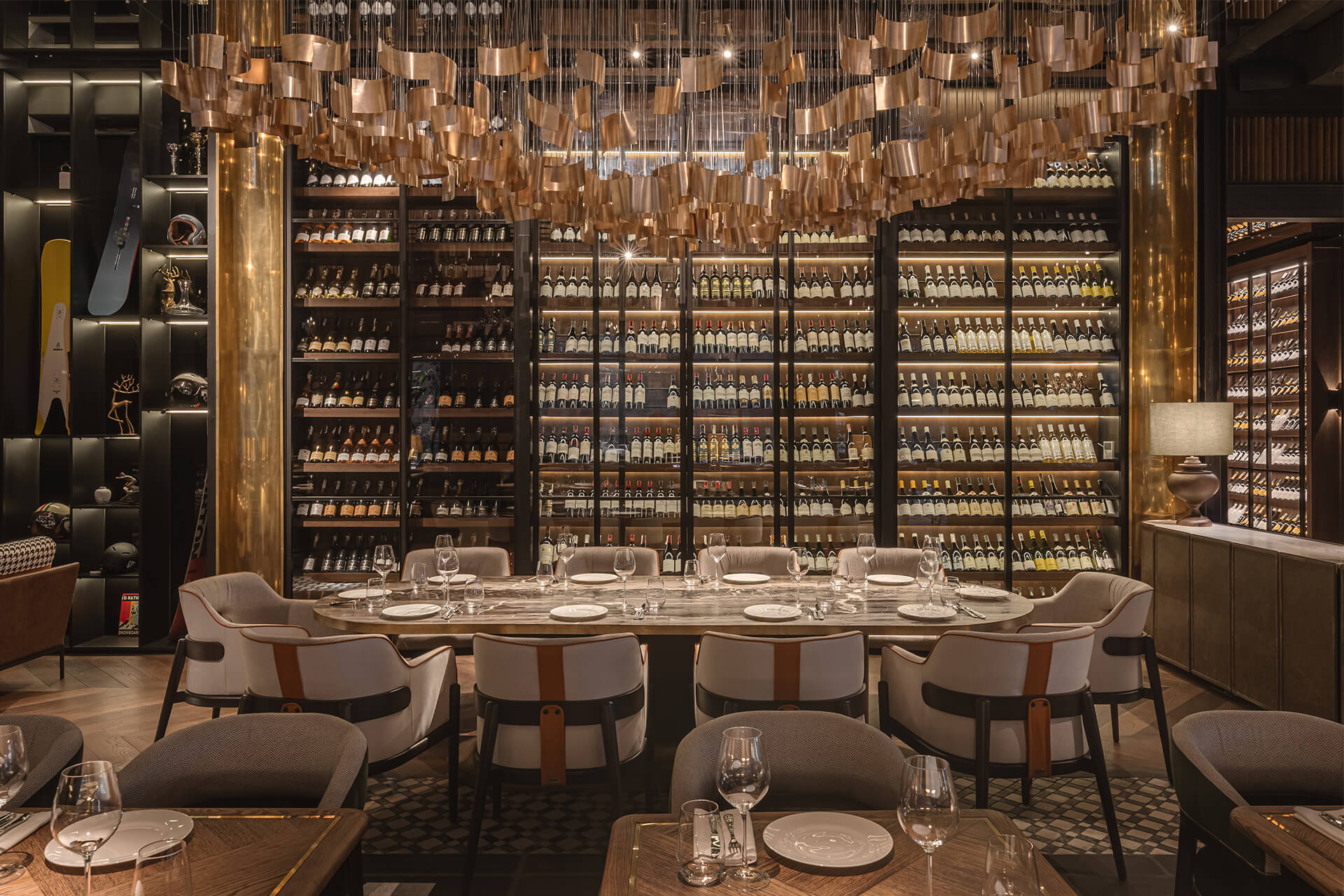
Над баром, камином и эффектной винной витриной использован зеркальный потолок. Он создаёт ощущение двухуровневого пространства, визуально увеличивает высоту полок, камина и винной витрины, придавая им масштабность и драматичность.
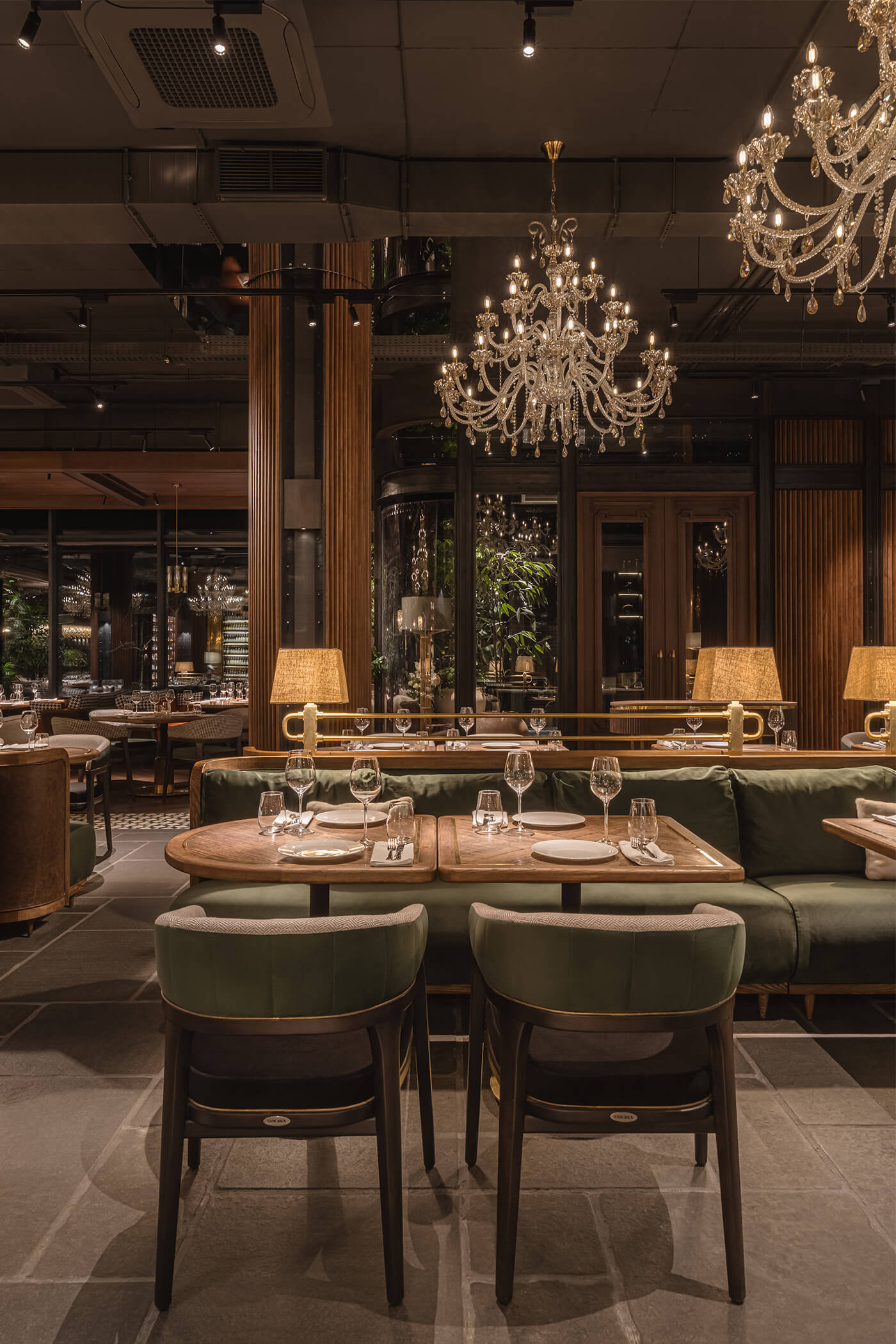
Отделка входных групп выполнена нестандартно. В ресторане их две, каждая обладает ярко выраженным архитектурным характером. Вдохновением послужили парижские витрины — с членением фасада, классическими пропорциями и мягко закруглёнными углами. При этом эти элементы реализованы в фирменной для интерьера брутальной манере — через использование чёрного закалённого металла и грубых рельефных деревянных панелей.
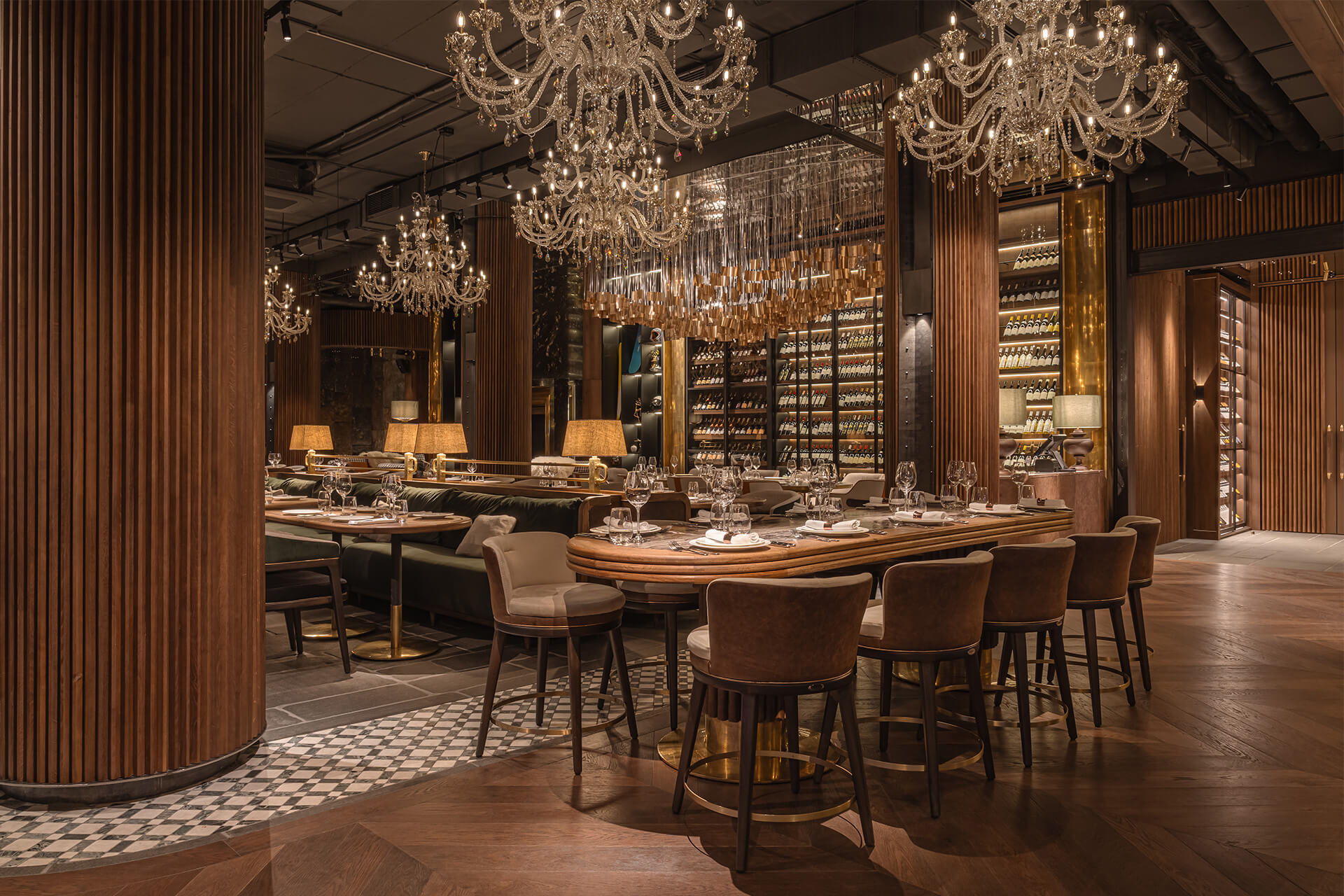
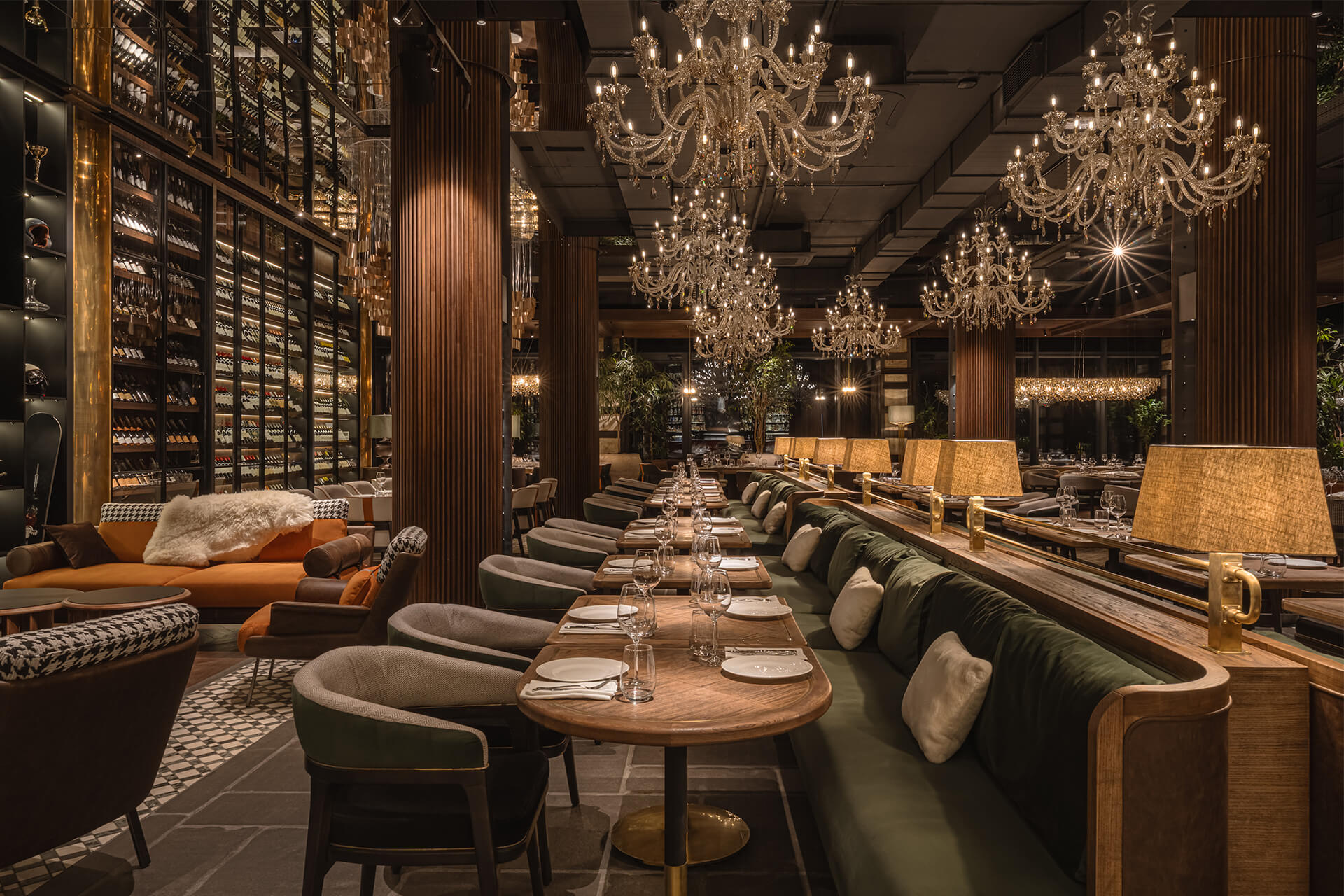
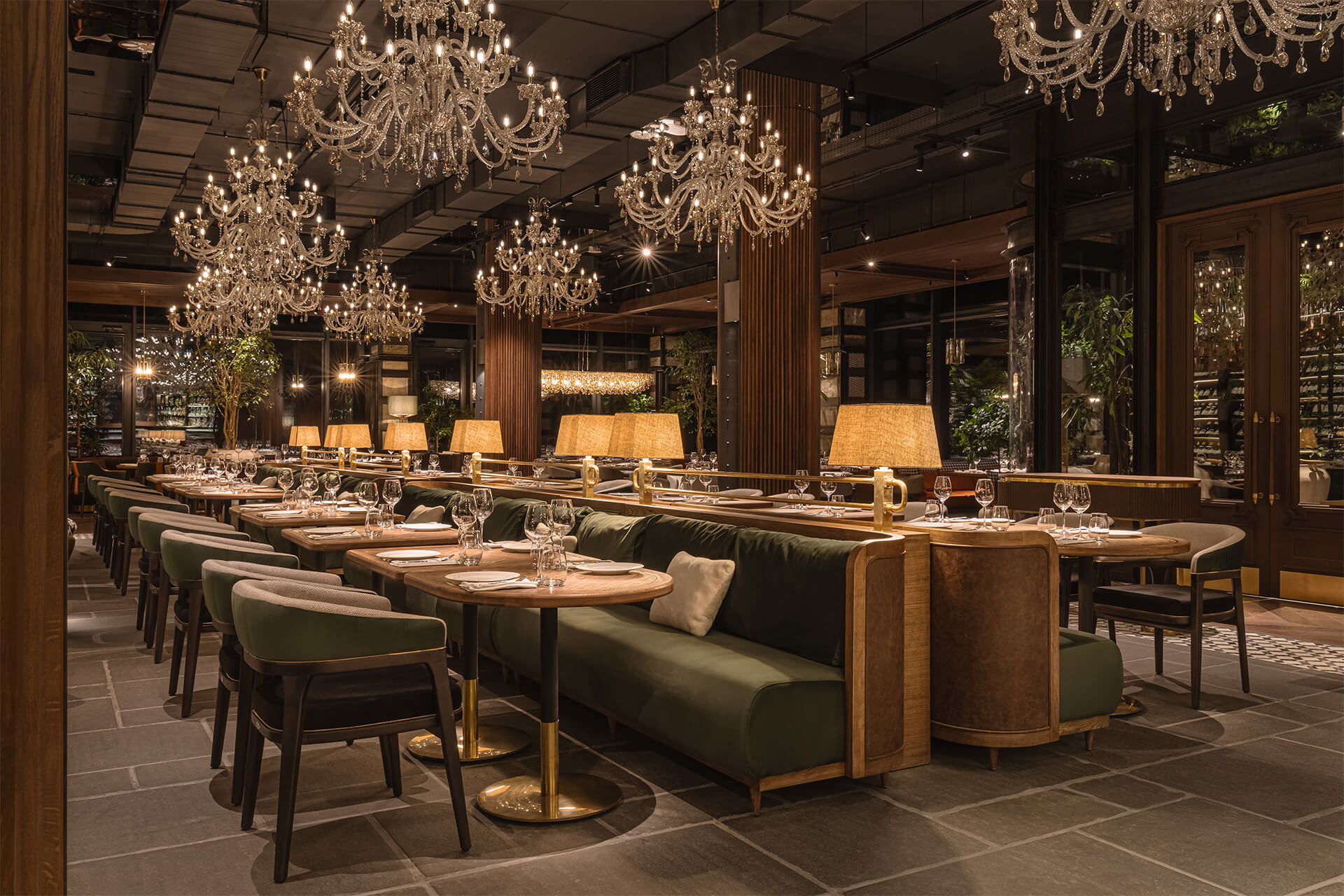
Пол также построен на сложном сочетании материалов. Здесь использованы три типа отделки: грубый паркет в стиле горного шале, чёрный натуральный камень и декоративная мозаика, добавляющая нотку роскоши. Все элементы объединены в единую композицию вокруг центральных колонн зала.
Колонны в интерьере имеют разное стилевое решение.
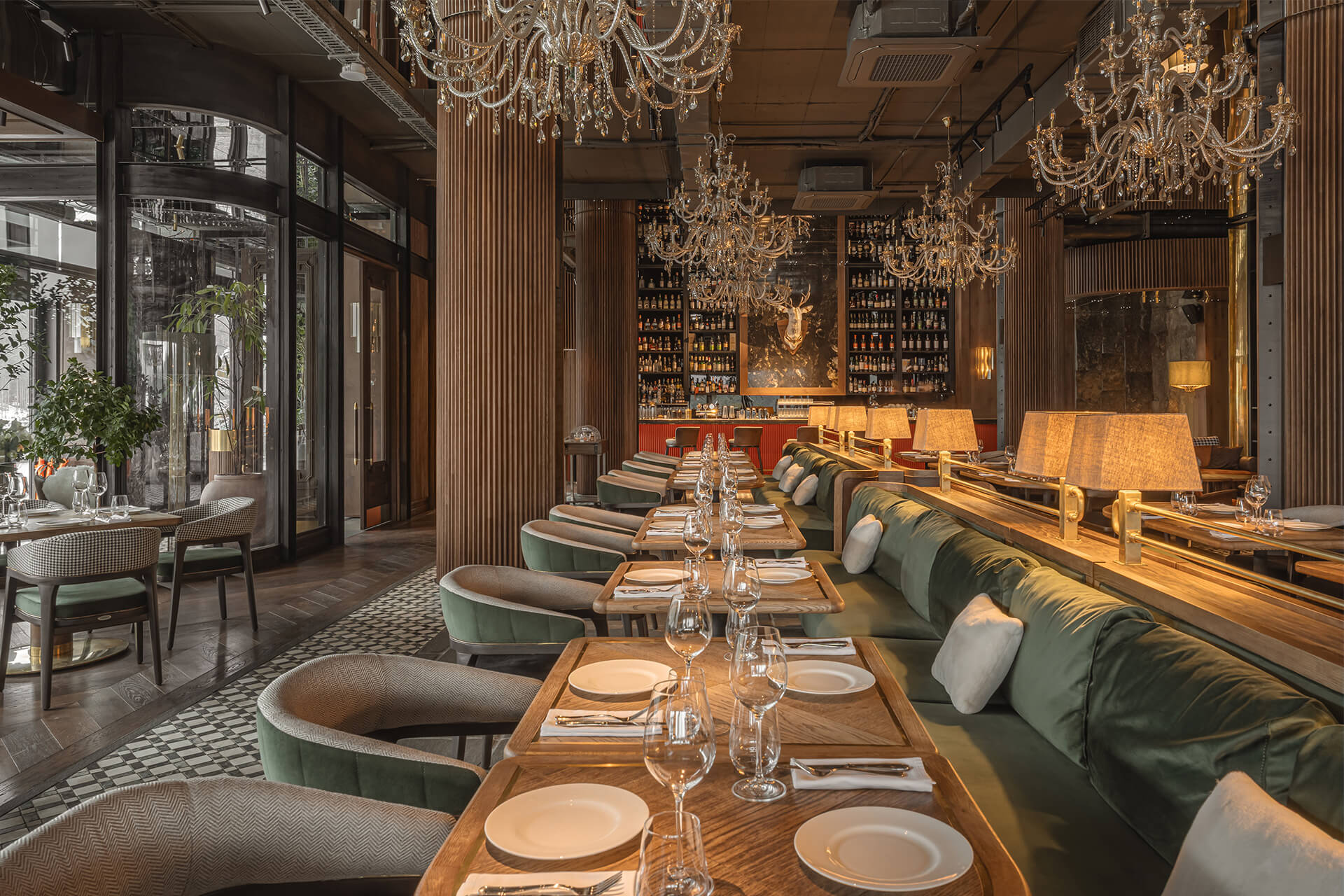
Центральные колонны — округлые, с неоклассическими чертами, дополнены брутальным акцентом в виде встроенных бра из воронёного металла. Колонны по периметру оставлены бетонными и заключены в металлические рамки; их форма отсылает к архитектуре старинных парижских вокзалов.
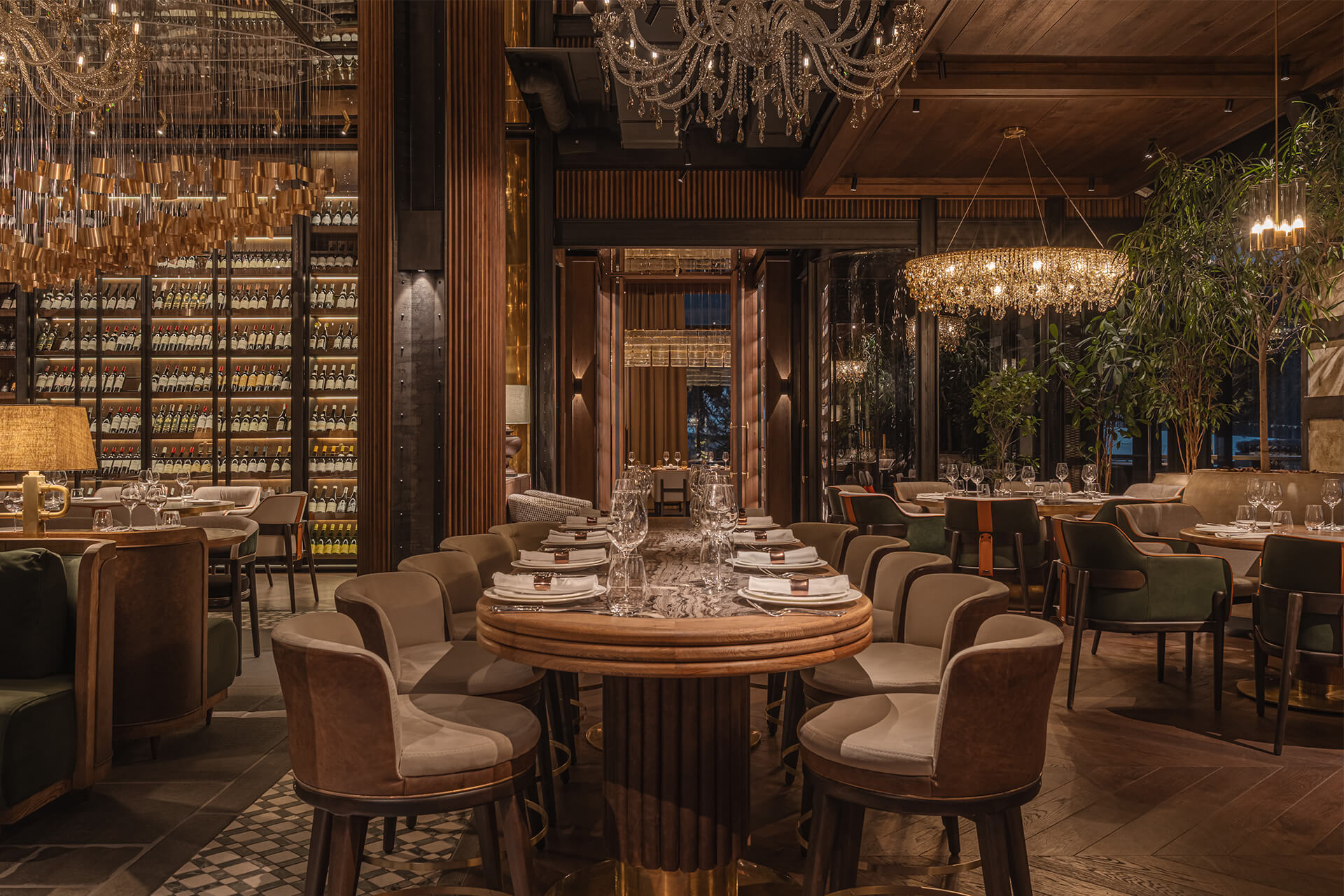
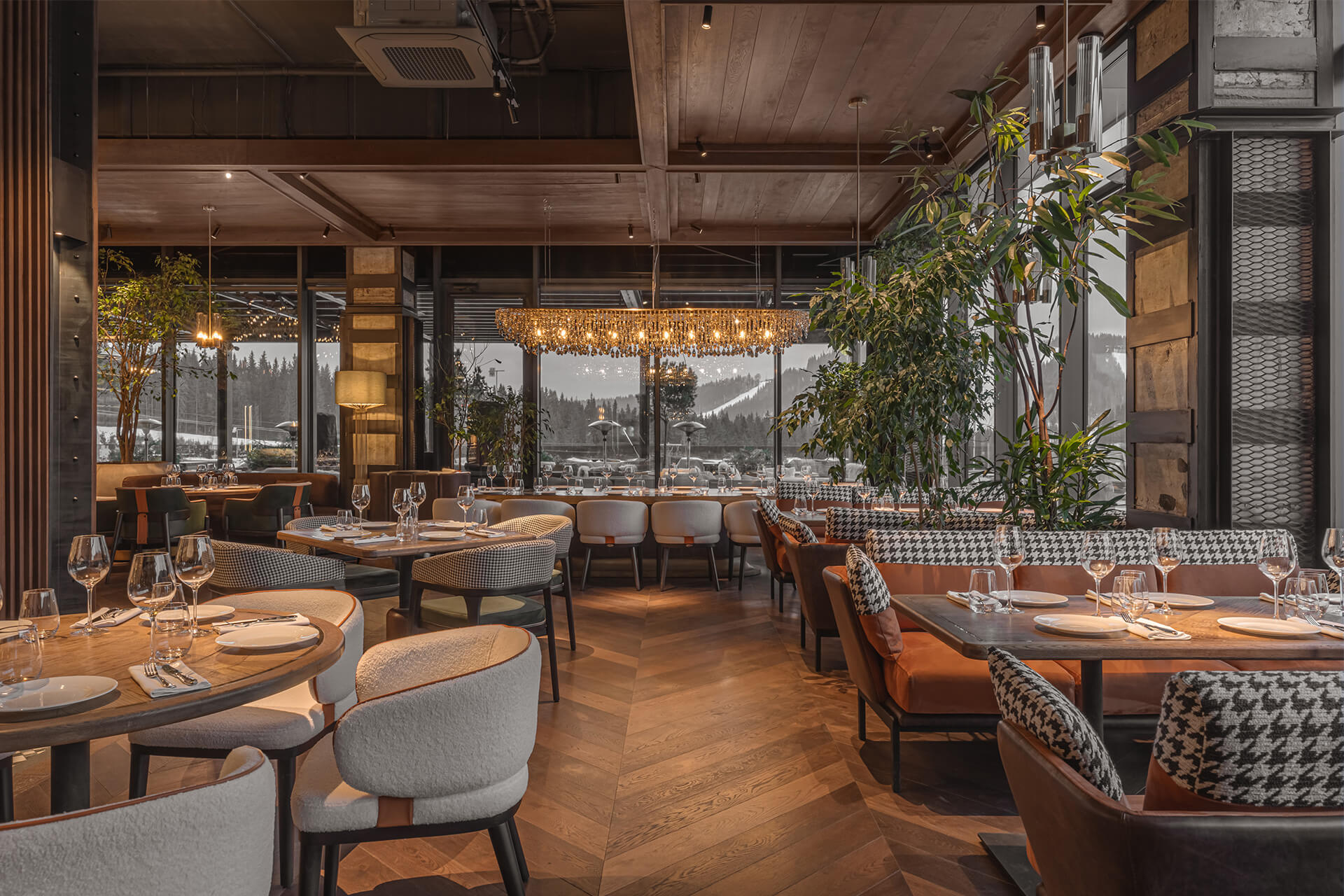
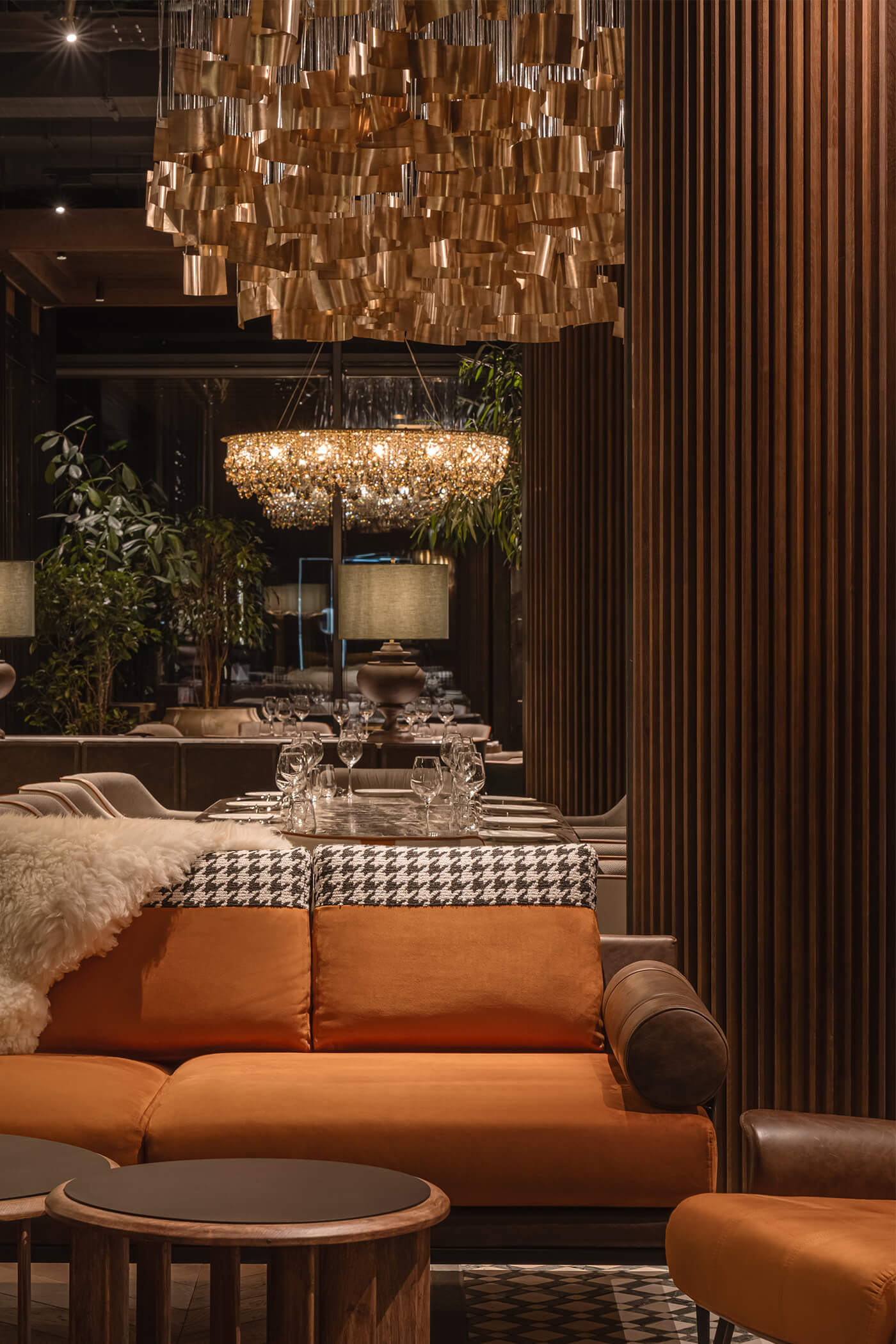
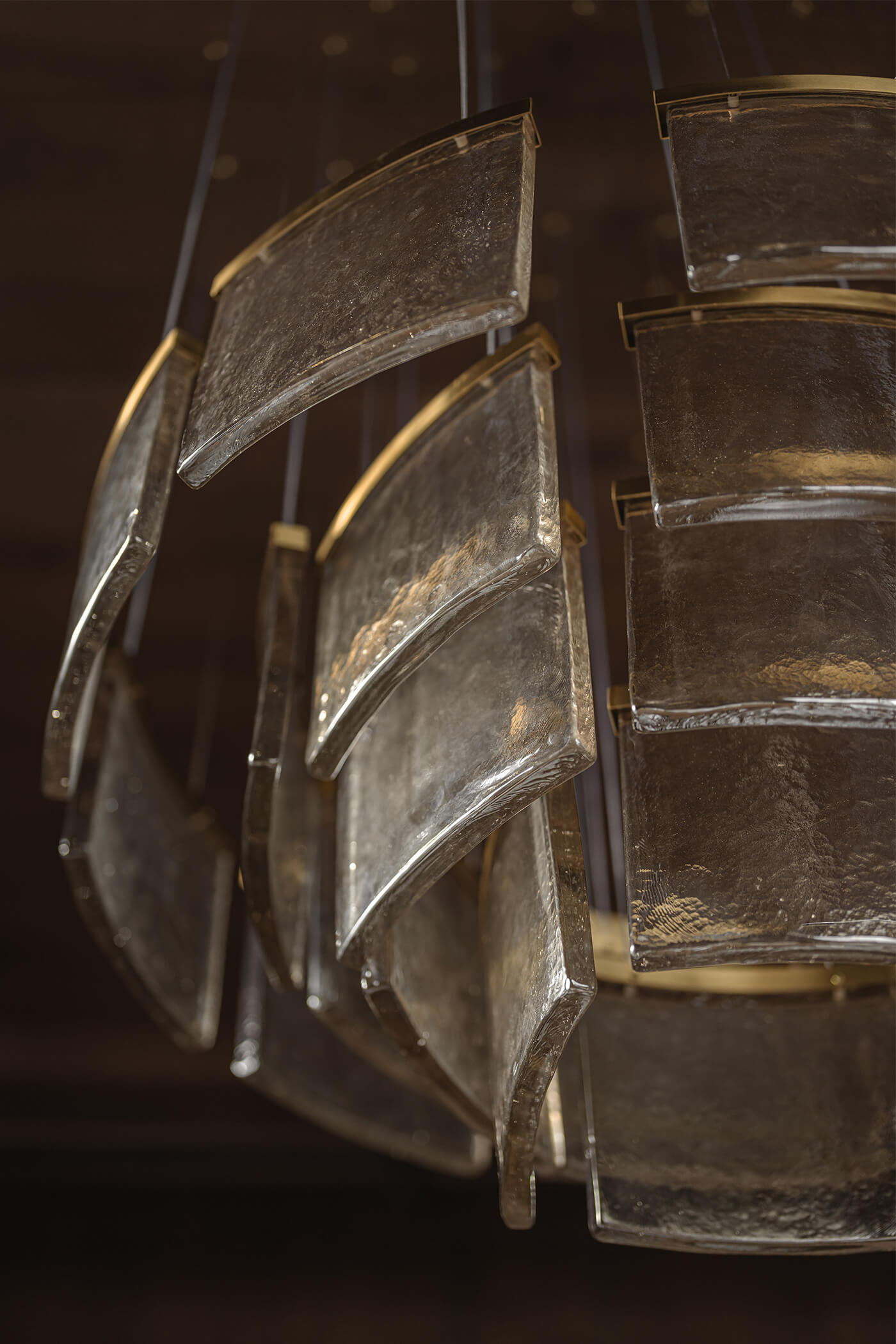
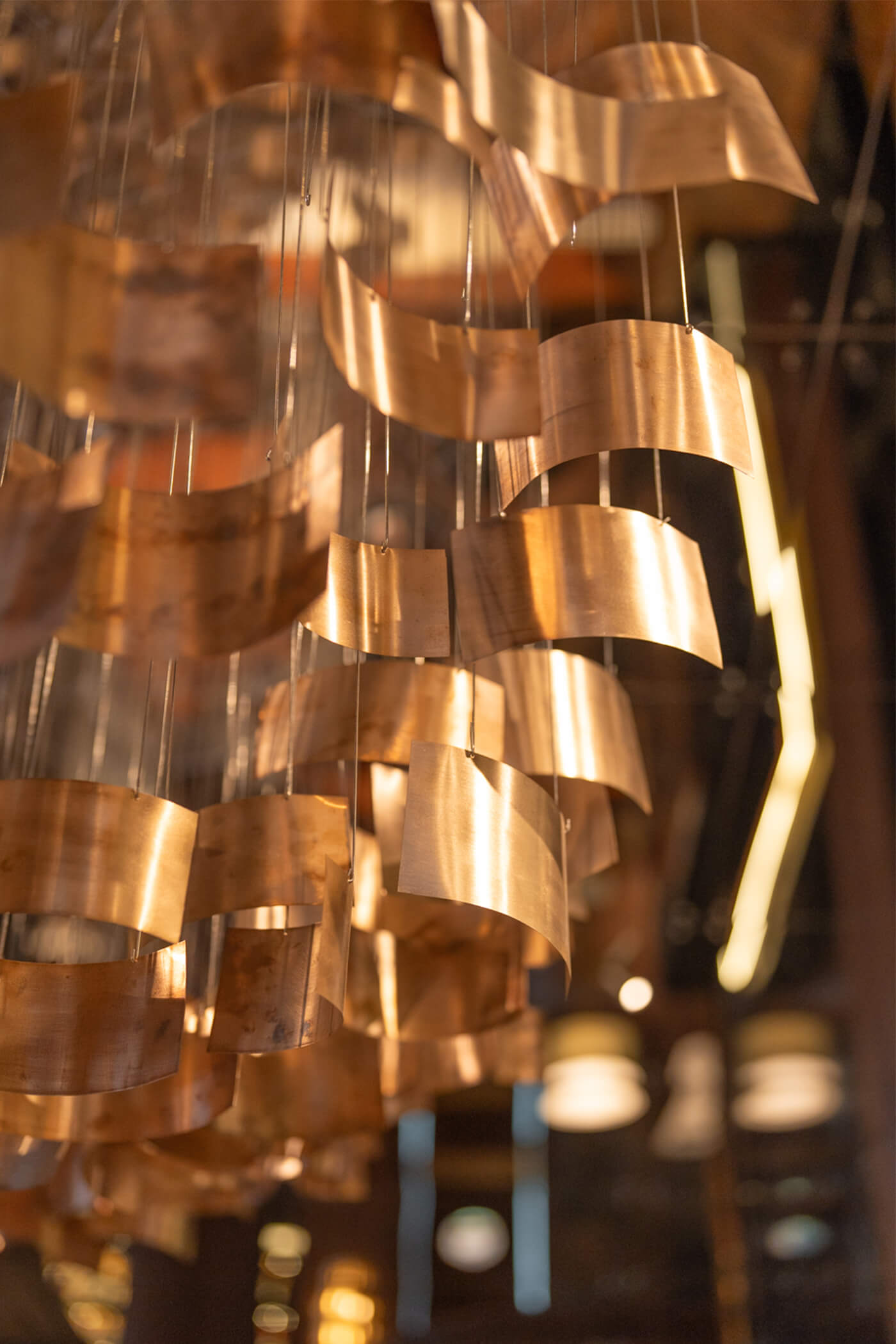
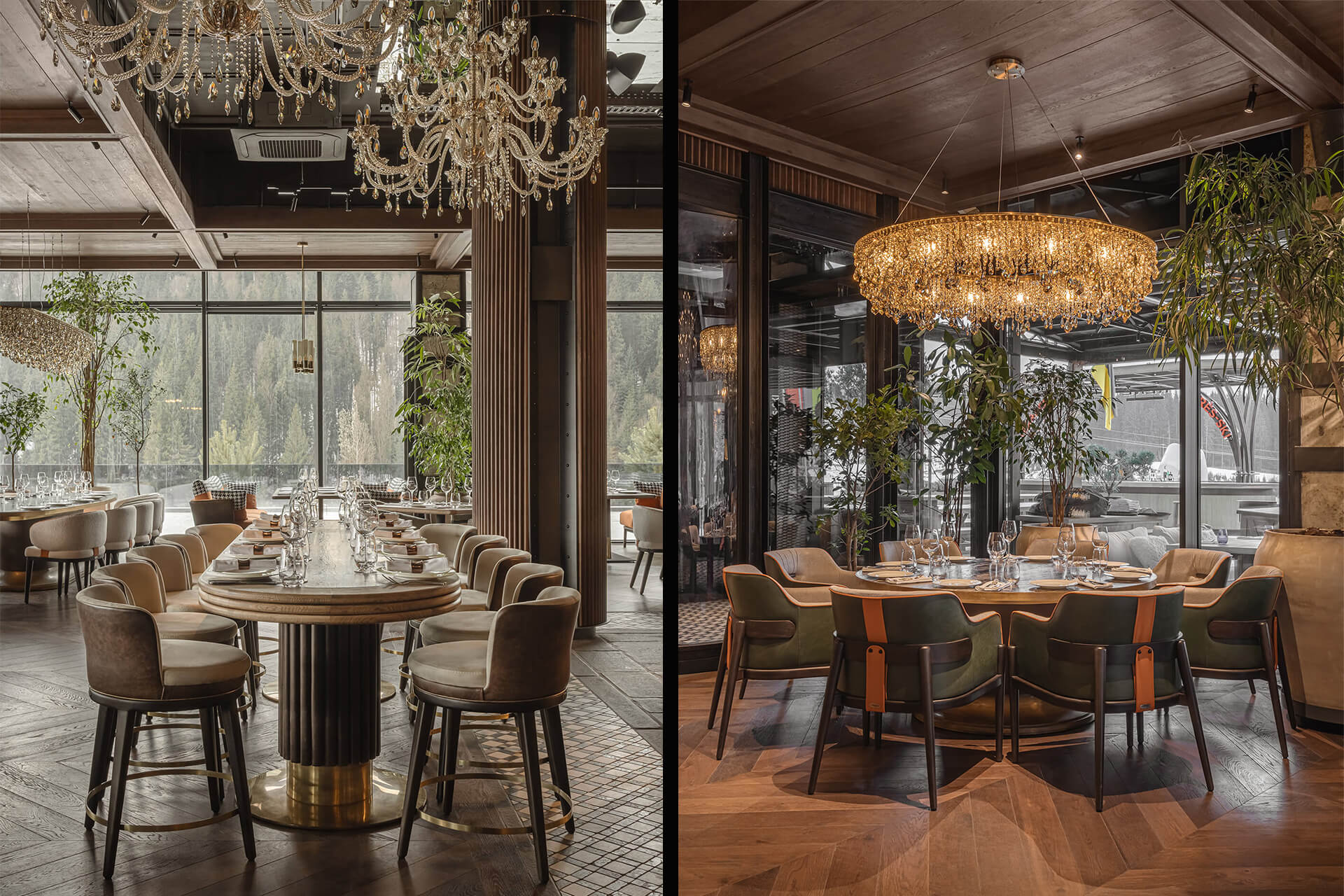
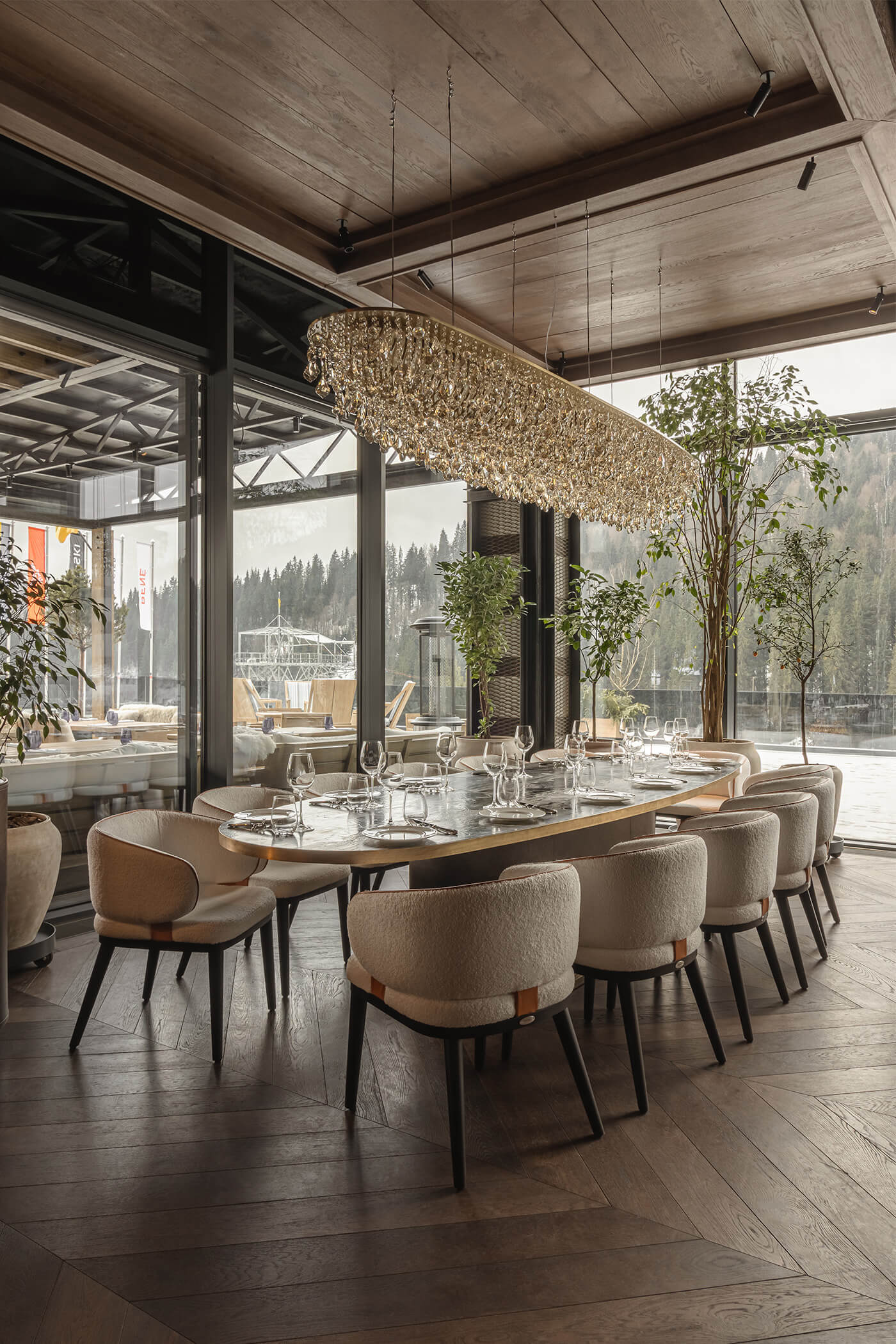
Все освещение разрабатывалось индивидуально и на заказ. Классические люстры в центре зала и современные хрустальные люстры по периметру подчёркивают роскошь пространства на фоне грубых материалов. У винной витрины размещена большая кастомная медная люстра современного дизайна, которая является акцентом зоны.
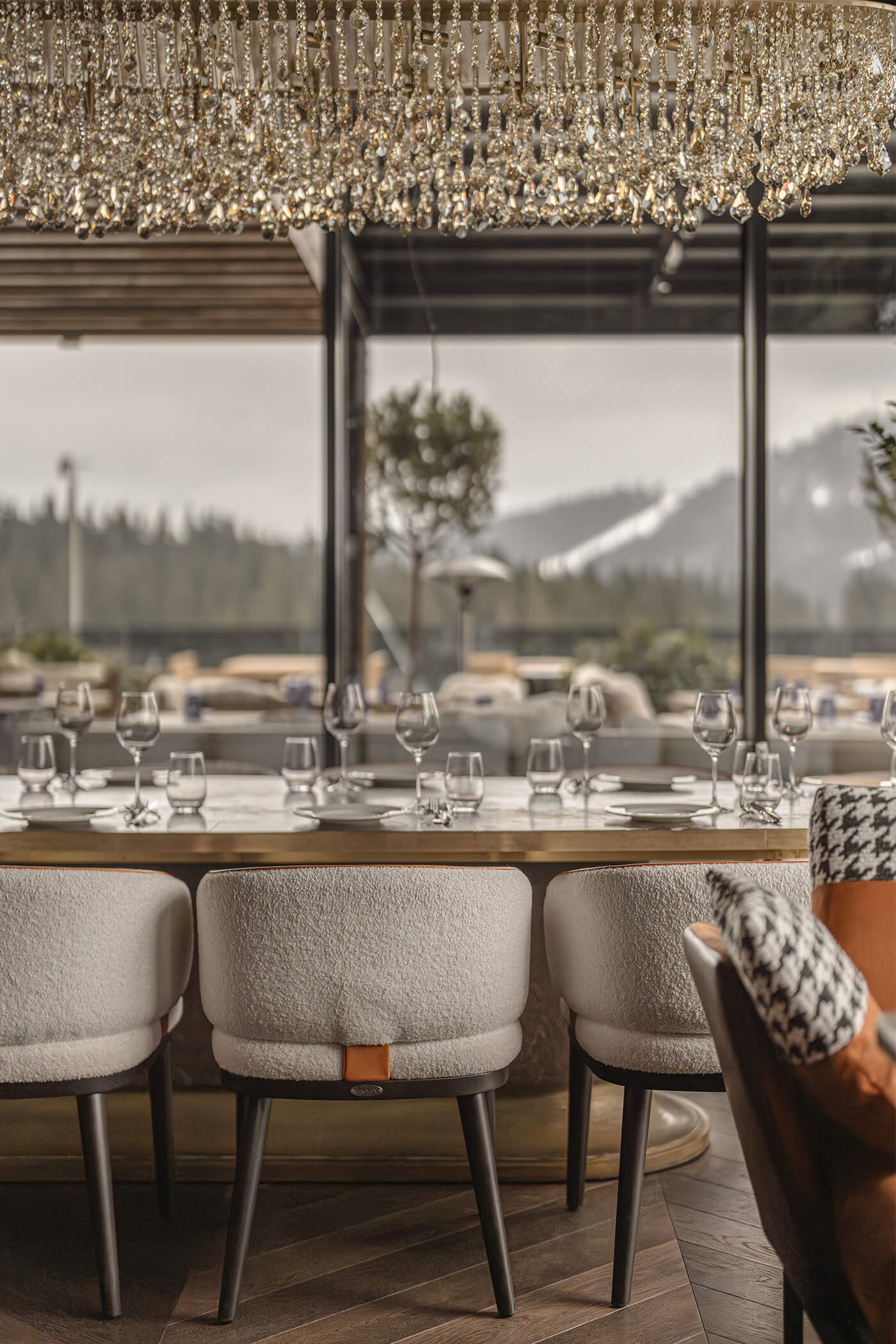
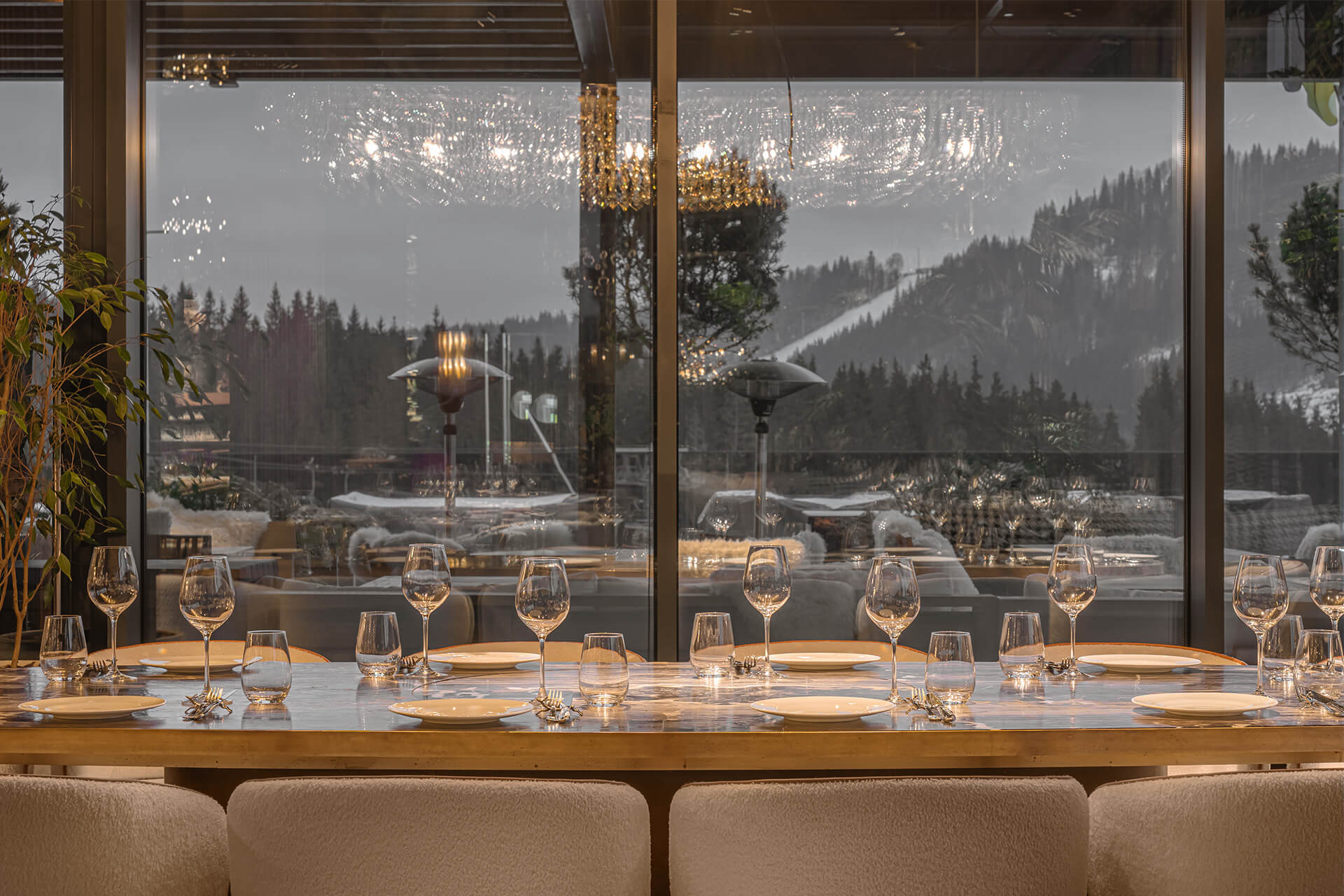
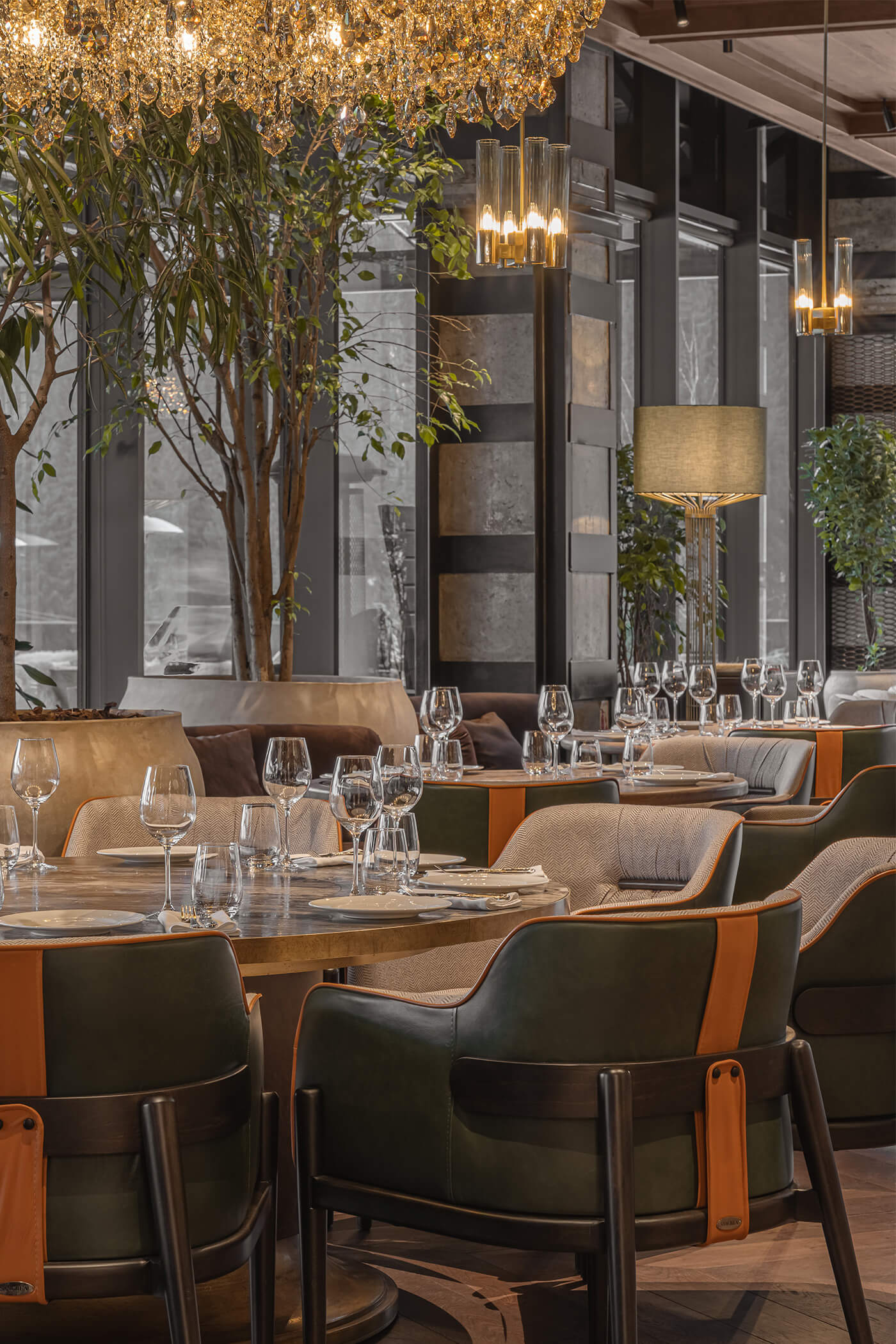
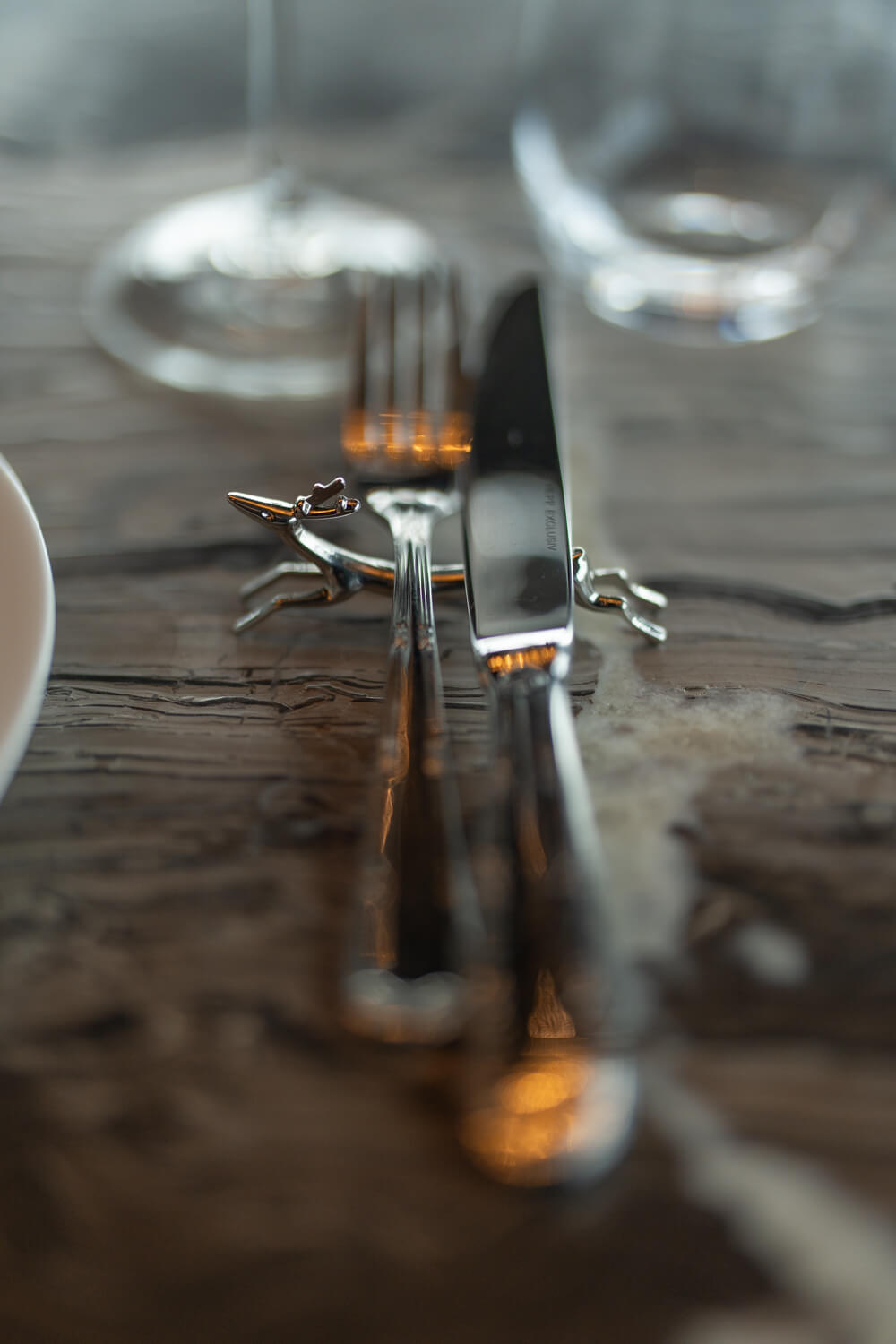
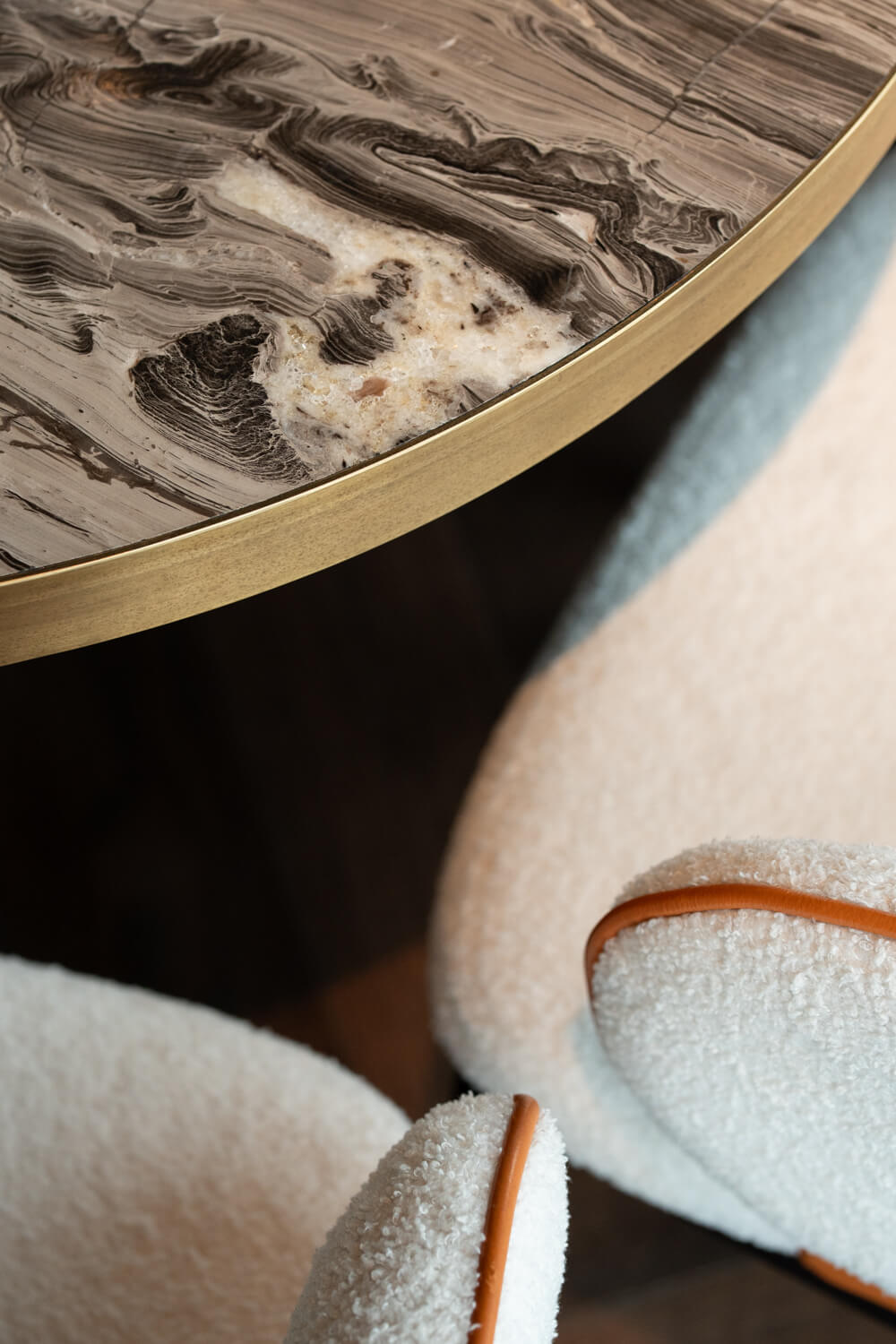
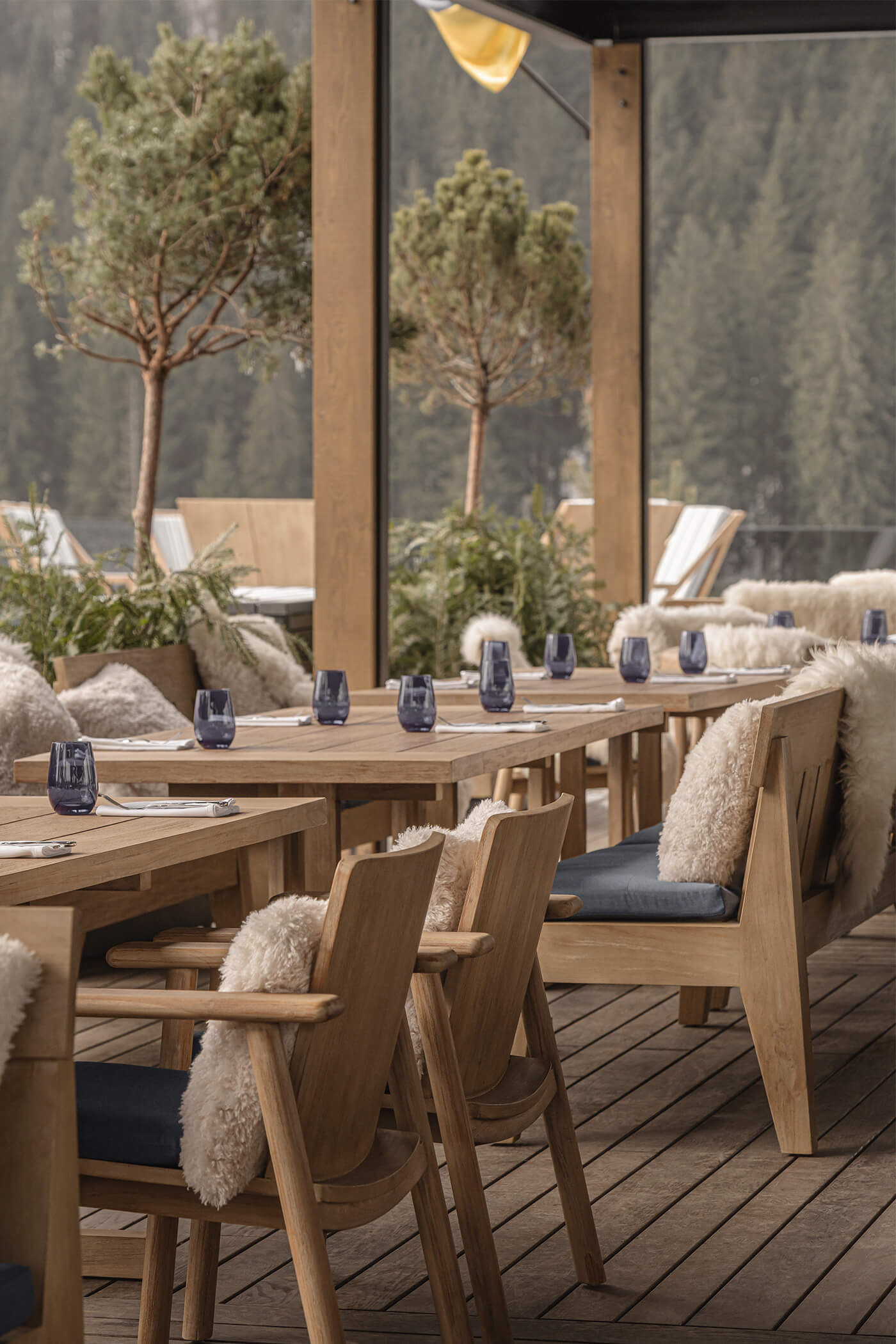
Особое внимание уделялось мебели. Каждый стул и диван детально проработаны и имеют индивидуальную отделку. В каждом элементе сочетается несколько материалов, создавая сложный, глубокий и выразительный образ.
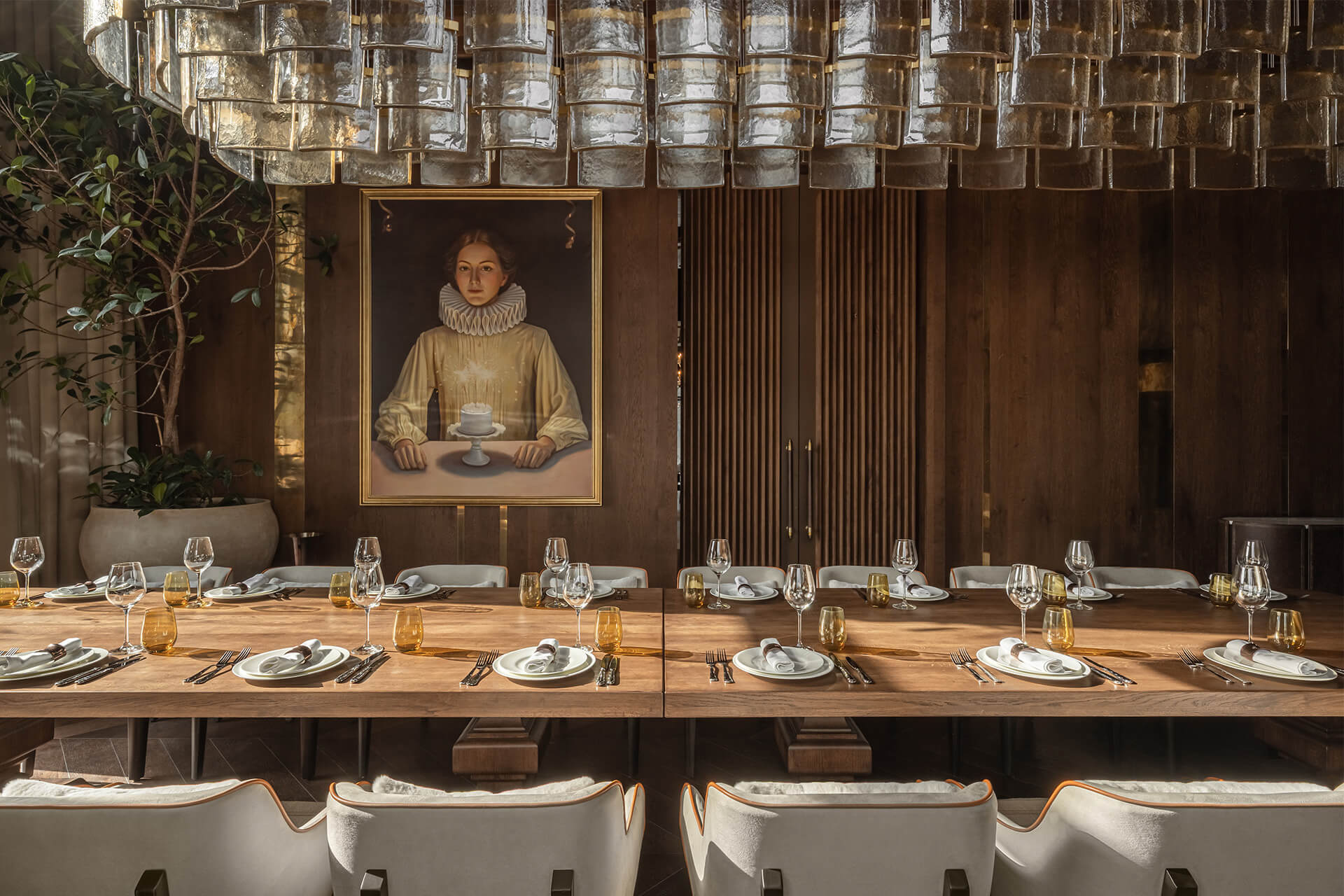
Банкетный зал — отдельное, самодостаточное пространство с собственным камином, что придаёт ему особый уют и одновременно торжественность. Он просторный, наполнен светом благодаря большому количеству окон и дополнен эффектной кастомной стеклянной люстрой, подчёркивающей его статусность.
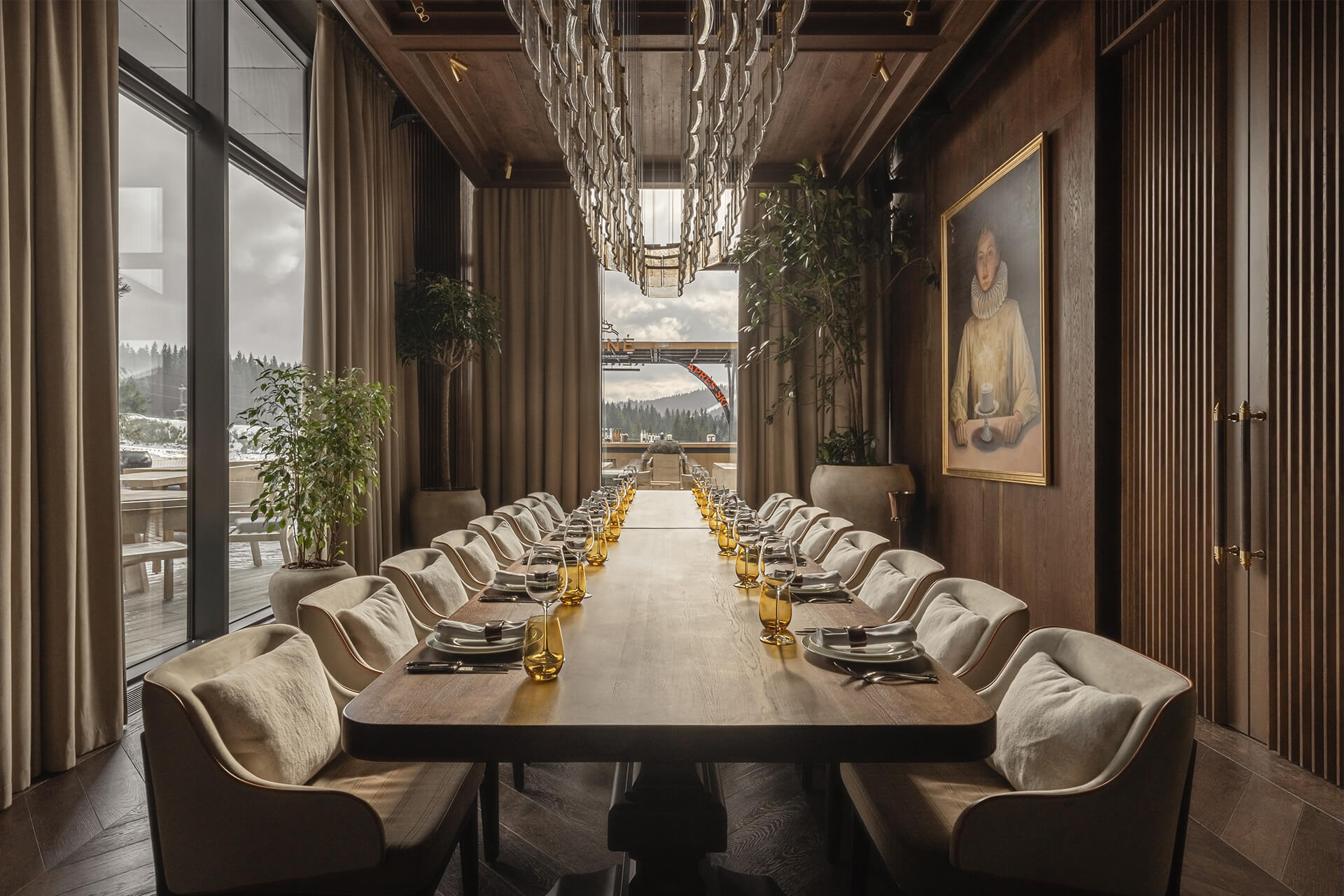
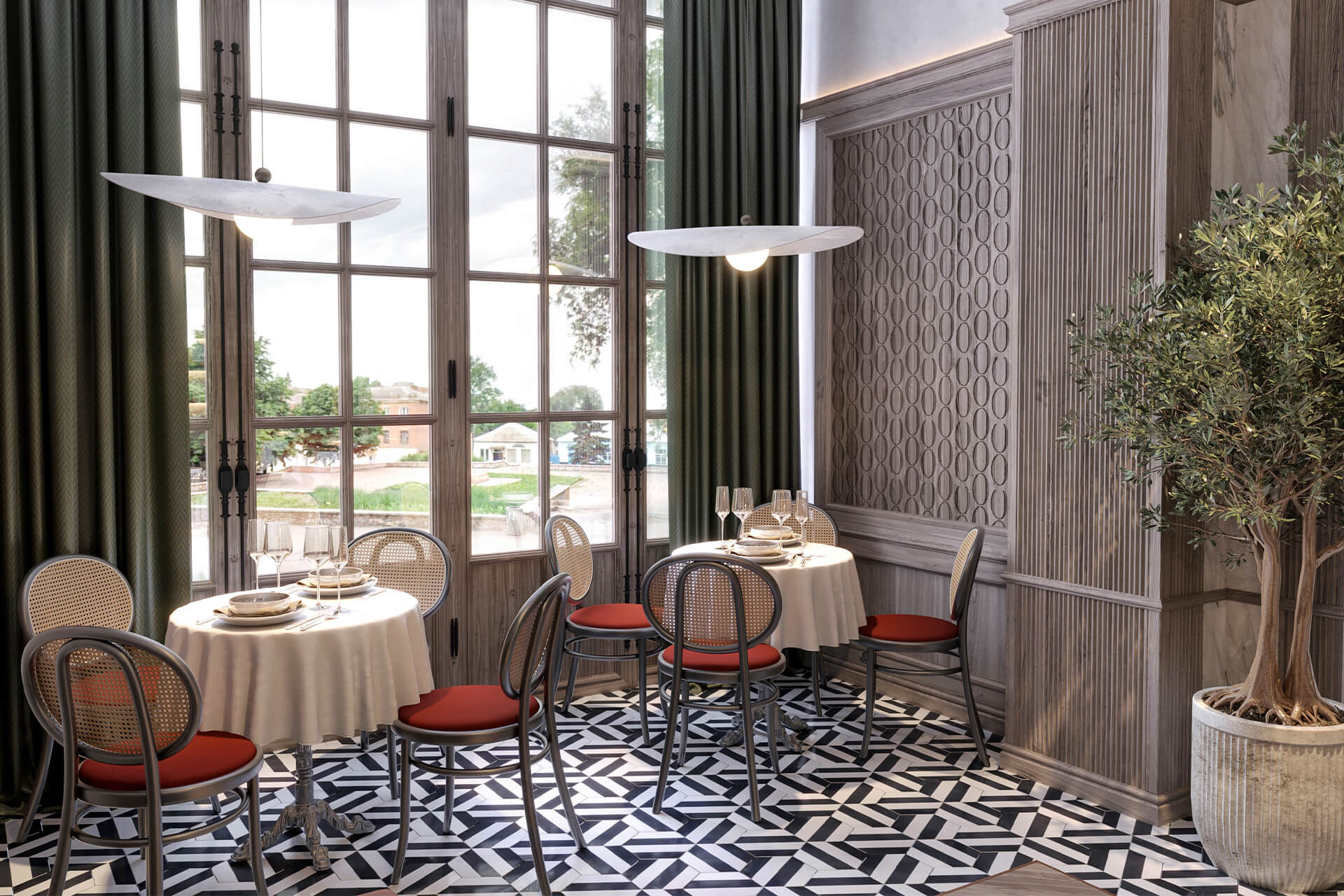
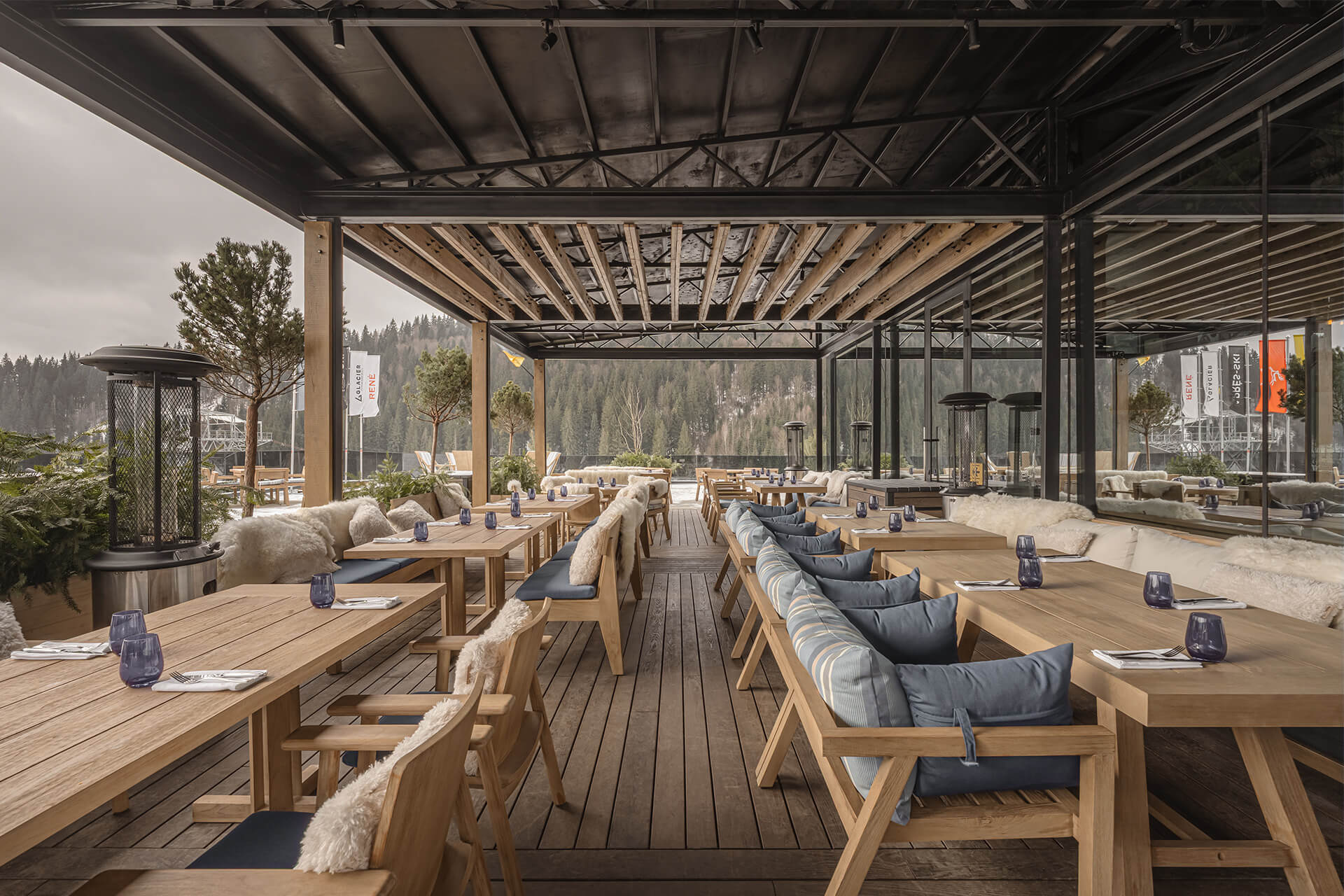
RENÉ выстраивает искренний диалог с карпатским ландшафтом. Большие панорамные окна стирают границу между интерьером и окружающими горными пейзажами, интегрируя природу в опыт гостей и делая её неотъемлемой частью посещения ресторана.
В проекте использованы локальные материалы, в частности дерево и камень, а многие индивидуально изготовленные элементы отделки и детали были созданы местными мастерами. Такой подход позволил сформировать пространство, глубоко связанное со своим окружением и богатыми ремесленными традициями региона.
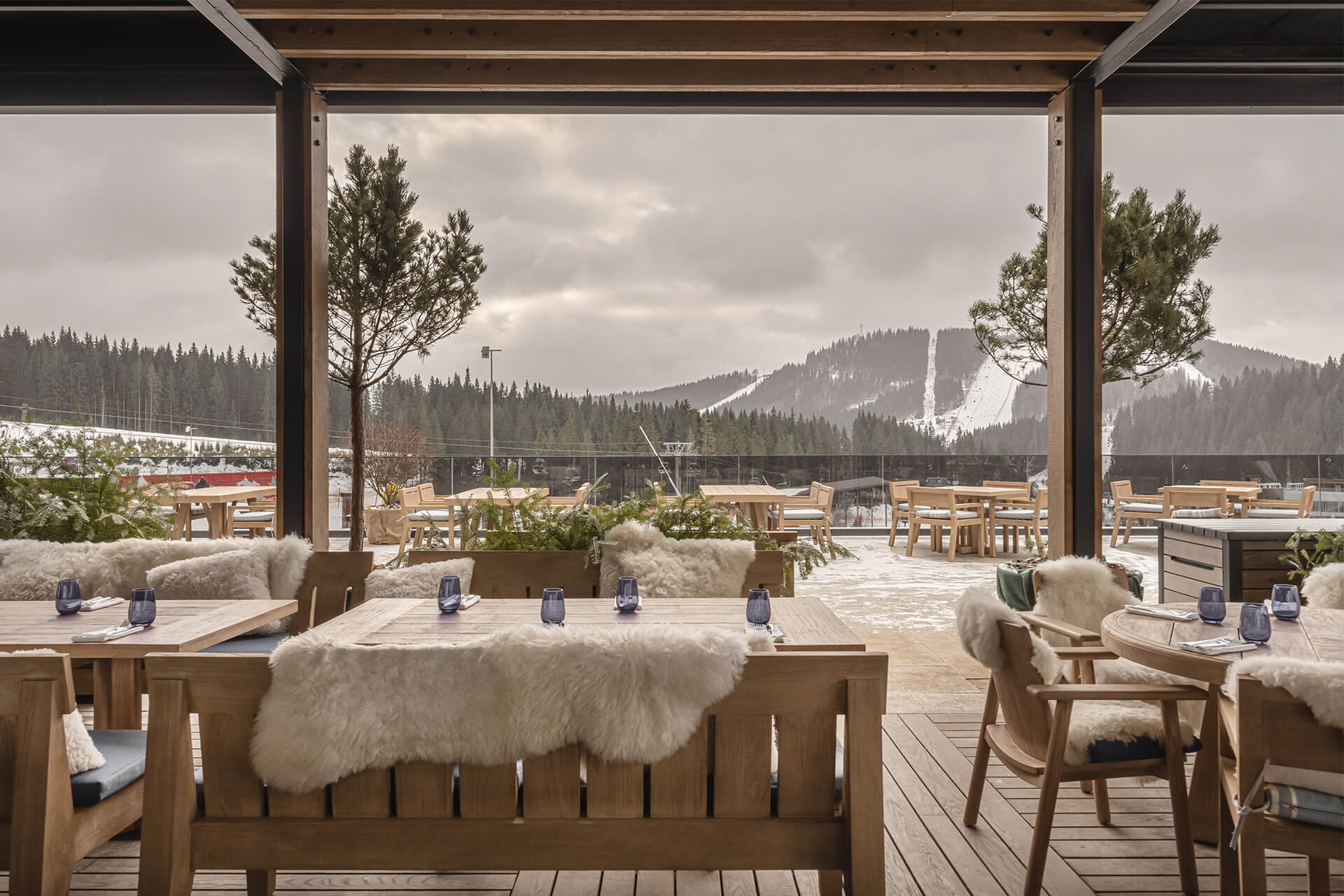
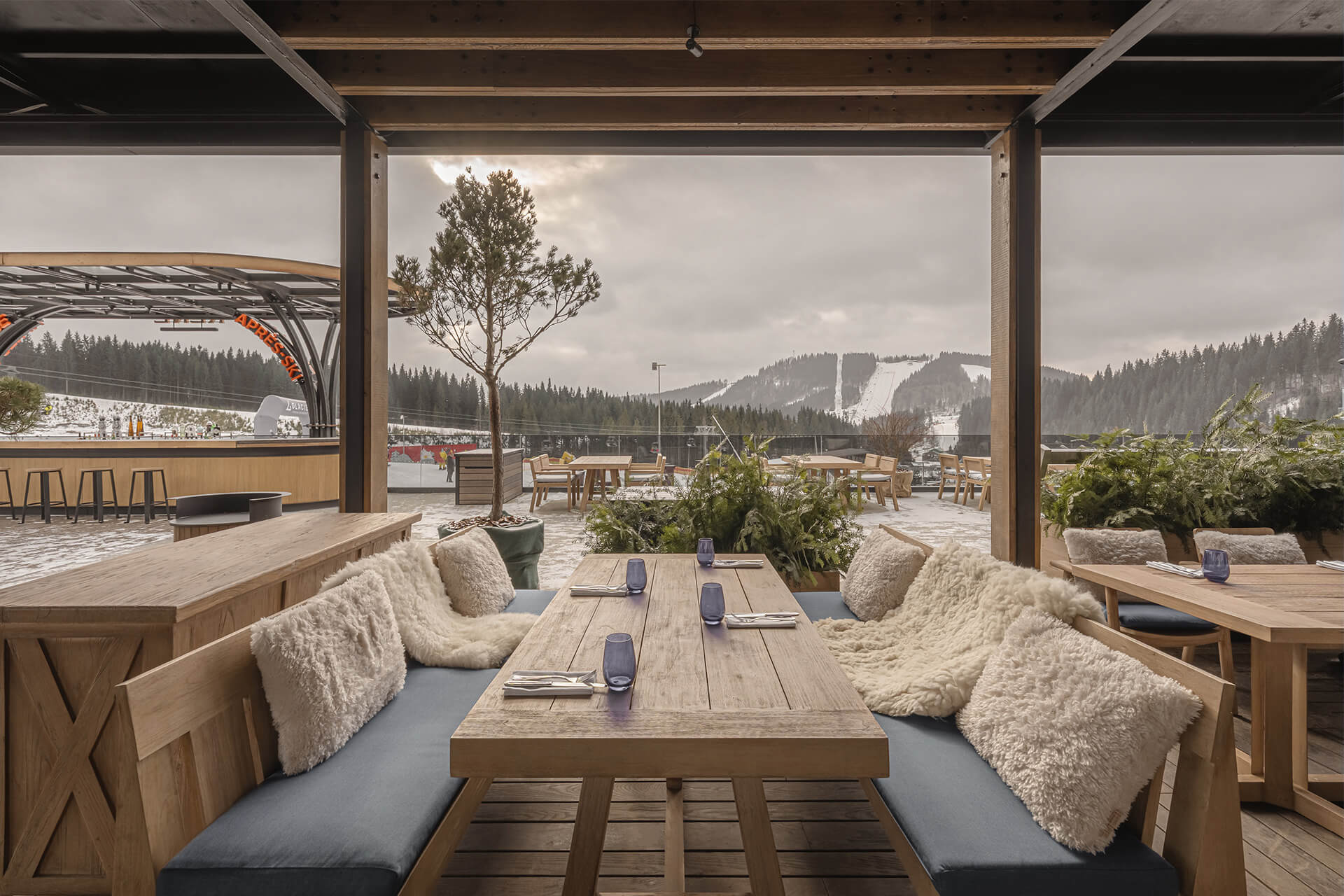
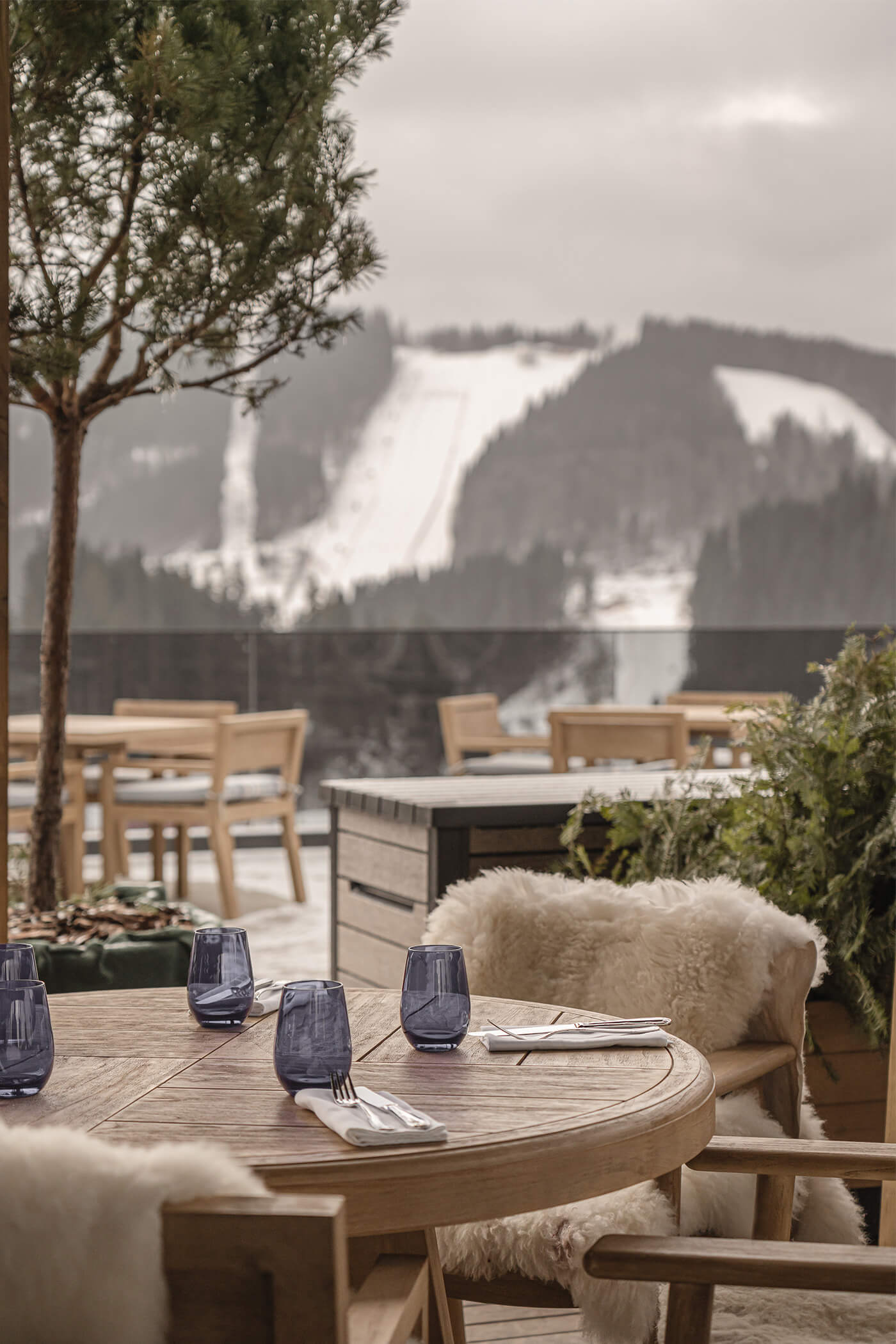
Для повышения доступности и удобства различных сценариев посещения ресторан имеет два входа. Первый выходит на главную набережную-променад вдоль озера, тогда как второй напрямую связан с горнолыжным склоном. Благодаря этому лыжники могут попасть в ресторан прямо со спуска, оказываясь на просторной открытой террасе.
Открытая и крытые террасы, спроектированные для использования как в летний, так и в зимний сезон, открывают панорамные виды на окружающие горы. Они являются естественным продолжением ресторана, создавая пространство для встреч, отдыха и общения. Зимой гости могут согреться у костра после дня, проведённого на склонах, а в тёплое время года — наслаждаться пейзажами и атмосферой курорта под открытым небом.
О проекте в цифрах
Step-by-step process that ensures flawless results

01.Workshop:
Проект RENÉ: как превратить сложные особенности планировки в преимущества
Работа над любым проектом начинается с глубокого анализа. Мы собираем и изучаем все факторы — от особенностей ландшафта до сценариев движения гостей, — которые впоследствии становятся основой планировочной концепции.
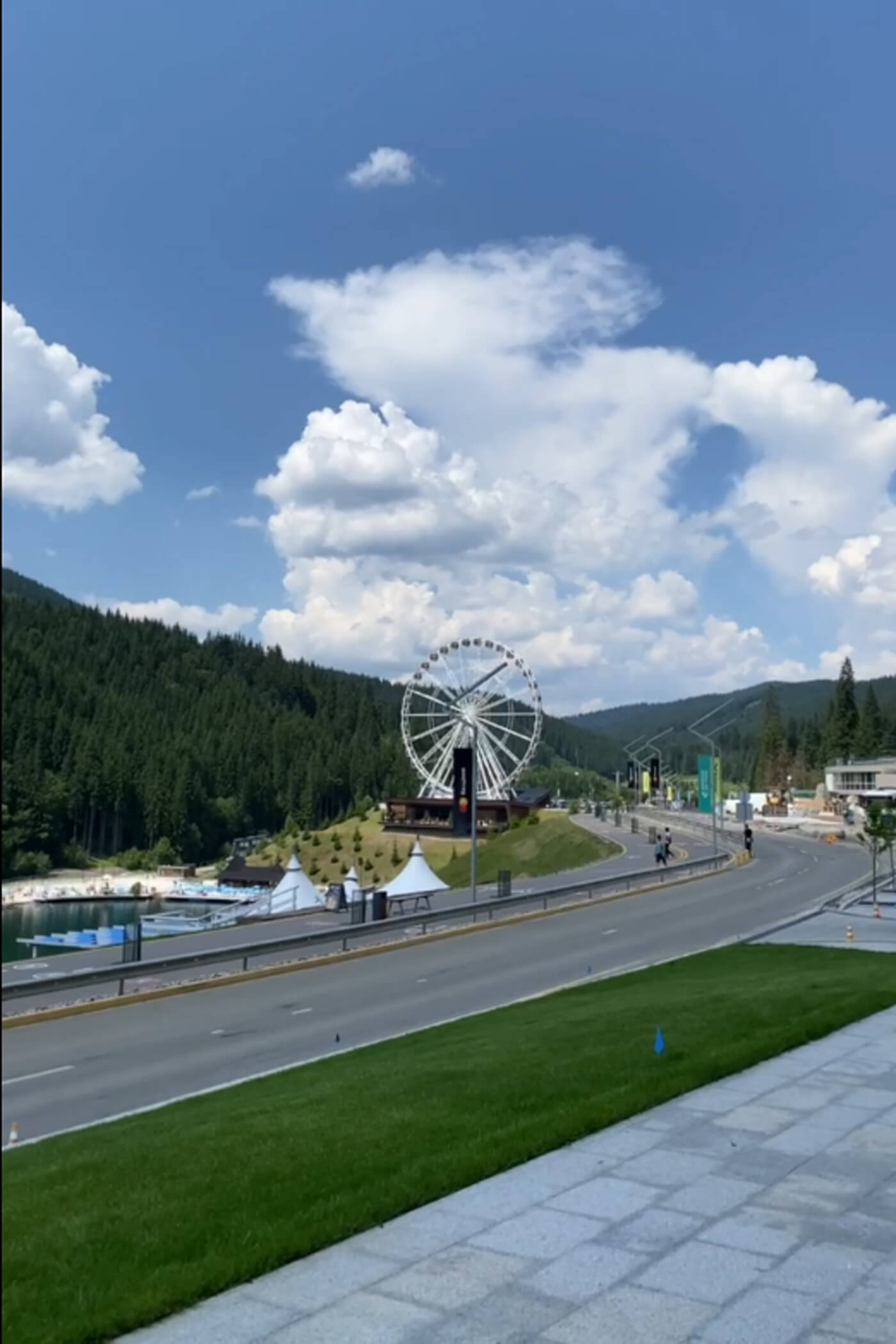
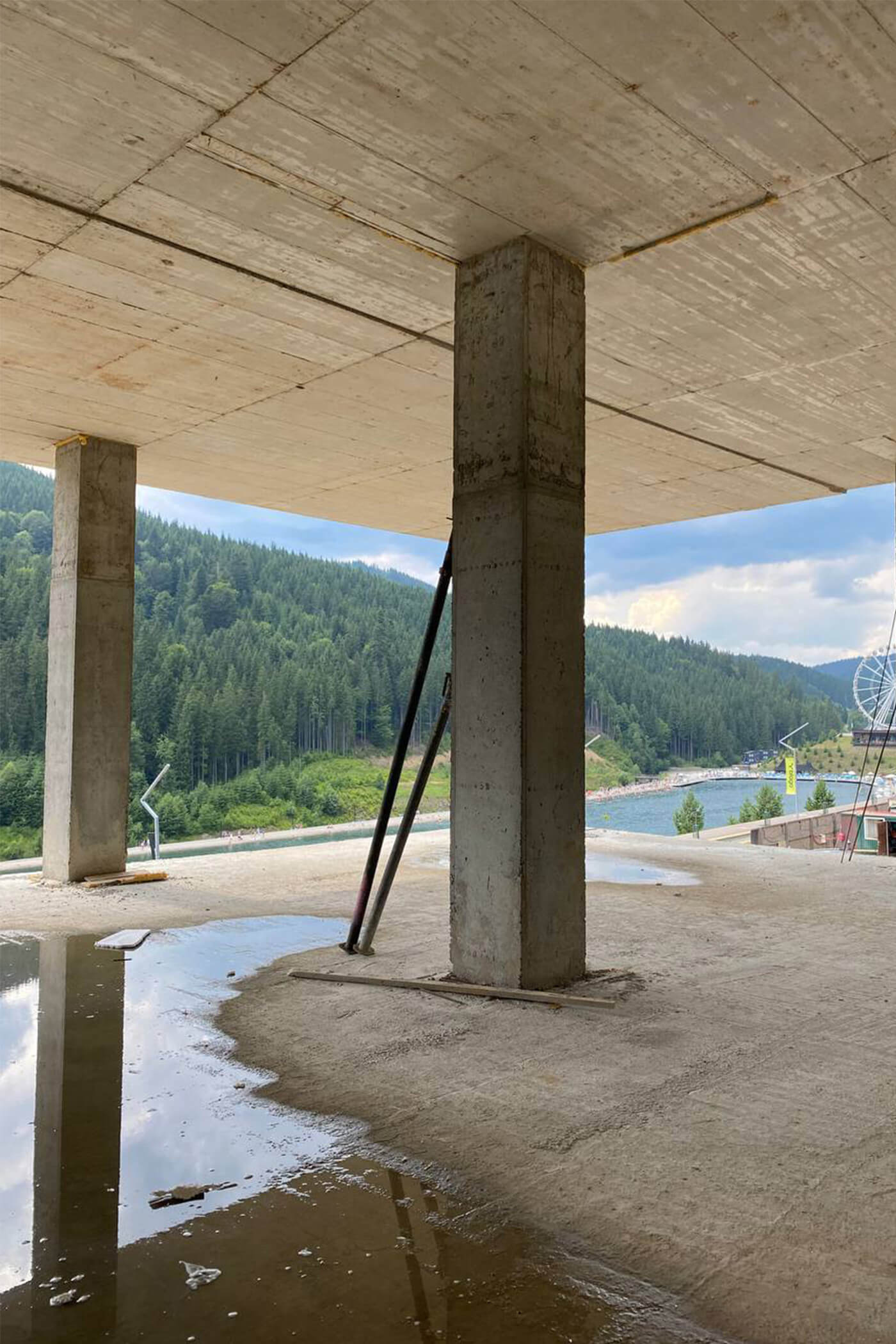
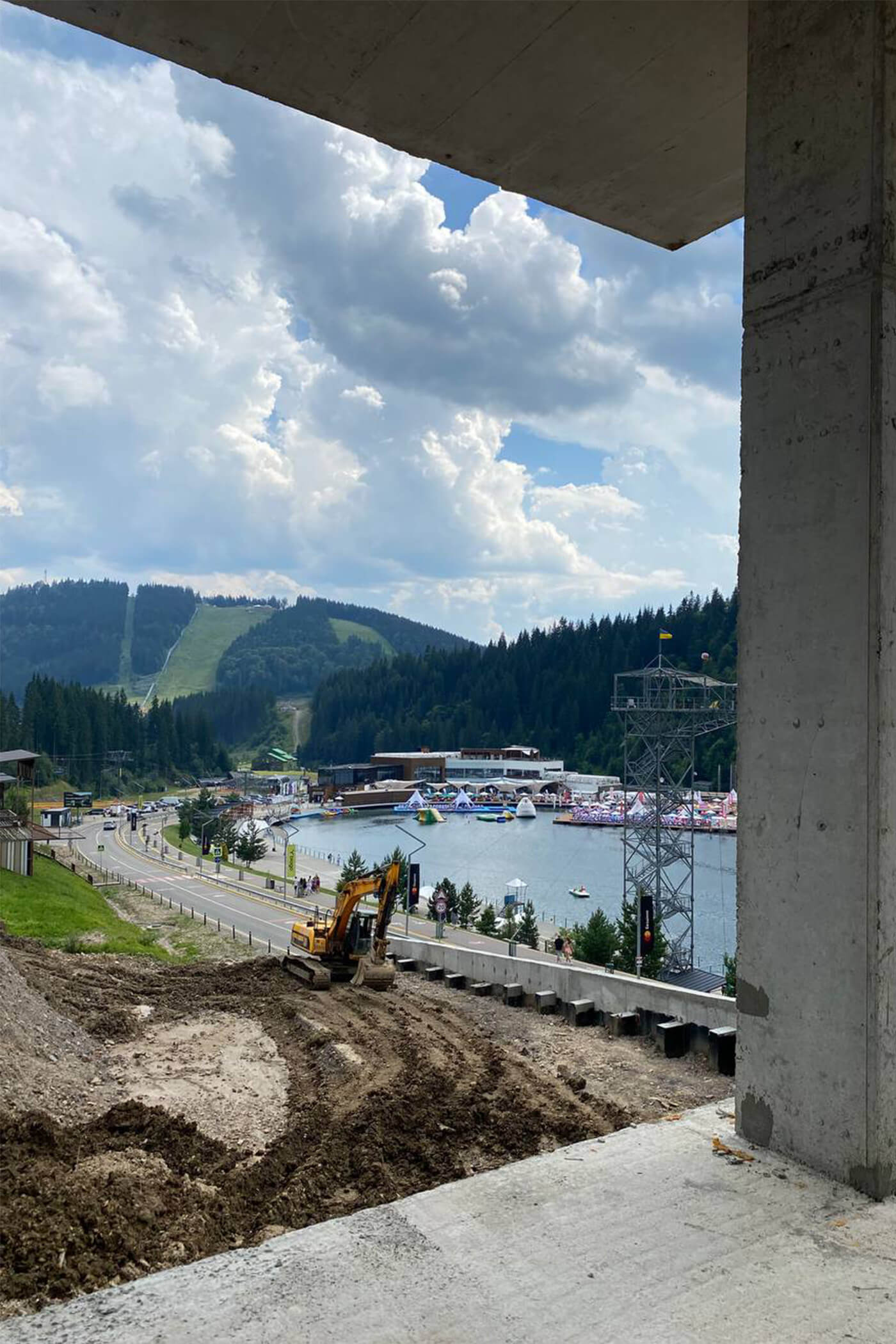
Ресторан RENÉ расположен в Буковеле, на первом этаже современного жилого комплекса. Локация обладает множеством преимуществ, однако при работе над проектом мы столкнулись с тремя ключевыми вызовами.
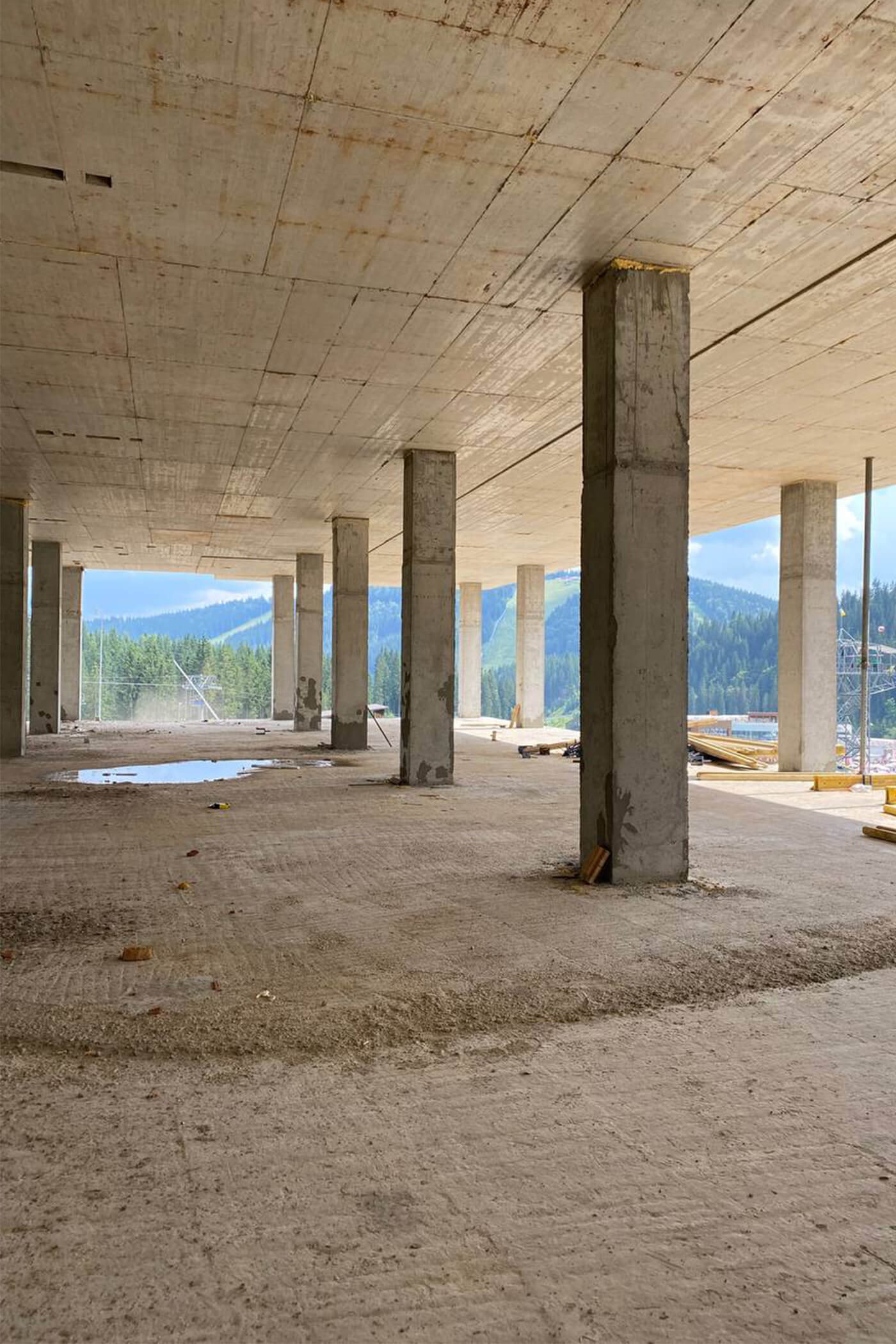
1. Панорамный вид или функциональность
Пространство обладает по-настоящему впечатляющими видовыми характеристиками: две стороны здания полностью ориентированы на озеро и лес. Однако здесь возник парадокс — основной поток гостей прибывает именно со стороны с самым эффектным видом.
Задача:
Гостям необходимы входная группа и гардероб. При стандартном размещении рядом с главным входом эти функциональные зоны полностью перекрыли бы вид на озеро, лишив основной зал естественного освещения и его главного визуального преимущества.
Решение:
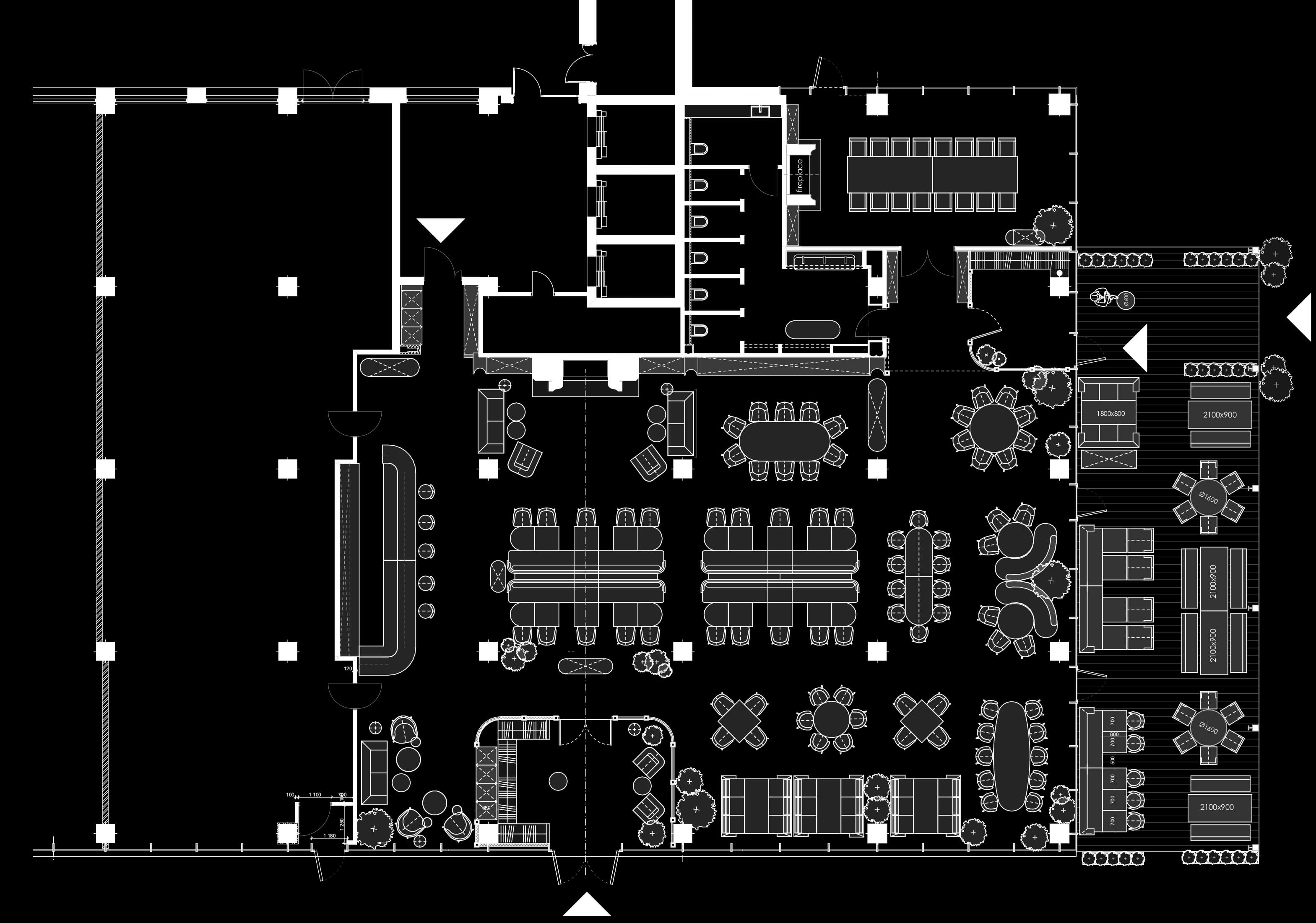
Мы спроектировали входную группу как компактный квадратный объём, интегрированный непосредственно в пространство ресторана. Чтобы избежать создания визуального барьера. Стены входной группы выполнили из стекла, что позволило естественному свету проникать глубоко в интерьер.
В результате гости, входя в ресторан, видят не глухие стены, а фрагмент живого интерьера за ними. Саму входную группу мы стилизовали с отсылками к парижским витринам и индустриальной архитектуре, превратив сугубо функциональный элемент в выразительную архитектурную деталь.

2. Ресторан как часть горнолыжного маршрута
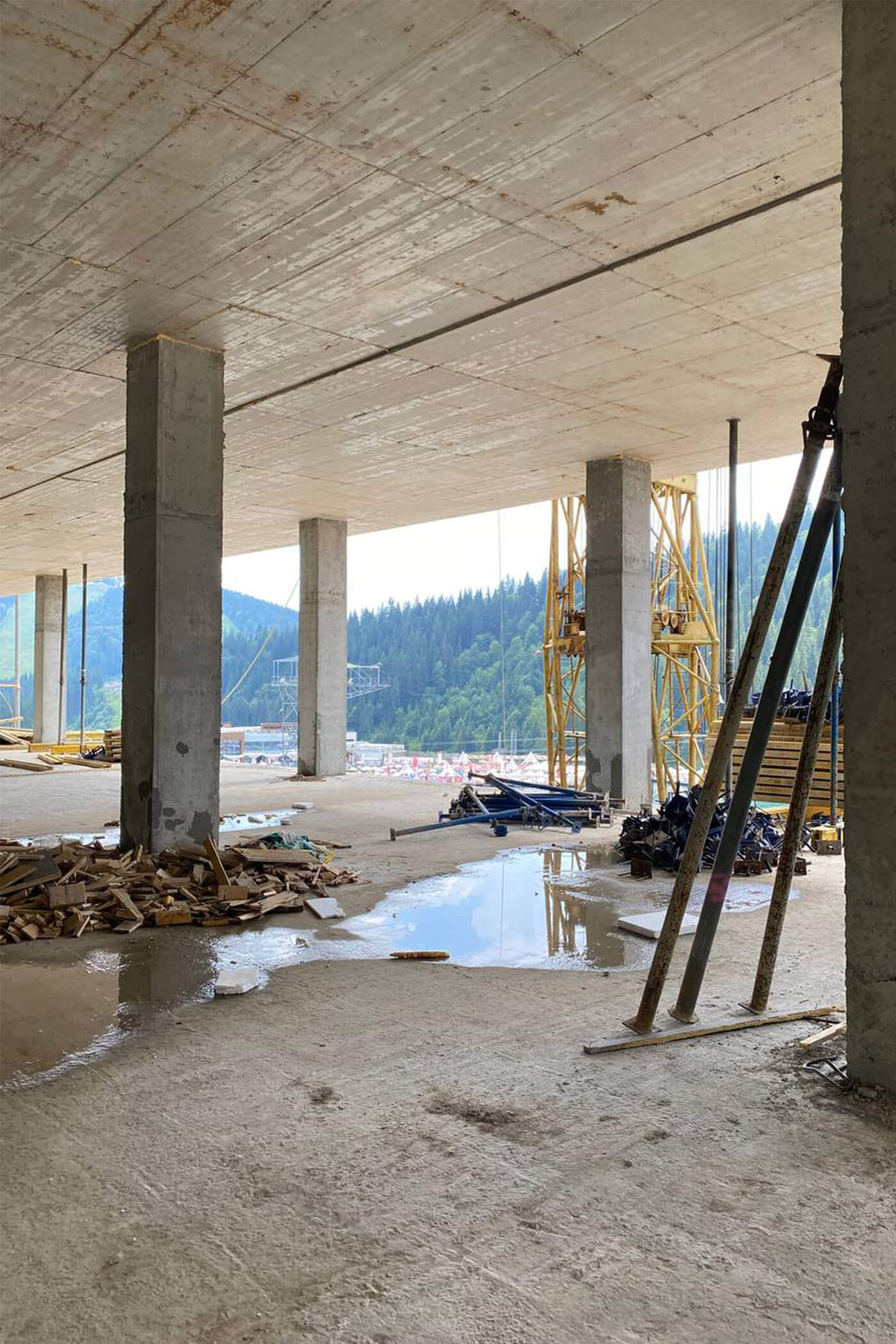
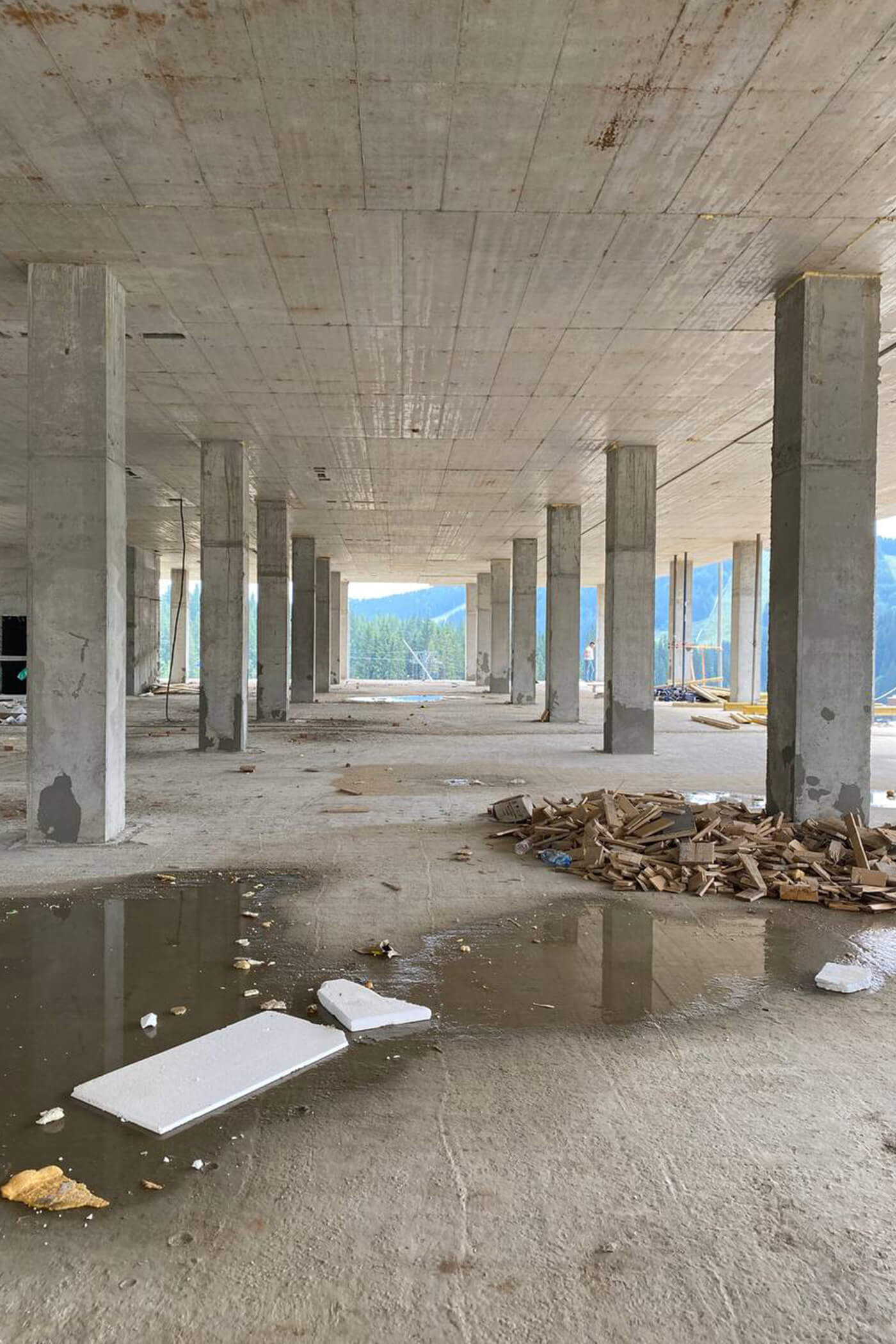
Непосредственно рядом с рестораном проходит горнолыжный склон — это большое преимущество, поскольку лыжники могут попадать на террасу прямо со спуска. Однако одновременно это создало серьёзный логистический вызов.
Задача:
Главный вход расположен с противоположной стороны здания. Посетителям в горнолыжном снаряжении пришлось бы обходить всё здание, чтобы попасть внутрь. Кроме того, на террасе отсутствовали отдельные санузлы, а путь к внутренним санитарным помещениям проходил через весь ресторан, что было неудобно как для лыжников, так и для остальных гостей.
Решение:
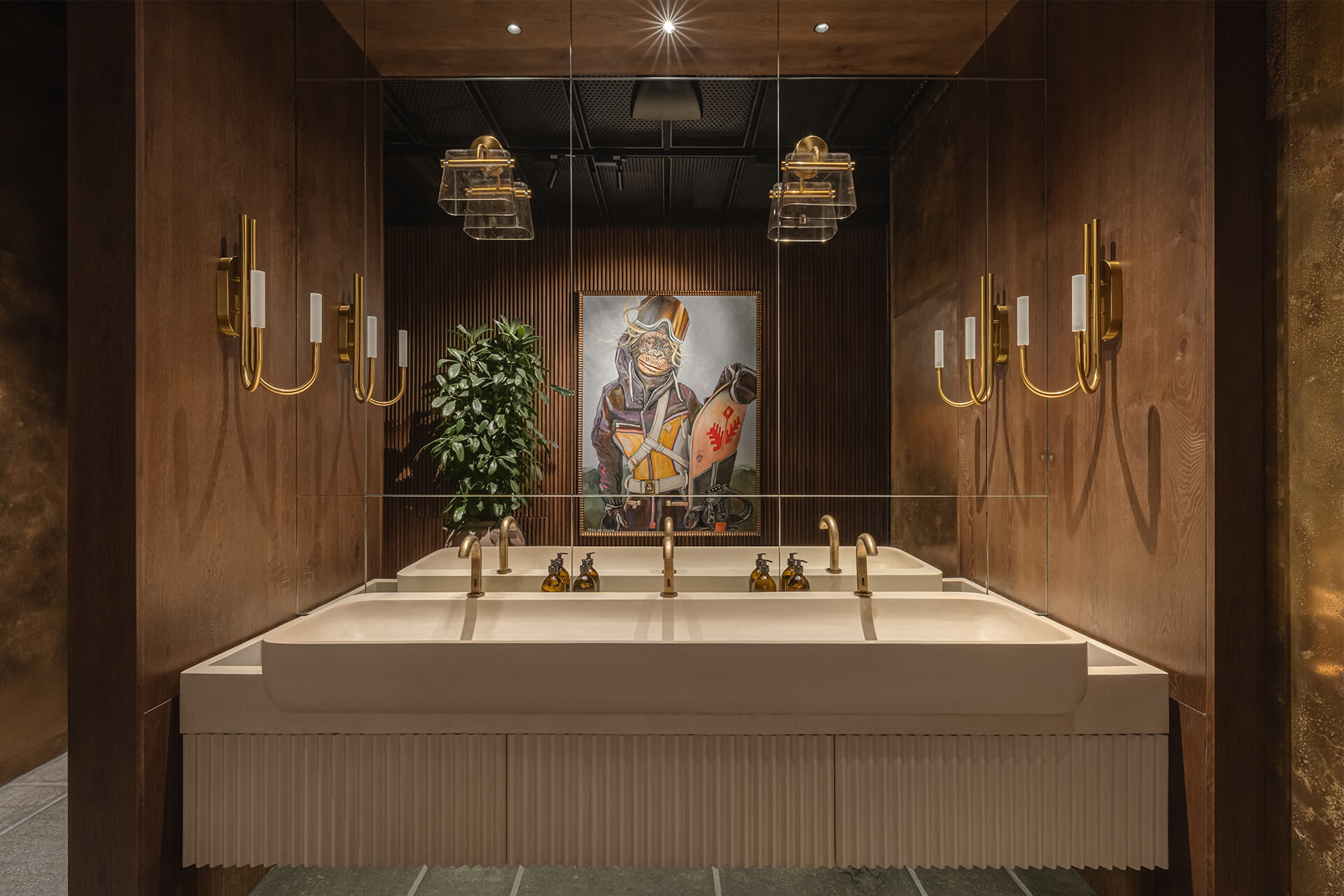
Мы приняли стратегическое решение сделать второй полноценный вход непосредственно со стороны горнолыжного склона. Хотя это уменьшило полезную площадь зала ресторана, это значительно улучшило эргономику.
Теперь путь от горнолыжного склона до стола или туалета максимально короткий, а потоки гостей с улицы и террасы больше не пересекаются хаотично.
3. Как мы добавили глубину пространству ресторана
Помещение имеет почти квадратную форму и значительную глубину. Две стены — глухие (смежные с кухней и лифтовым холлом), что создавало риск появления «непопулярных» посадочных зон.
Задача:
Столики у окон с видом на озеро всегда будут самыми востребованными. Вопрос заключался в том, как сделать места в глубине зала — без окон — не менее привлекательными для гостей.
Решение:
Мы превратили это ограничение в творческую возможность. Сплошные внутренние поверхности стали идеальным холстом для выразительных дизайнерских элементов.
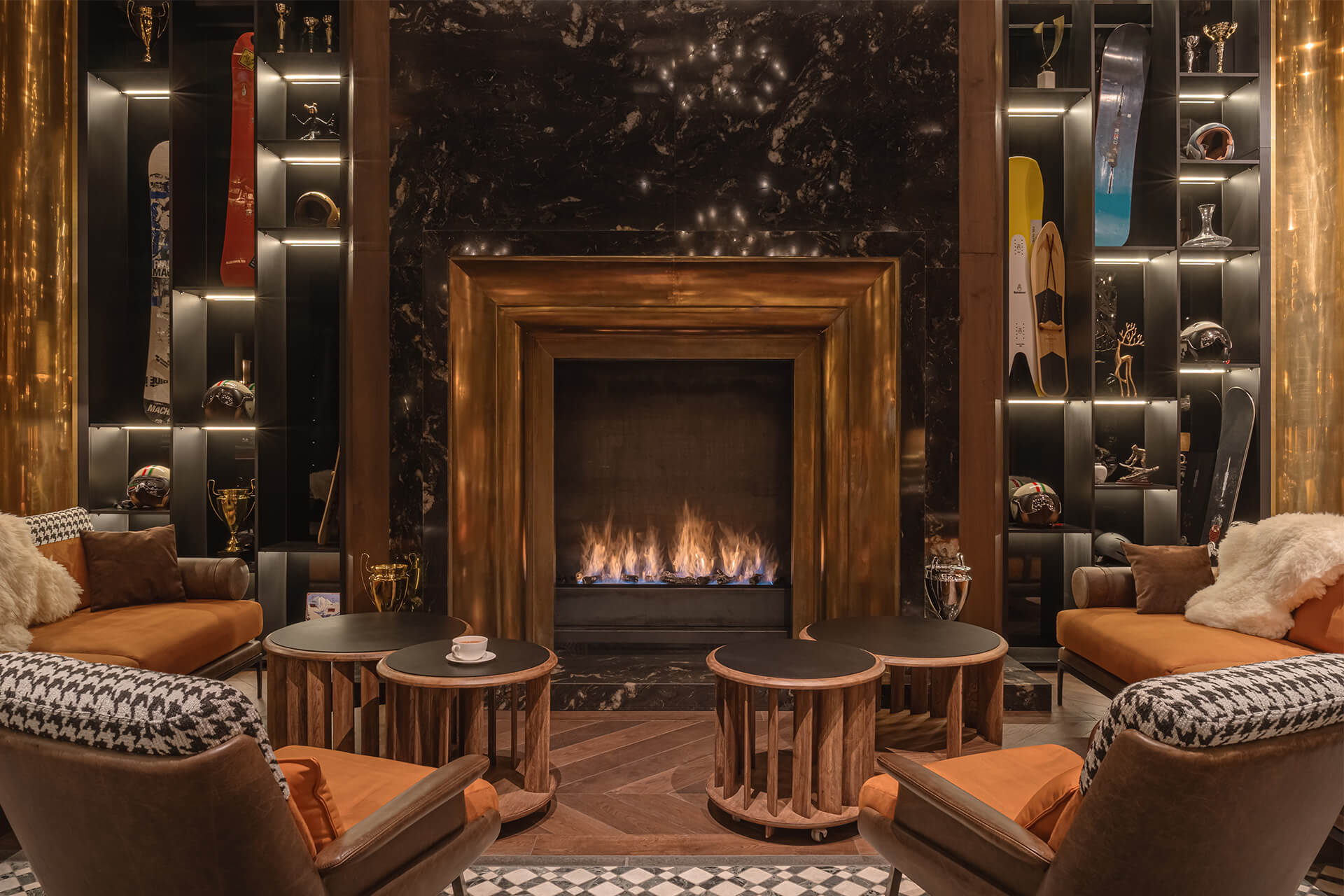
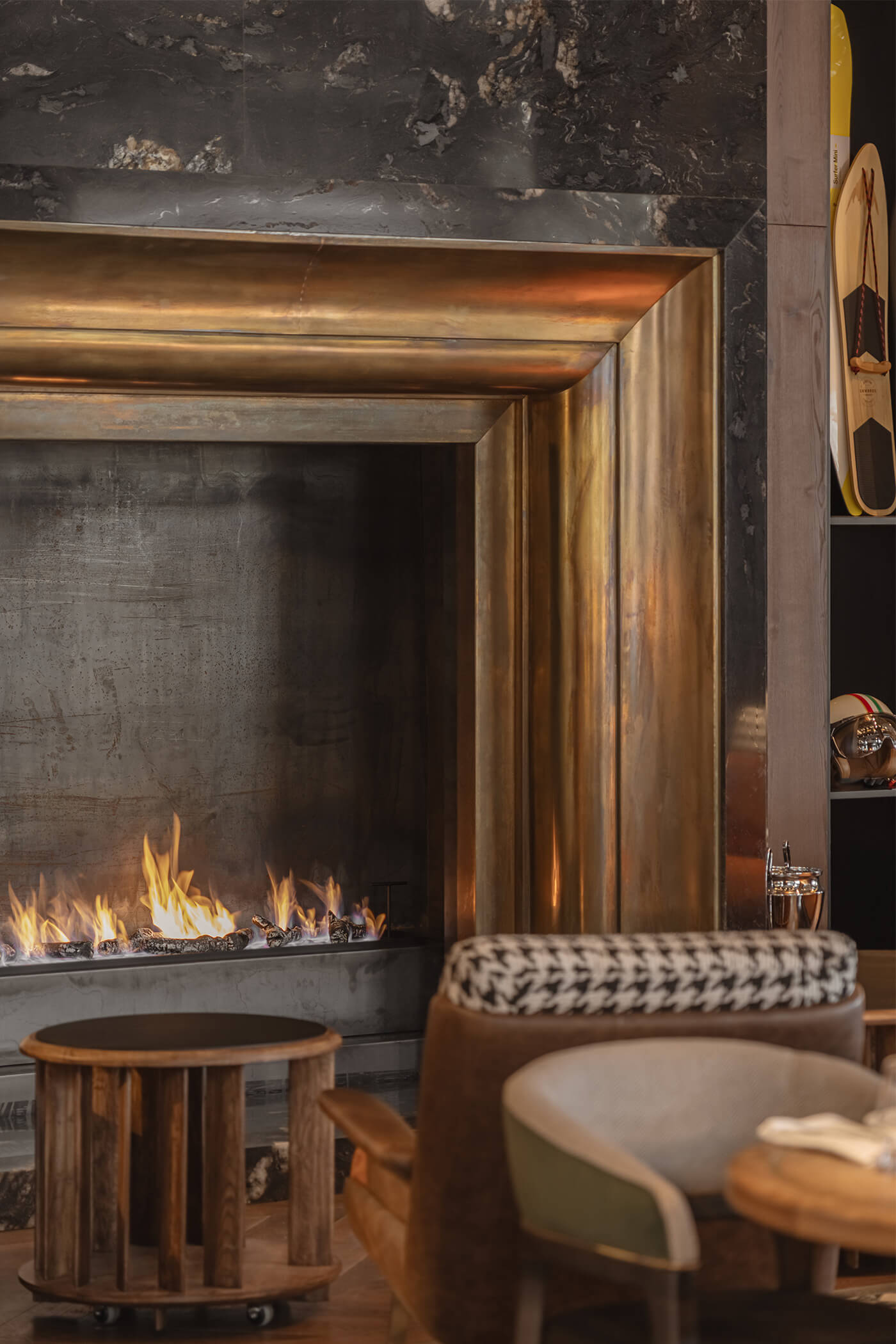
На центральной оси входа мы разместили большой камин, который сразу привлекает внимание и создаёт ощущение уюта и тепла. Рядом расположен впечатляющий бар с полками до потолка, обрамлённый стенами из натурального камня.
Благодаря такой многослойной композиции интерьера посадочные места в глубине ресторана стали более камерными, атмосферными и такими же привлекательными, как столики у панорамных окон.

02.Concept:
Этап концепции: Как скрестить альпийское шале и дерзкий декаданс
Первые встречи с клиентами обозначили невероятно азартную задачу. Нам заказали не просто ресторан, а «взрывную смесь»: современное прочтение горного шале, но без прямого цитирования. Это должен был быть микс роскоши, неоклассики и атмосферы безудержной вечеринки в горах — статусно, дорого, немного игриво и с лёгким привкусом декаданса.
Это был тот редкий случай, когда заказчик не говорит «сделайте, как у соседа», а стремится создать абсолютно новый визуальный код.
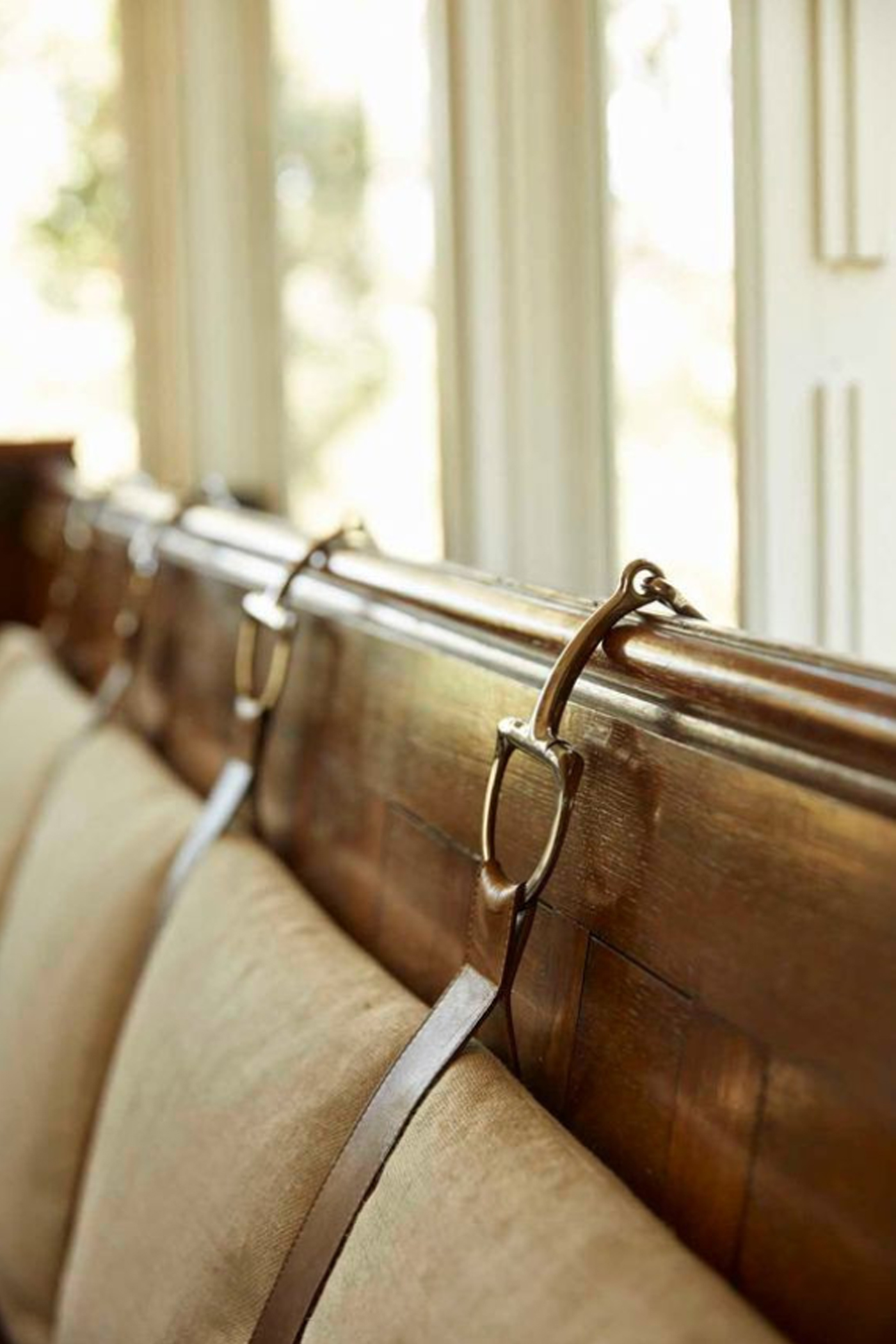
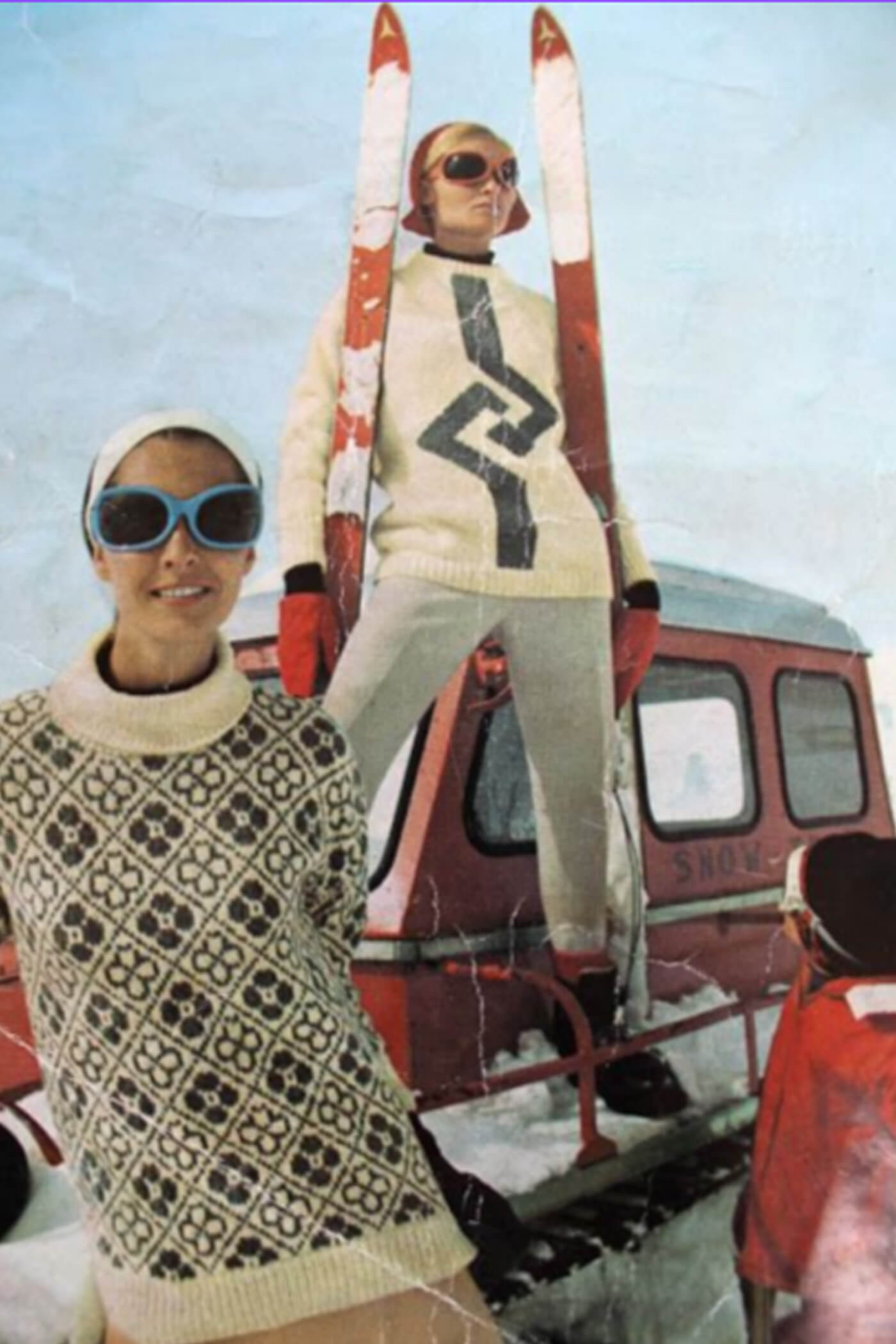


Вызов: не сбиться с курса
Дизайн такого сложного микса — это огромные трудозатраты. Главный риск здесь — потратить недели на моделирование мебели и рендеры, а затем услышать: «Это не совсем то, что мы себе представляли».
Как мы выстроили работу, чтобы избежать «стрельбы в молоко».
AI-прототипирование
Мы использовали нейросети (Midjourney) не для готовых решений, а для поиска «темперамента» интерьера. Мы генерировали десятки вариантов, чтобы нащупать ту самую грань между теплотой дерева и дерзостью неоклассики.
Это позволило клиенту буквально «почувствовать» атмосферу ещё до первого чертежа.
Постепенная разработка
Мы отказались от формата «уйти на месяц и принести готовое». Вместо этого мы двигались небольшими шагами, постоянно встречались с заказчиком и дорабатывали каждый следующий фрагмент интерьера с учётом правок к предыдущему.

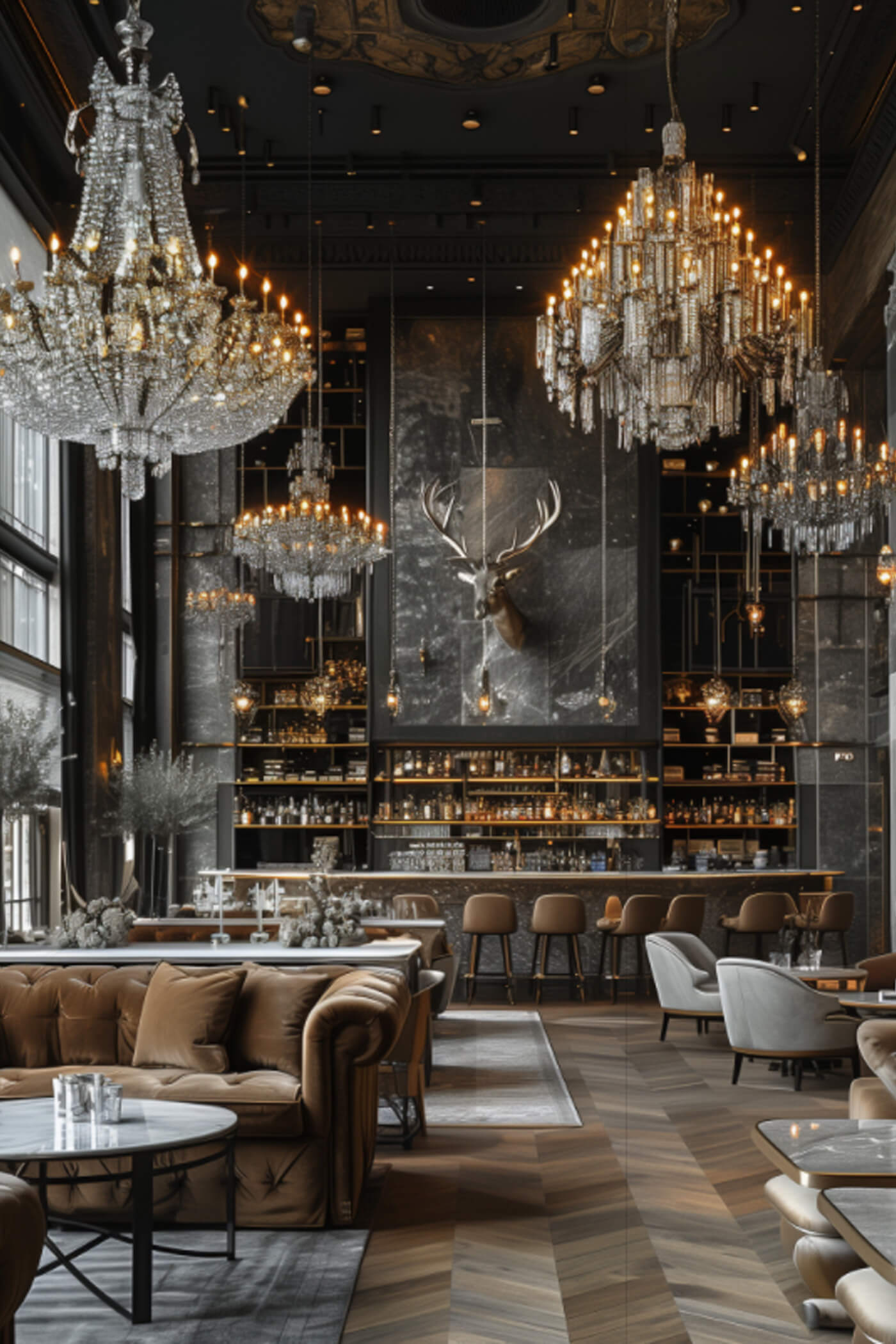


Всё ли прошло гладко?
Честно — нет.
Хотя заказчик мгновенно влюбился в настроение AI-концепций, мы всё же столкнулись с «подводными камнями». Желание быстрее перейти к визуализациям привело к тому, что некоторые значимые элементы зала не были достаточно детально зафиксированы на этапе концепции.
Последствия
Это вылилось в изнурительные поиски уже на этапе финальных рендеров. Приходилось перерабатывать узлы «на ходу», что затянуло сроки и потребовало дополнительных ресурсов команды.
Наш вывод
Даже если клиент в восторге от общего настроения, каждый стратегический элемент пространства должен быть подтверждён референсом. Не буквальной копией, а хотя бы визуальным вектором.
Надежда на то, что «всё магически сложится в процессе» — это иллюзия, которая стоит времени. Тщательная подготовка на старте — единственный способ сохранить нервы и бюджет на финише.


Project showreel