BEERTEKA
Ресторан BEERTEKA - це крафтова пивоварня в Одесі
BEERTEKA — проєкт, у якому інженерія та естетика індустріальної епохи переплітаються в цілісну архітектурну симфонію. Один із наших найулюбленіших проєктів, якому присвячено дуже багато уваги.
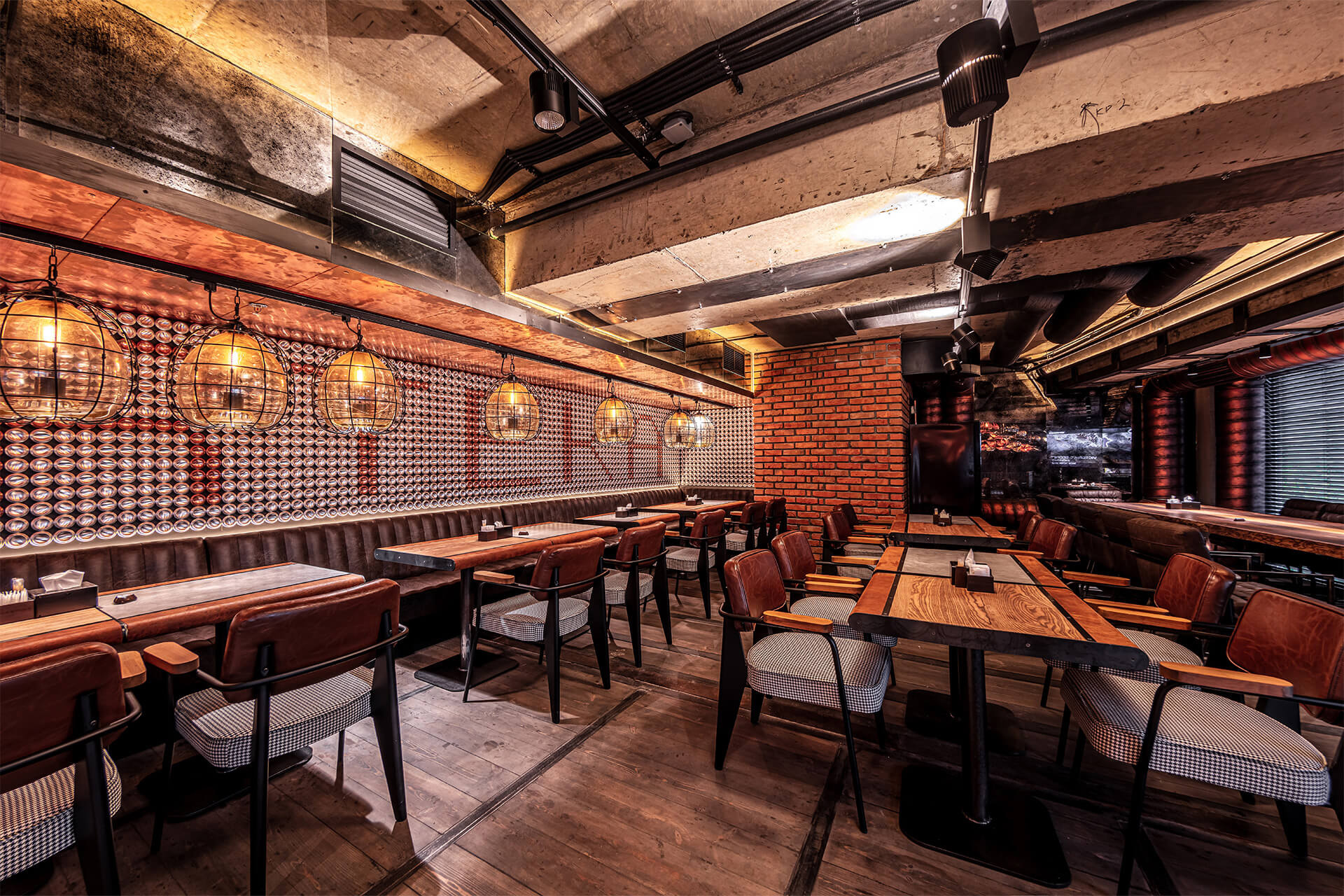
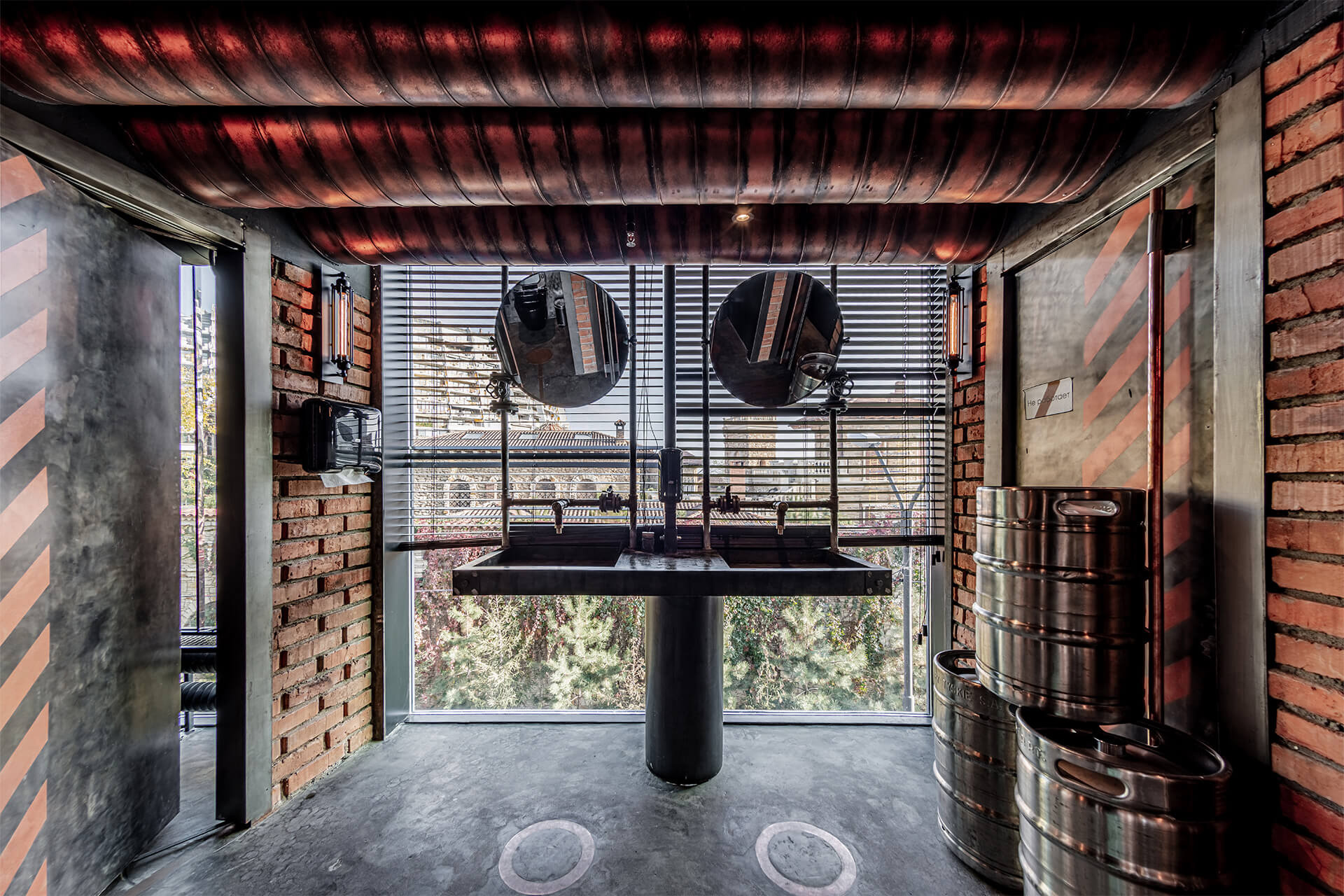
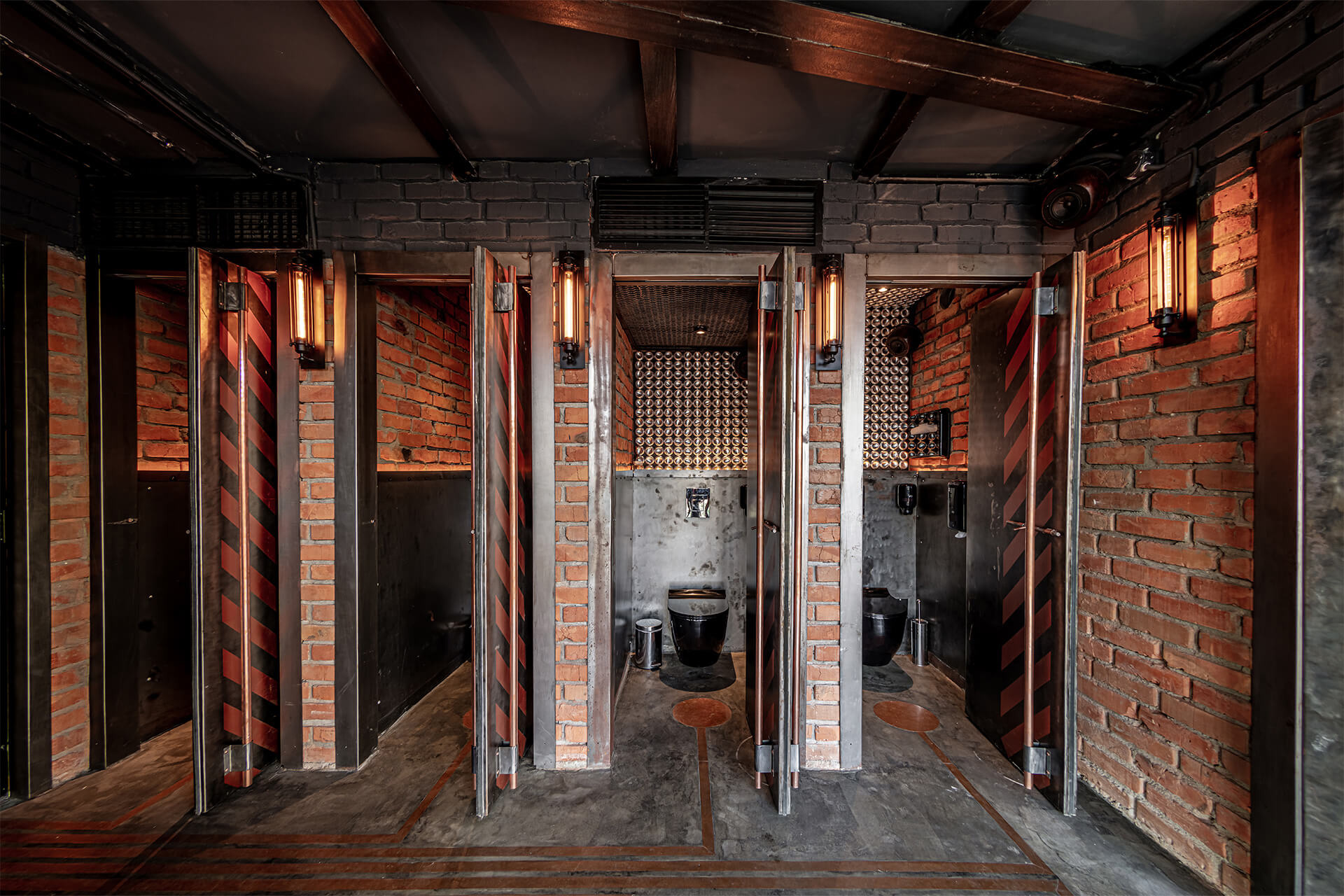
Проектуючи інтер'єр, ми мали на меті створити простір, який не просто стилізується за американською пивоварнею, але такий, який повністю занурить гостя у свою автентичну атмосферу. Архітектурна мова побудована на чесних, «робочих» матеріалах — цеглі, сталі, масиву дерева, міді. Їх поєднання не декоративне, а функціональне: металеві конструкції несуть фактичні навантаження, дерево служить справжніми робочими поверхнями, а мідні акценти приносять тепло і візуальний ритм.
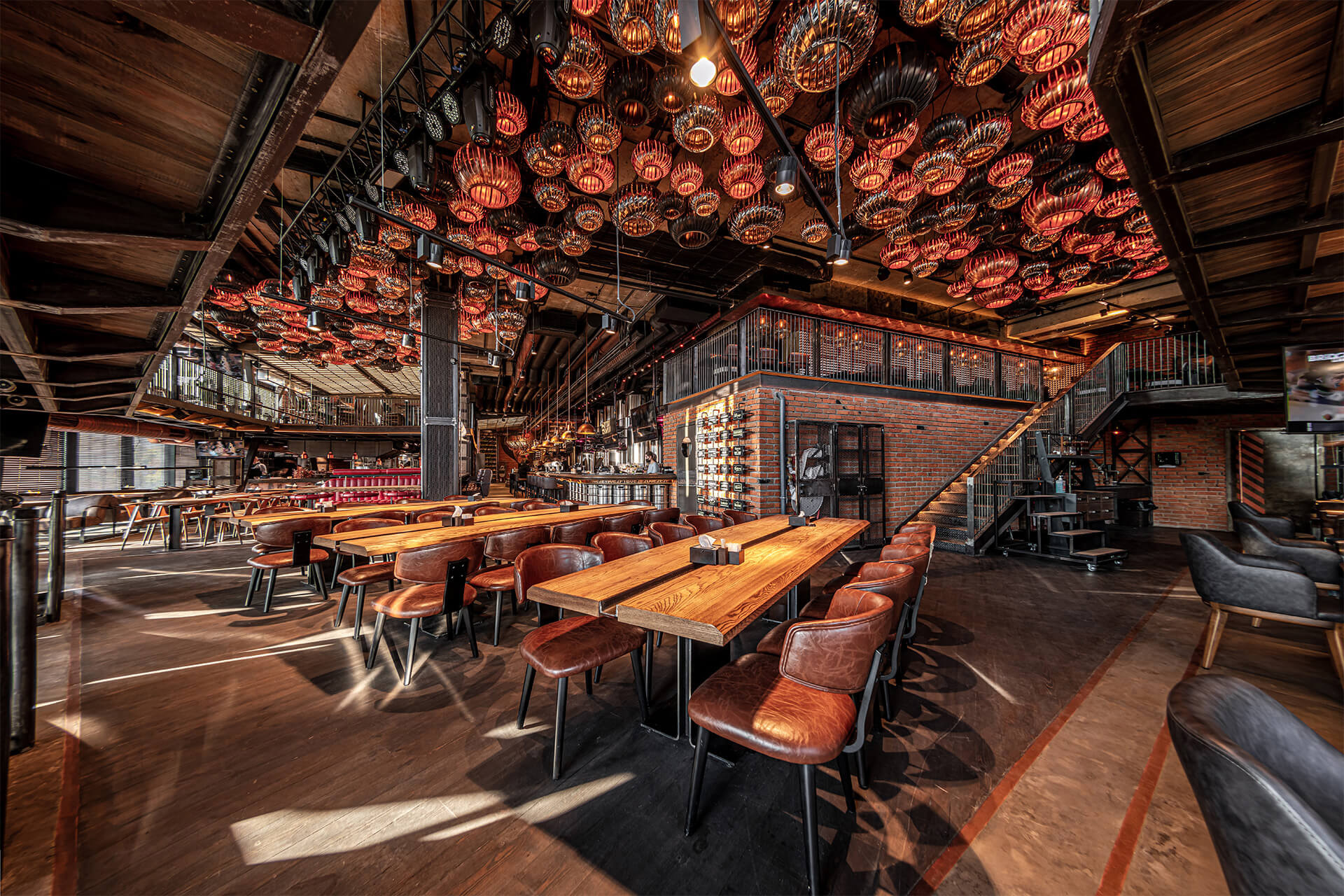
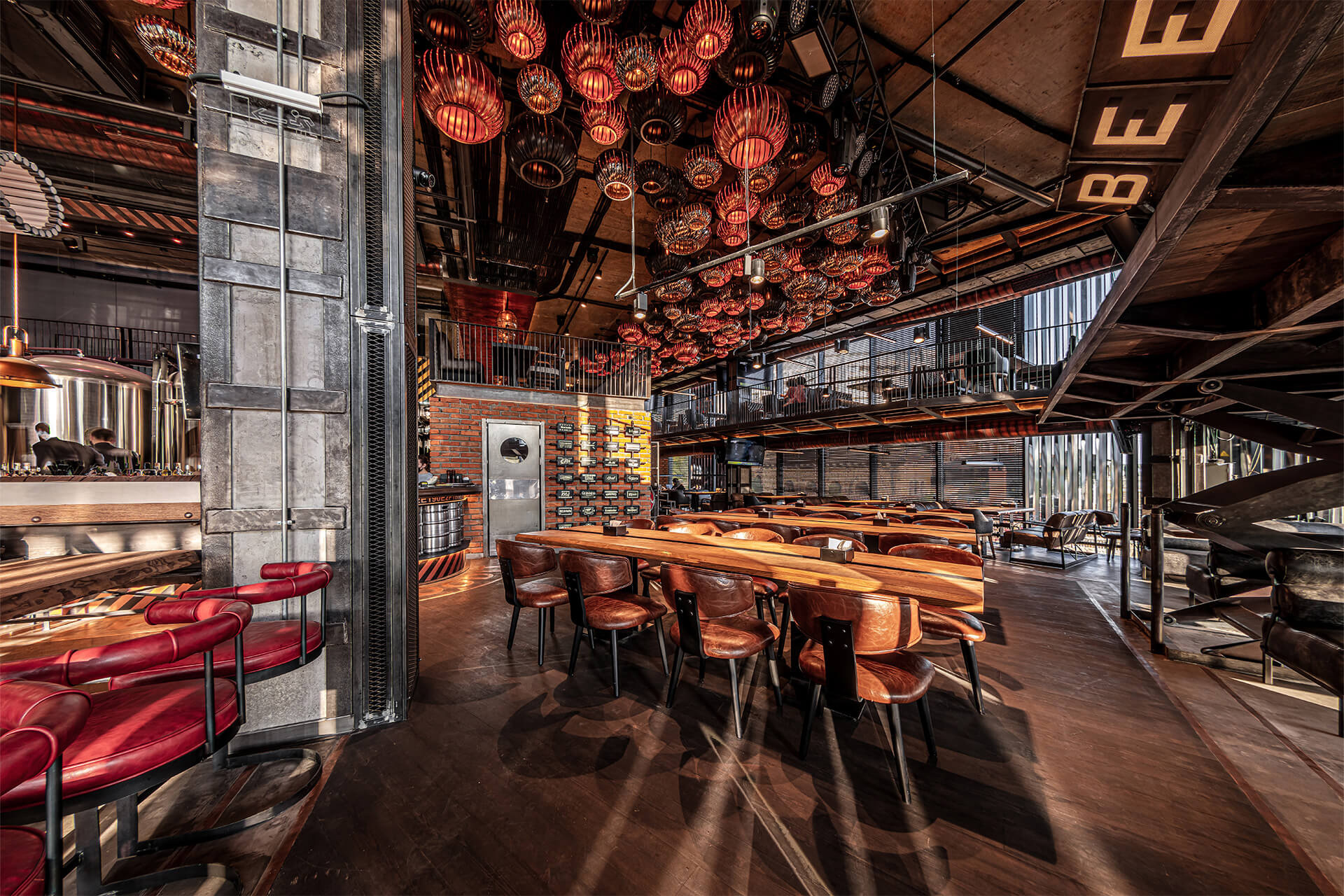
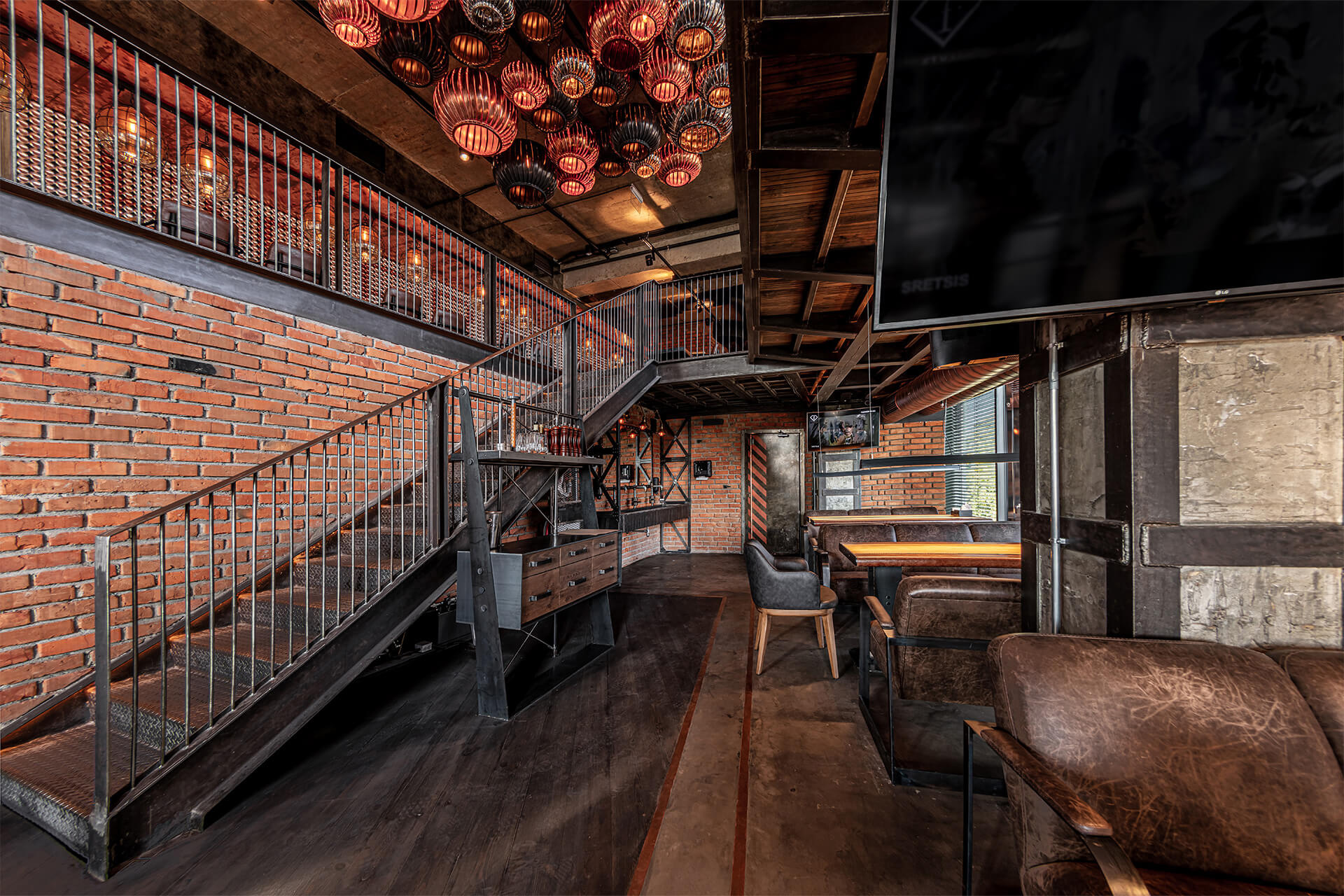
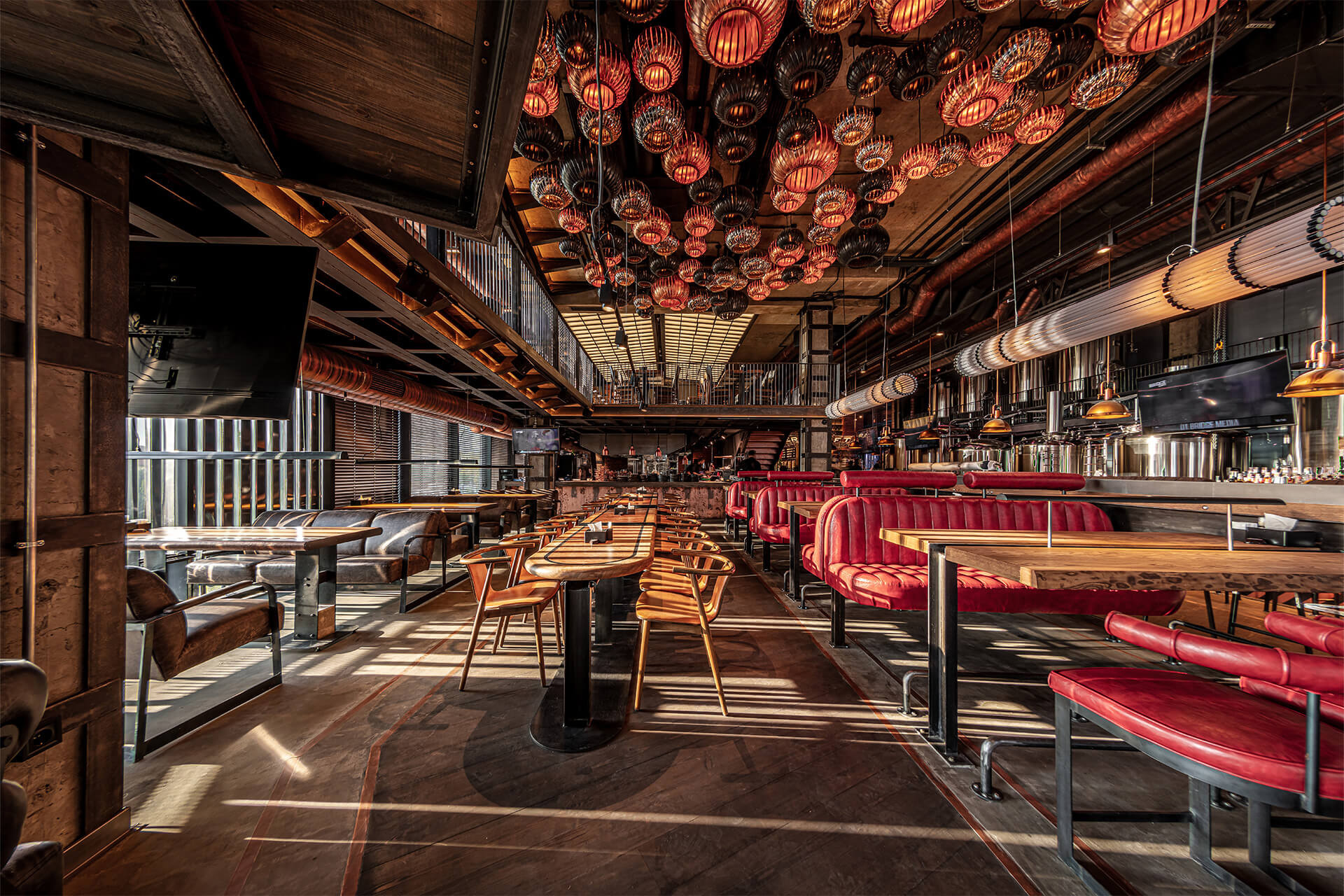
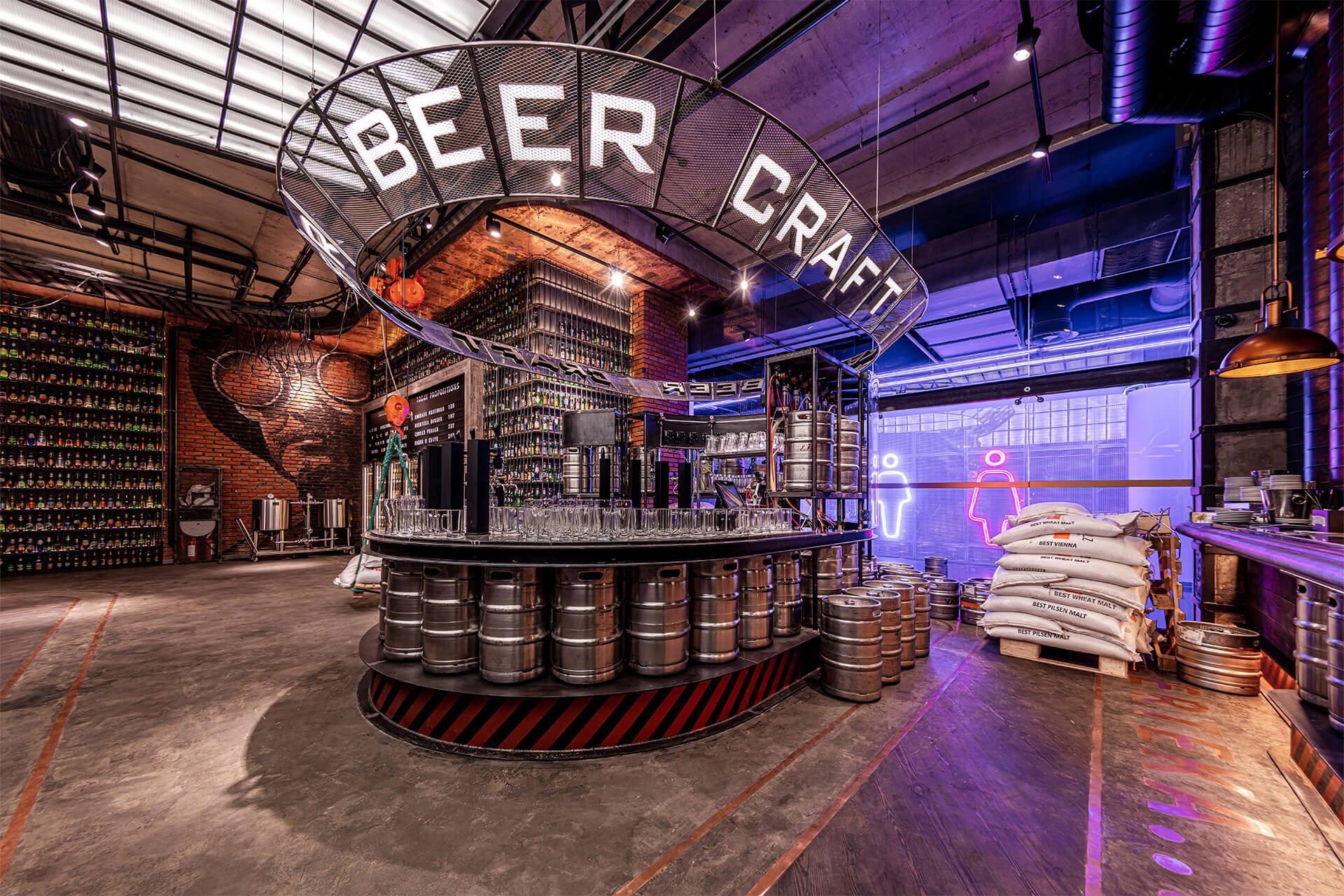
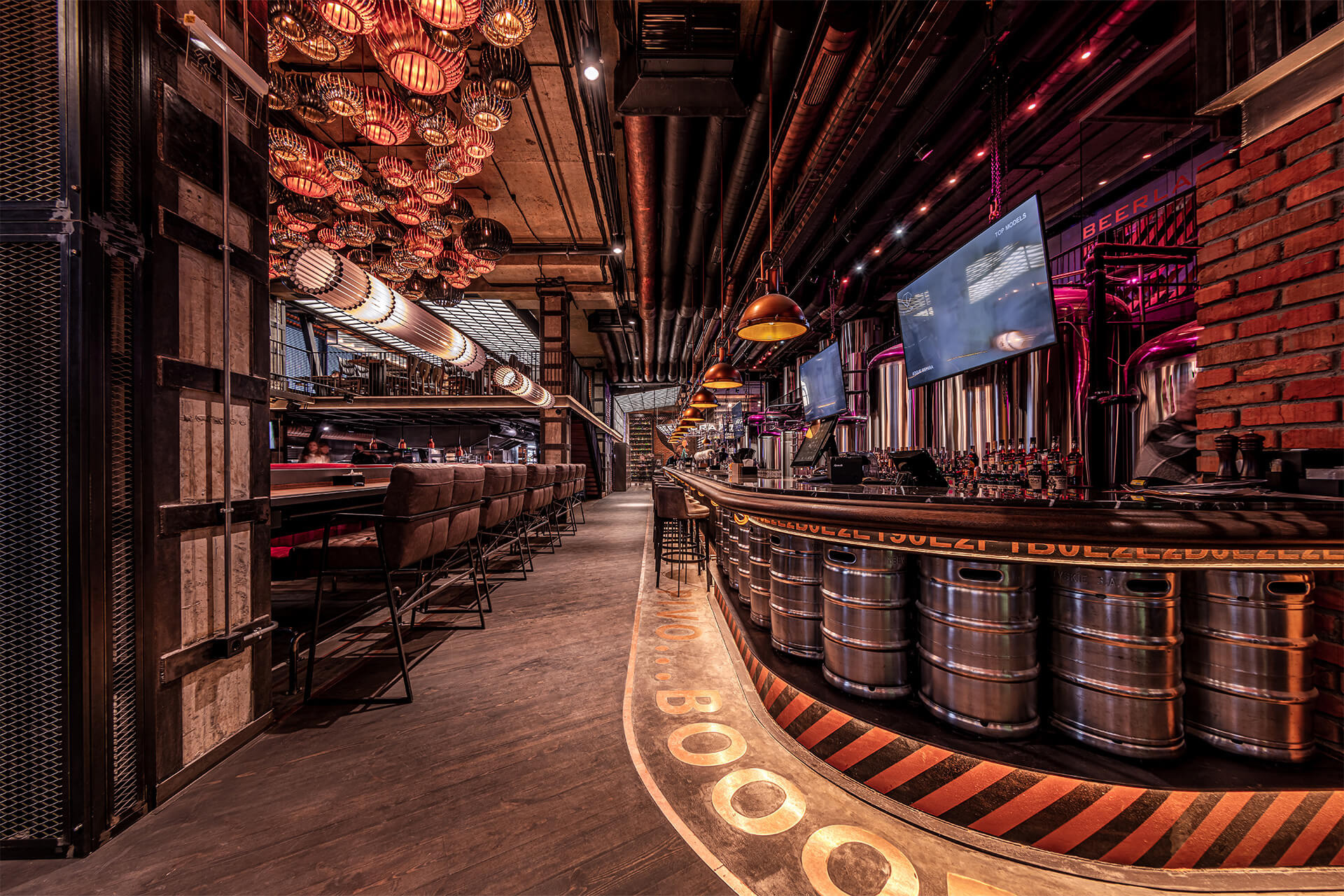
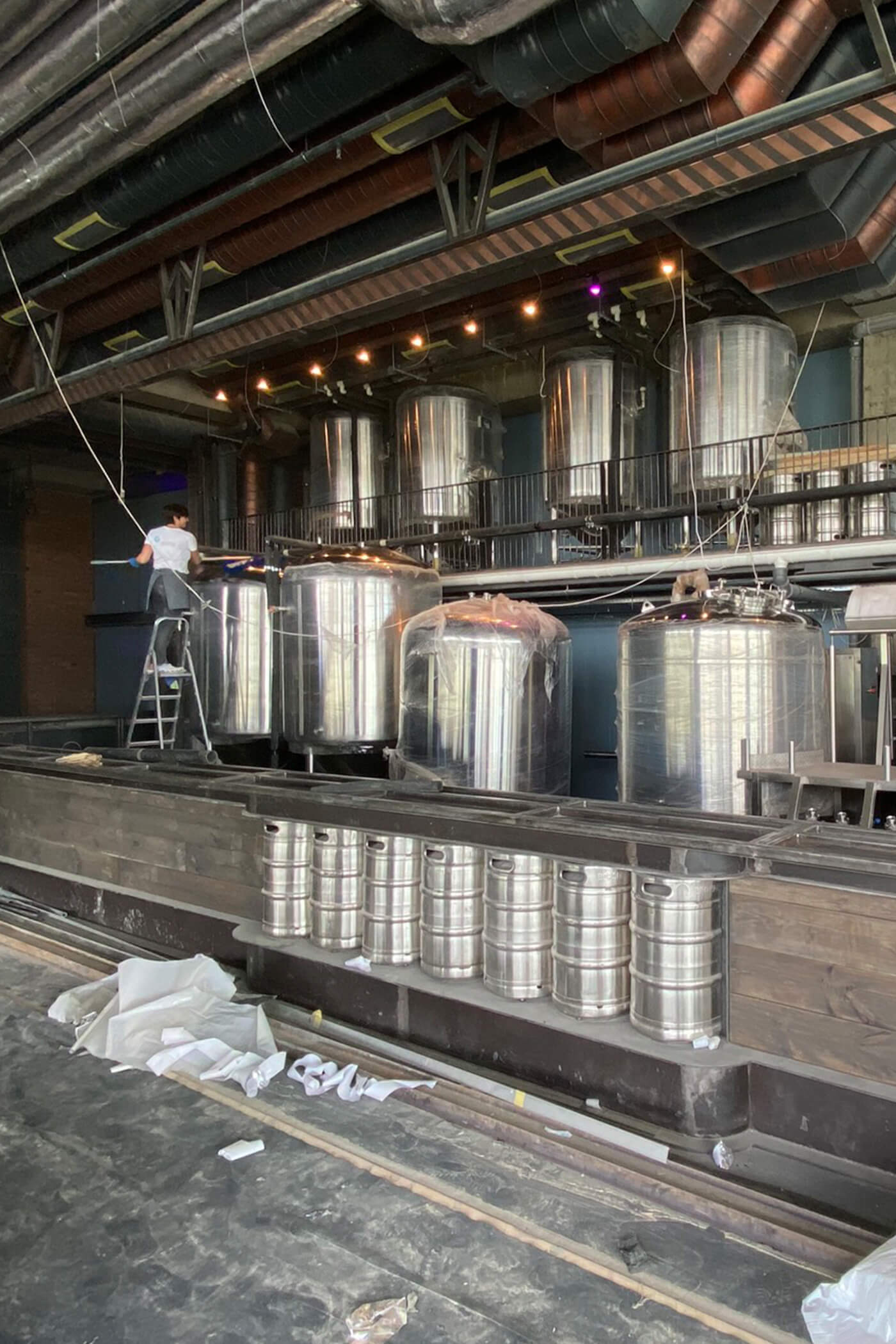
Ключовим елементом концепції є інтеграція повністю функціонуючої пивоварні з автентичним промисловим обладнанням безпосередньо в інтер'єр. Він не ховається за склом, але стає частиною візуального та емоційного досвіду гостей, дозволяючи їм спостерігати за процесом пивоваріння в режимі реального часу. Це не тільки підвищує автентичність, але й створює унікальну філософію проекту, об'єднуючи гастрономію та архітектуру в один цілісний простір.
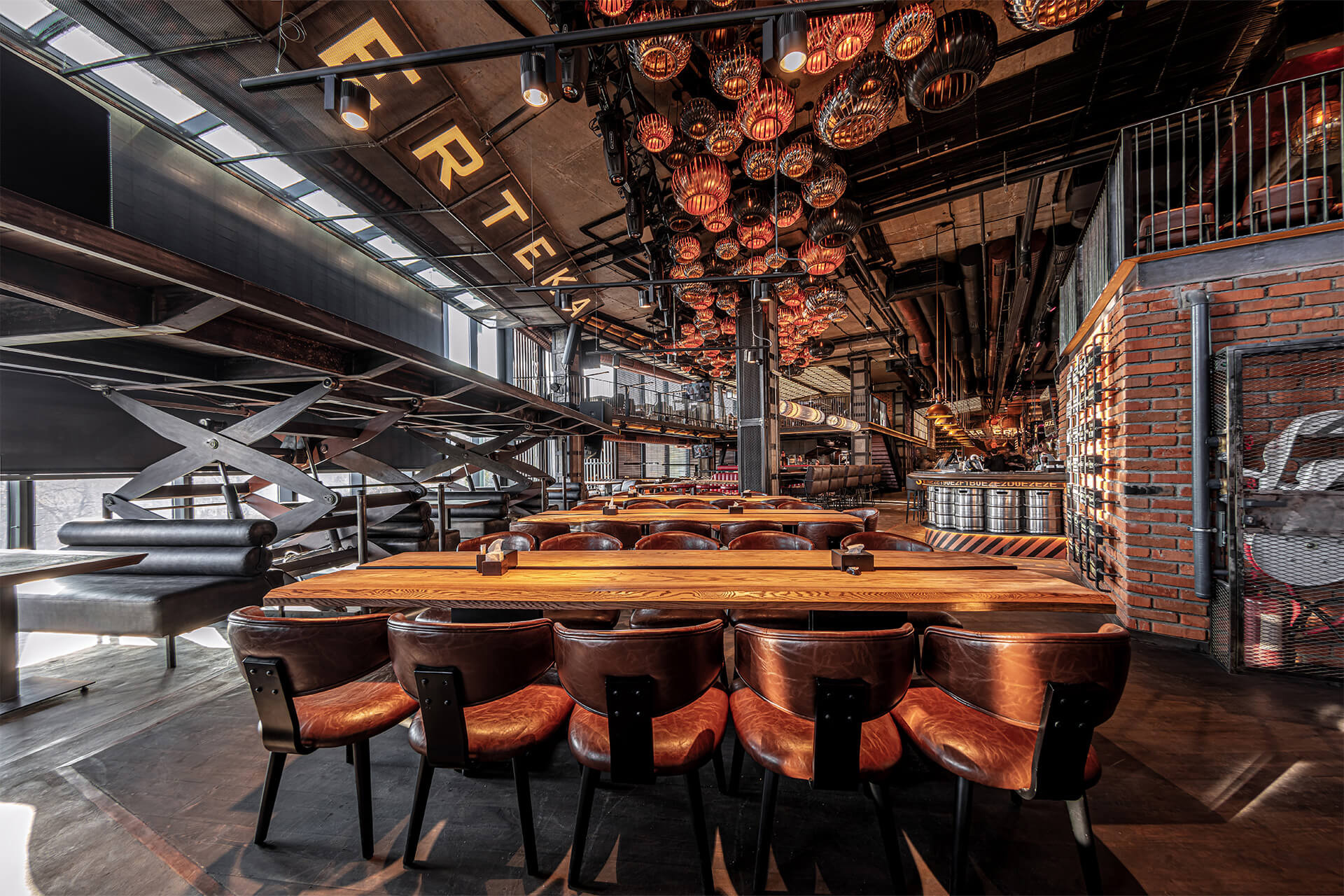
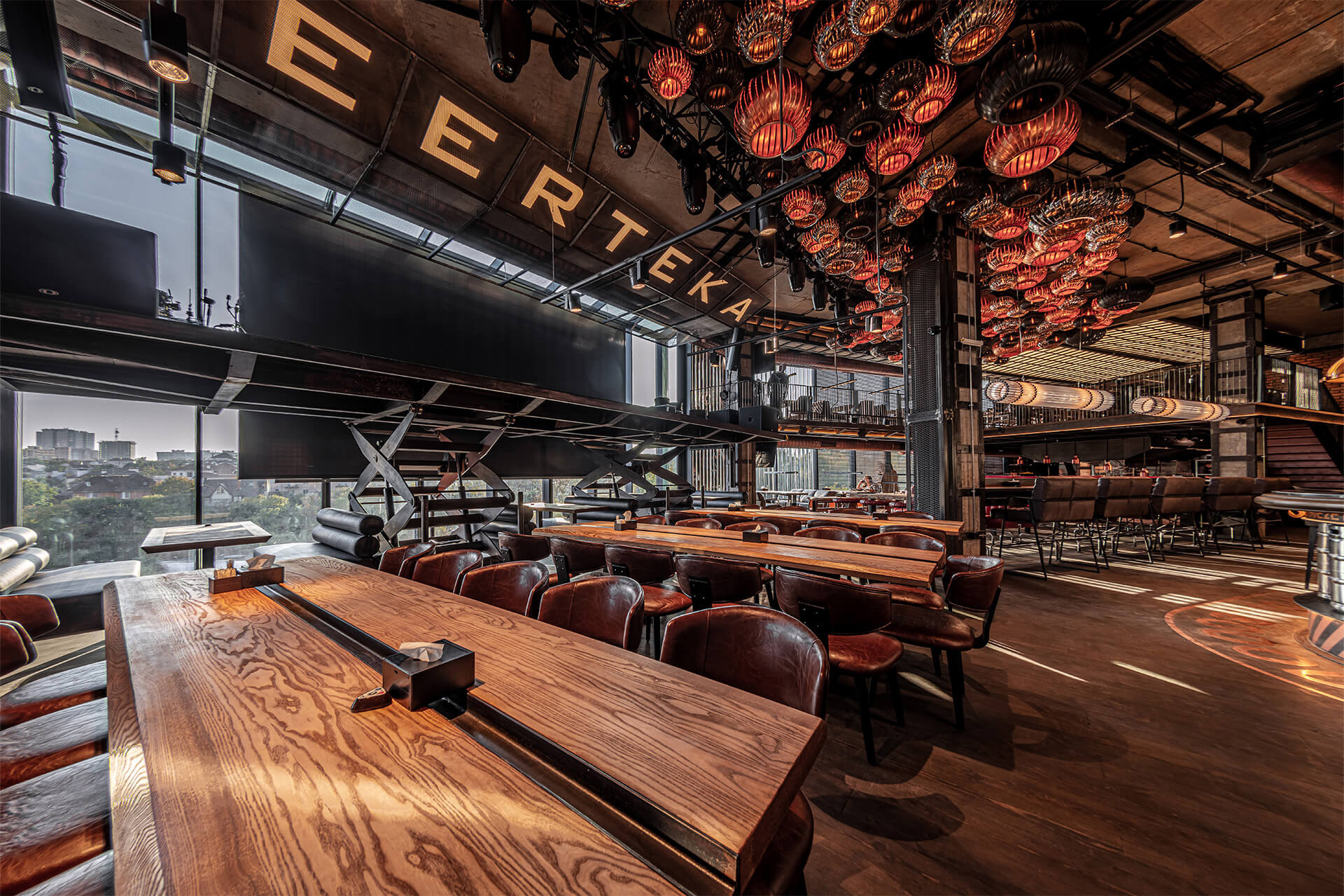
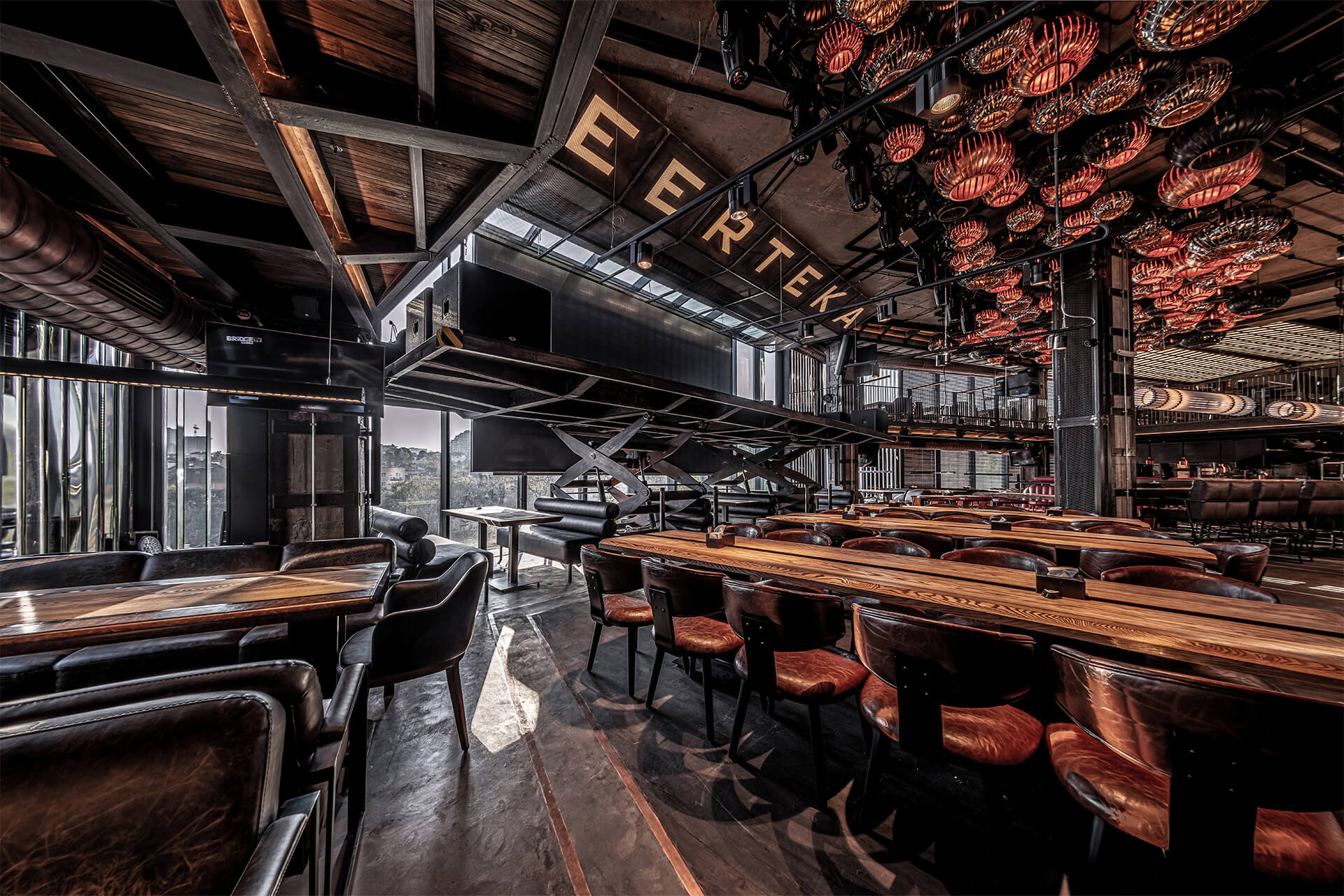
Особливе враження справляє ефектний двосвітний простір ресторану. Він не лише формує потужний архітектурний акцент і відчуття масштабу, а й дозволив організувати додаткові рівні посадкових місць, збільшивши місткість залу без відчуття тісноти. Висота приміщення підсилює гру світла, надаючи інтер’єру ресторану масштабності та вагомості.
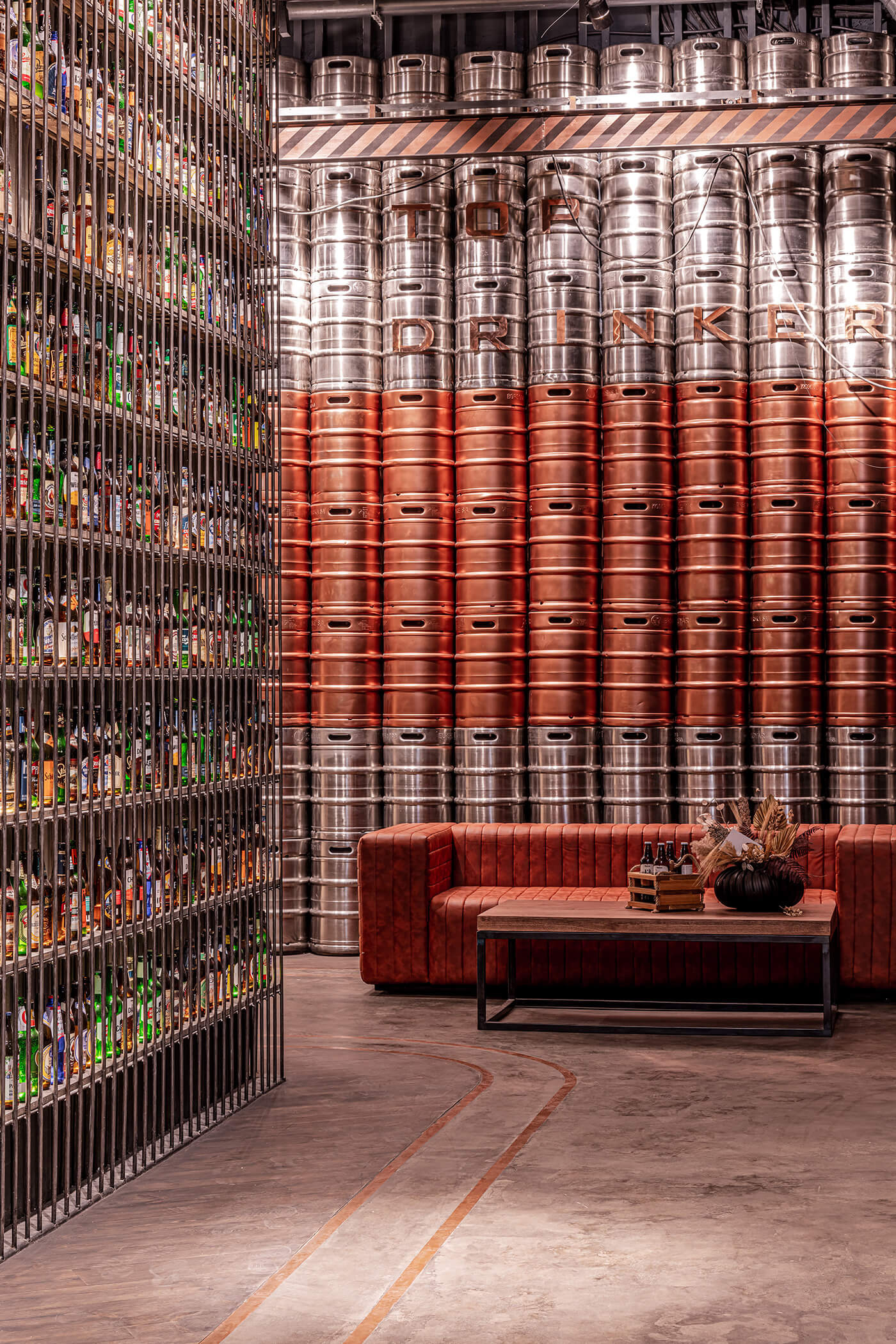
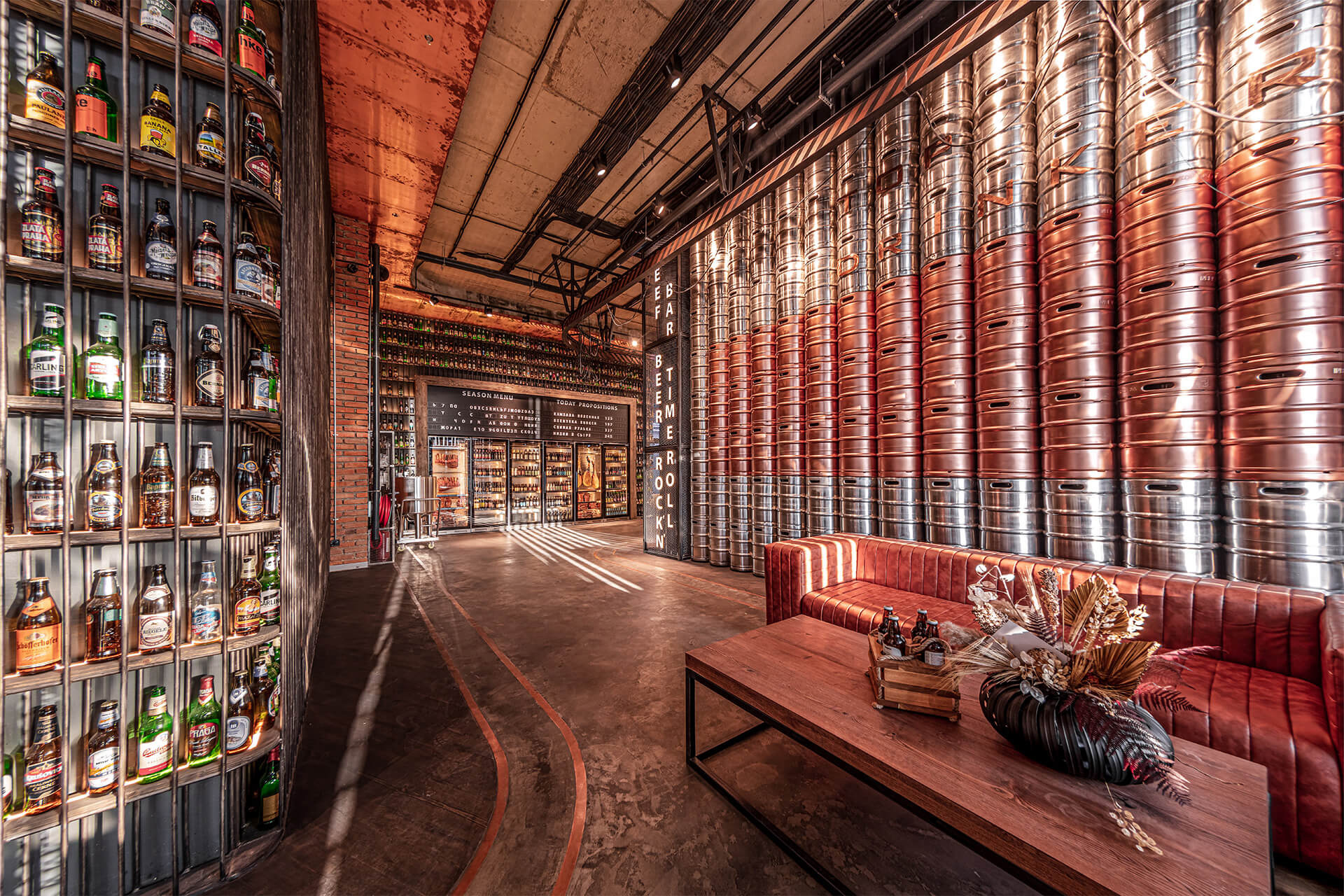
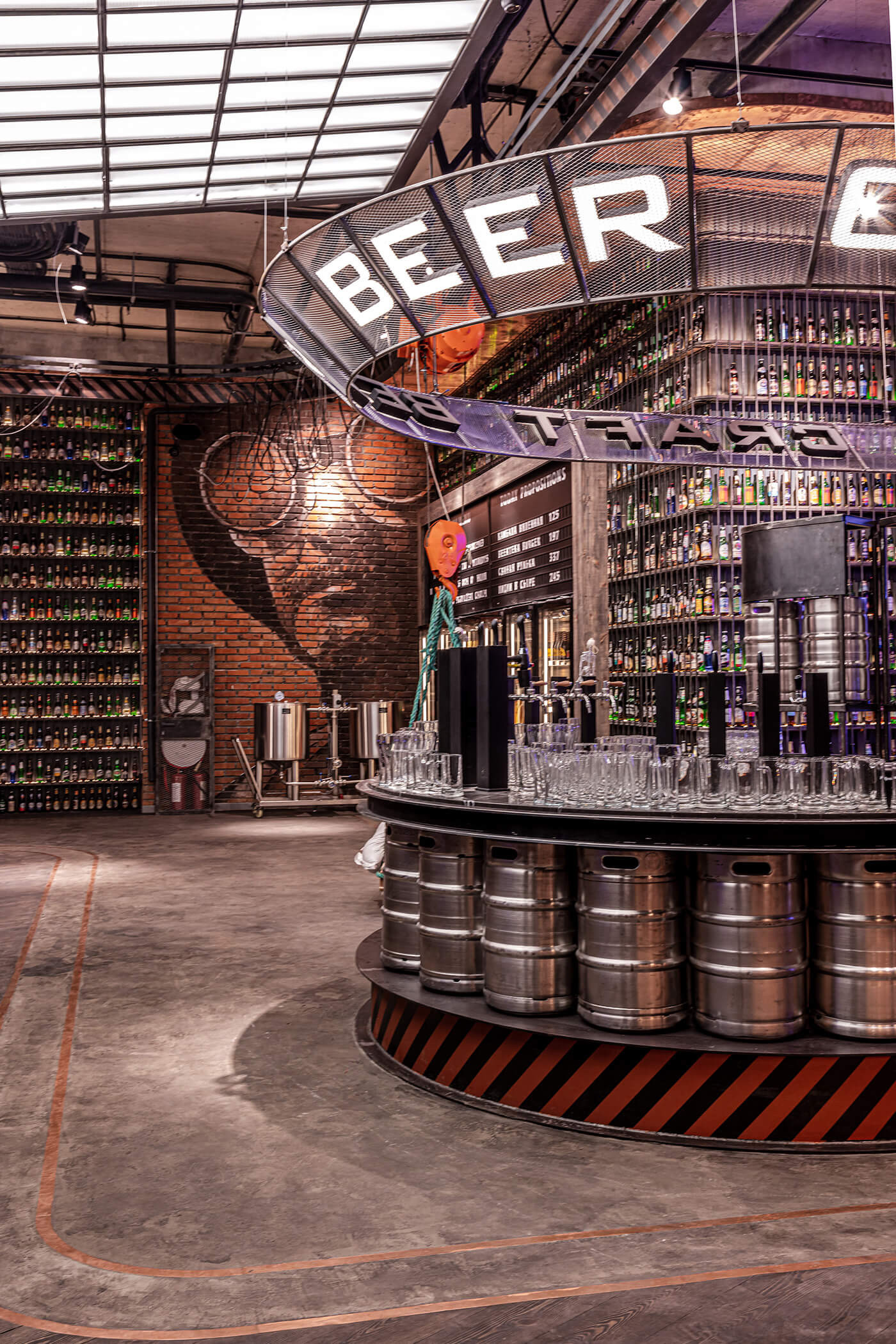
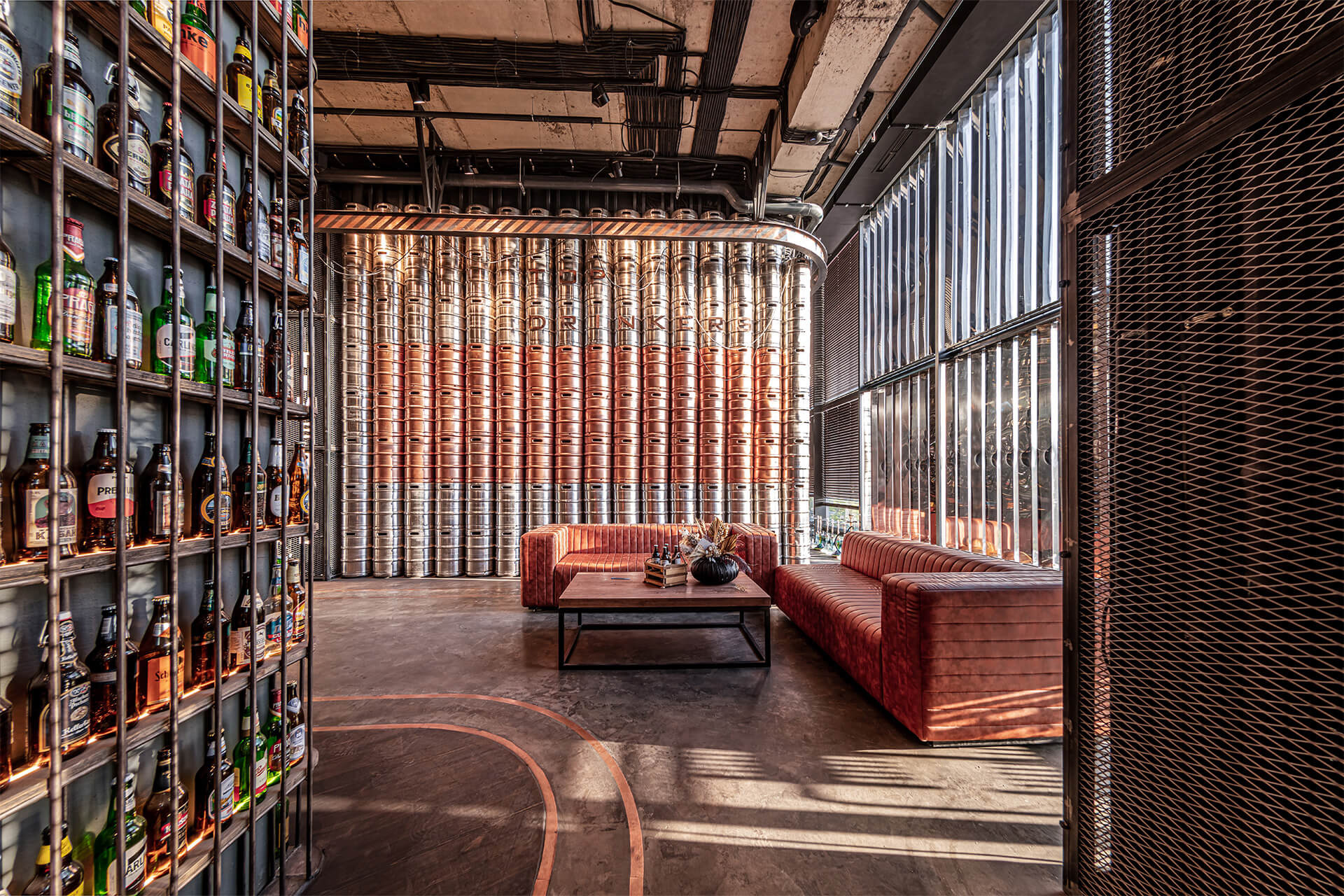
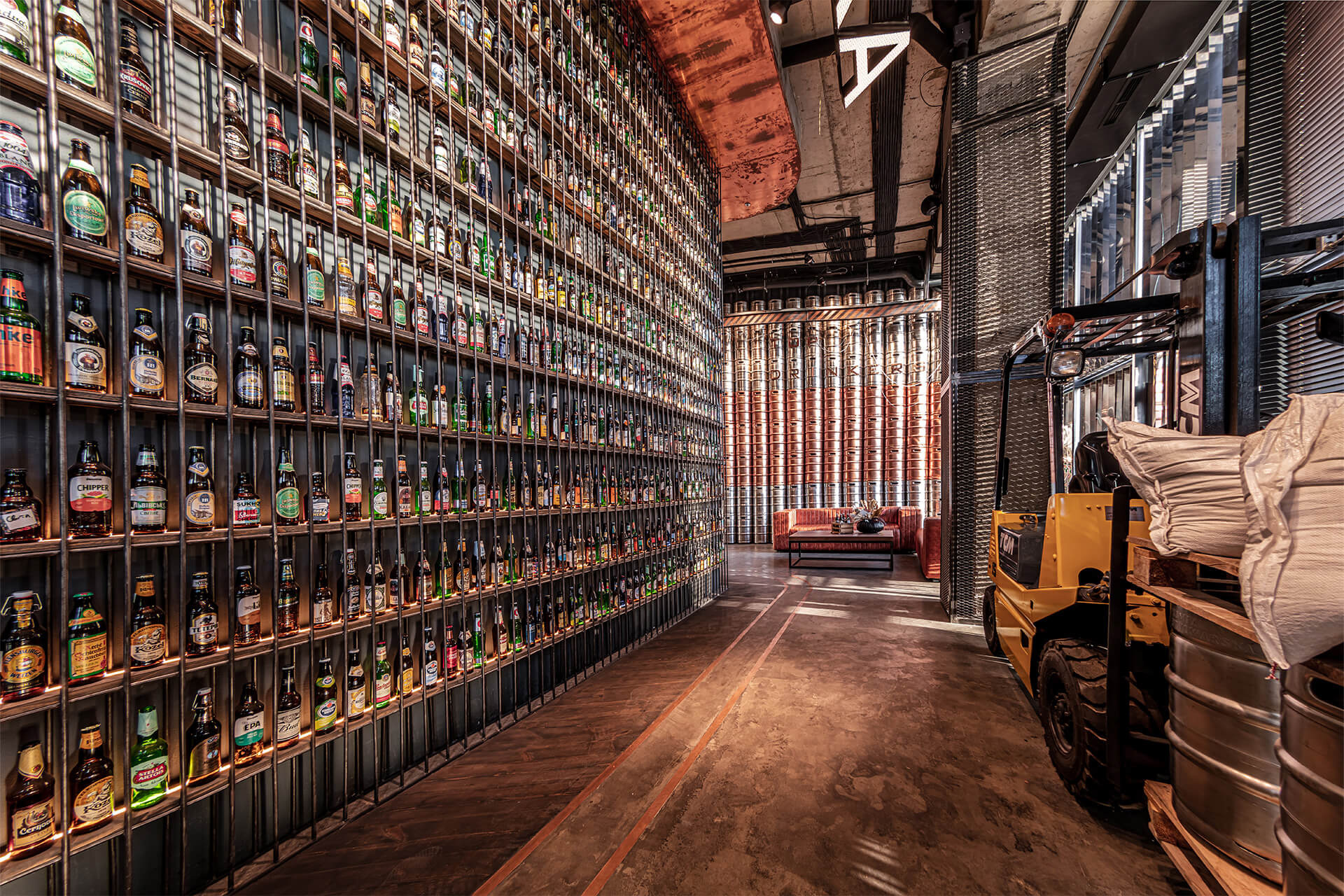
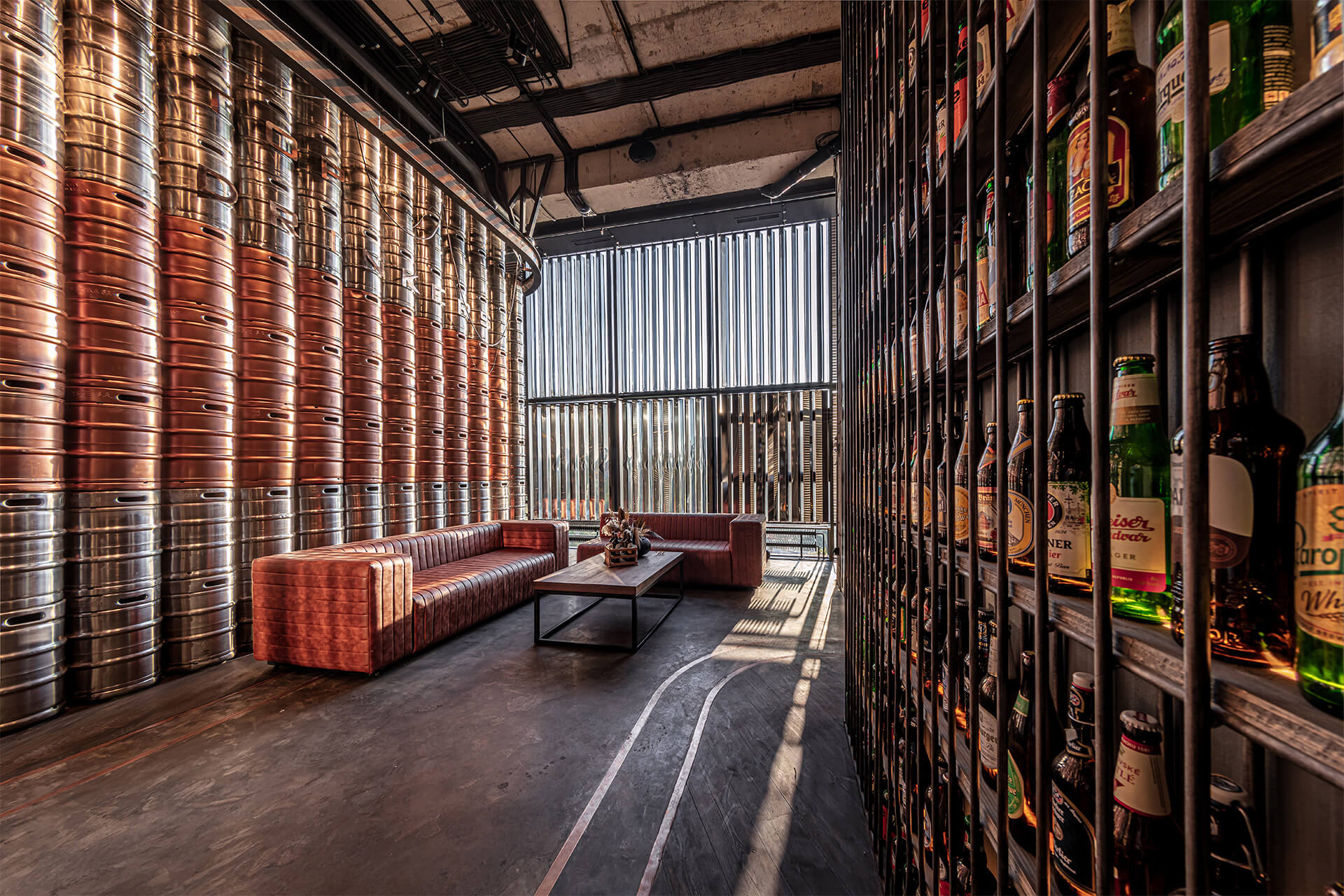
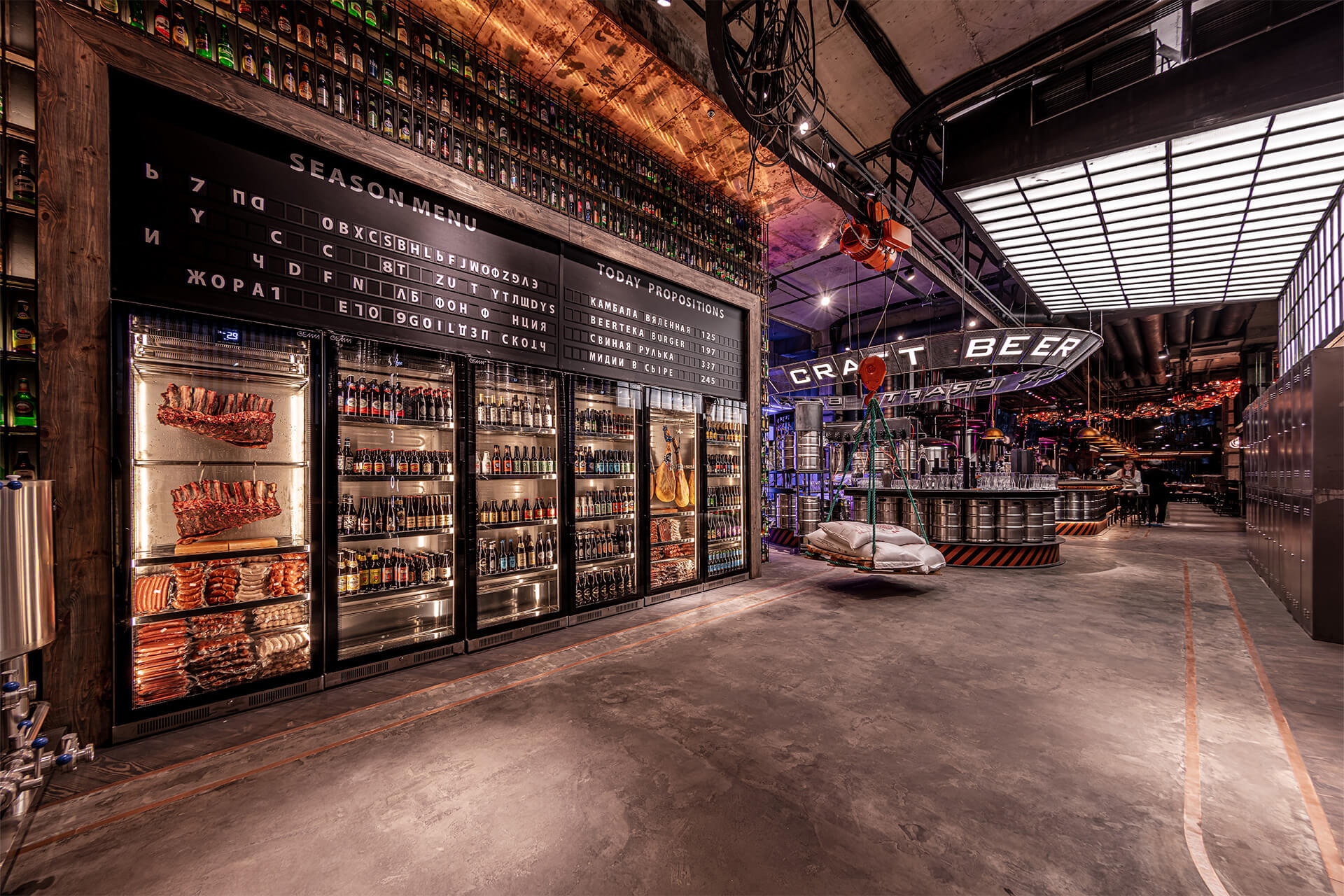
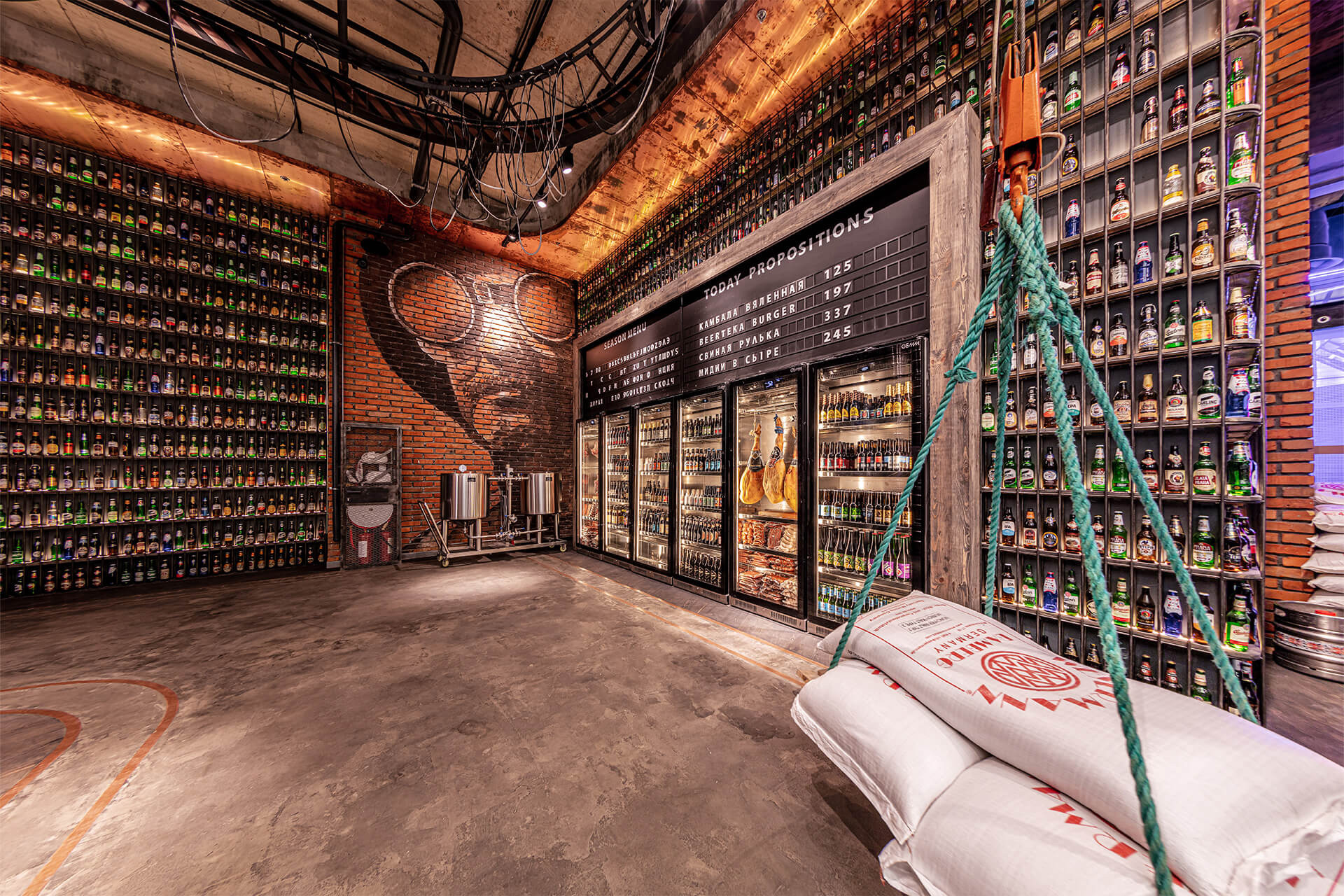
При вході в зал відкривається акцентна композиція — «пивна бібліотека» з понад 3000 пляшок, розташованих як музейна експозиція. Цей елемент став не просто декором, а смисловим ядром простору, від якого розходиться візуальна та планувальна логіка.
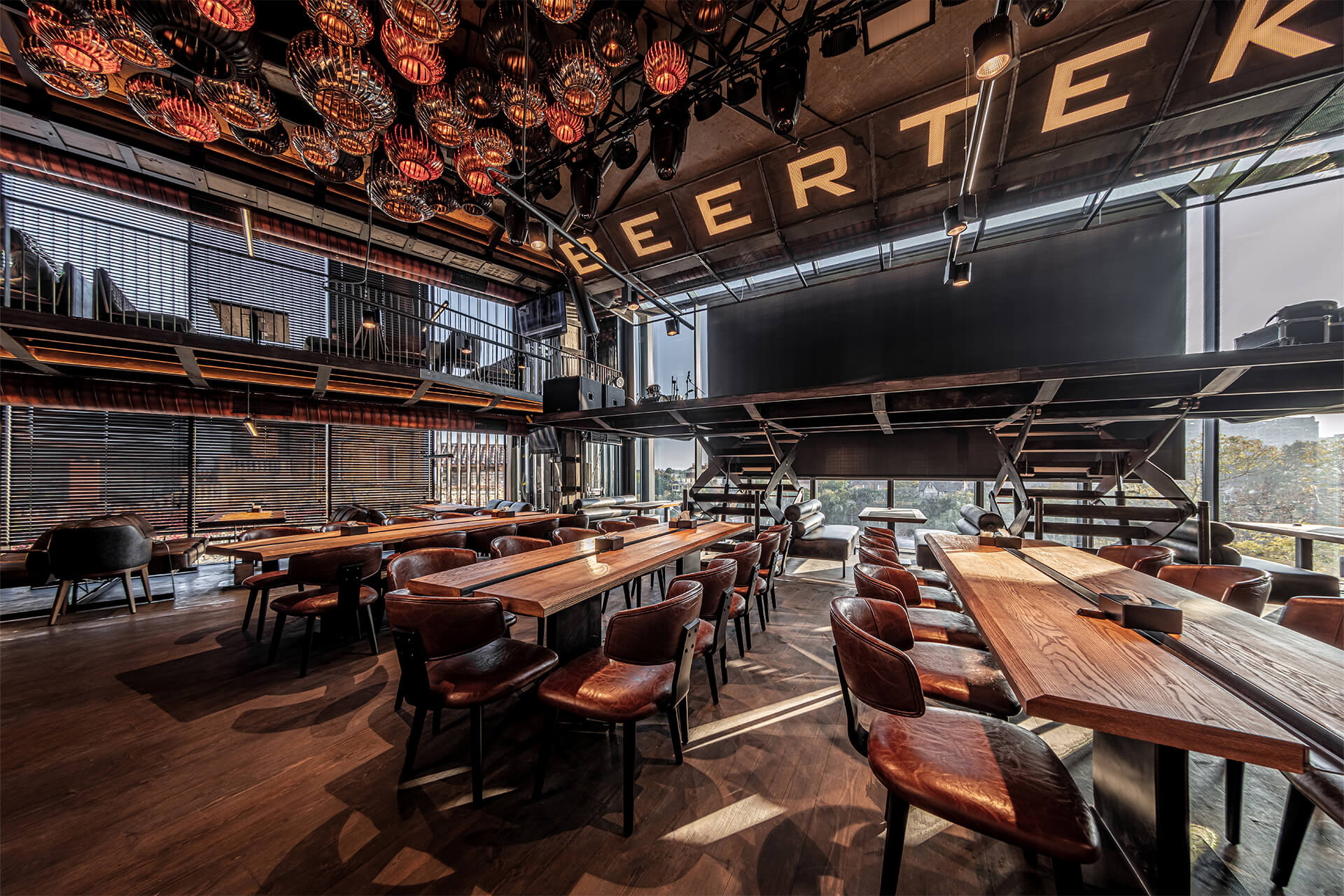
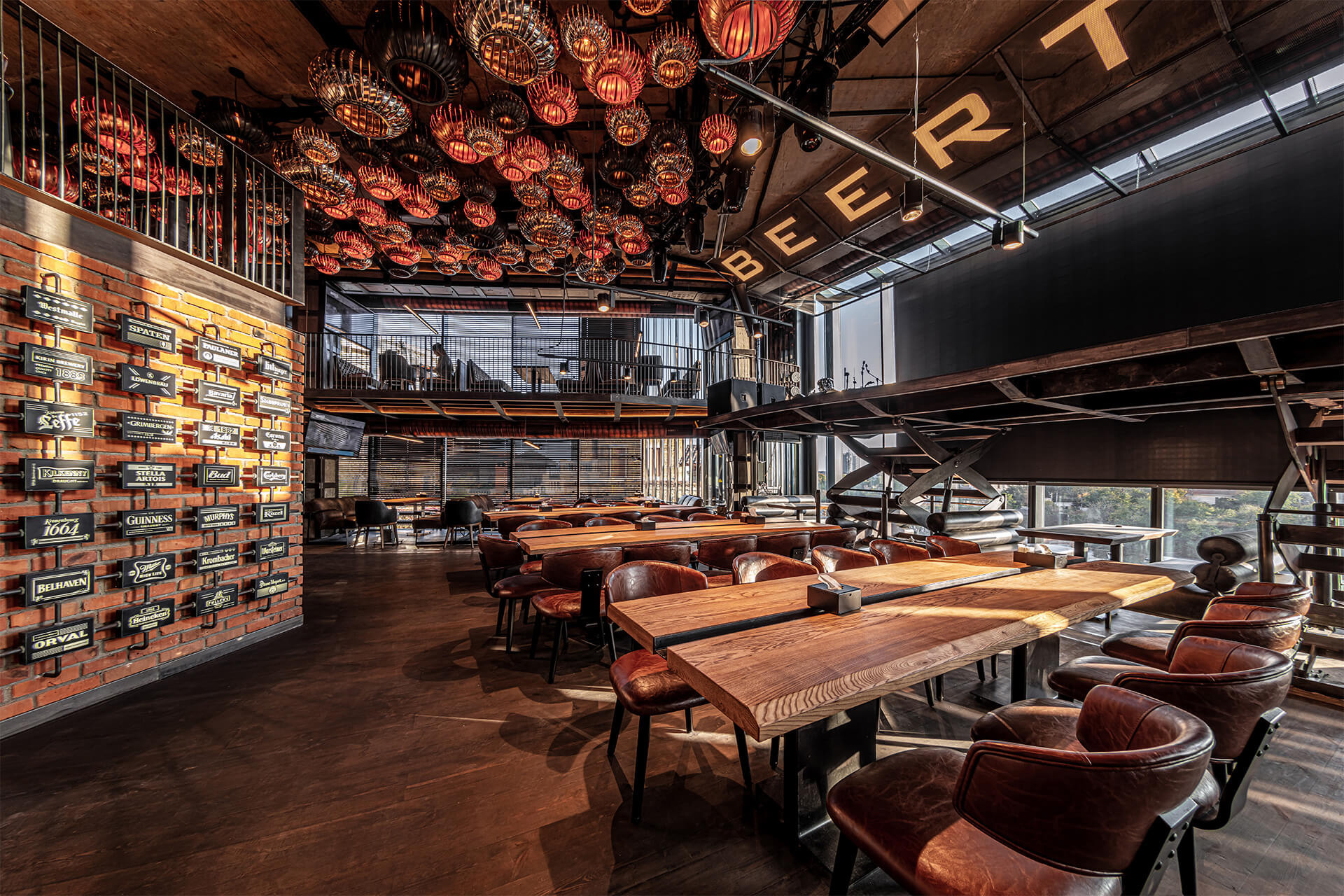
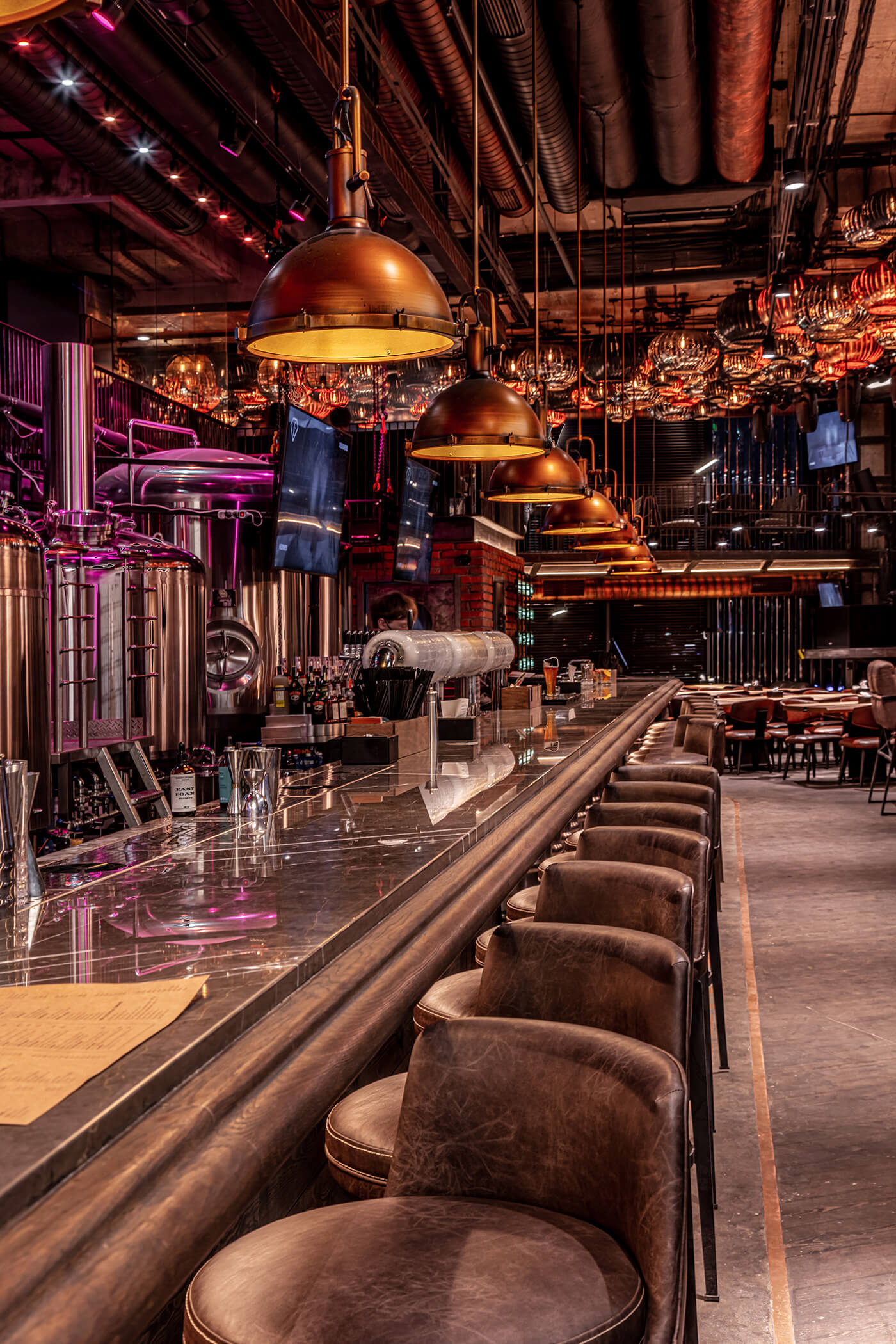
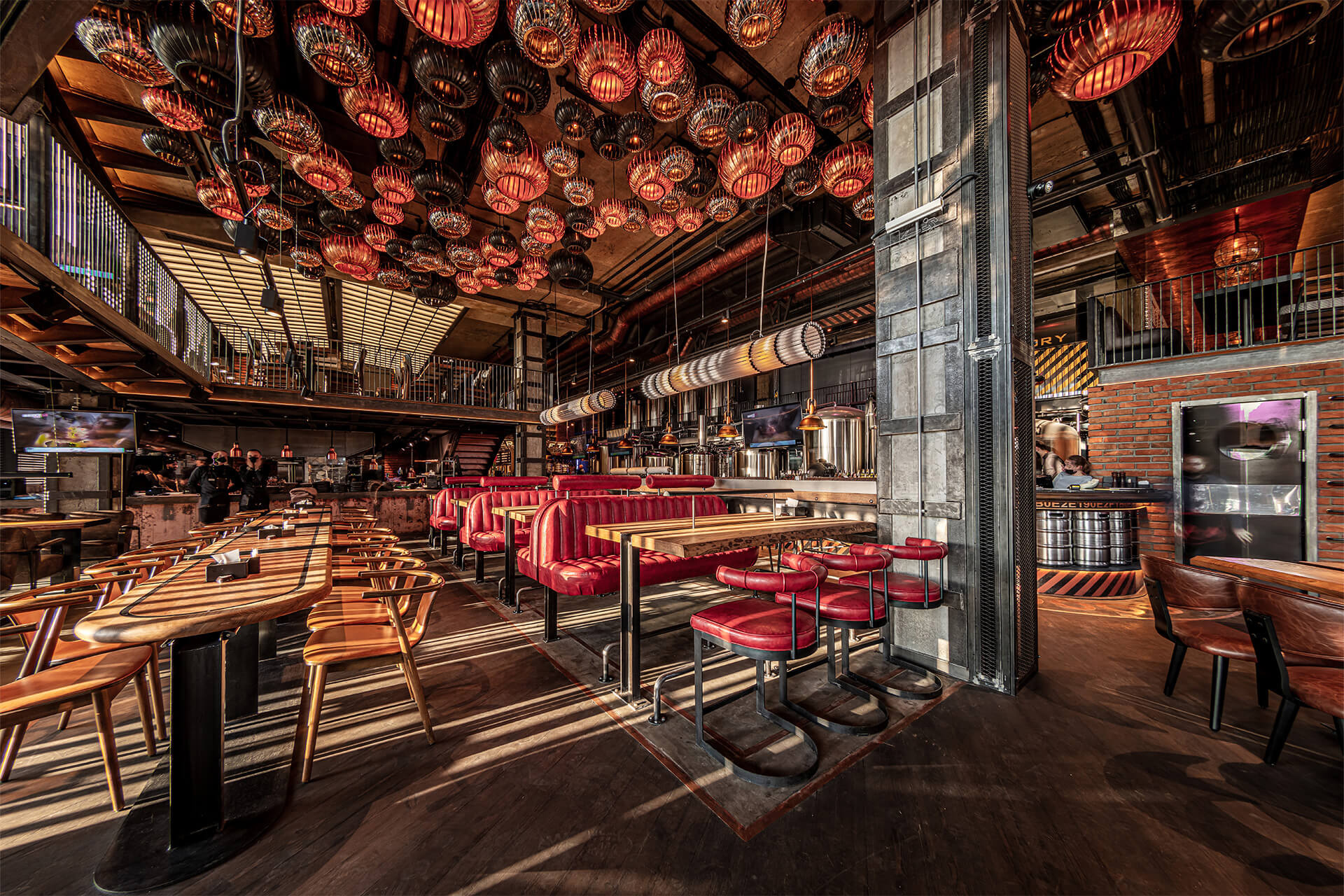
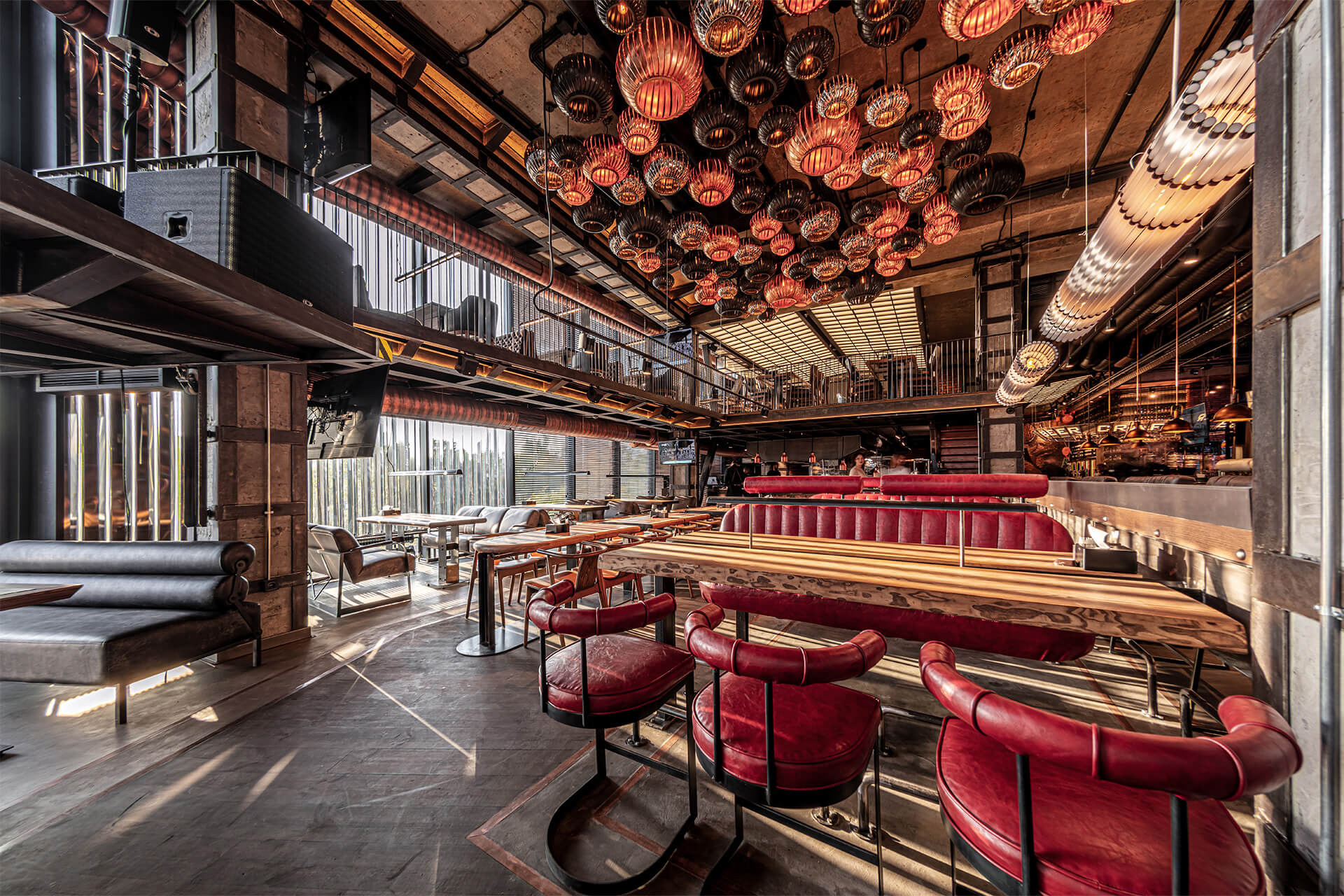
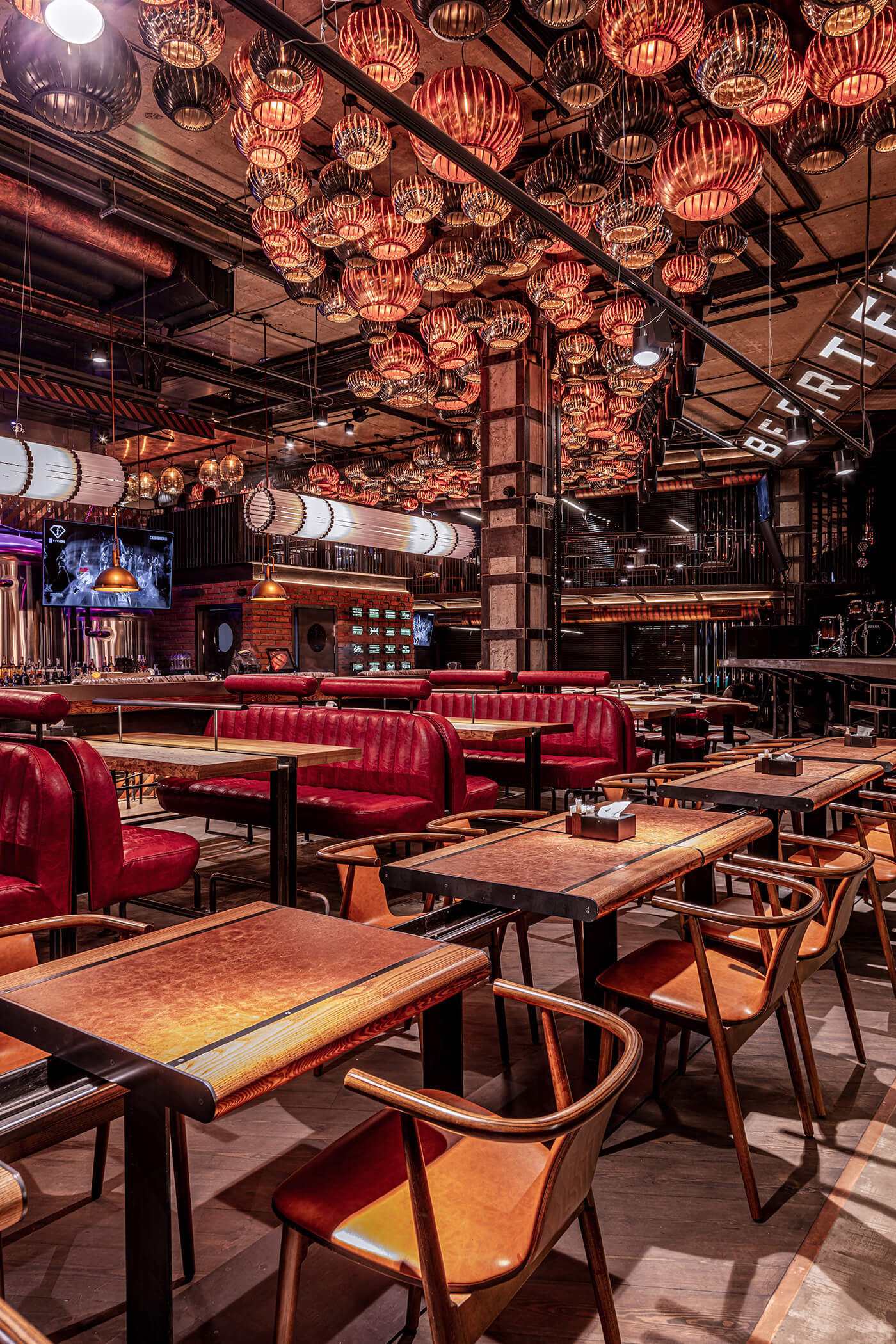
Меблі підбиралися та проєктувалися індивідуально, як частина архітектурного сценарію. Шкіряні крісла та дивани, включно з унікальним диваном, стилізованим під сидіння Cadillac, створюють тактильний і візуальний контраст із грубими індустріальними поверхнями. Простір організований у строгій відповідності до вимог HoReCa - продумане розташування столів, барних зон і проходів забезпечує безперебійну роботу персоналу та максимальний комфорт для гостей.

В інтер’єрі використані авторські рішення в стилі Loft Industrial:
- розсувні столи на направляючих від верстатів;
- гігантський світловий ліхтар, який змінює освітлення залежно від часу доби;
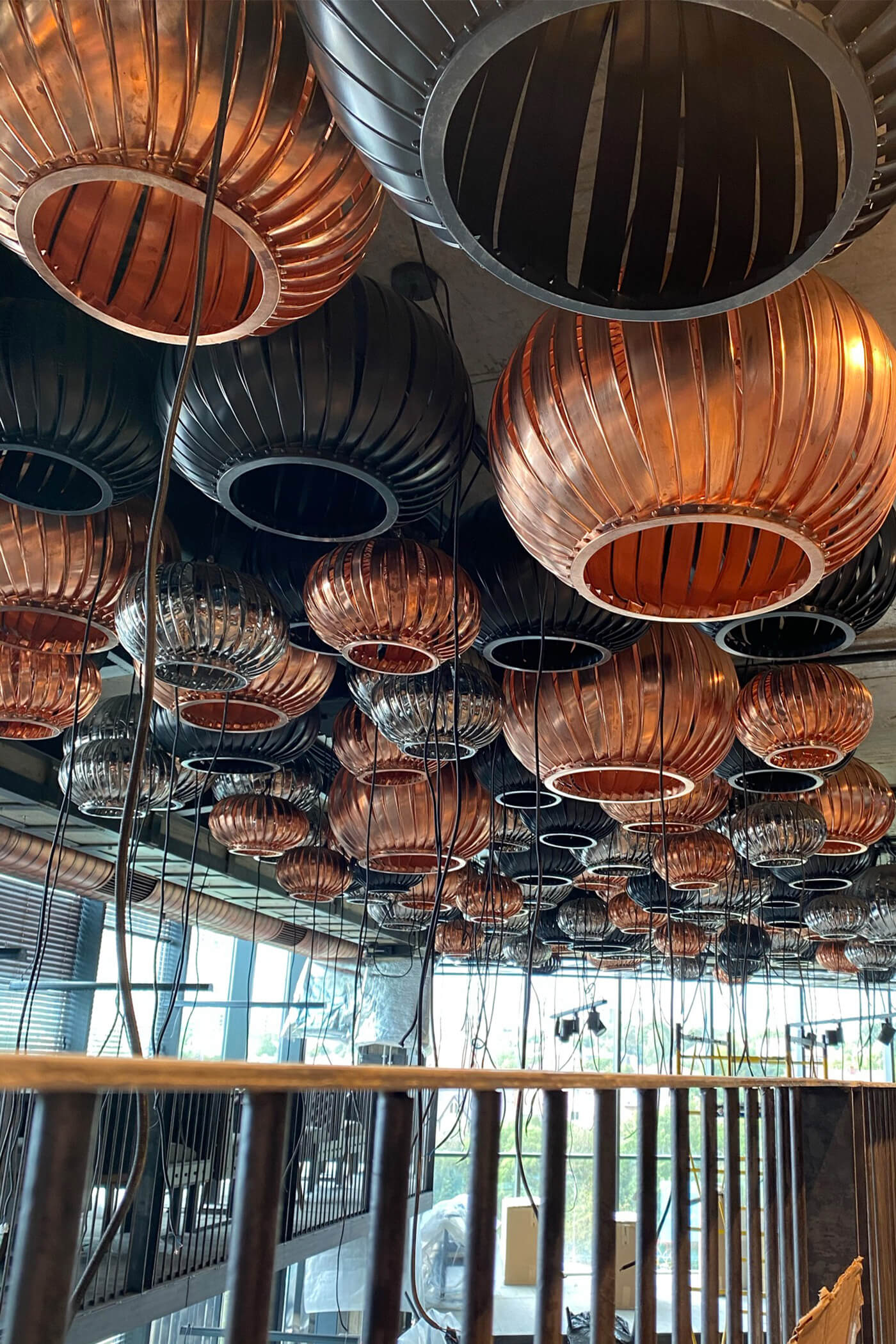
- люстри у формі турбодефлекторів;
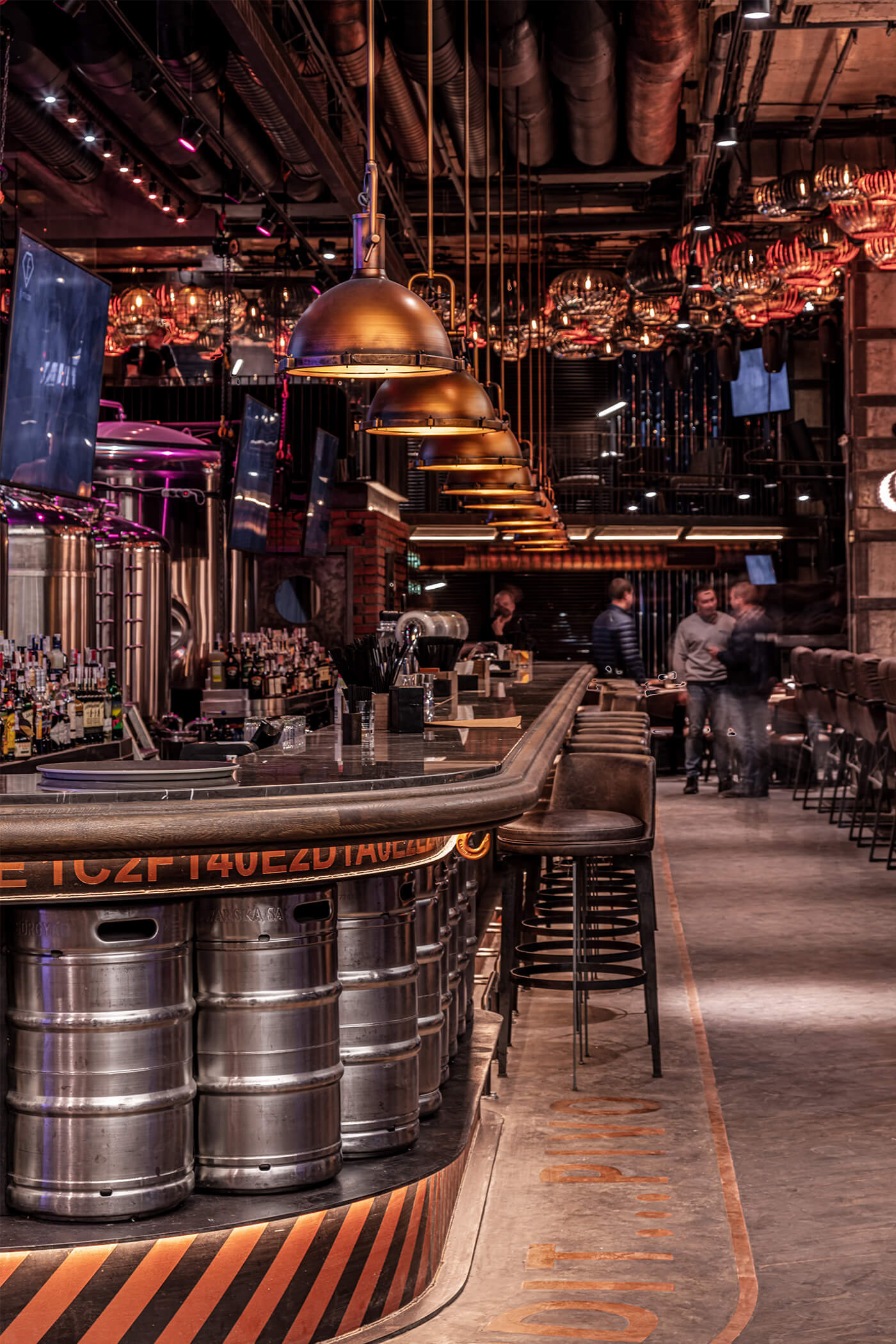
- тельфер під стелею, що додає справжньої індустріальної механіки в образ;
- панорамні вікна, що пов’язують інтер’єр із вулицею, зі сталевими жалюзі, які створюють динамічну гру світла й тіні.

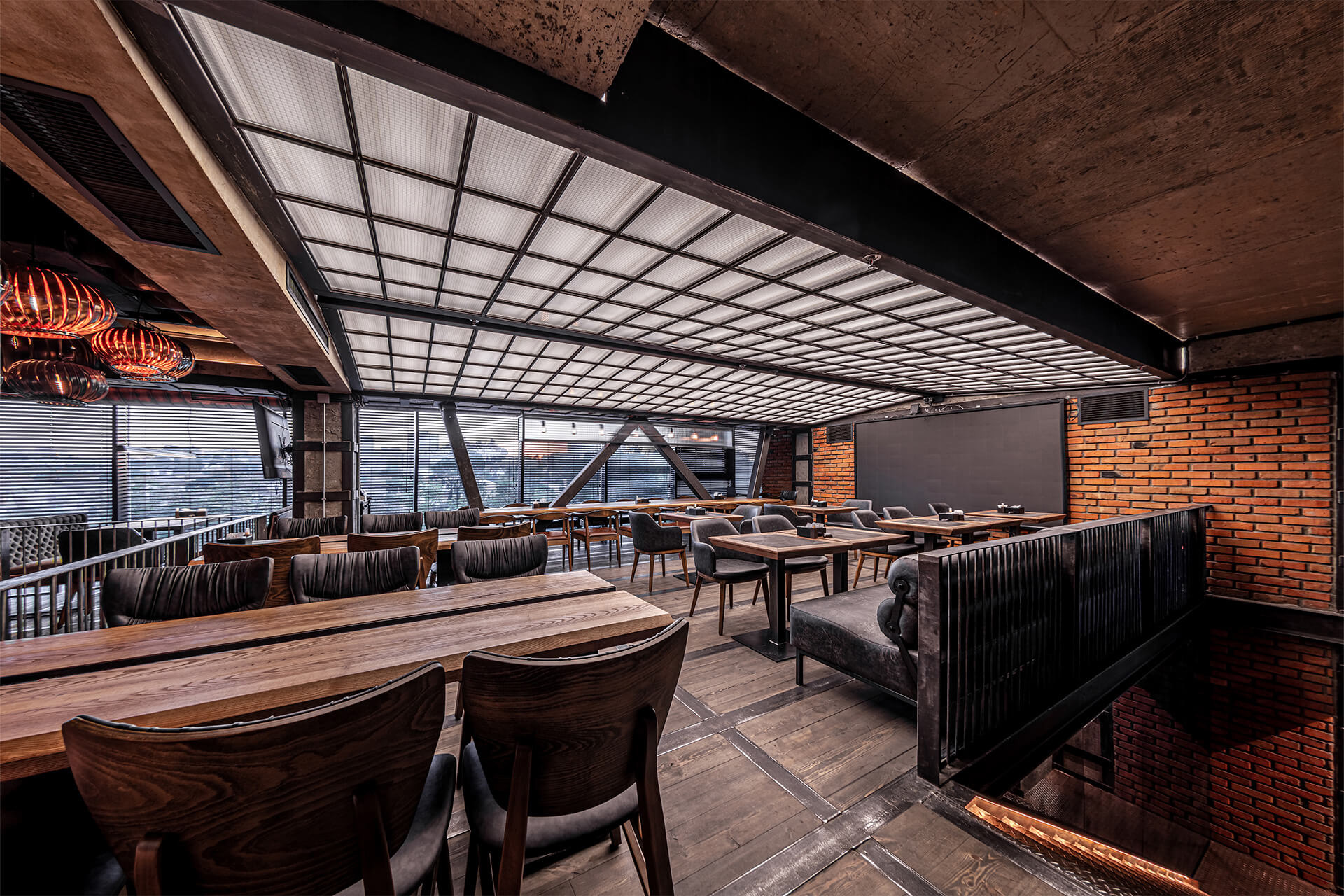
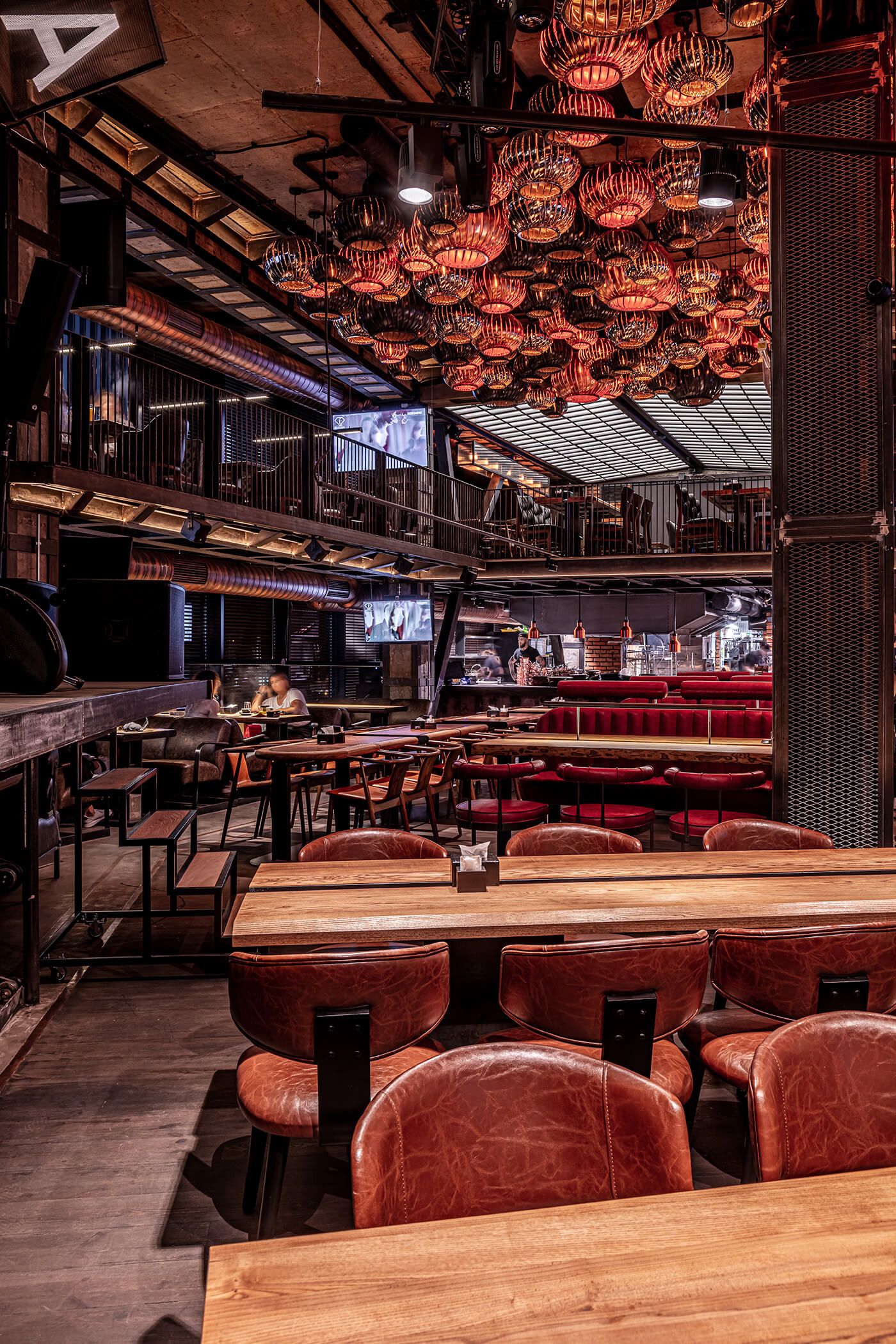
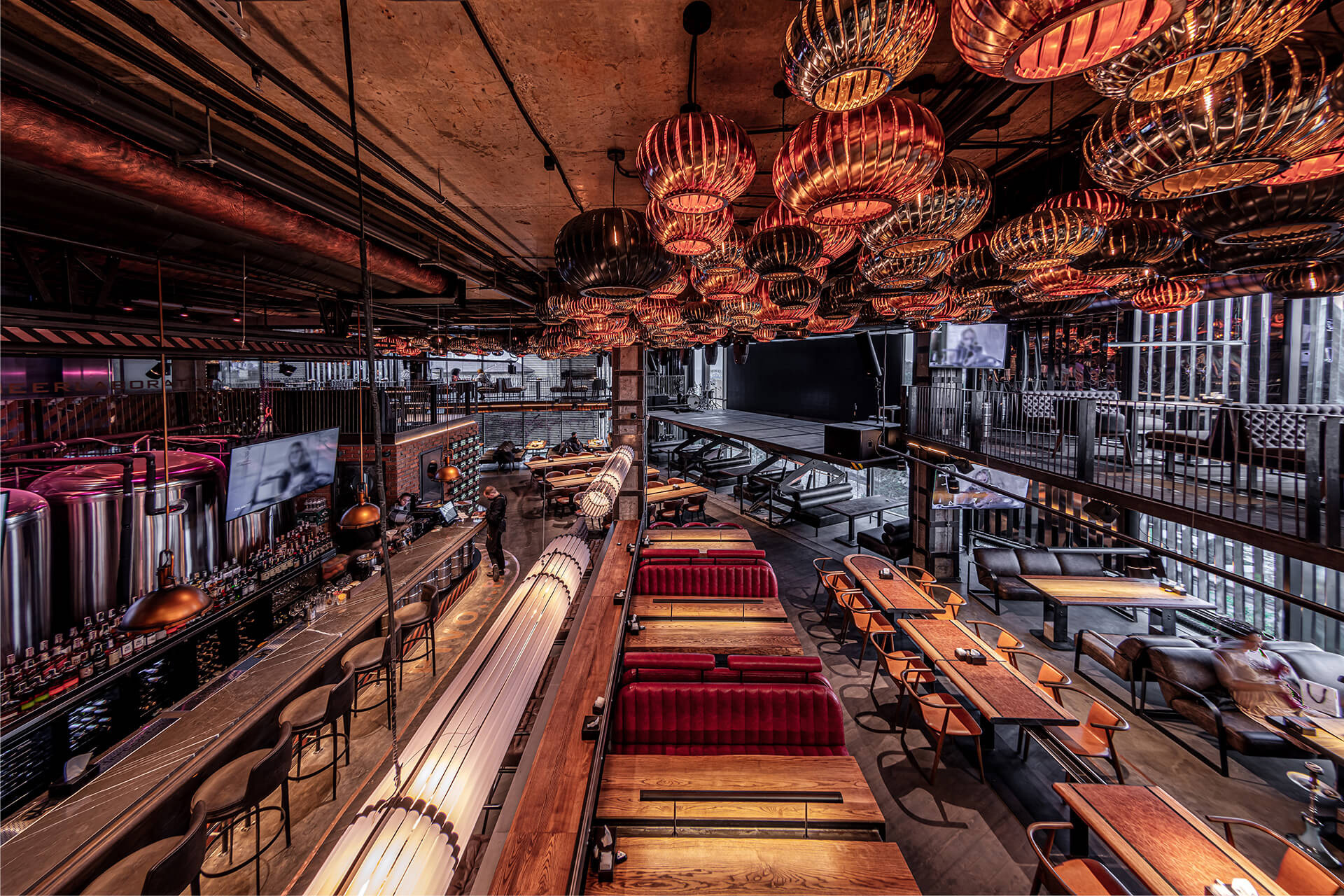
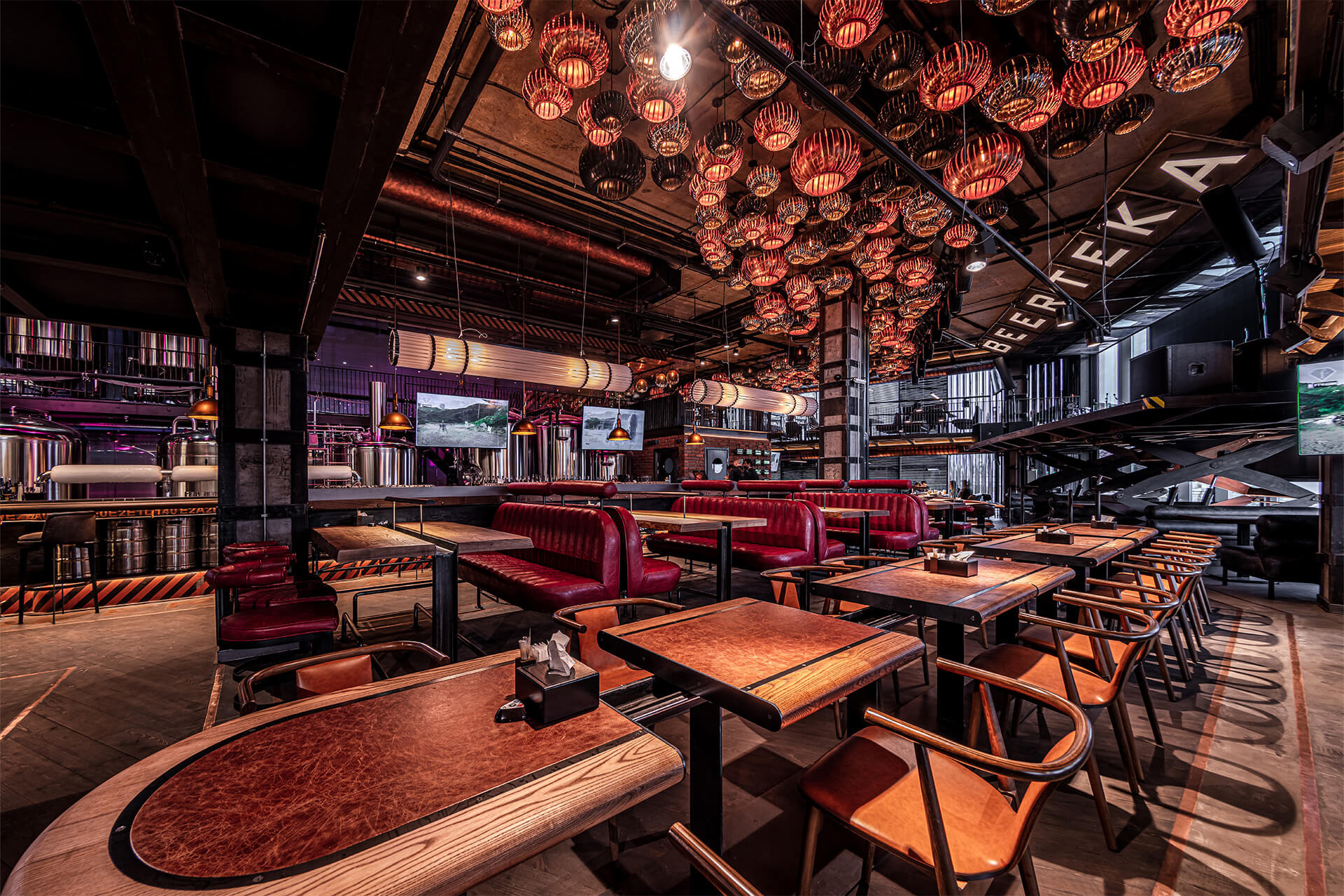
Важлива особливість — архітектурна трансформованість. Металеві антресолі та сцена на автомобільних підйомниках дозволяють миттєво змінювати конфігурацію залу, адаптуючи його під концерти, фестивалі чи камерні вечори.
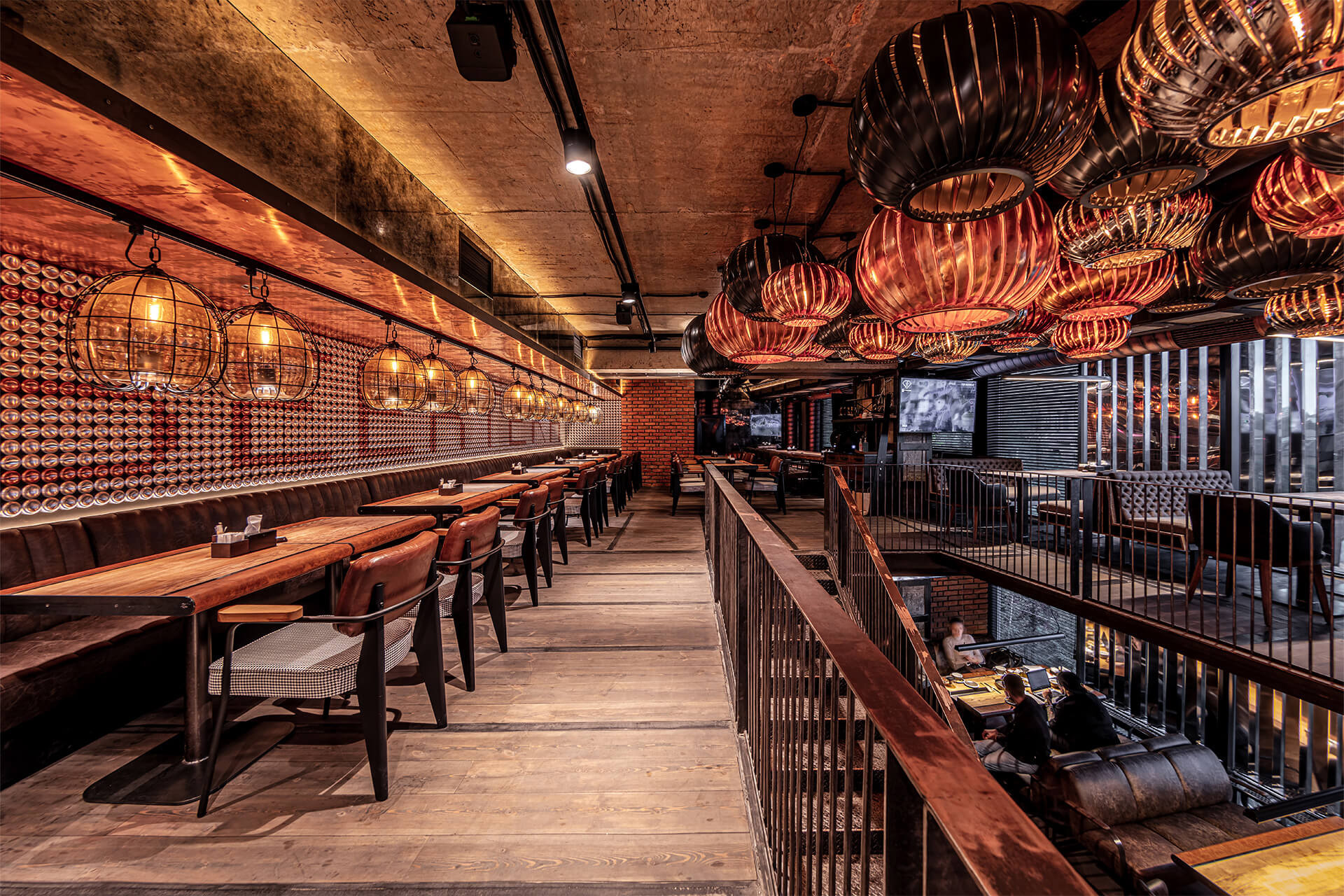
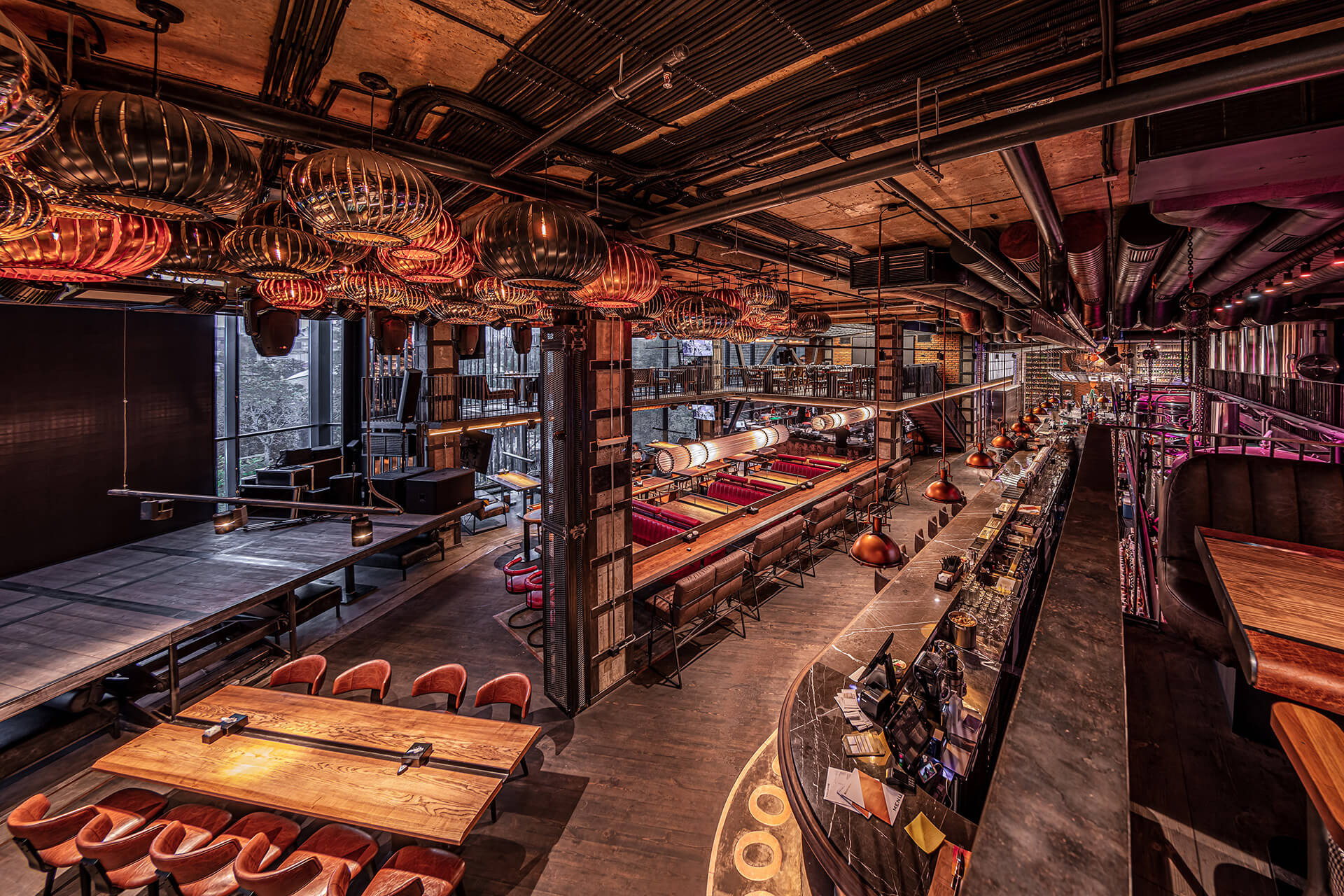
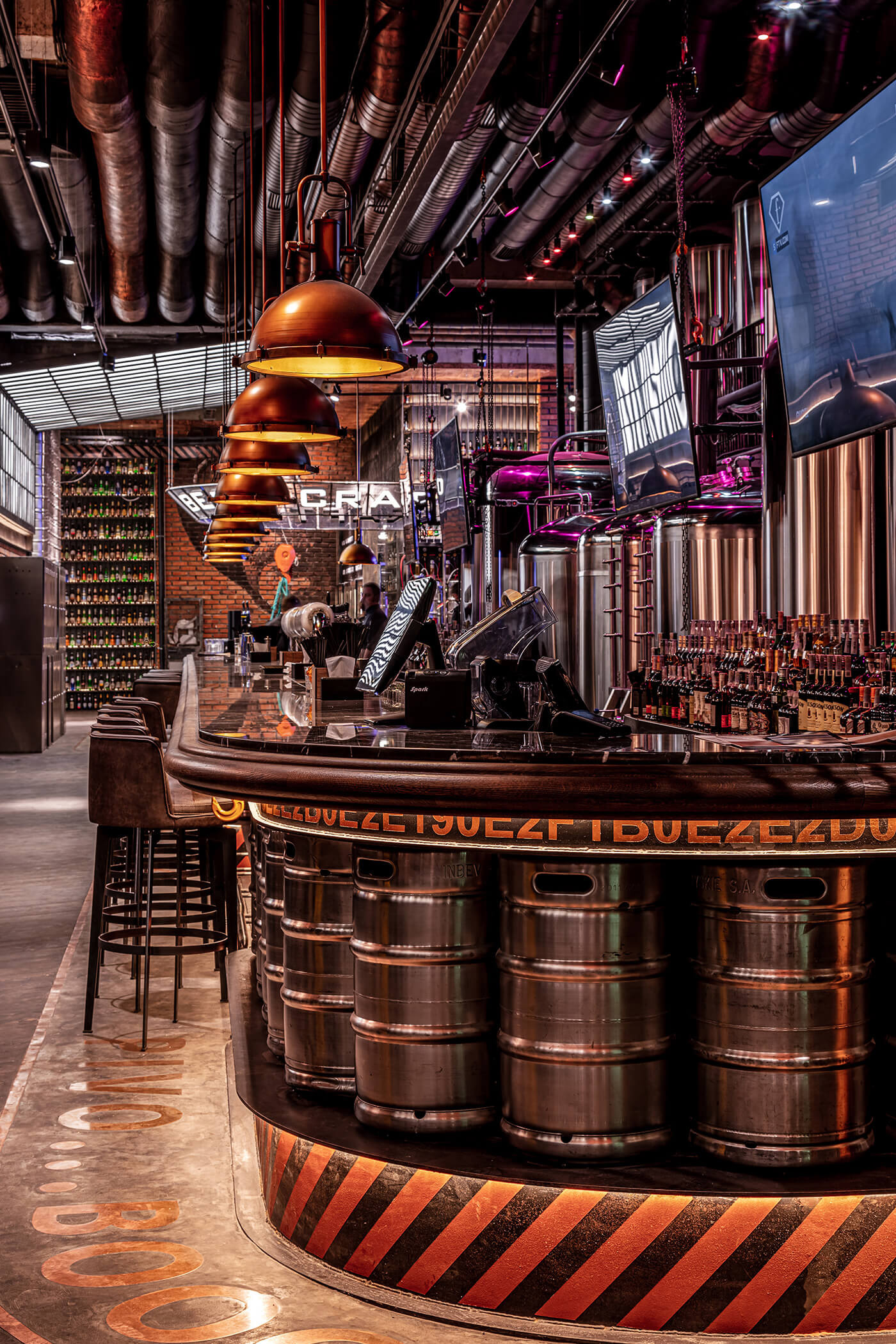
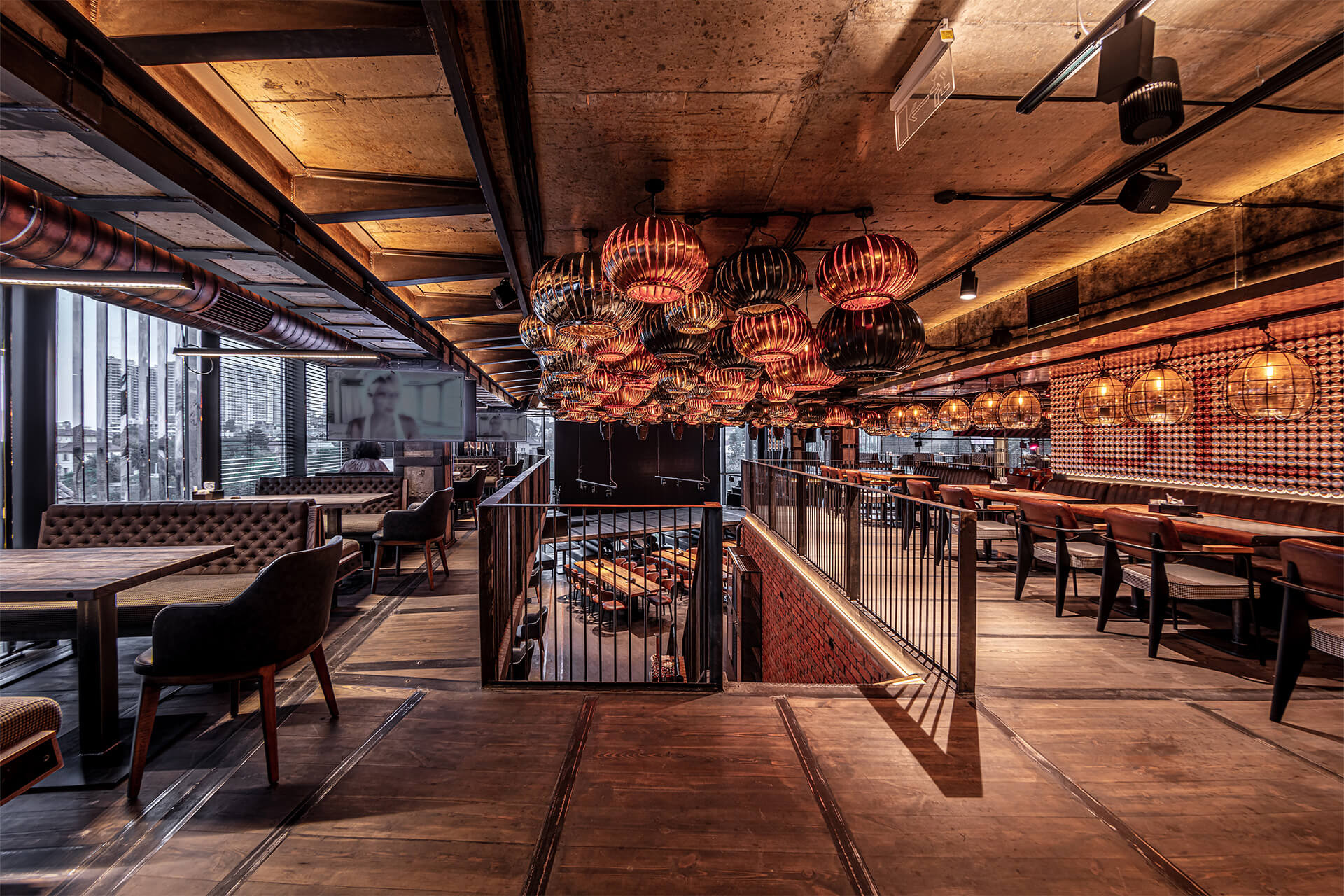
Для нас цей проєкт став прикладом того, як можна поєднати надскладні інженерні рішення з виразною естетикою, зберігши при цьому абсолютну функціональність. BEERTEKA — це живий, динамічний простір, де кожна деталь підпорядкована загальній концепції, а сама концепція визначає форму, матеріал і атмосферу.
О проекте в цифрах


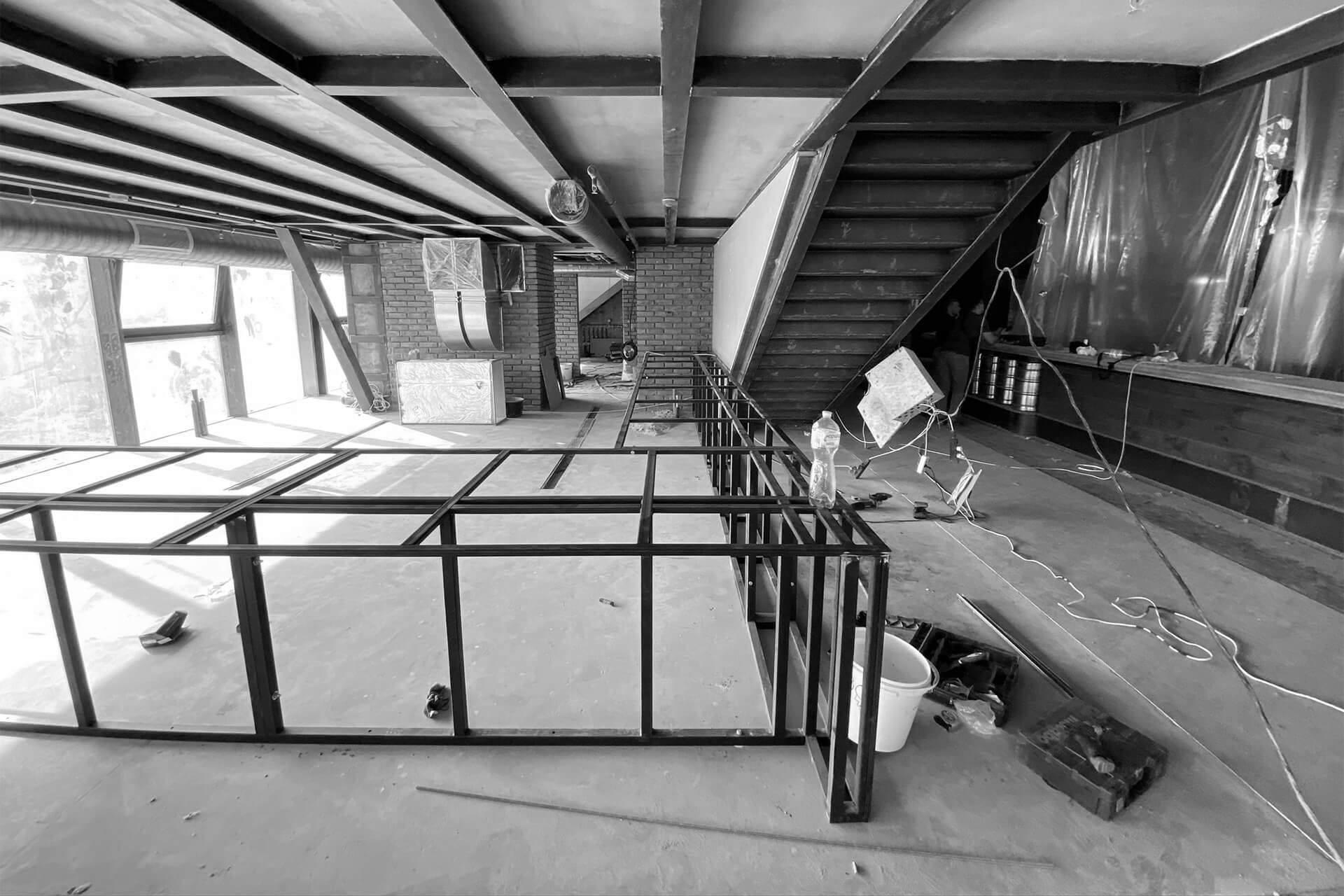

For Beerteka, construction information became the key link between concept and flawless execution.
A comprehensive drawing set translated the design into clear instructions for builders, millworkers, lighting specialists, and site teams. Every custom element — from the bar and seating systems to lighting details and material transitions — was resolved in advance to prevent ambiguity during construction.
By eliminating guesswork on site, the package helped control budget, maintain timelines, and protect the integrity of the design throughout implementation.
Step-by-step process that ensures flawless results

01.Workshop:
FROM ARCHITECTURE TO INTERIOR
We were fortunate to join the project during the building's initial architectural phase. This allowed us to shape the space in a way that perfectly integrated with the future interior. Beerteka is more than just a restaurant; it is a high-tech brewery featuring panoramic views of the city and the Black Sea.
The Technological Heart and Structural Loads
Our primary challenge was the placement of heavy brewing equipment: massive brewhouse kettles and CCT (cylindro-conical) fermentation tanks. The design live load for this equipment reaches 4,000 kg/m². In an existing shopping center, this would have required complex structural reinforcement. However, since the floor slabs for our level hadn't been poured yet, we were able to pre-engineer two spans between columns to handle these heavy industrial loads from the start.
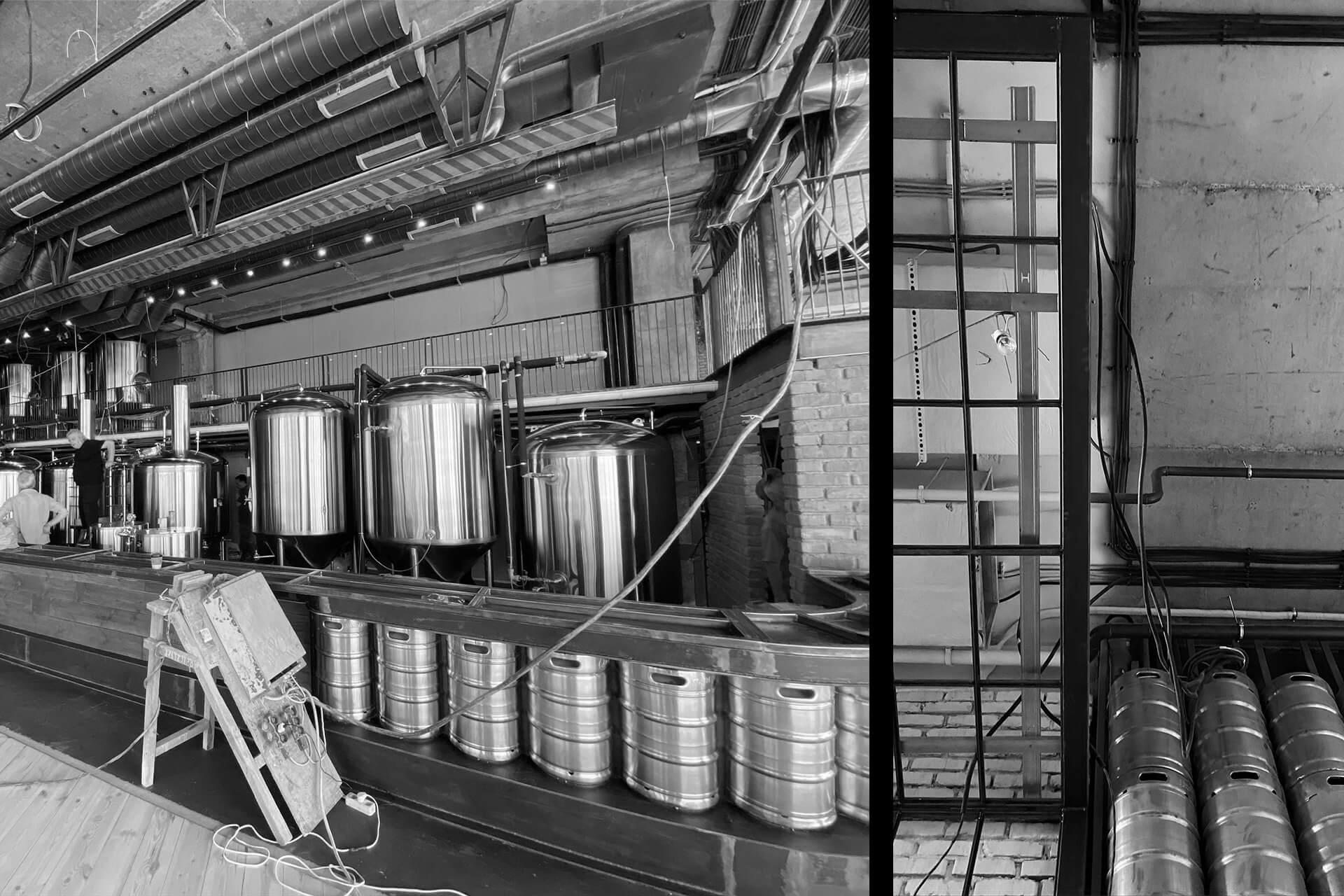
To achieve maximum visual impact, we displayed 16 tanks facing the main hall. In collaboration with the structural engineer, we designed a custom mezzanine capable of supporting 2,000 kg/m². Using a terracing method, we positioned the maturation tanks (where beer rests for 2 to 4 weeks) on the upper level so they wouldn’t obstruct one another. The result is a balanced composition: two large brewhouse kettles at the center, 2-ton tanks flanking them, and 1-ton tanks elevated on the mezzanine.


Open Production and Engineering
We designed the brewery to be fully open to the public, despite the common practice of isolating fermentation processes. Deep technical research allowed us to execute this bold concept without compromising product quality.
Another challenge involved the aggressive wastewater from cleaning the tanks with chemical reagents. These cannot be discharged into the standard sewage system, so we implemented a dedicated onsite treatment plant. The flooring also provided a learning curve: the initial microcement finish could not withstand the chemical runoff and was promptly replaced with specialized chemically resistant tiles.
Achieving Architectural "Lightness"
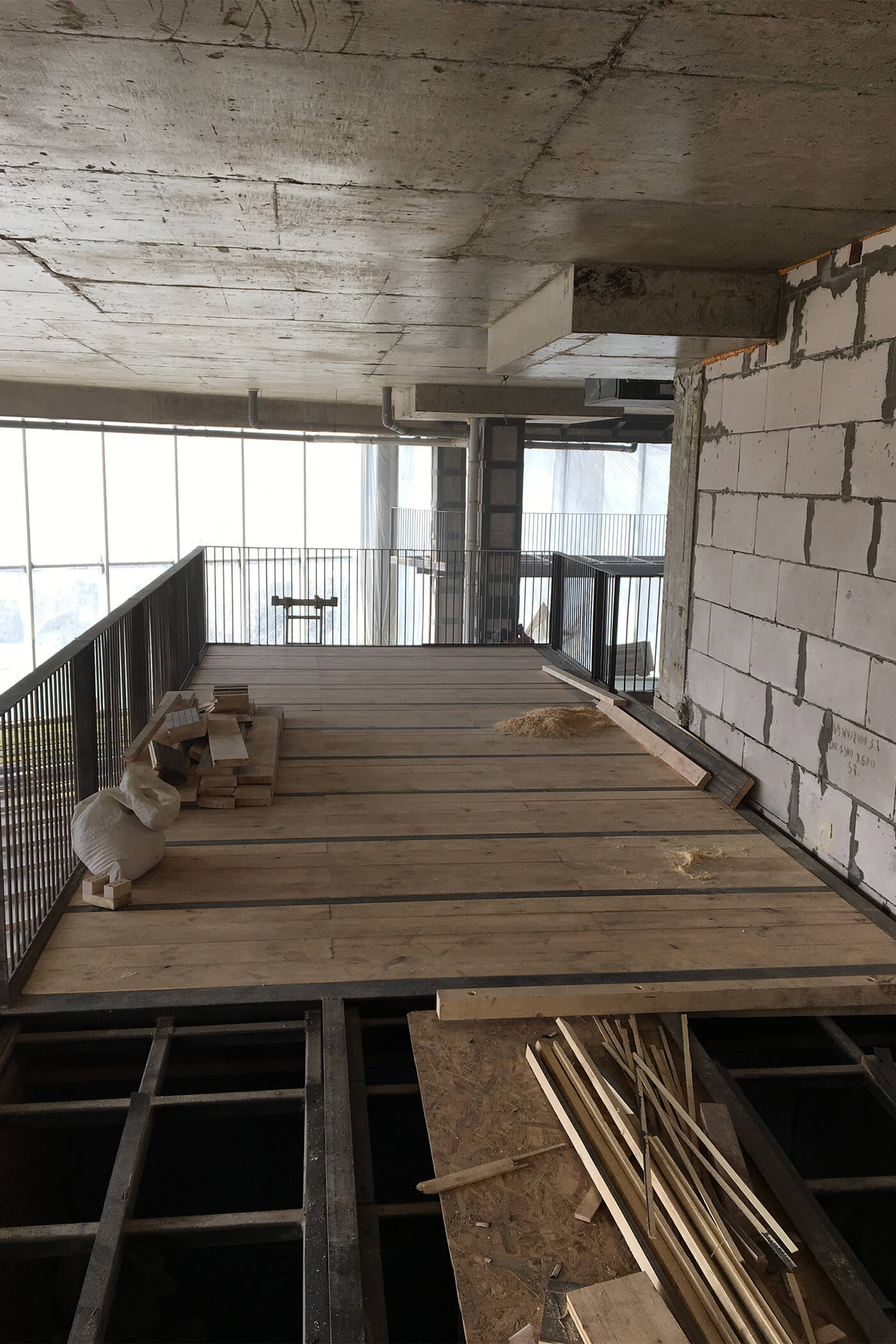
The project’s objective was to create a vibrant, multi-level social space that preserves panoramic views. To prevent the mezzanines along the windows from looking visually heavy over a 7.8 m span, we developed a bespoke beam system. The structure is based on two primary load-bearing beams made of heavy-duty No. 24–26 steel channels, from which a system of gradual tapering was formed: secondary channels decrease in cross-section, culminating in a delicate No. 12 profile. This gradation allowed us to maintain the necessary load-bearing capacity while visually lightening the construction, resulting in a design where massive structural elements appear airy and weightless.


Spatial Transformation: The Hydraulic Lift Stage
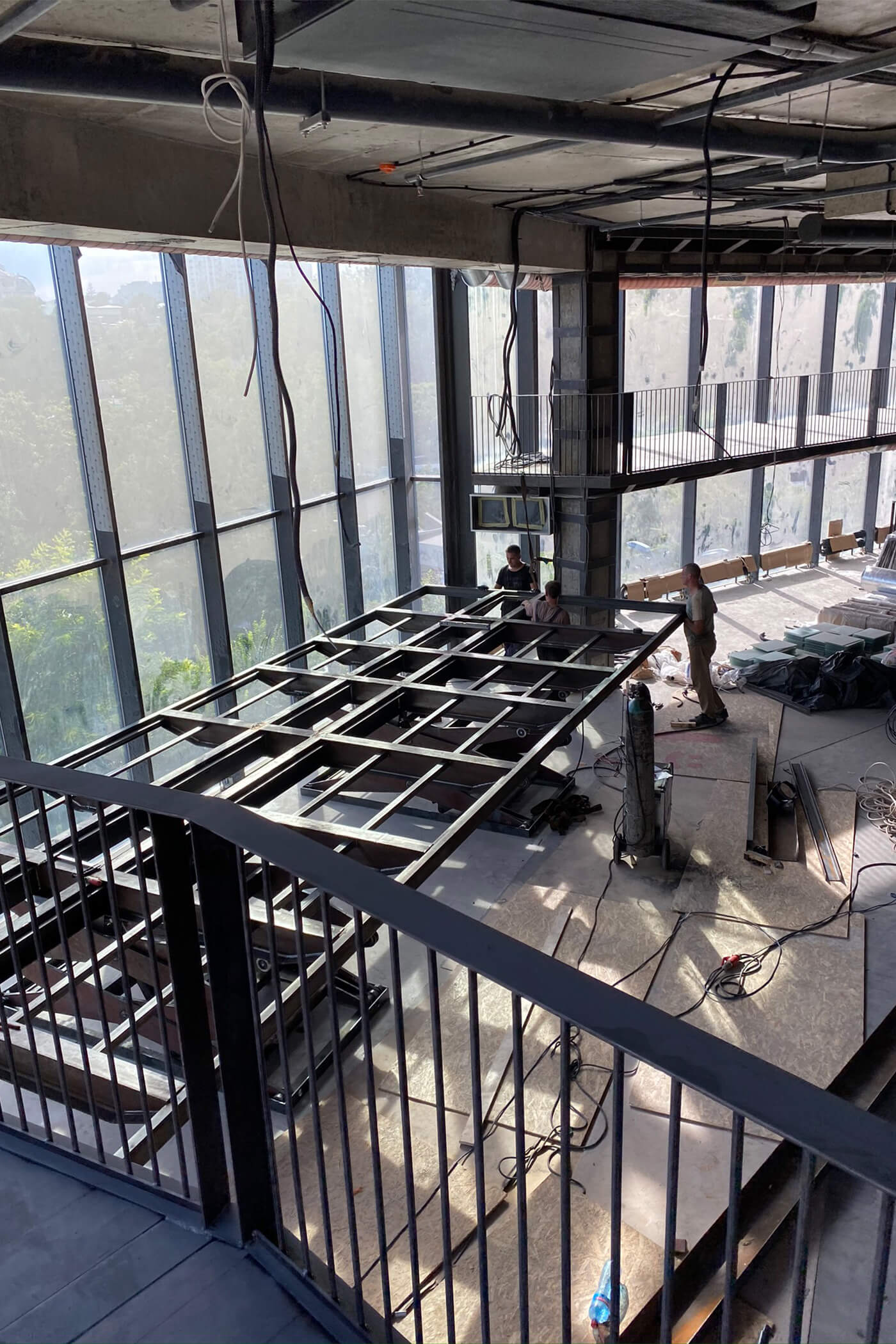
The centerpiece of the hall is a stage visible from every angle. To ensure its functionality during weekdays, we made it mobile using hydraulic scissor lifts (similar to those used in automotive service centers), custom-engineered for us in Dnipro.
The stage features three distinct positions:
- Upper Position (Level with the mezzanine): Allows for guest seating on the stage itself while opening up a lounge area with sofas underneath.
- Middle Position: Optimized for major concerts and maximum visibility.
- Lower Position (1.2m): Set for background performances and ambient shows.
The hydraulic system (pumps and tanks) is concealed beneath the stairs, with lines running through the ceiling of the floor below. For maximum safety, the system is equipped with mechanical locks that must be disengaged before the hydraulics can move the stage.


02.Concept:
DESIGN CONCEPT AND AESTHETICS
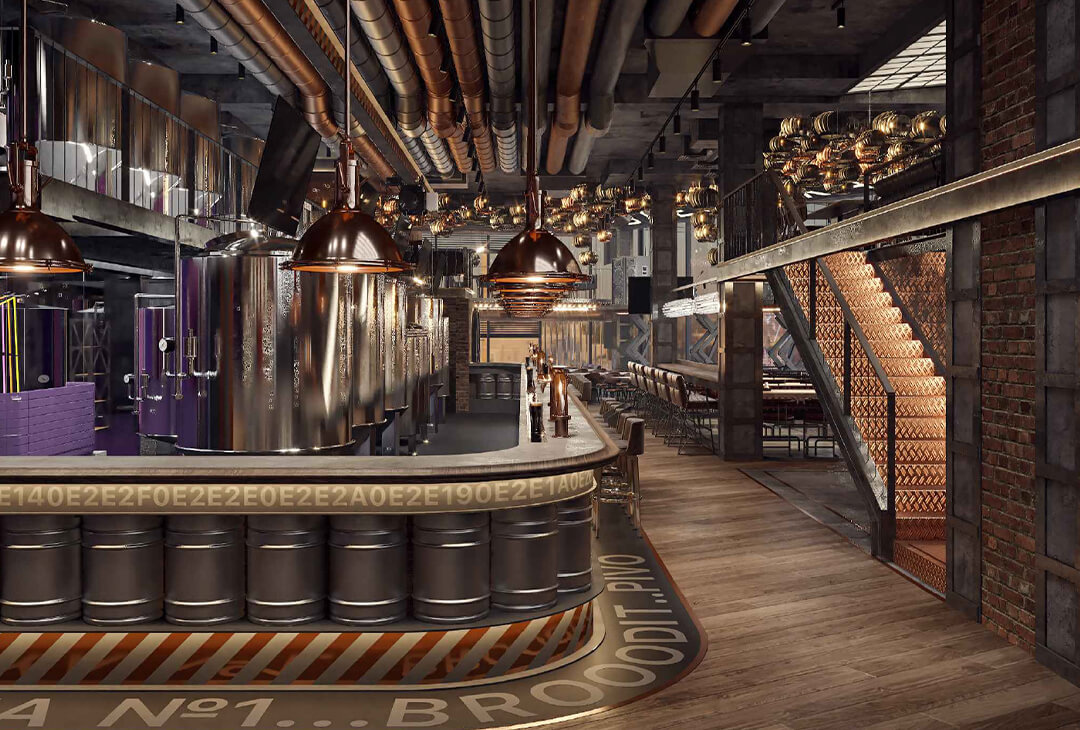
The project’s style can be defined as a blend of Steampunk, Loft, Industrial, and Chic-Industrial. It is a curated mix of raw industrial elements, bold accents, and premium materials. A standout feature is our custom red sofa, an aesthetic tribute to the iconic 1959 Cadillac. One of the primary challenges was establishing a cozy, "authentic" feel within a brand-new space. Typically, breweries are housed in old factory buildings that come with a pre-existing history. In our case, we had to invent that history from scratch, as the building was constructed simultaneously with the restaurant—essentially starting as a blank reinforced concrete shell.
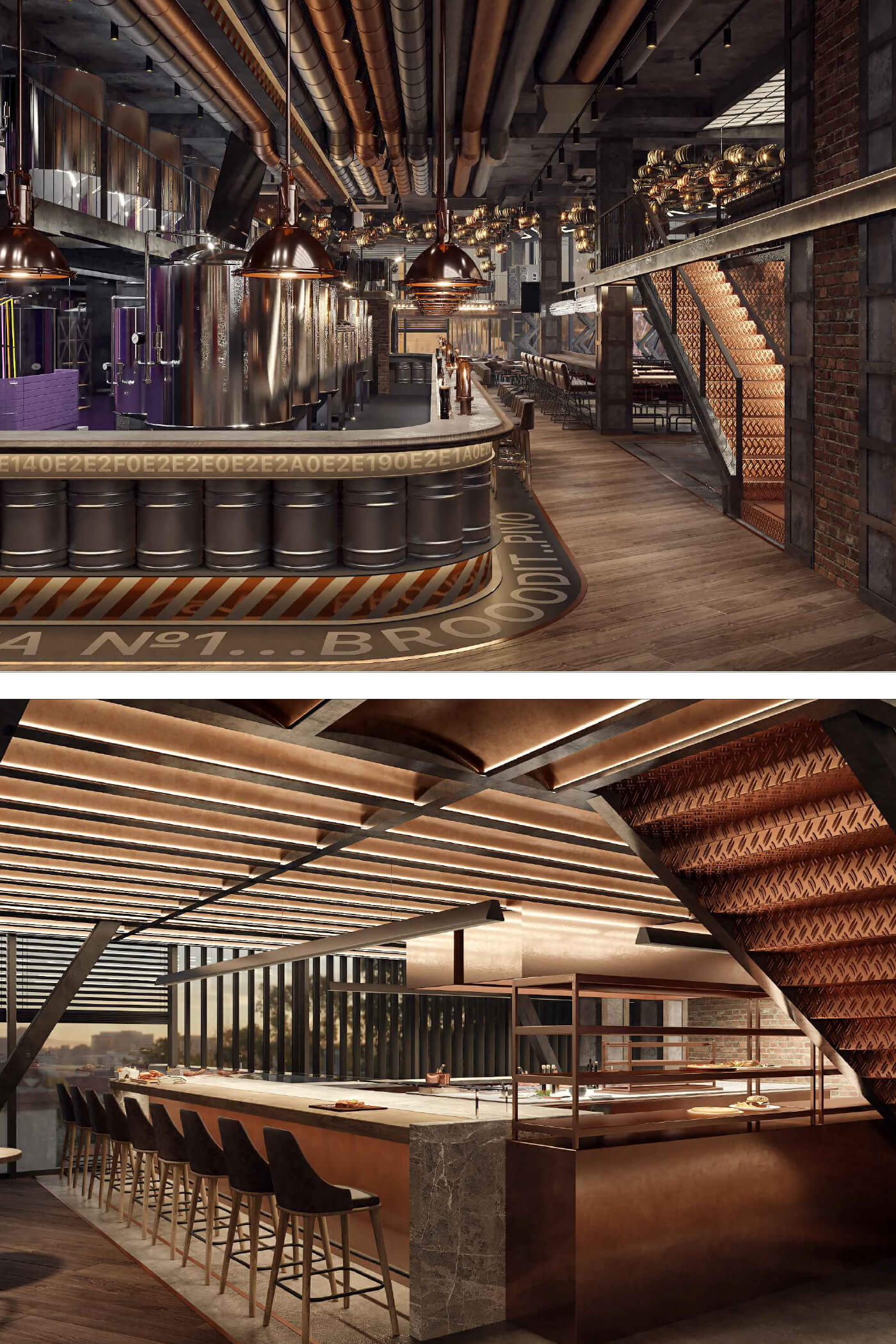
Our first priority was to set the right mood. We achieved this by leaving the raw concrete exposed and designing architecture that functions as the interior itself: mezzanines, decorative ceiling grids, hardwood flooring, and concrete inlaid with metal accents. To balance the industrial roughness, we introduced elements of "chic"—marble countertops, leather upholstery, and copper details that brought a sense of refinement and elegance to the entire project.
To further emphasize the production atmosphere, we integrated industrial machinery into the design. For instance, a hoist (telfer) is installed on the ceiling. For those unfamiliar, this is an electric winch that travels along a rail; it is remote-controlled and capable of lifting up to 8 tons. In our space, it is fully functional and used to move the "beer island" and kegs.
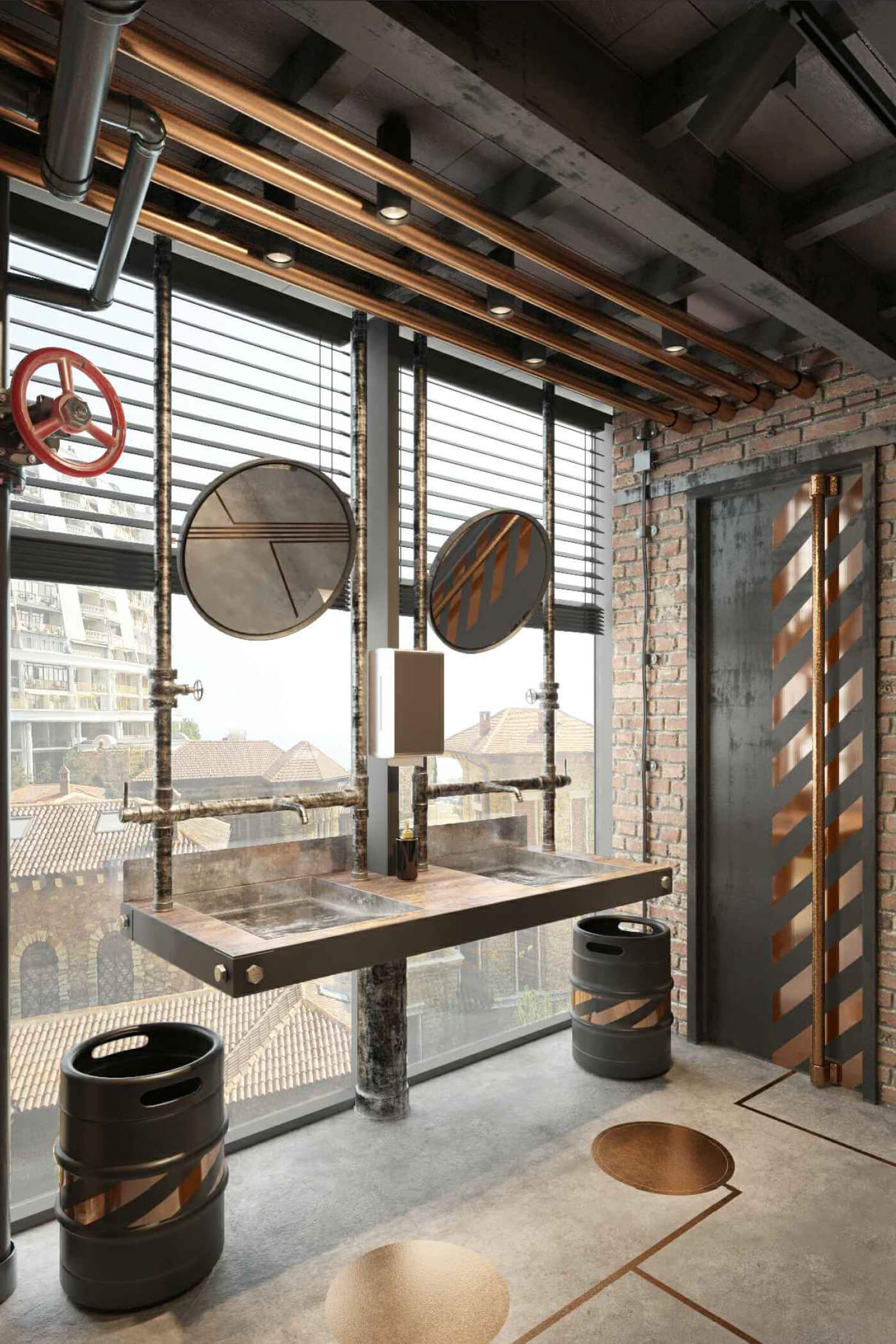
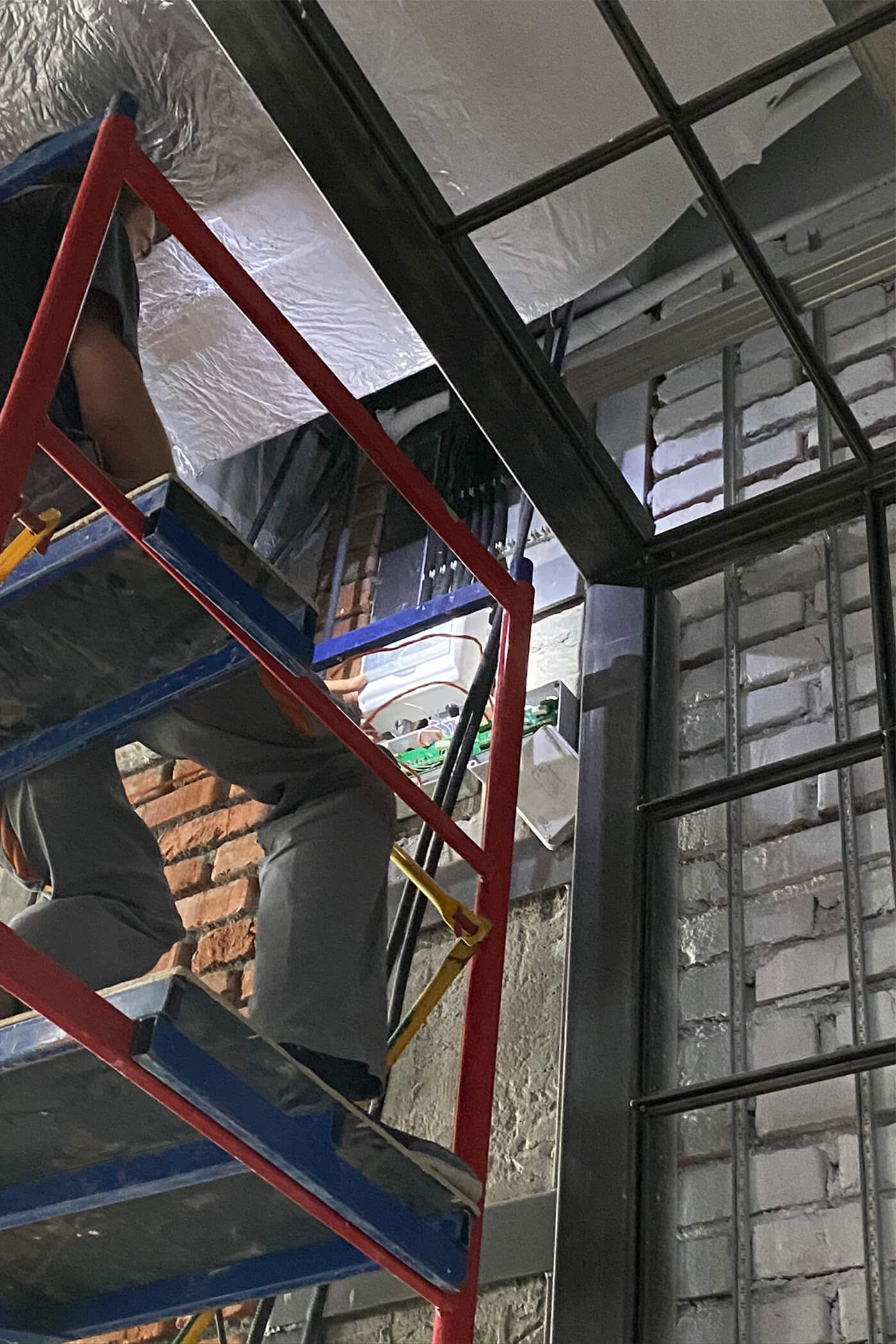
Exposed utilities are another vital part of the interior—we kept them all visible. It is often difficult to ensure that contractors install systems aesthetically, as they tend to run pipes diagonally or at awkward angles. We maintained strict oversight at every stage to ensure that every line was perfectly straight and intentional.
We were also fortunate to work with local partners on the electrical project. They developed a precise cable routing scheme, which we then refined to ensure all trays and guides aligned with our aesthetic vision. Ultimately, in this project, everything is the interior: the wiring, the mezzanines, the ventilation ducts, and even the fire suppression system.




03.Development:
GUEST JOURNEY AND INTERIOR SOLUTIONS
The layout was largely dictated by the fact that Beerteka is located on the third floor, with access provided via elevators or the main hall of the shopping center and cinema. The distance from the elevators to the main brewery space is approximately 25 meters, and our challenge was to design this path so that guests would traverse it with ease and curiosity. This corridor runs along the facade glazing, offering panoramic city views; however, it was crucial to establish the industrial aesthetic from the very first second. Upon entering, guests are greeted by an authentic forklift with raised forks that serves as the hostess station. This element has become so popular that it is constantly used as a signature photo zone.

Further along, guests enter a lobby with comfortable lounge seating. Behind the sofas, we installed a wall of beer kegs designed for direct guest engagement: a central copper strip displays the names of regular customers, birthday guests, or those who have set brewery records. Opposite the seating area is the massive "Beer Library." This 5-meter-high structure was built using five kilometers of smooth 12mm rebar and simple pine planks, housing thousands of bottles. Interestingly, we initially stocked it with full bottles, but due to direct sunlight during sunset, there was a risk of the beer spoiling. Consequently, one month before the opening, the entire team—from management to contractors—was mobilized to "liquidate" the beer while meticulously preserving the bottles and caps for the display.
Immediately following the lobby, the path takes a sharp left turn, as an evacuation staircase directly behind the keg wall prevented us from continuing along the facade. To keep this transit zone engaging, we installed glass-fronted refrigerators showcasing aged meats and exclusive craft beers. To ensure guests feel comfortable as they move deeper into the building, we installed a biodynamic skylight overhead. This lighting system automatically adjusts its color temperature and intensity to mirror the natural outdoor light, changing according to the weather and time of day.



DETAILS AND NEIGHBORLY COLLABORATION
A standout feature in this zone is the cloakroom, designed as bespoke metal lockers. The lacquered metal perfectly embodies the "industrial chic" aesthetic, reinforcing the overall concept. Opposite the lockers sits the "Beer Island"—a technologically complex station equipped with its own freon line for cooling. This allows the venue to significantly expand its offering with rare draught beers that maintain their peak quality in kegs.
Finally, the guest arrives in the main hall, where a large bar counter separates the restaurant area from the brewing zone. A critical phase of the project was managing the boundary between our space and the neighboring Multiplex cinema. Instead of solid walls, we installed a large glass partition. Since the cinema interior features a vibrant neon style, we turned this into a design advantage. The purple and pink neon from Multiplex reflects brilliantly off our stainless steel brewing tanks—an effect we further enhanced with our own RGB backlighting. This created a win-win scenario: cinema-goers get a glimpse of the impressive brewing process, while our guests enjoy a unique, ever-changing play of light and reflections.

04.Implementation:
ENGINEERING SOLUTIONS
The most formidable engineering challenges were related to HVAC (heating, ventilation, and air conditioning) and smoke extraction systems. Air conditioning at Beerteka is managed through high-capacity ducted units. Ventilating a massive 1,000 m² space with 6-meter ceilings is a significant task on its own, but the location’s layout added layers of complexity. Situated on the main facade, our unit shares its opposite wall with a cinema. This meant that connecting the brewery to the external ventilation equipment on the rear facade required a path that effectively "pierced" through the entire cinema complex.
Naturally, running ductwork through or even directly above the cinema halls was out of the question; the vibrations from the ventilation pipes are strictly unacceptable for a theater environment. Consequently, we devised an alternative route through the ground floor. We dropped the lines from Beerteka down to the first level, ran them along the entire length of the parking garage, and only then ascended to our rooftop equipment. According to calculations, the primary ducts had to be approximately 1500 x 700 mm, and that was only half of the problem.


The second major challenge was smoke extraction. As a shopping center is a high-hazard facility, we had to adhere to stringent fire safety regulations. The system consists of two mandatory components: fresh air intake and the smoke exhaust itself, which utilized a massive 2000 x 700 mm duct leading to powerful rooftop extraction fans.
We had to intelligently combine these systems, distributing both ventilation and smoke extraction across the entire ceiling. While the ventilation ducts lead downward, the smoke extraction lines go upward (utilizing the building's expansion joint). A critical aesthetic issue arose: with ceilings over 5 meters high, a 70 cm duct running beneath the slab created a visual barrier. A person standing on the mezzanine would find their view obstructed from the waist up by metalwork—negating the open feel of the space.
While we had some flexibility with the ventilation layout, smoke extraction parameters are rigidly dictated by fire codes. How did we solve this? We split the massive smoke extraction duct into six circular 315 mm pipes and added a dozen smaller pipes for ventilation. To give this composition a sense of rhythm and dynamics, we intentionally stylized them: some were painted, others finished in copper tones, and some left in thermal insulation to emphasize the industrial aesthetic.



Project showreel