BEERTEKA
BEERTEKA - это крафтовая
пивоварня в Одессе
BEERTEKA — проект, в котором инженерия и эстетика индустриальной эпохи переплетаются в цельную архитектурную симфонию. Один из самых любимых наших проектов, которому посвящено очень много времени и сил.
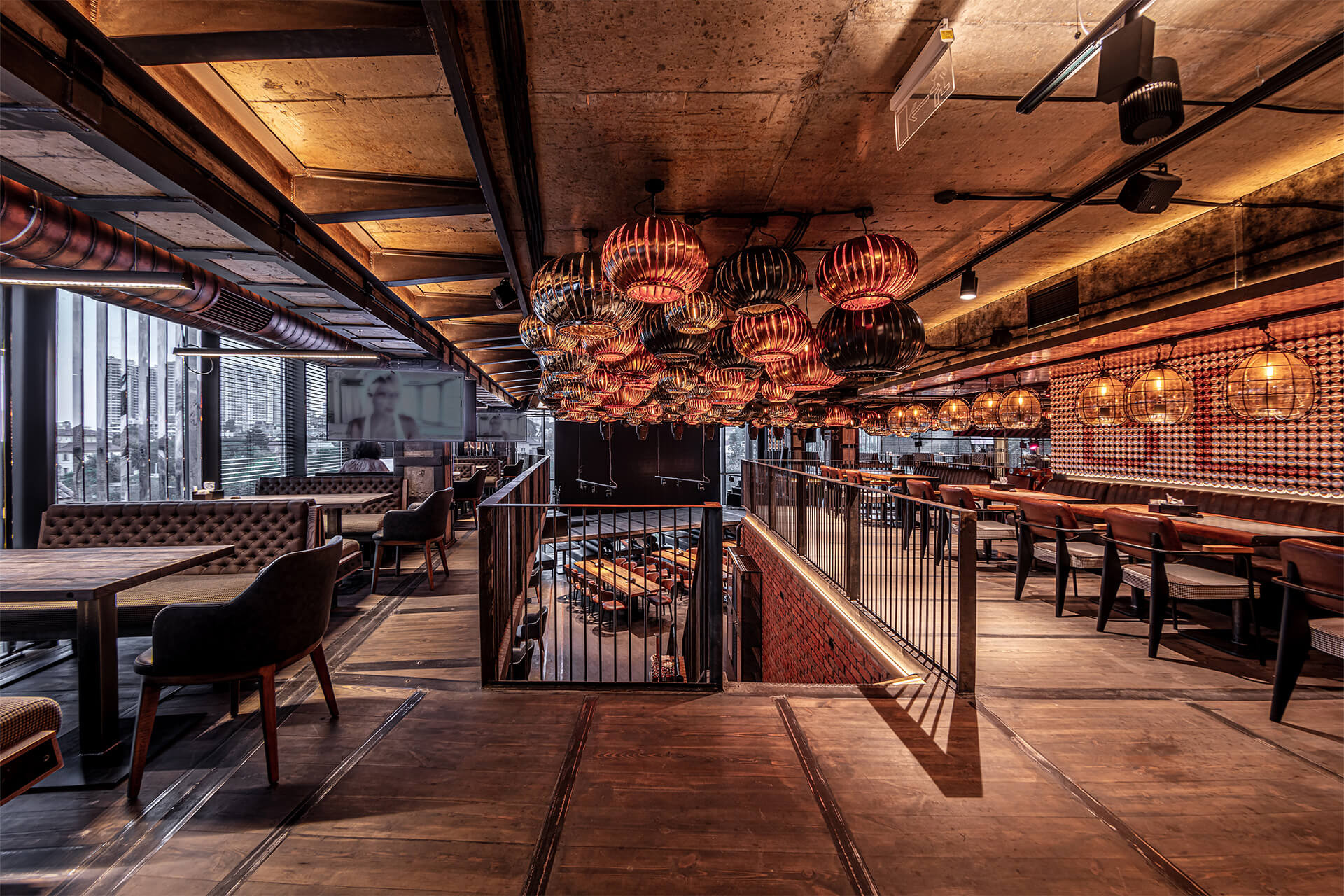
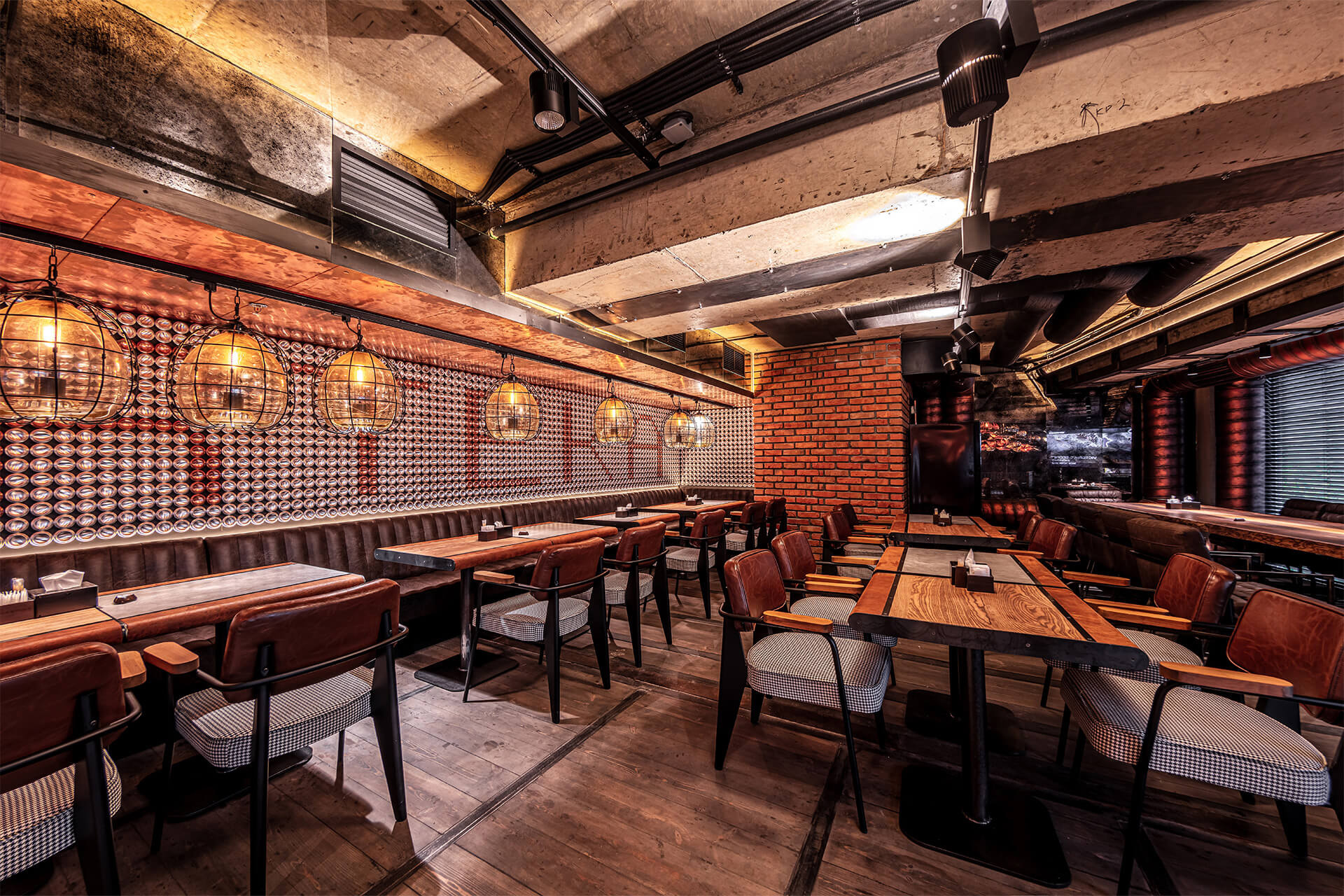
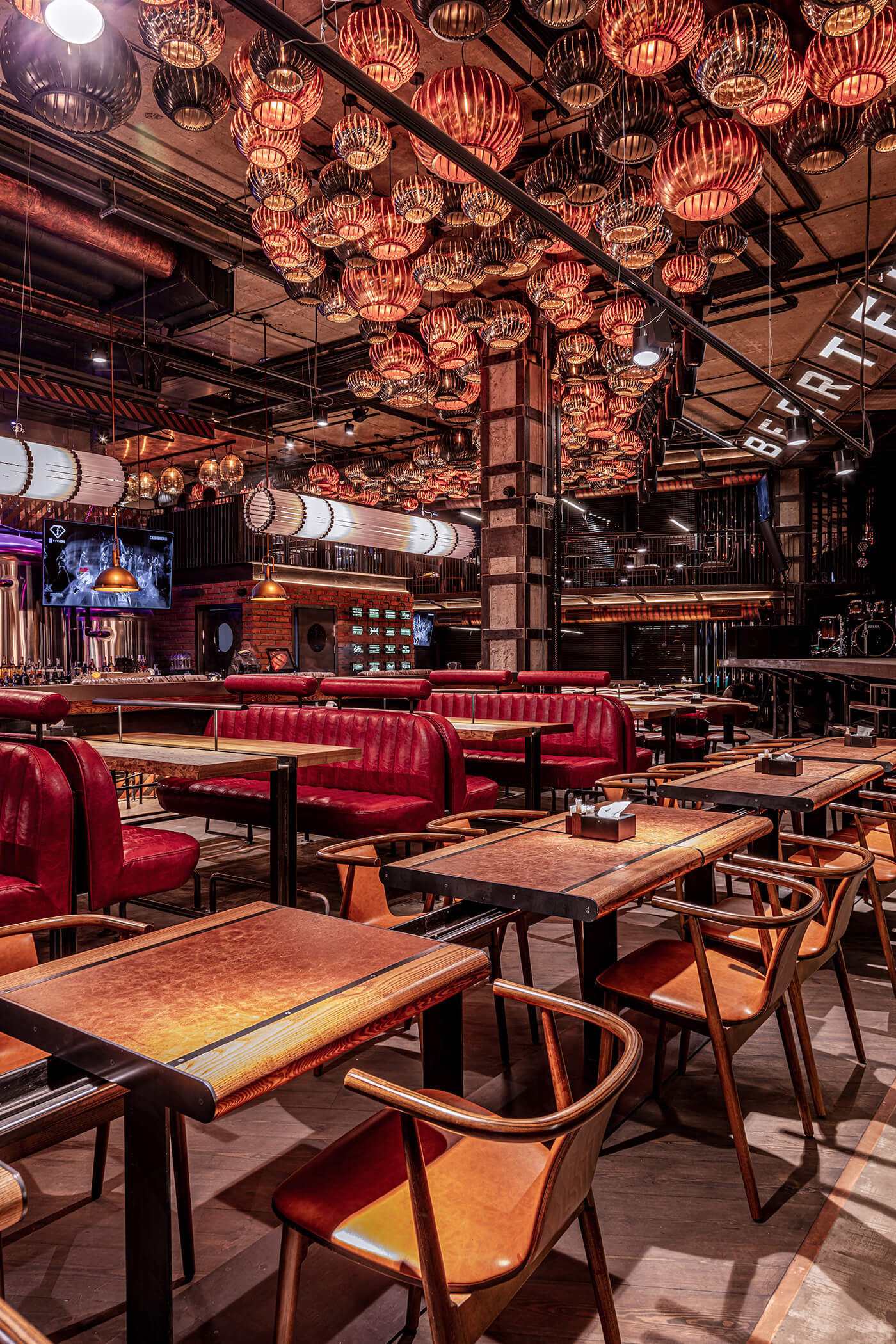
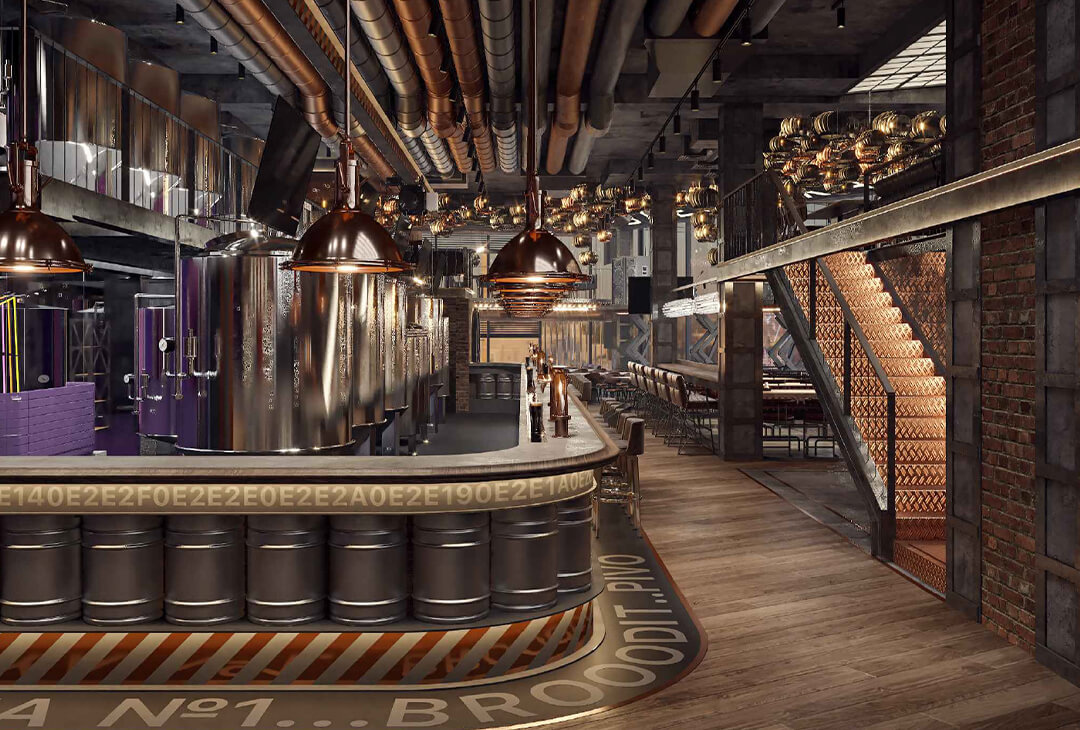
Работая над интерьером, мы стремились создать пространство, которое не просто стилизованное под американскую пивоварню, а буквально перенесет гостя в её атмосферу. Архитектурный язык здесь строится на честных, «рабочих» материалах — кирпич, сталь, массив дерева, медь. Их сочетание не декоративно, а функционально: металлические конструкции реально несут нагрузку, дерево служит в качестве рабочих поверхностей, а медные акценты придают теплоту и визуальный ритм.
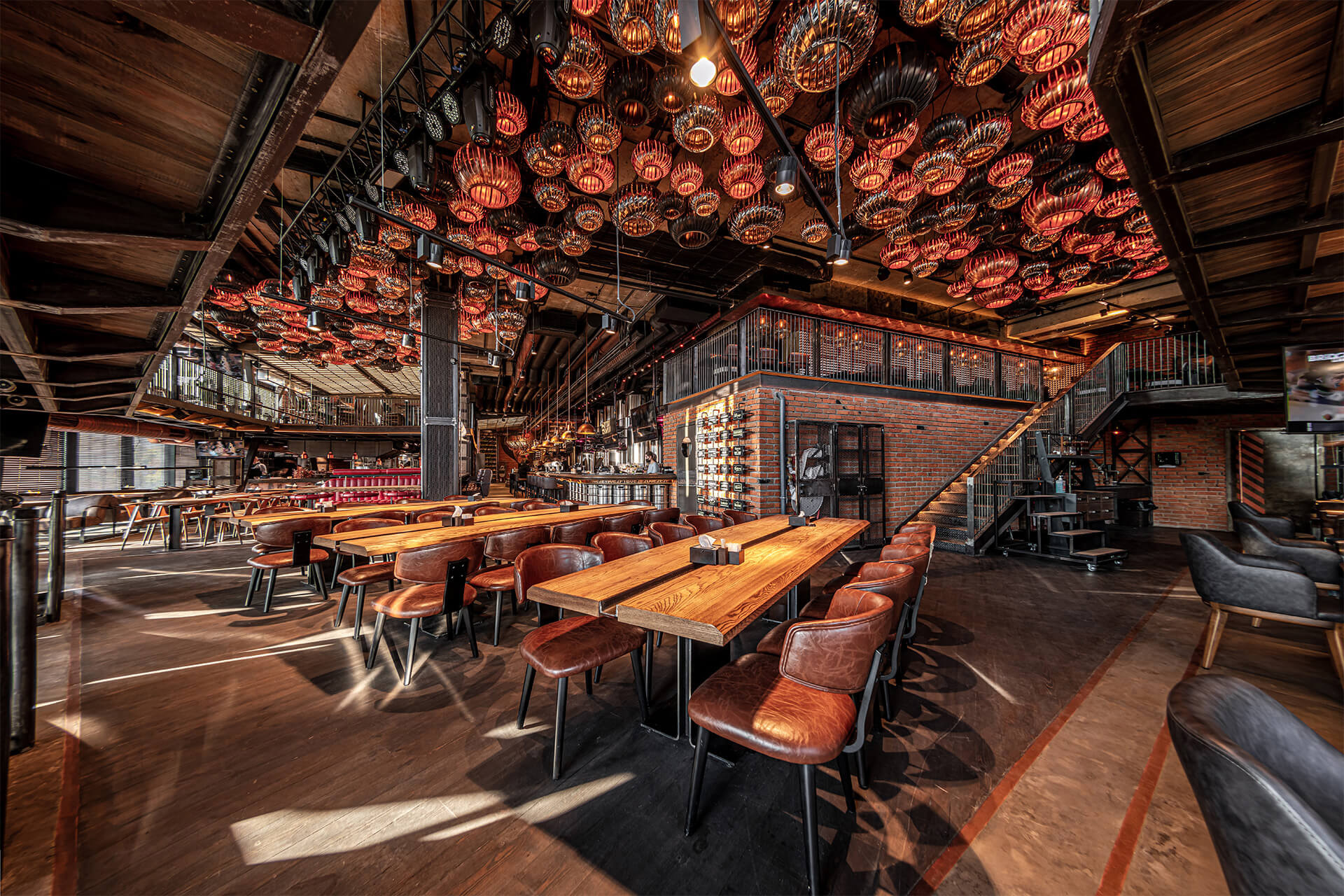
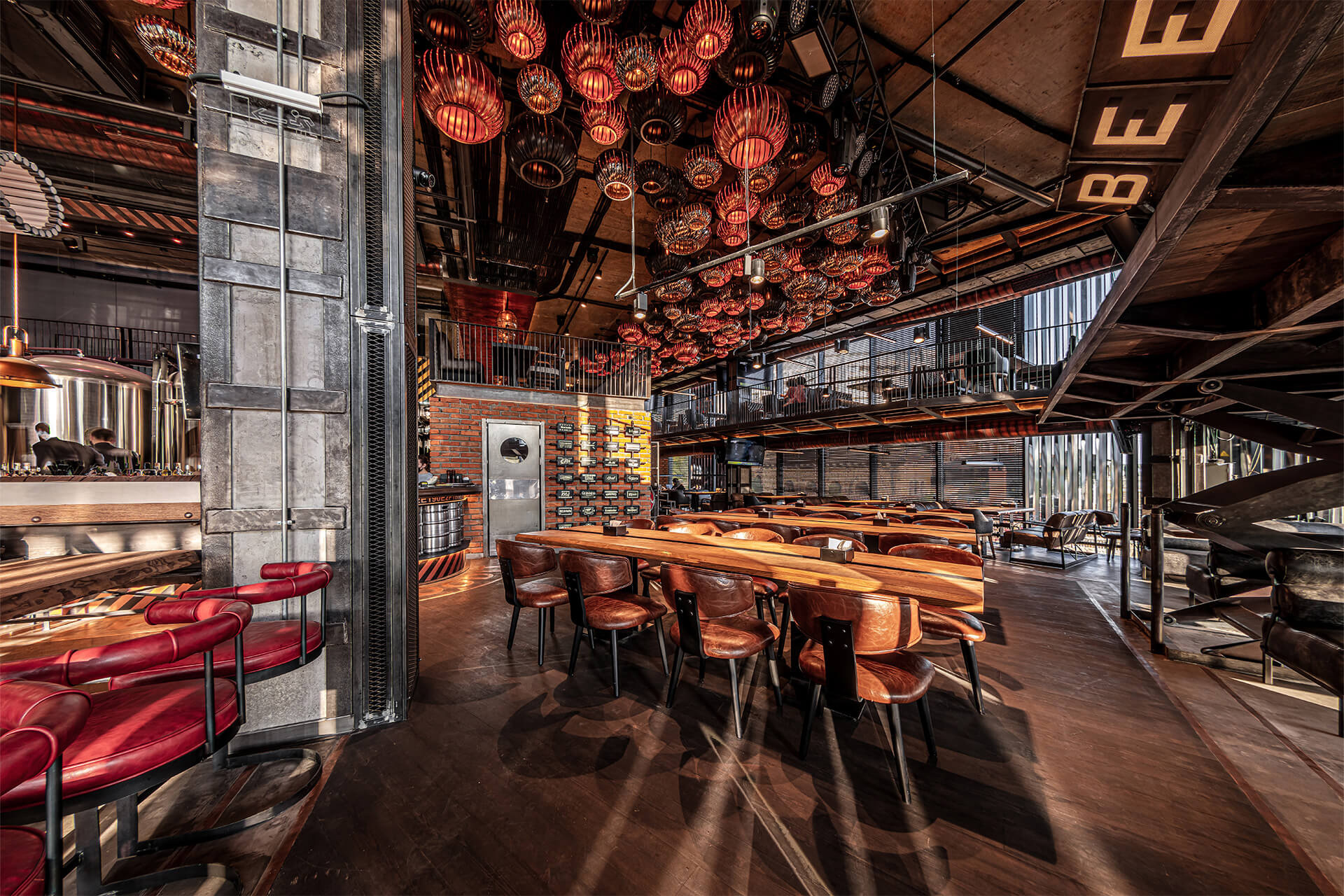
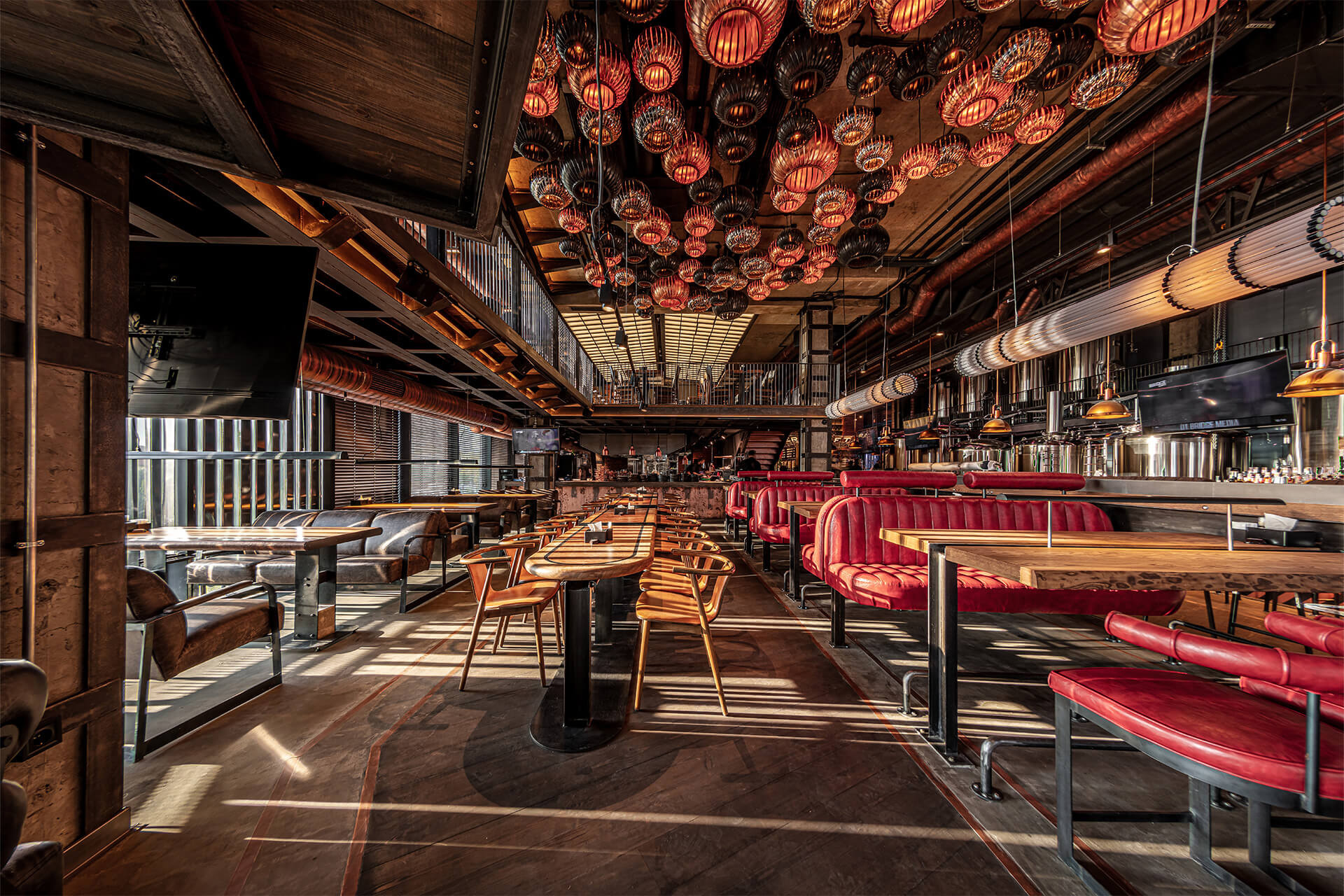
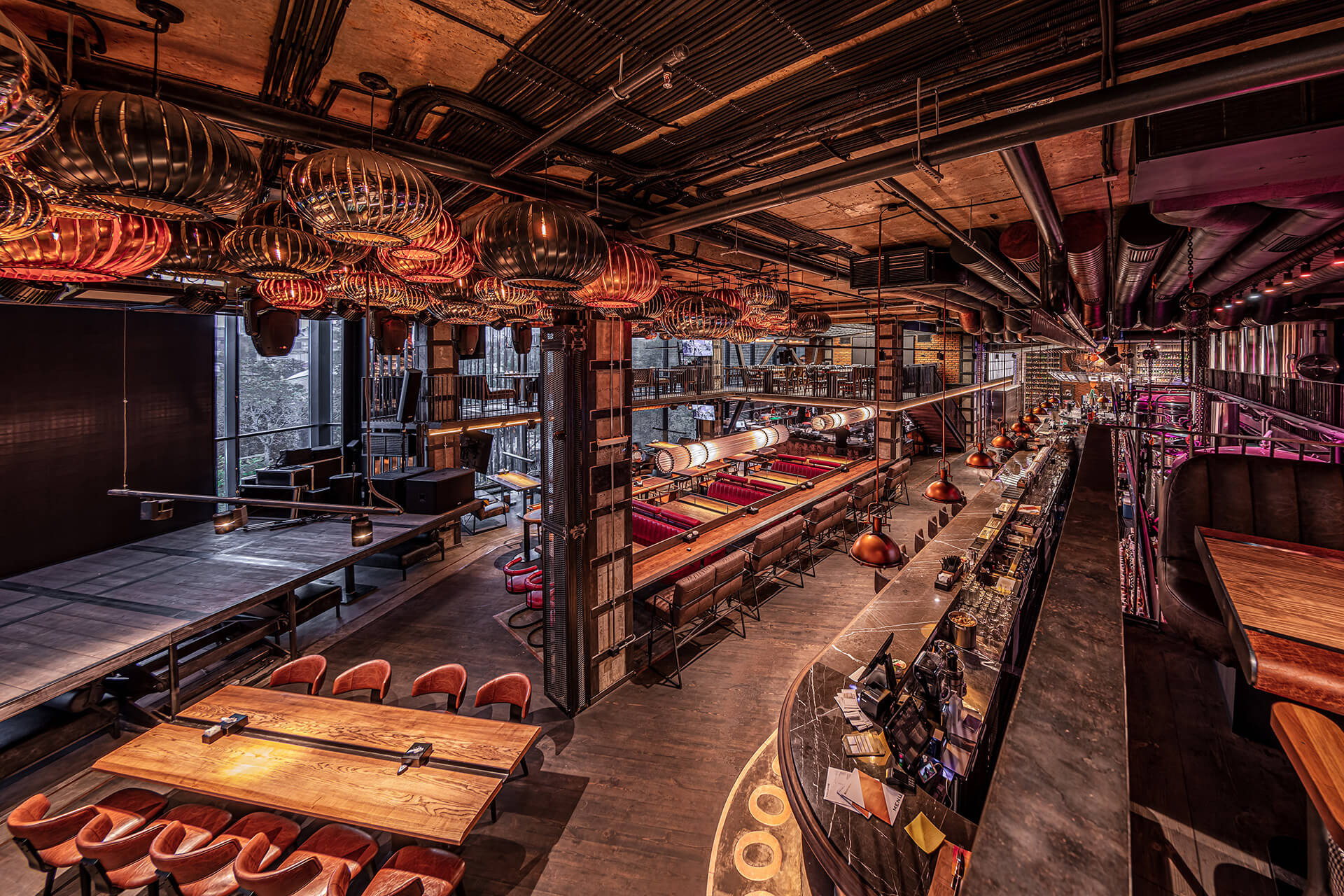
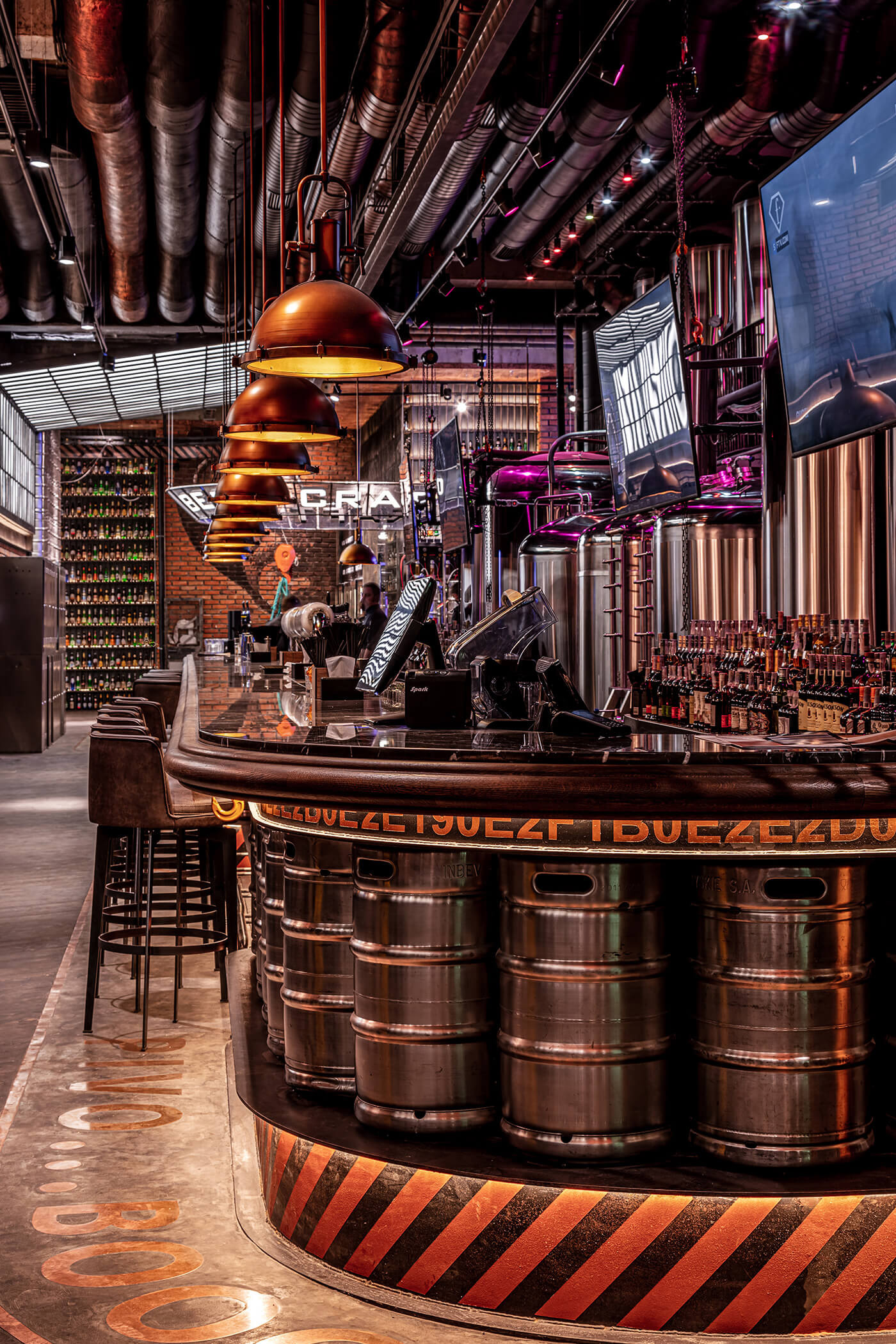
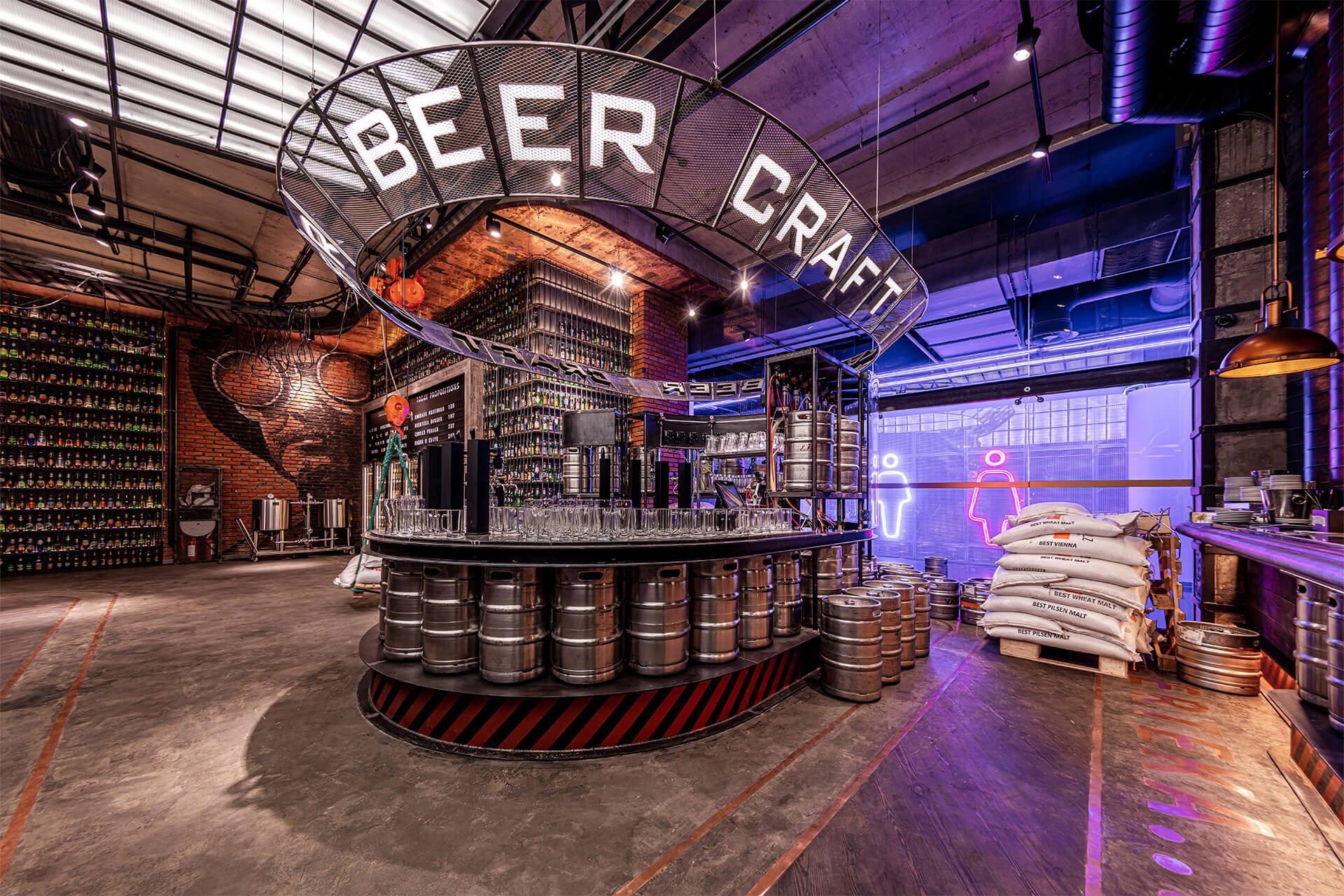
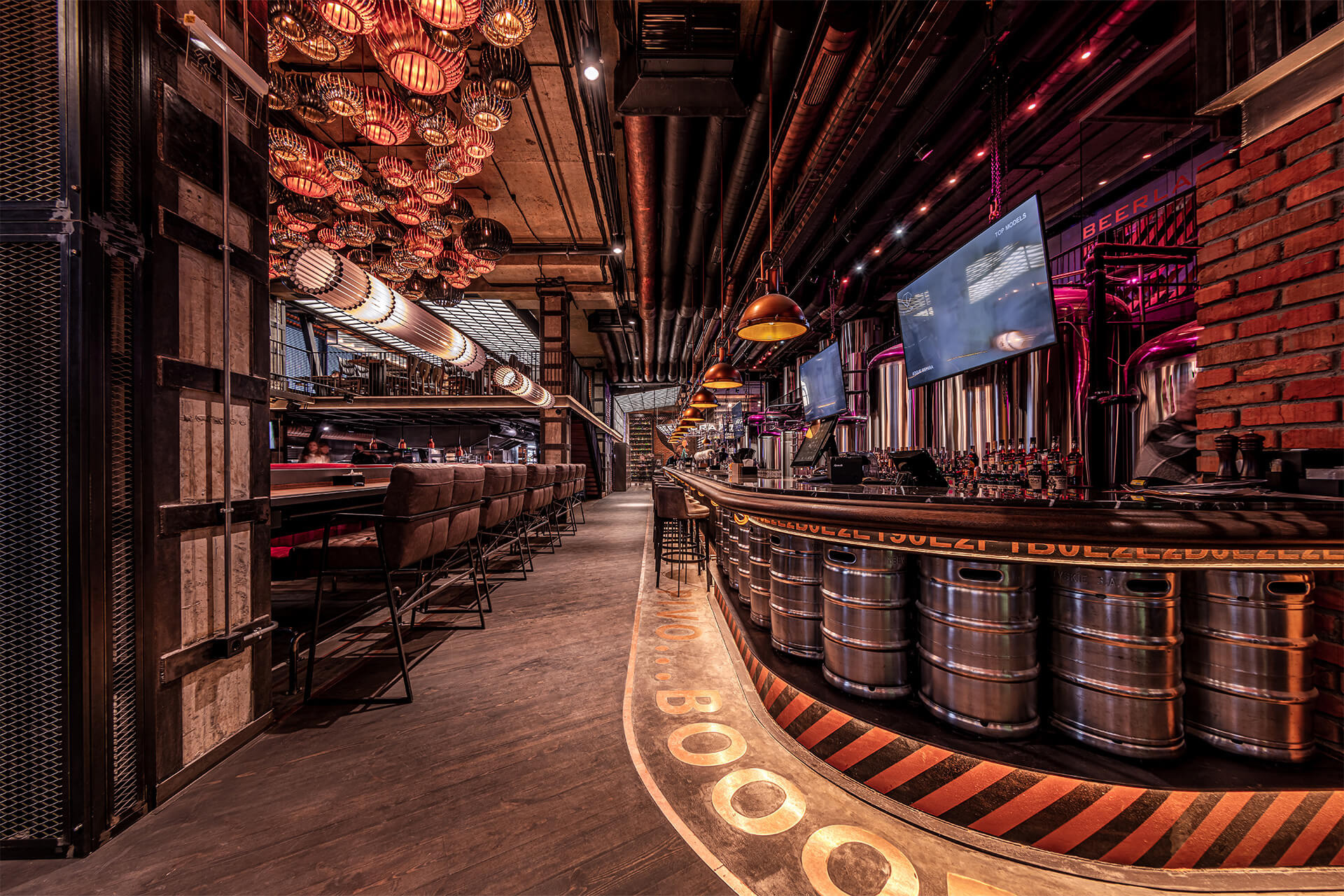
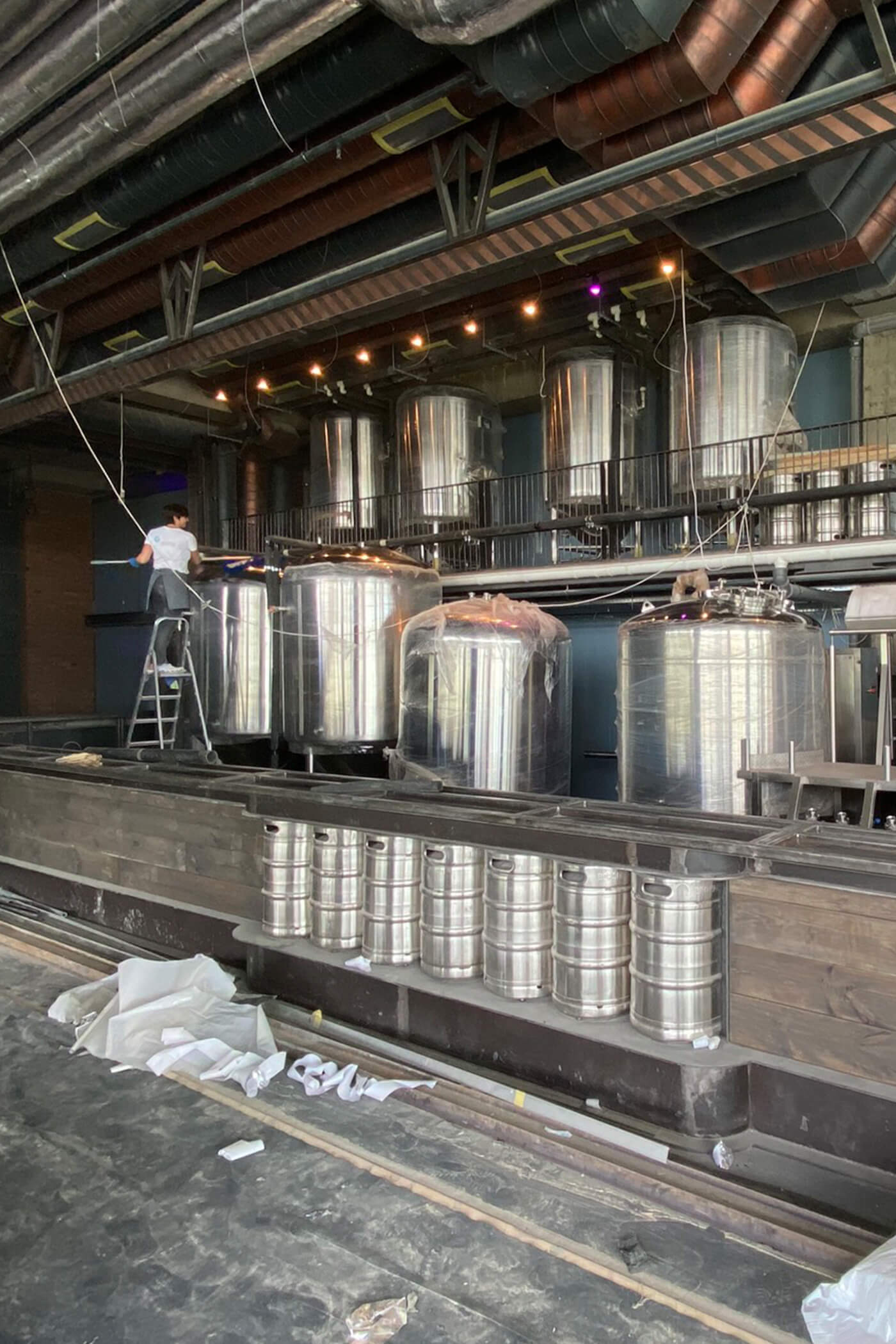
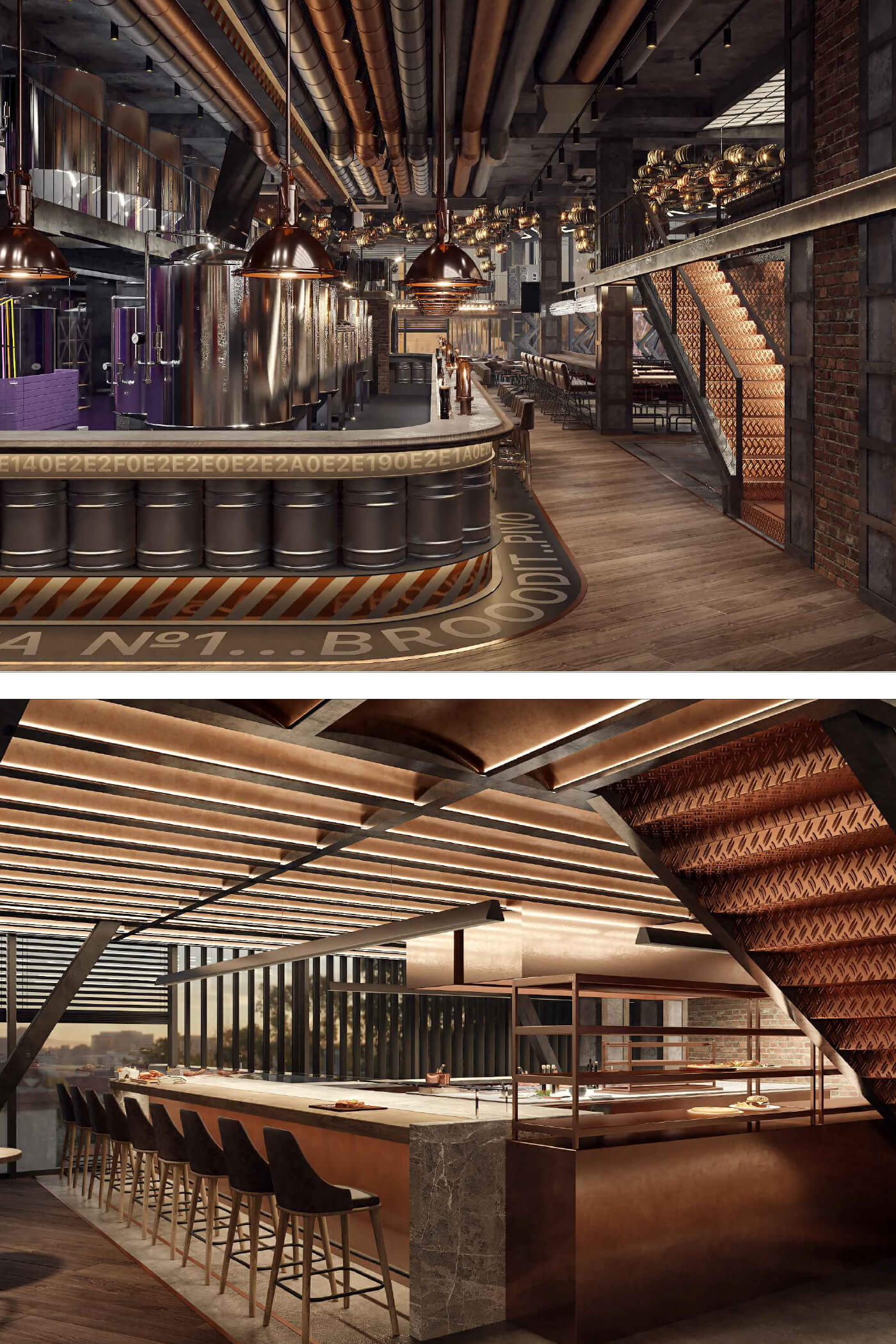
Ключевой элемент концепции — интеграция в интерьер полностью рабочей пивоварни с настоящим технологическим оборудованием. Она не спрятана за стеклом, а становится частью визуального и эмоционального опыта гостей, позволяя им наблюдать процесс варки пива в реальном времени. Это не только усиливает аутентичность, но и создаёт уникальную философию проекта, объединяя гастрономию и архитектуру в одном пространстве.
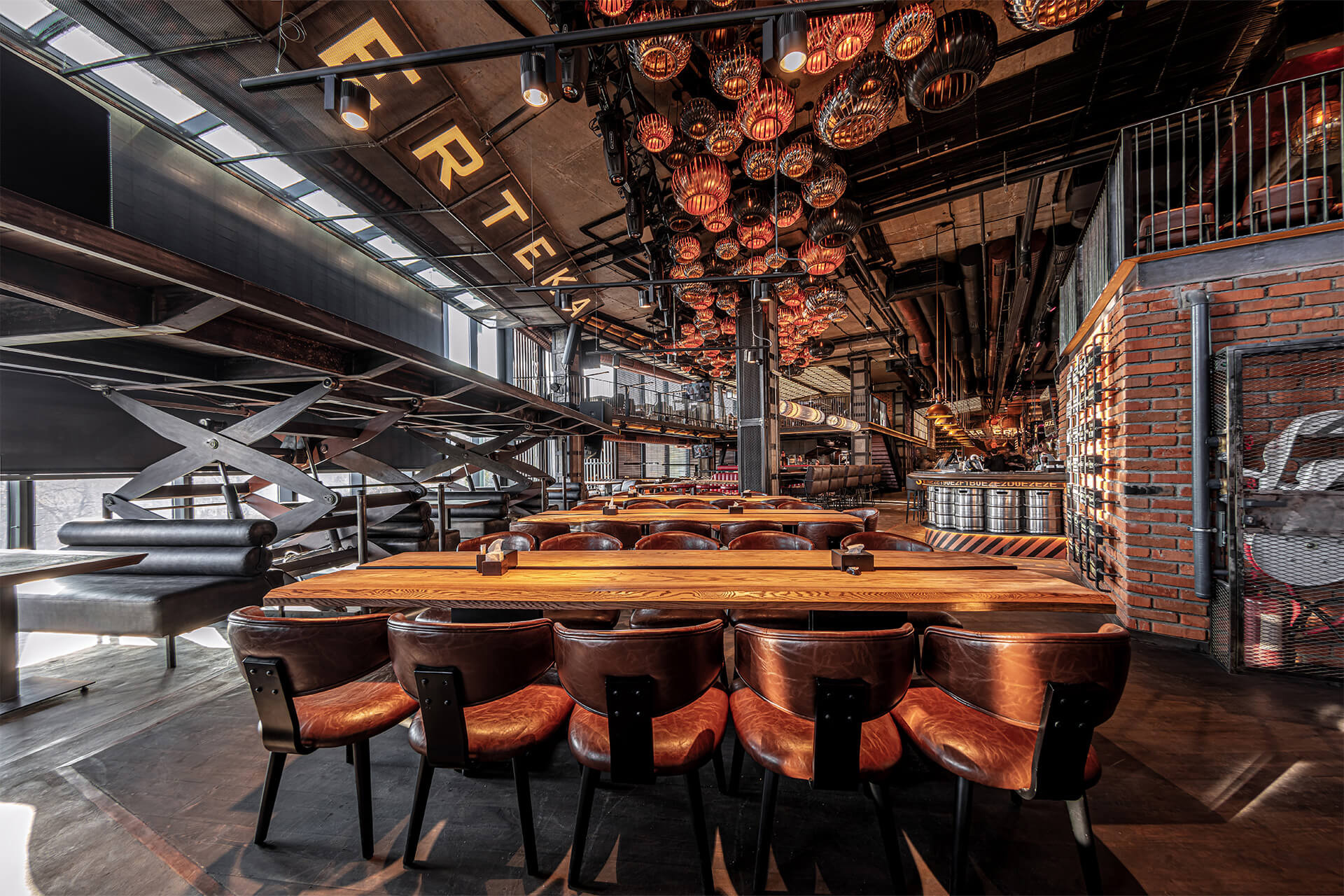
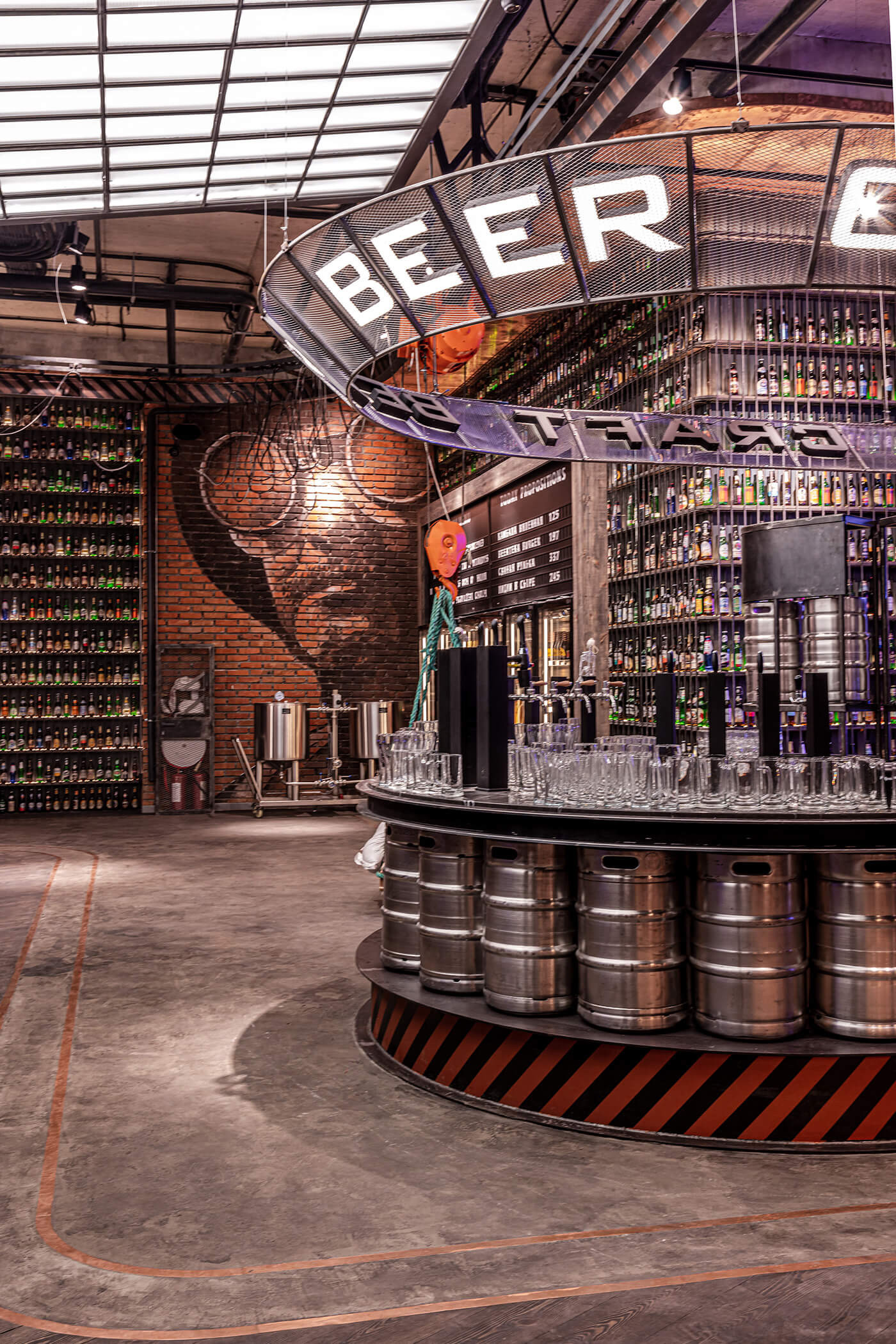
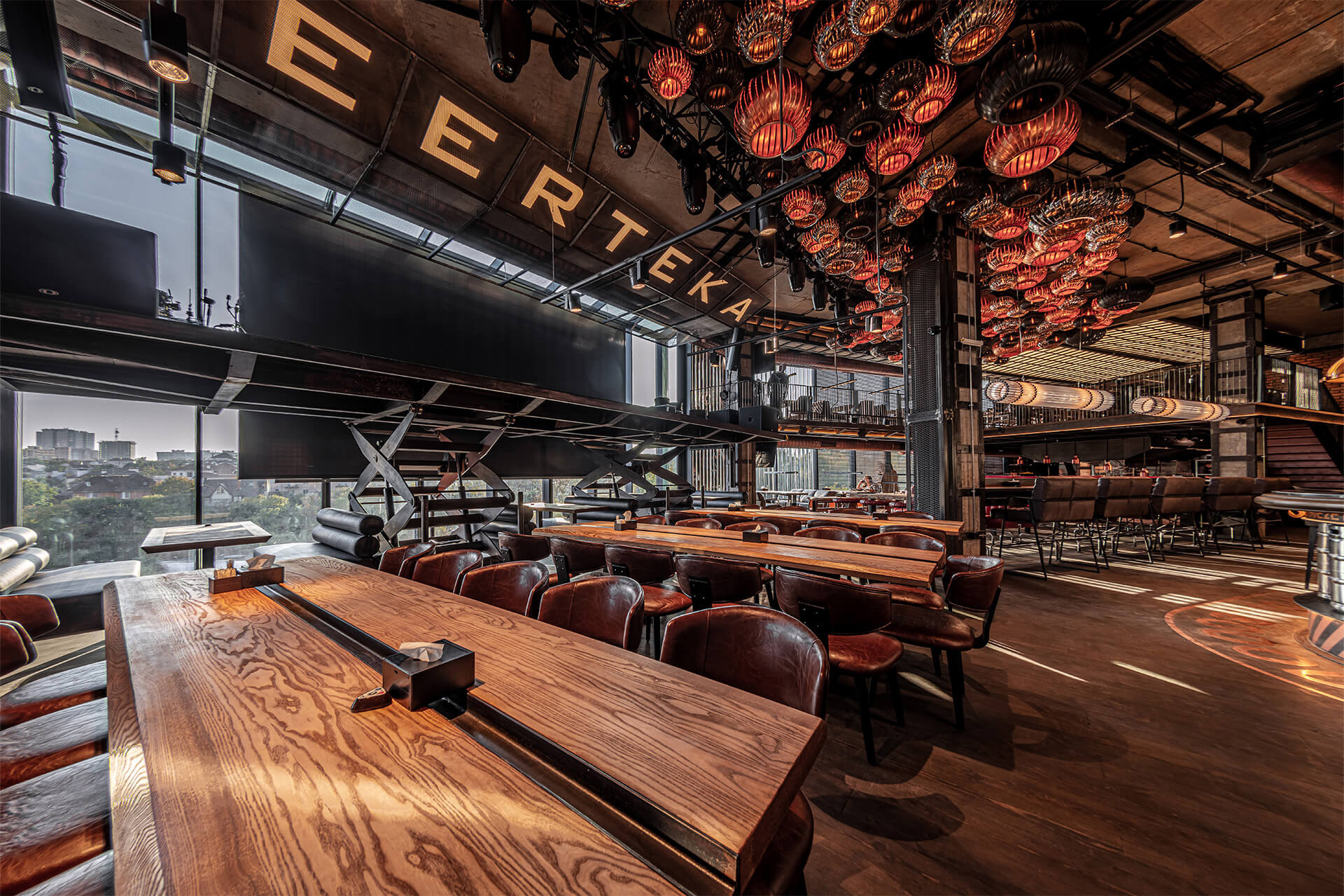
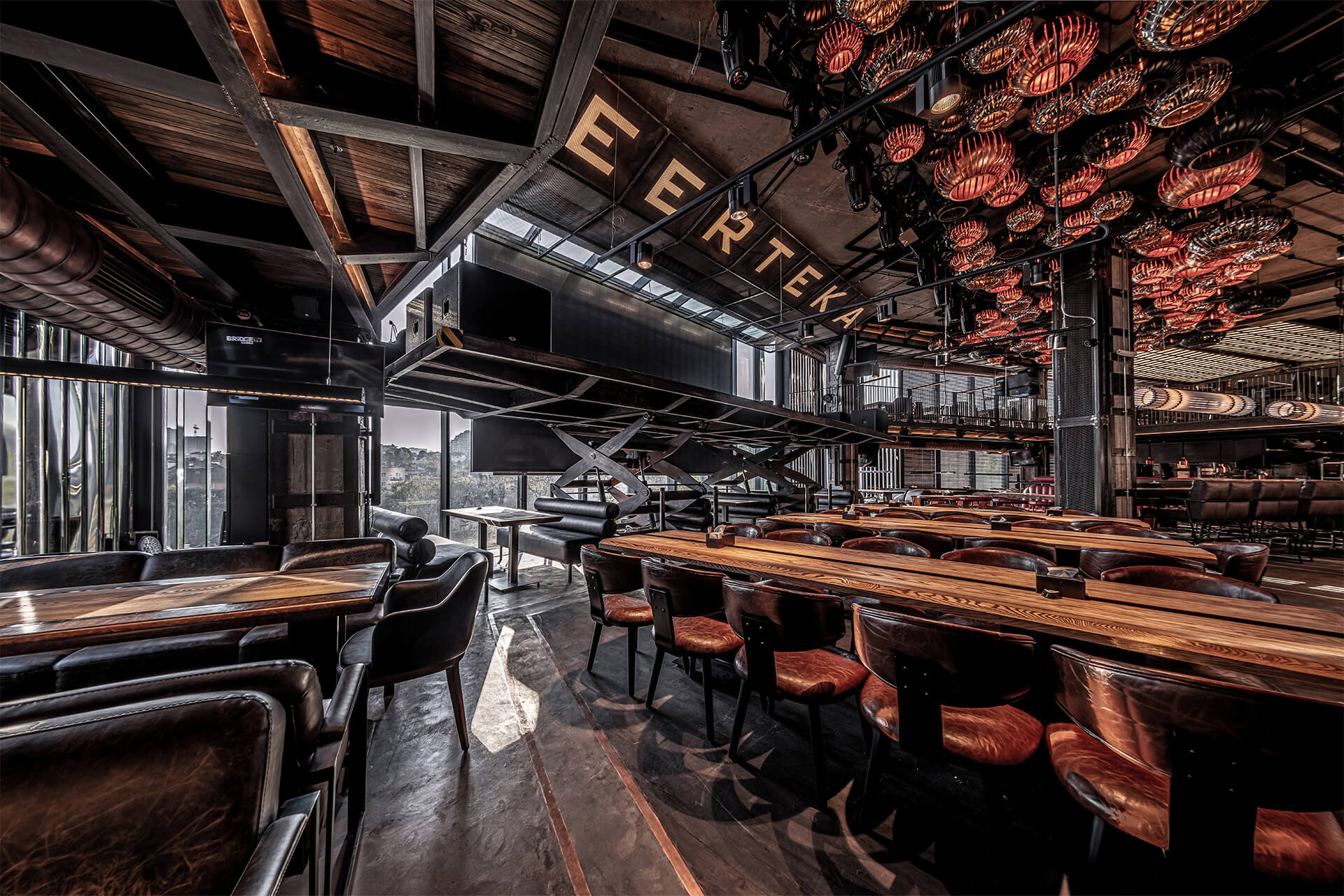
Особое впечатление производит эффектное двусветное пространство ресторана. Оно не только формирует мощный архитектурный акцент и ощущение масштаба, но и позволило организовать дополнительные уровни для посадочных мест, увеличив вместимость зала без ощущения тесноты. Высота помещения усиливает игру света придает интерьеру ресторана масштабность и весомость.
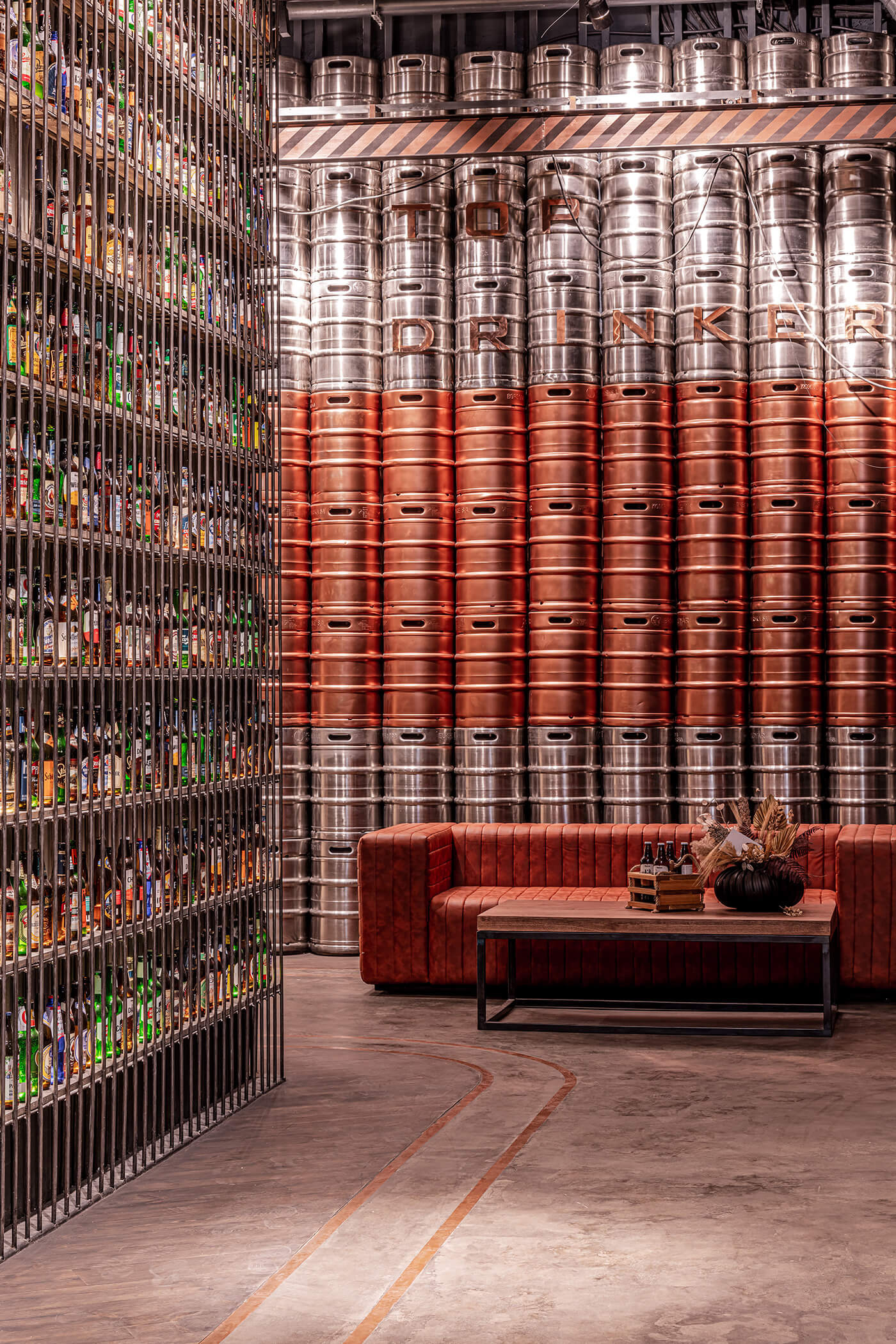
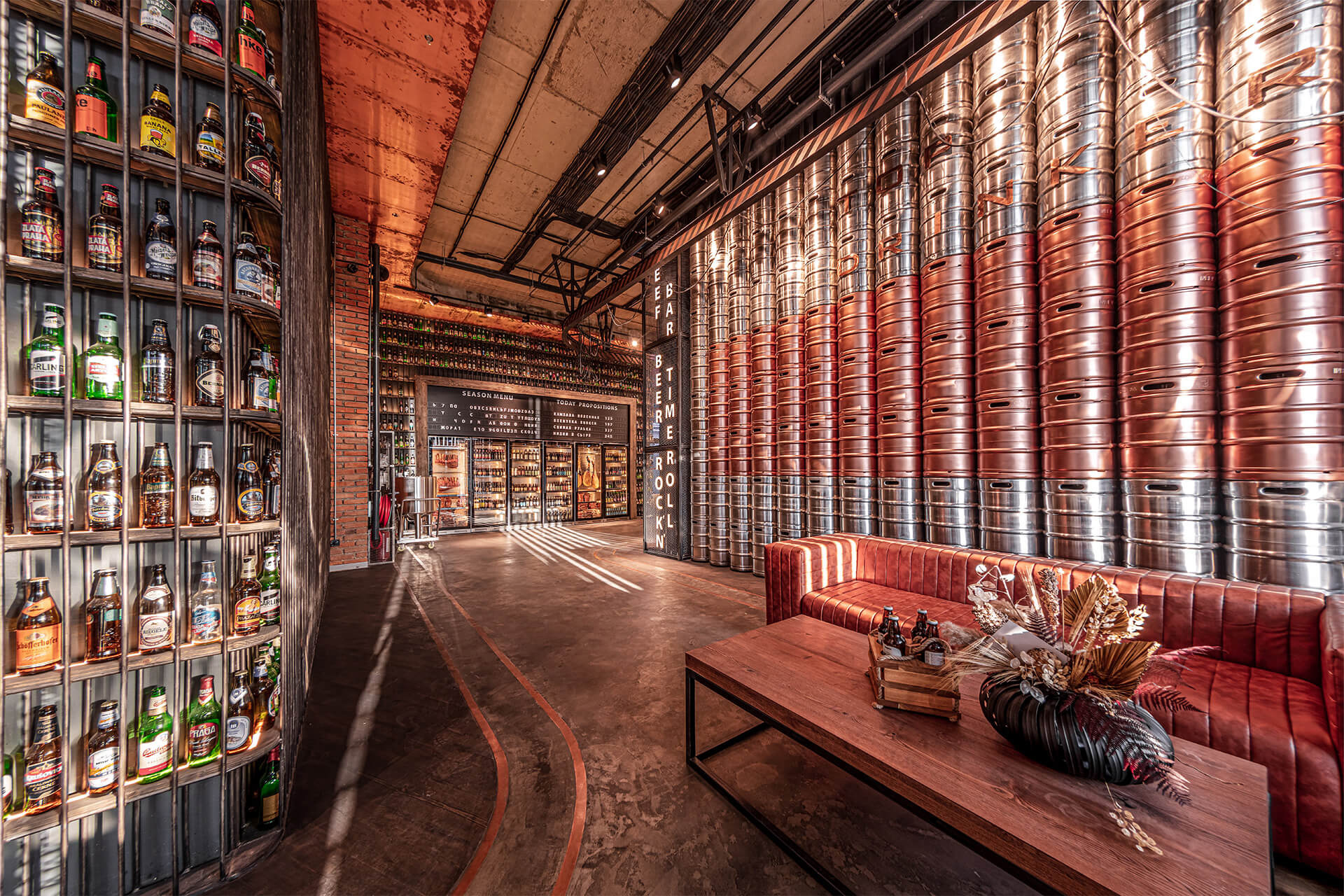
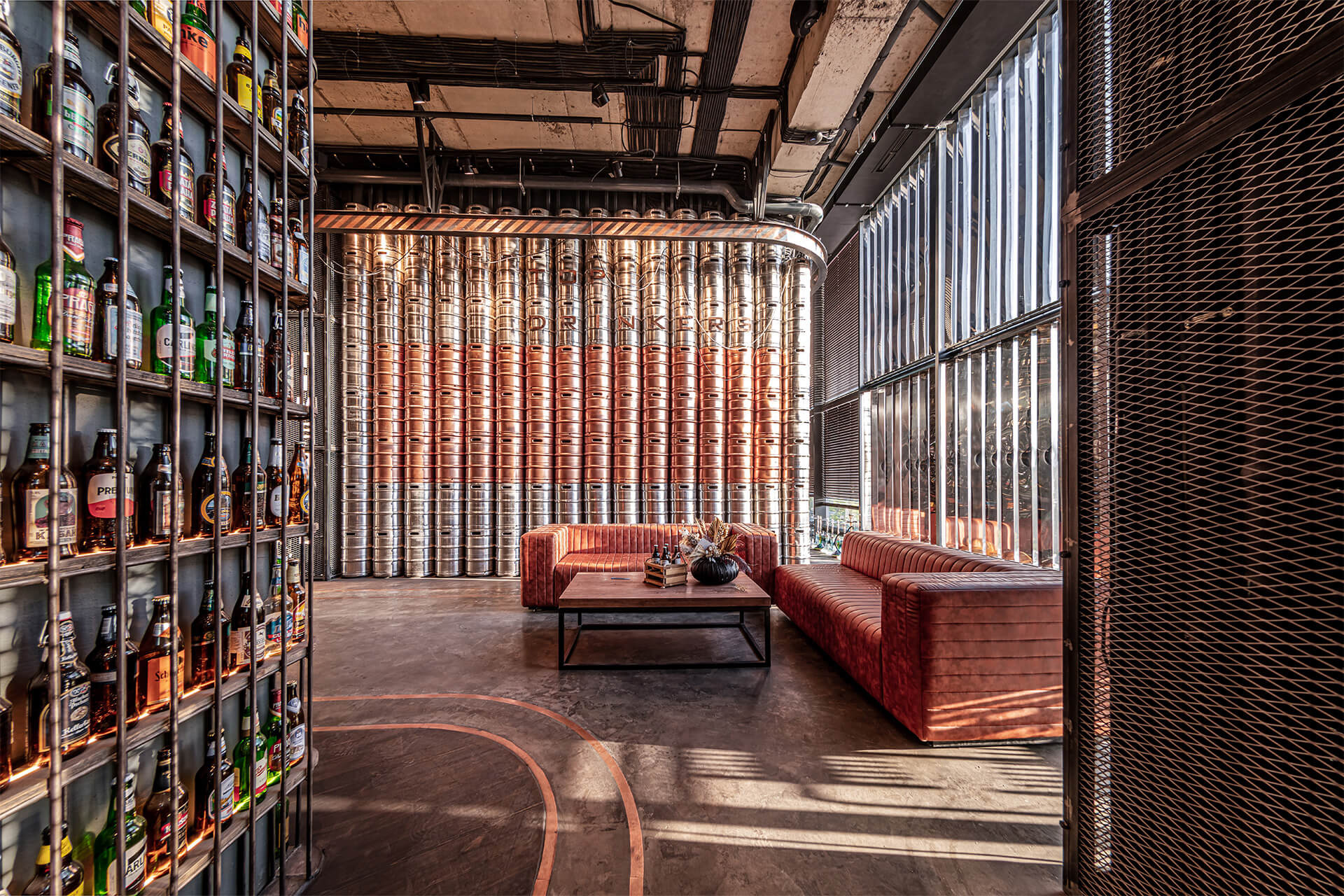
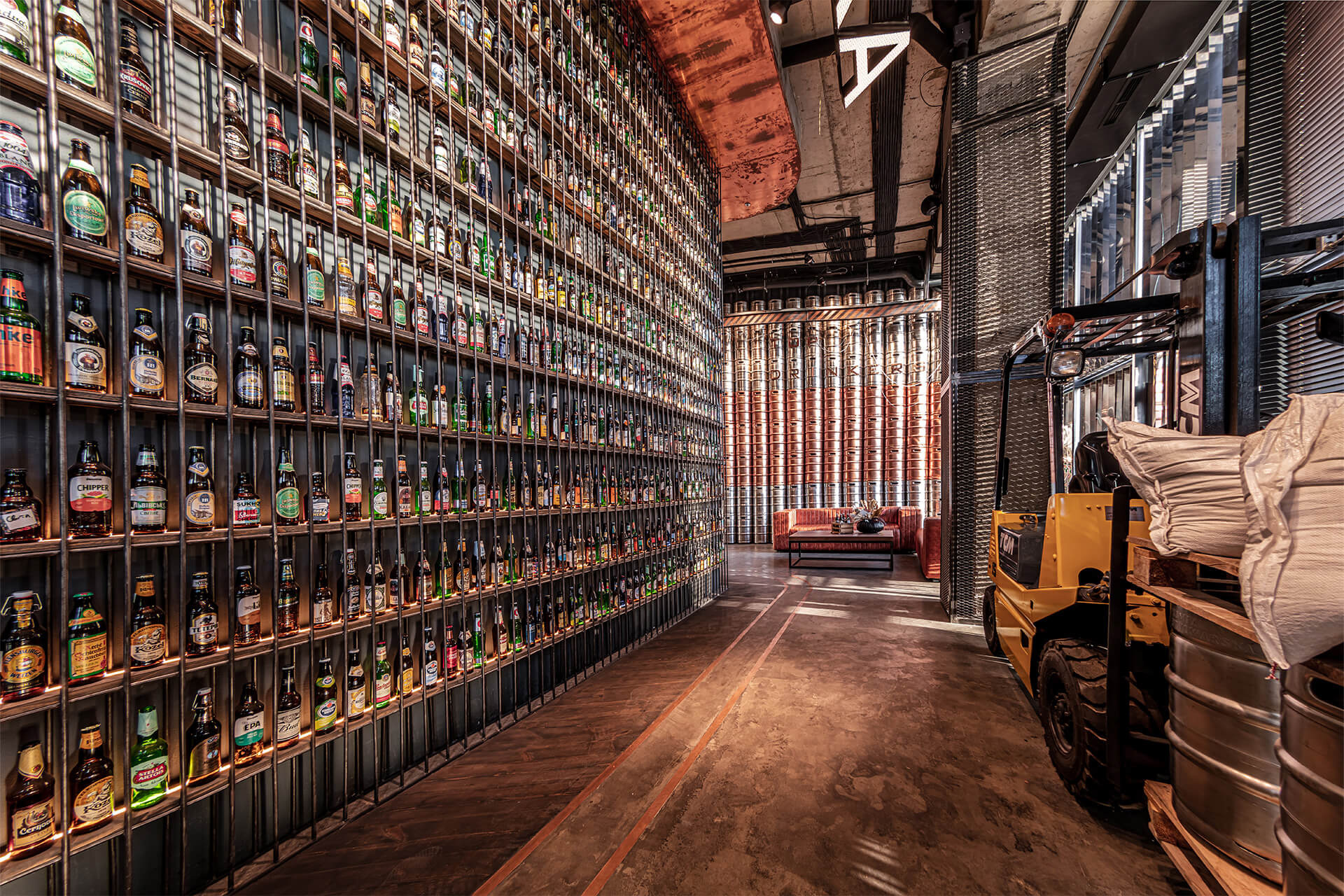
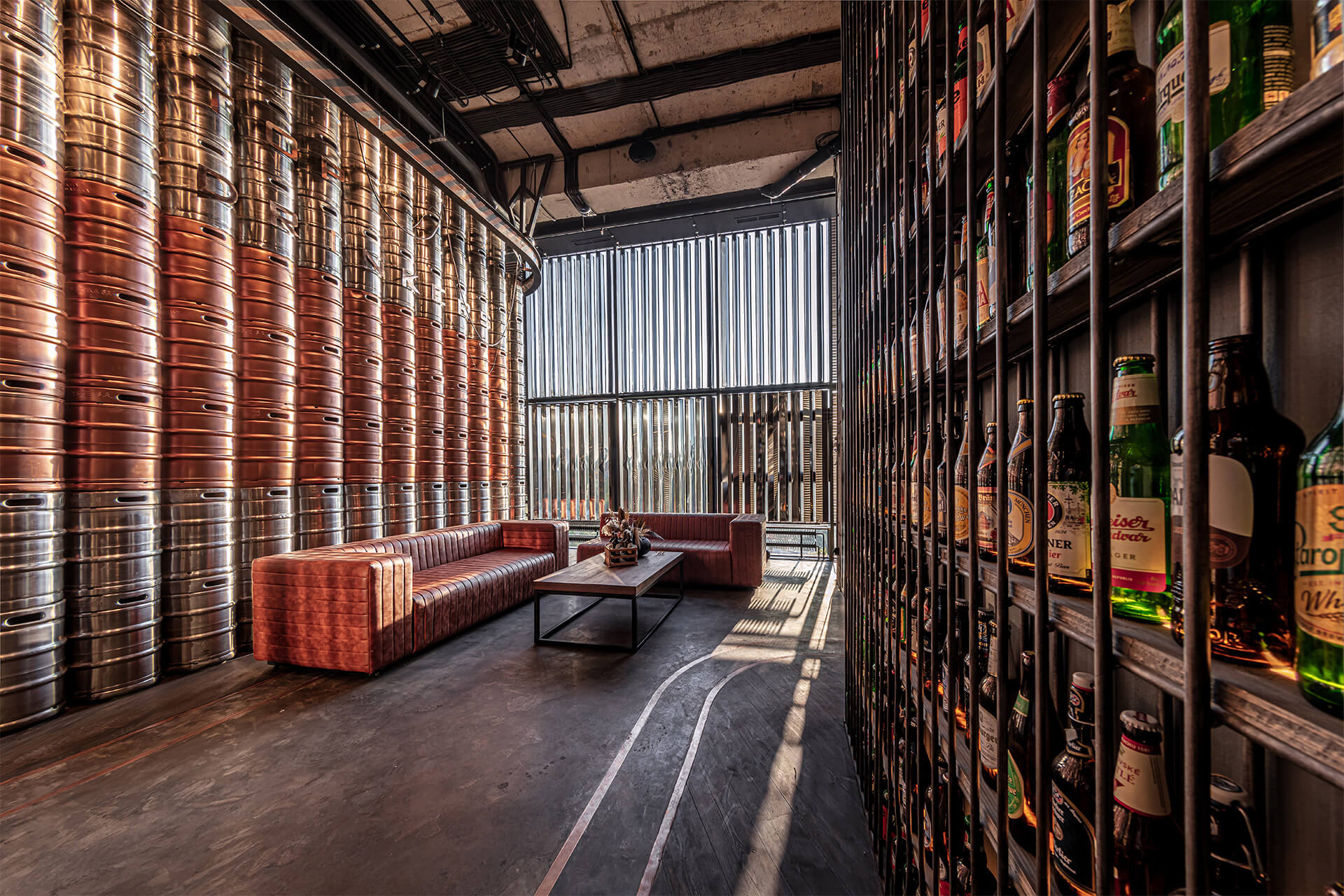
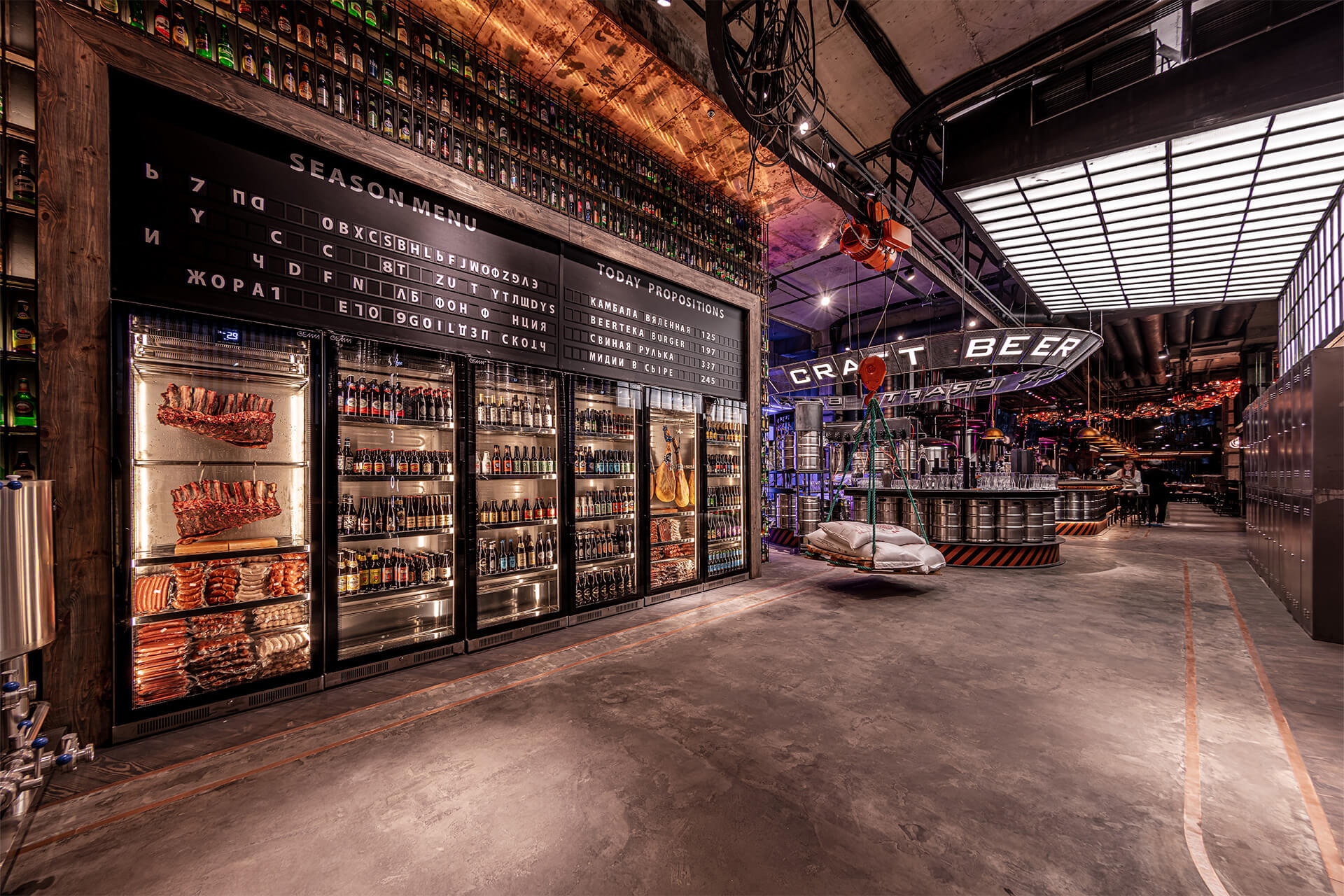
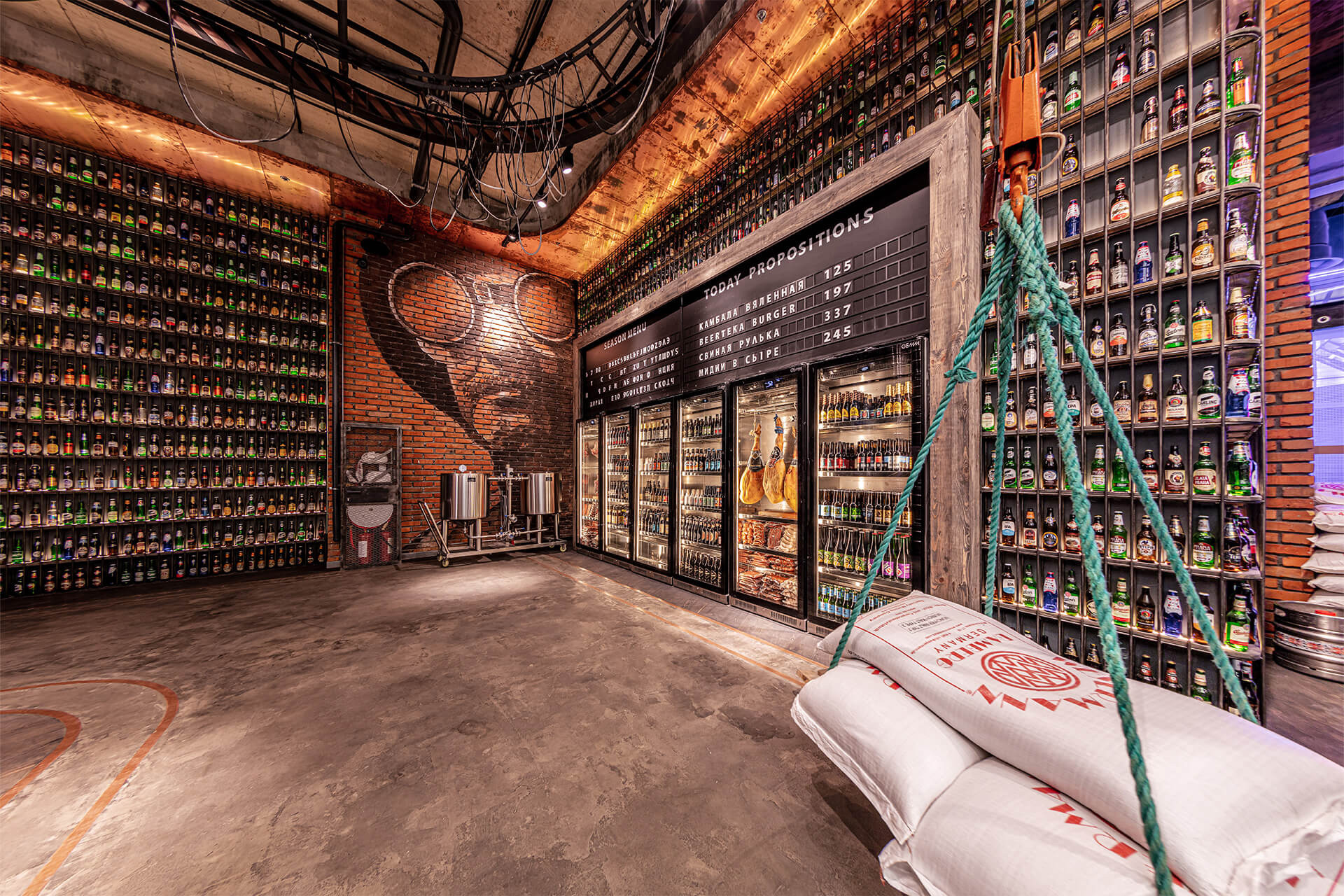
При входе в зал открывается акцентная композиция — «пивная библиотека» с более чем 3000 бутылок, выстроенных как музейная экспозиция. Этот элемент стал не просто декором, а смысловым ядром пространства, от которого расходится визуальная и планировочная логика.
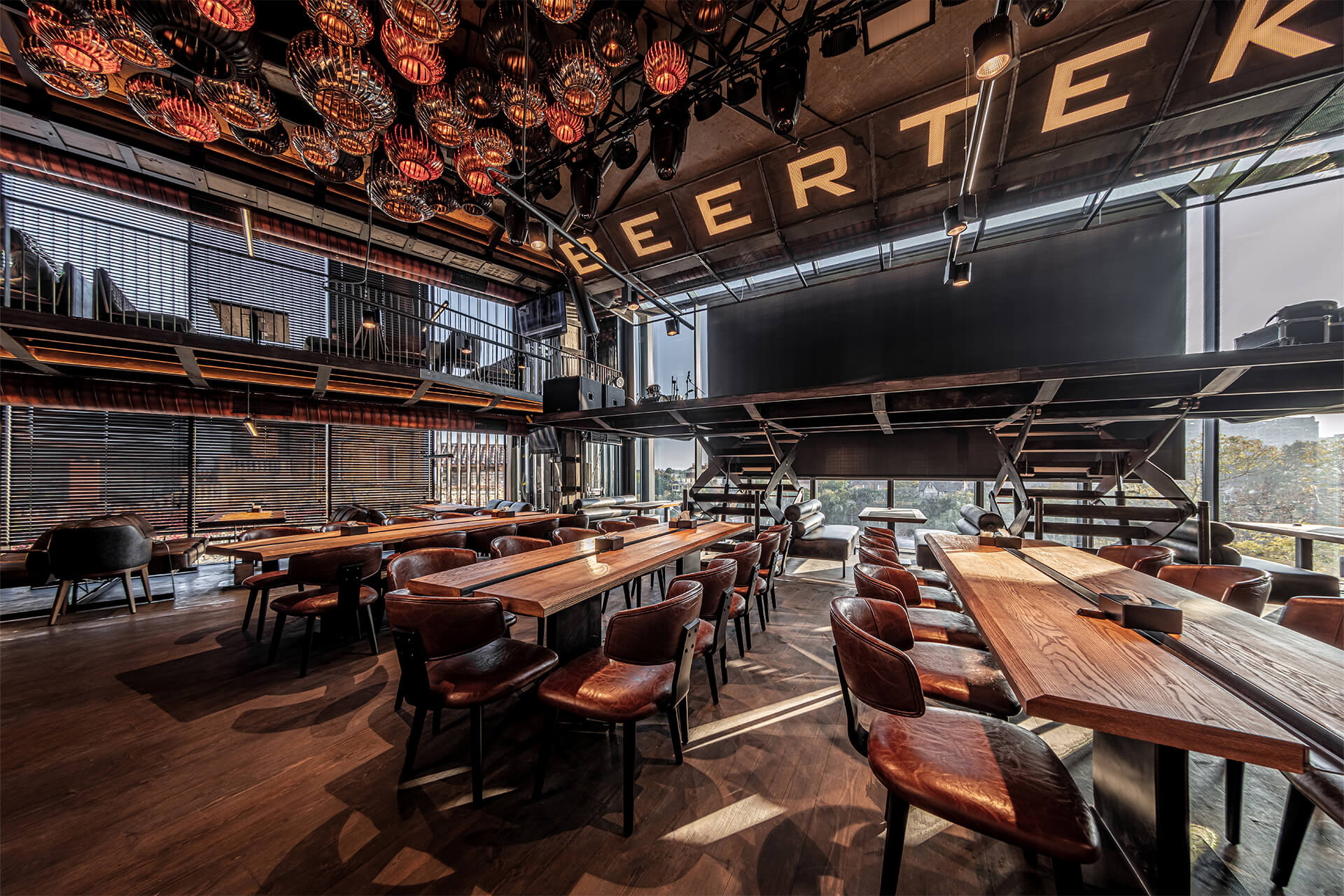
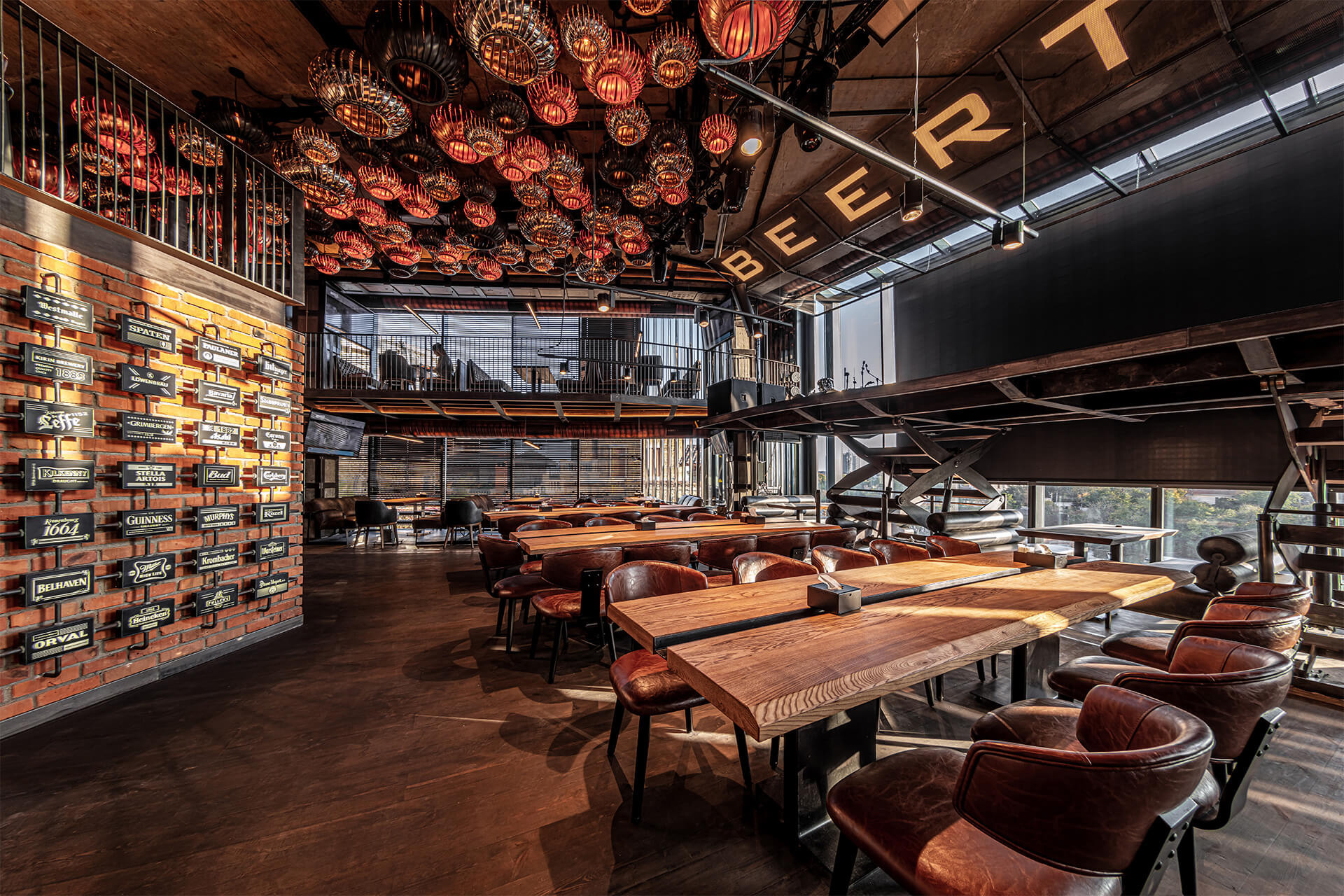
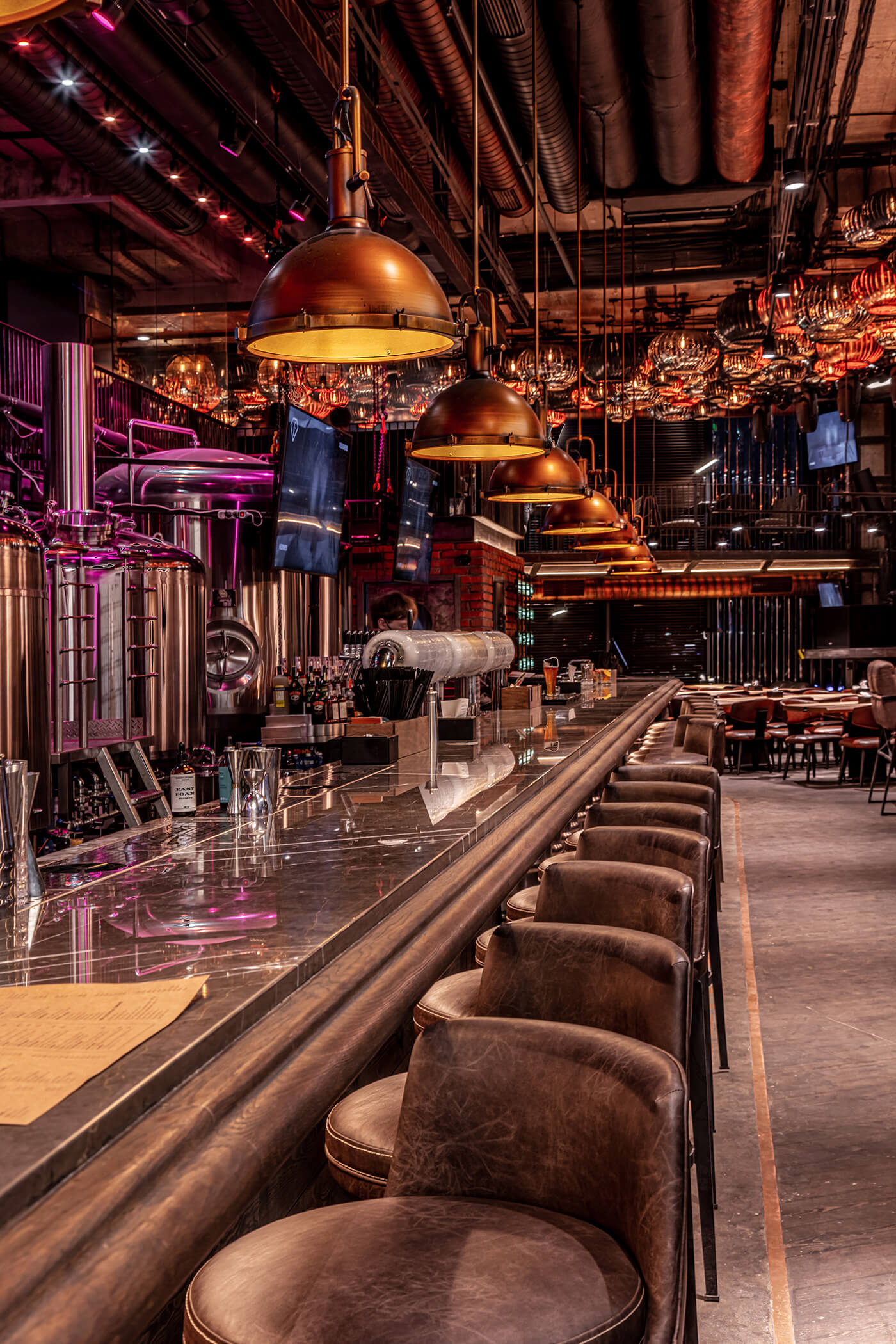
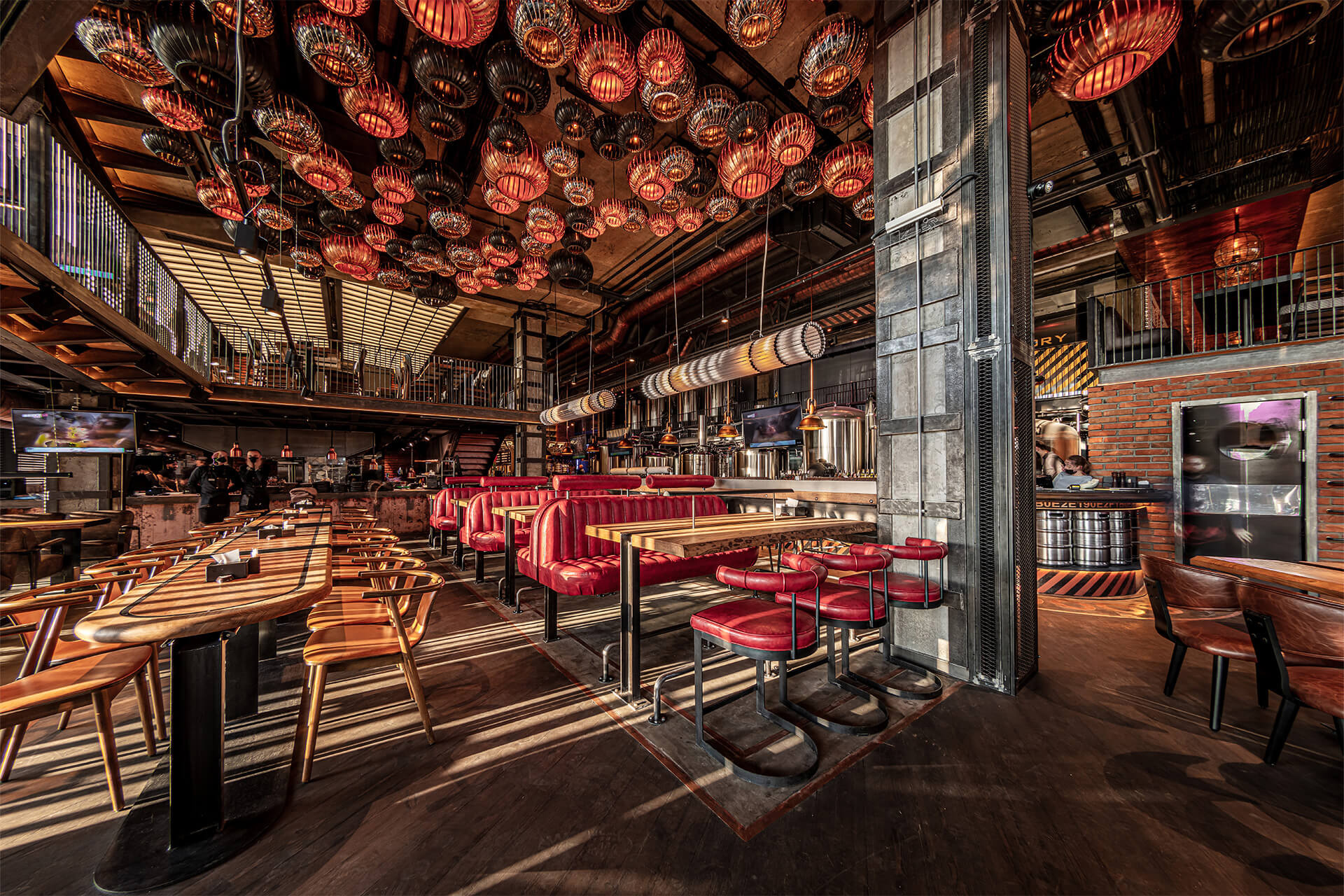
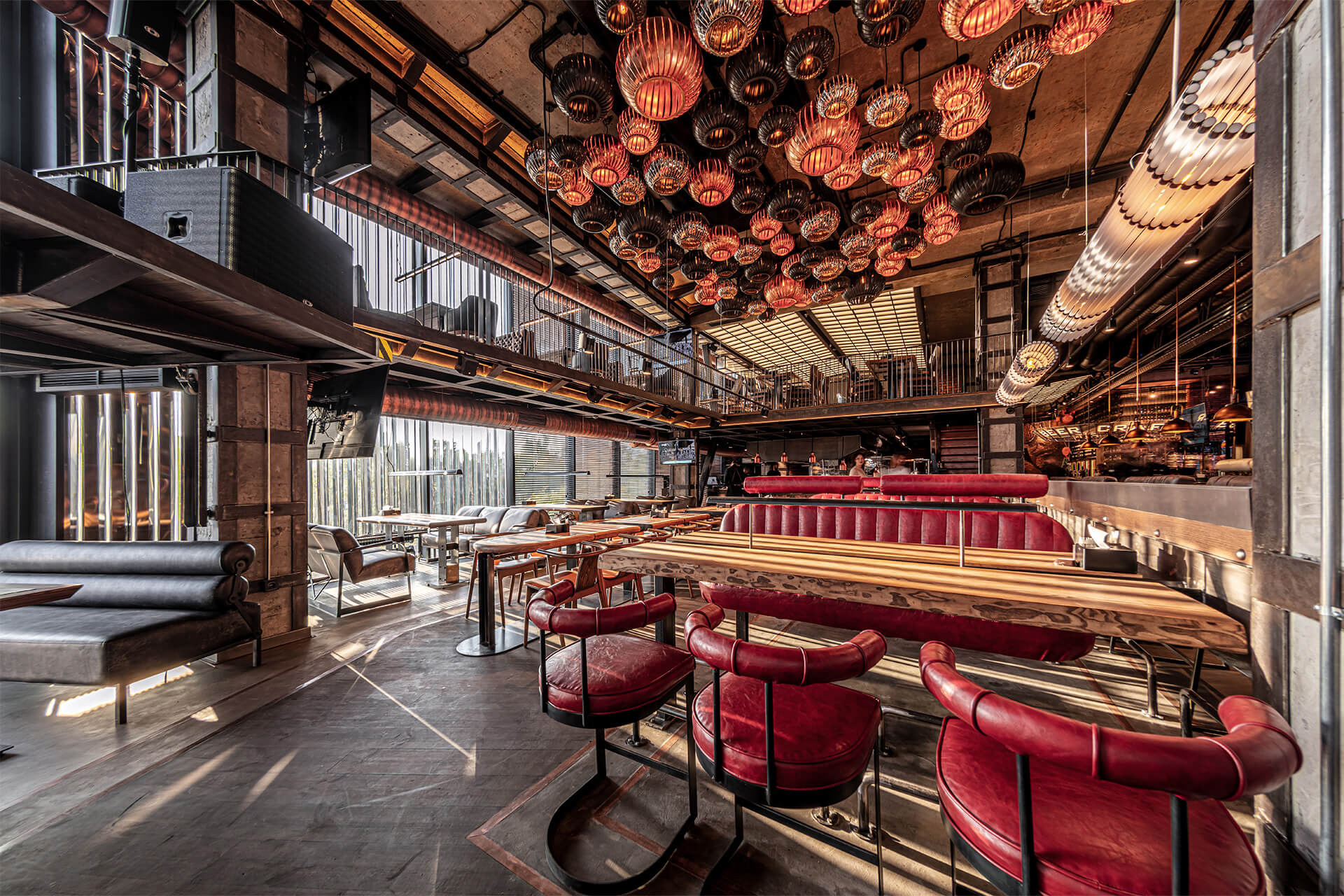
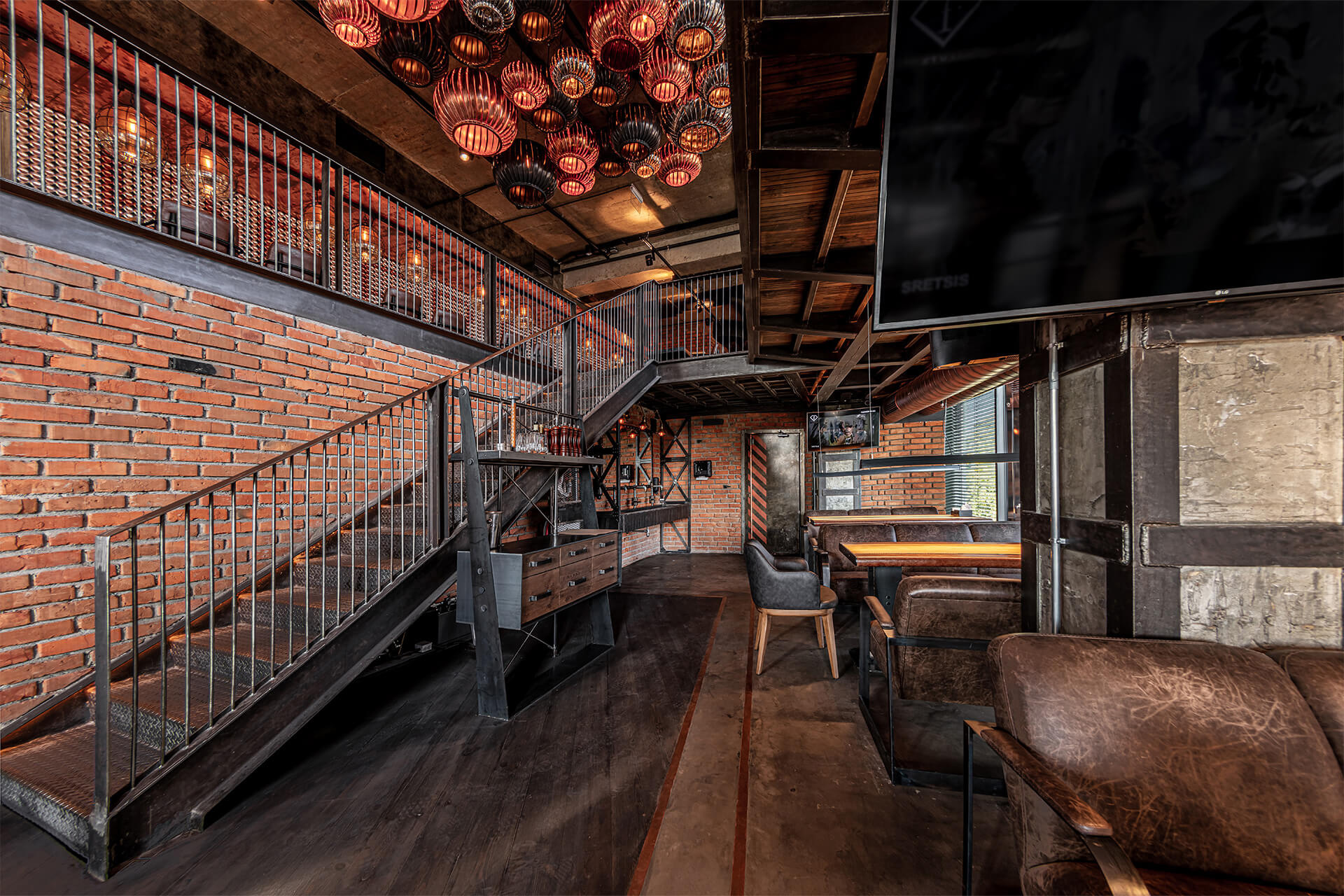
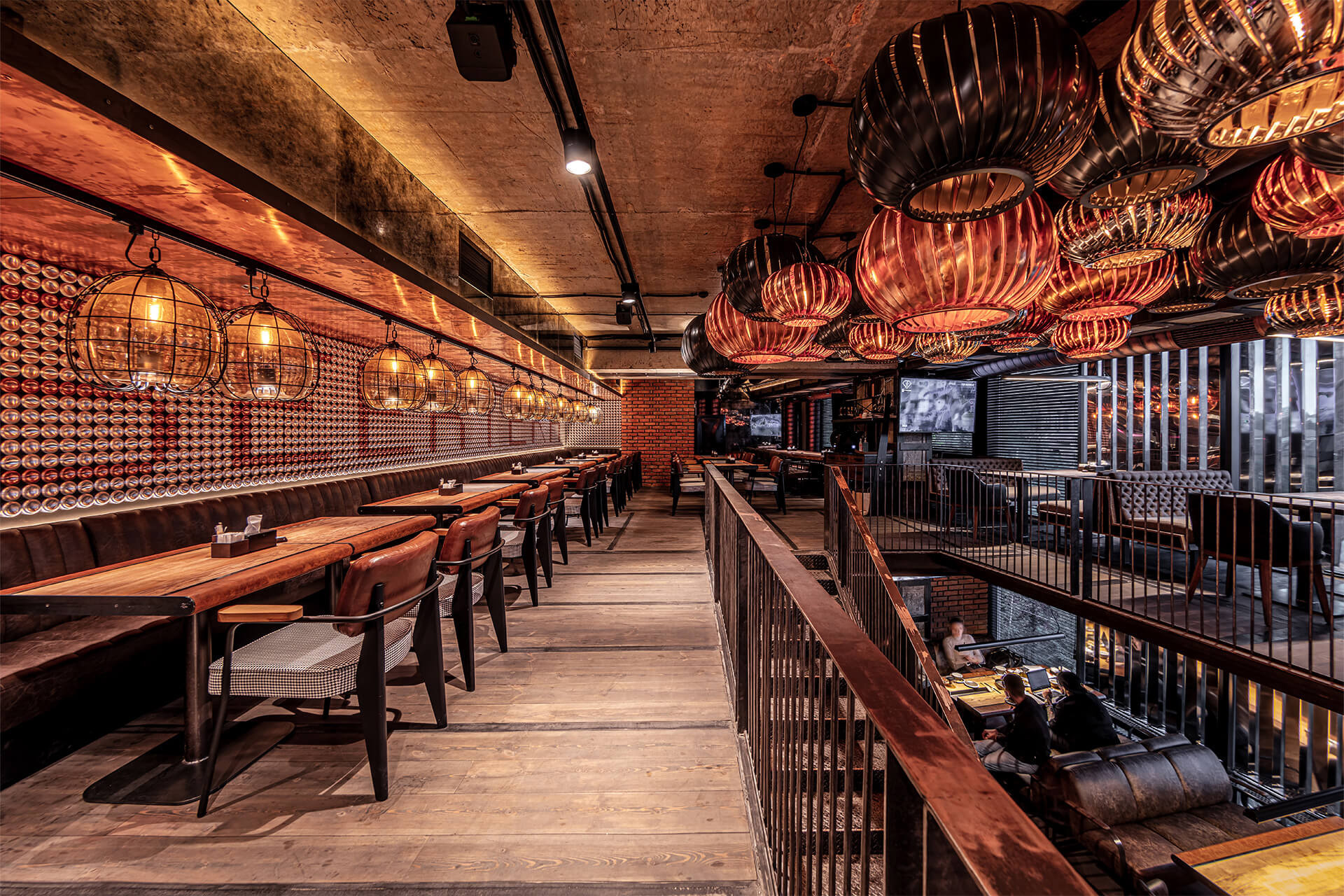
Мебель подбиралась и проектировалась индивидуально, как часть архитектурного сценария. Кожаные кресла и диваны, включая уникальный диван, стилизованный под сидения Cadillac, создают тактильный и визуальный контраст с грубыми индустриальными поверхностями. Пространство организовано в строгом соответствии с требованиями HoReCa — продуманная расстановка столов, барных зон и проходов обеспечивает бесперебойную работу персонала и максимальный комфорт для гостей.

В интерьере использованы авторские решения в стиле Loft Industrial:
- разъездные столы на направляющих от станков;
- гигантский световой фонарь, изменяющий свет в зависимости от времени суток;
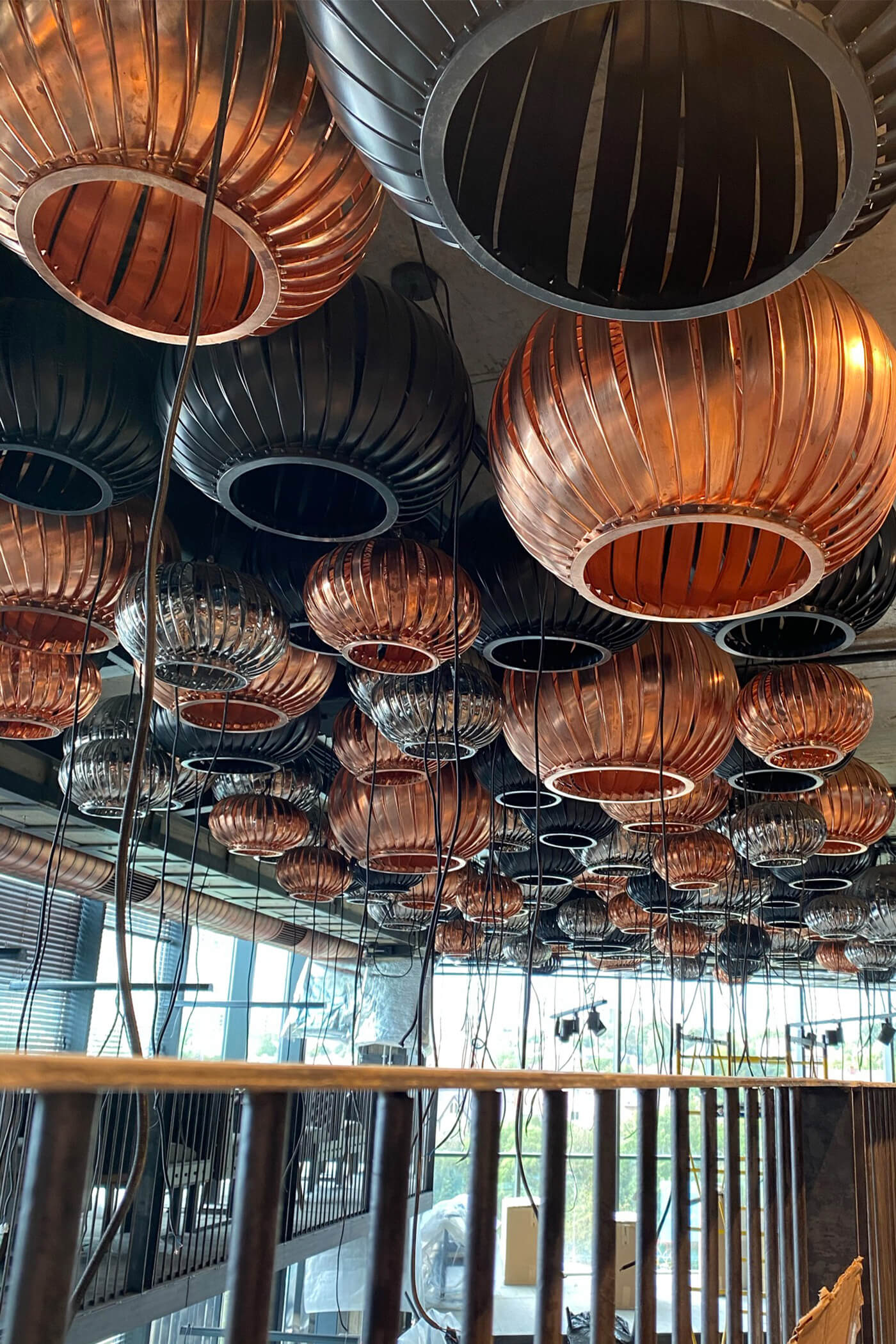
- люстры в форме турбодефлекторов;
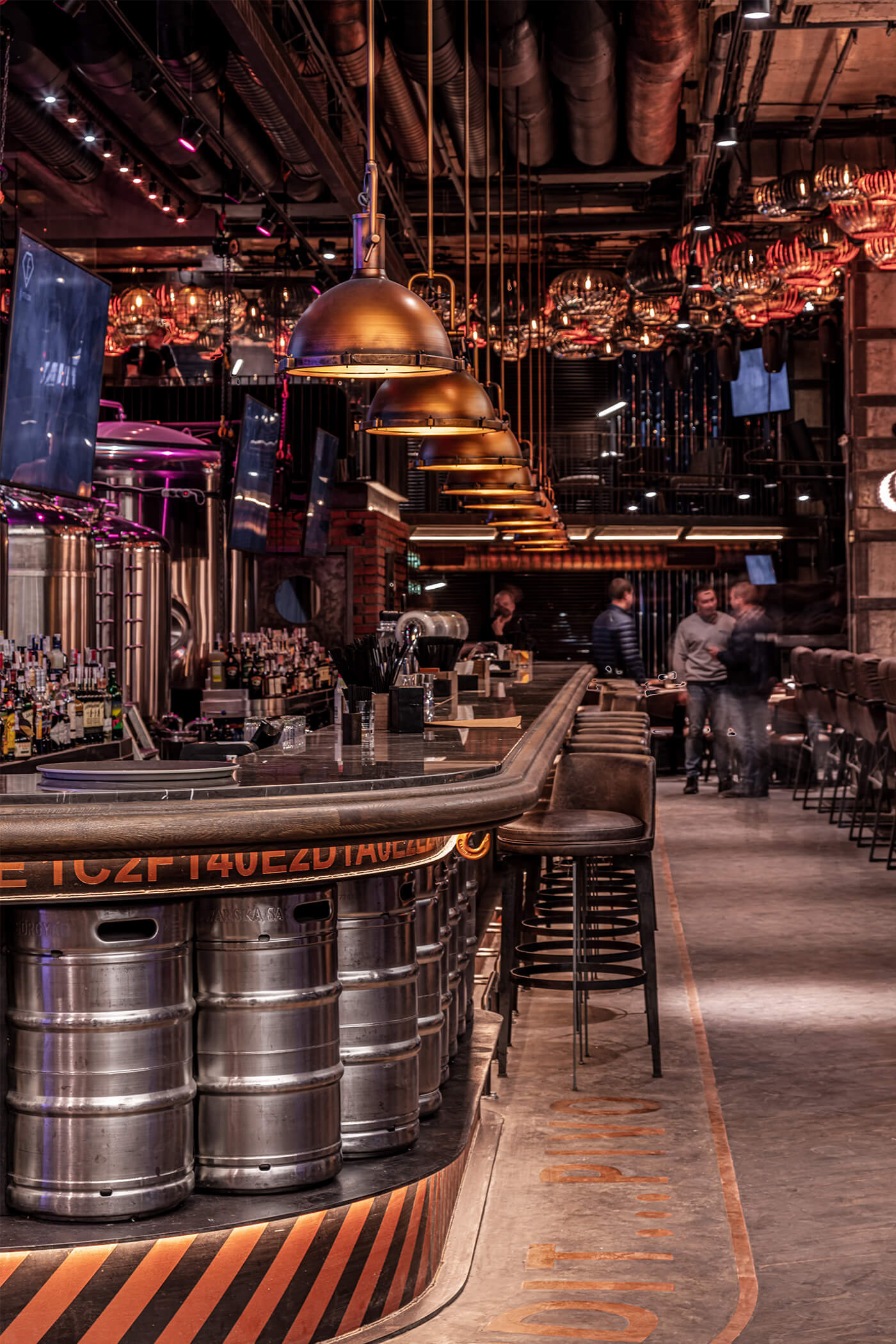
- тельфер под потолком, добавляющий подлинную индустриальную механику в образ;
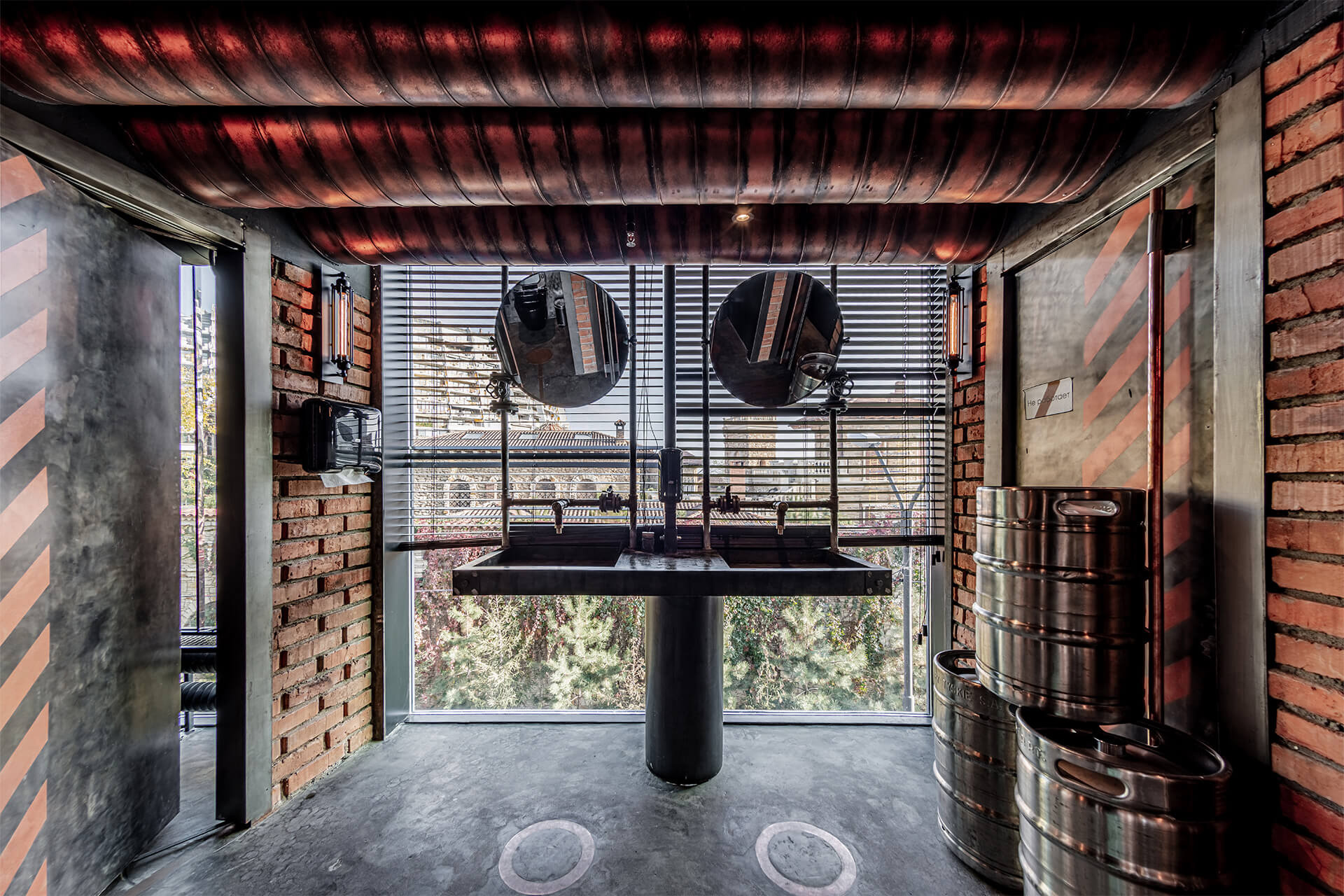
- панорамные окна, связывающие интерьер с улицей, со стальными жалюзи, создающими динамичную игру света и тени.

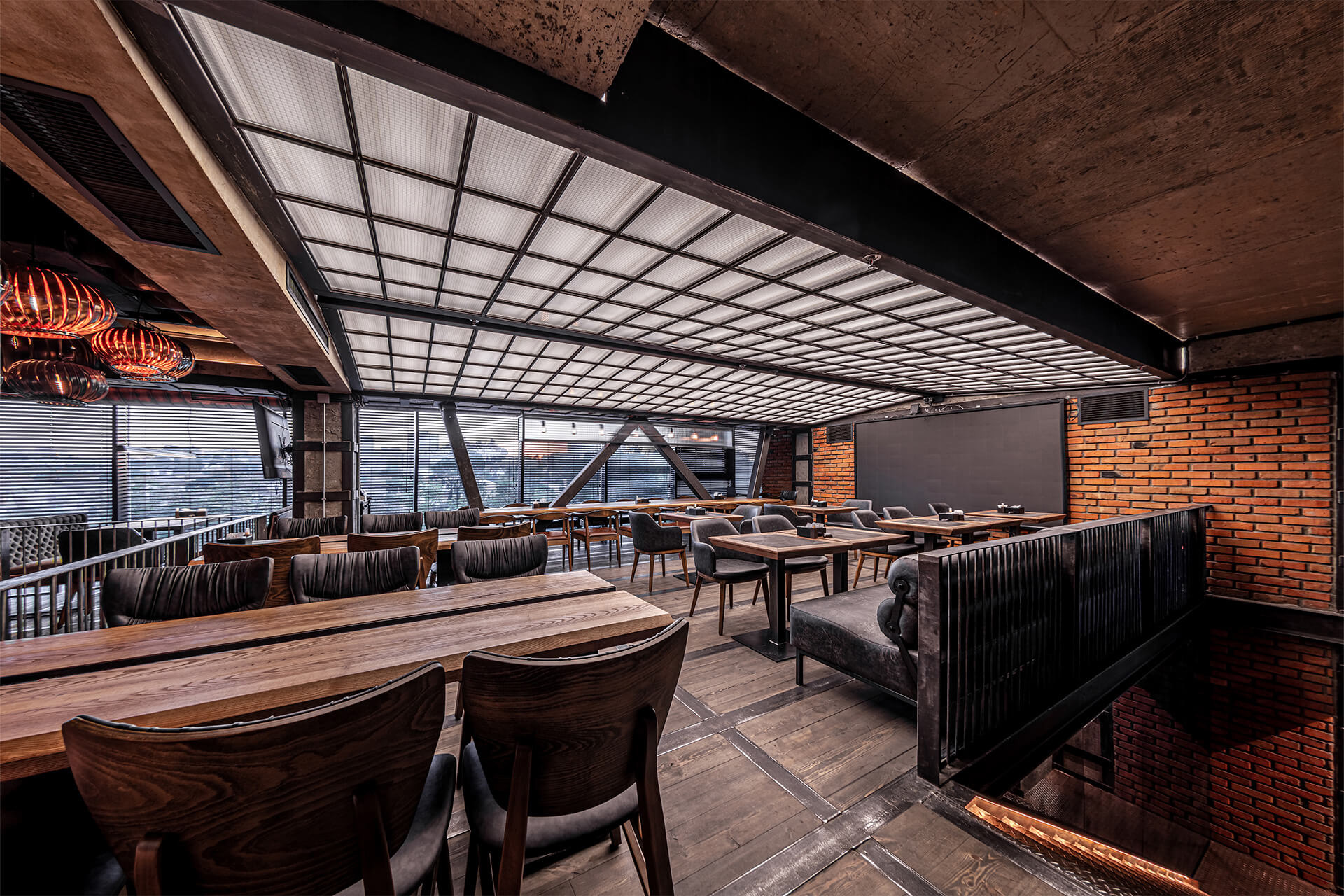
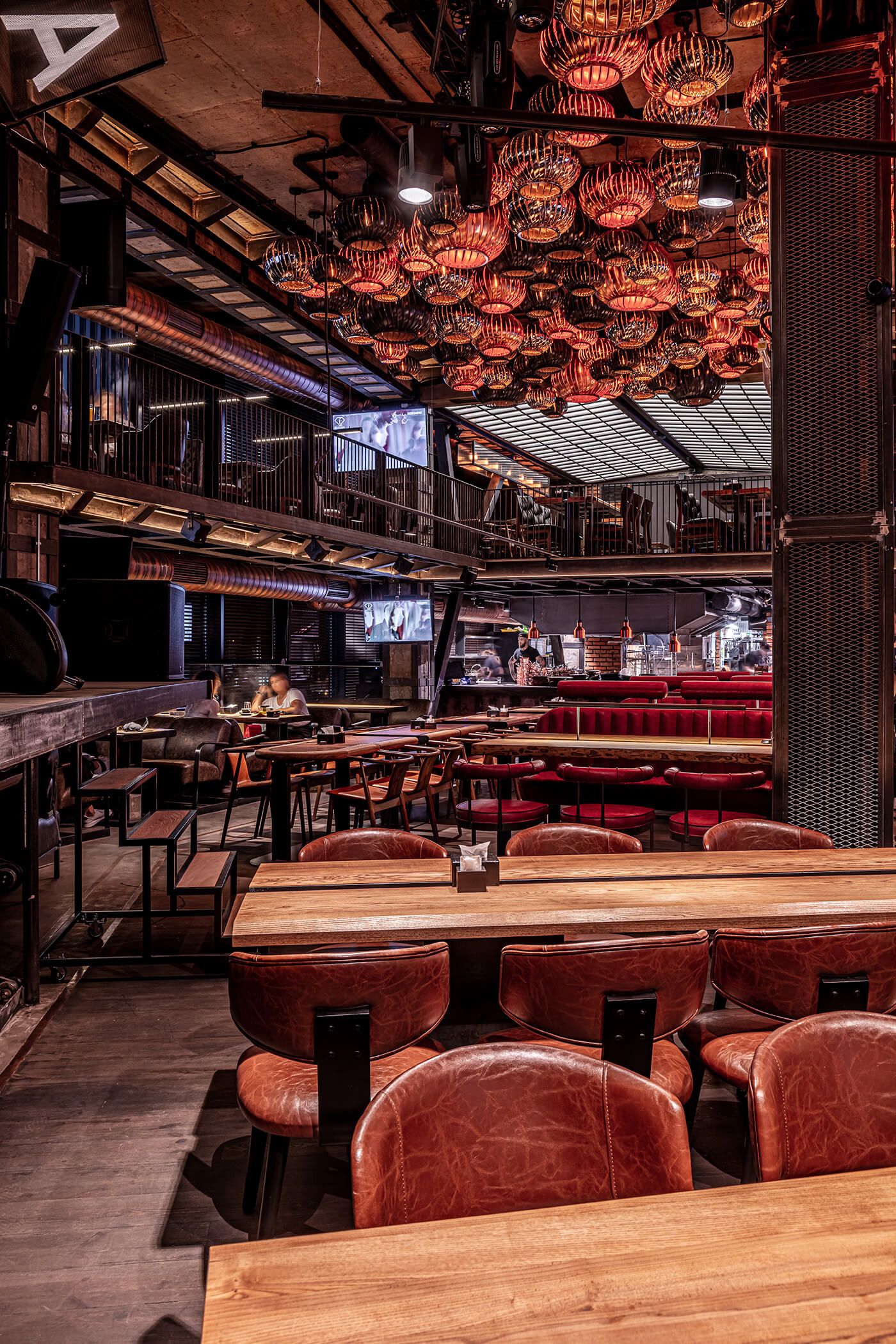
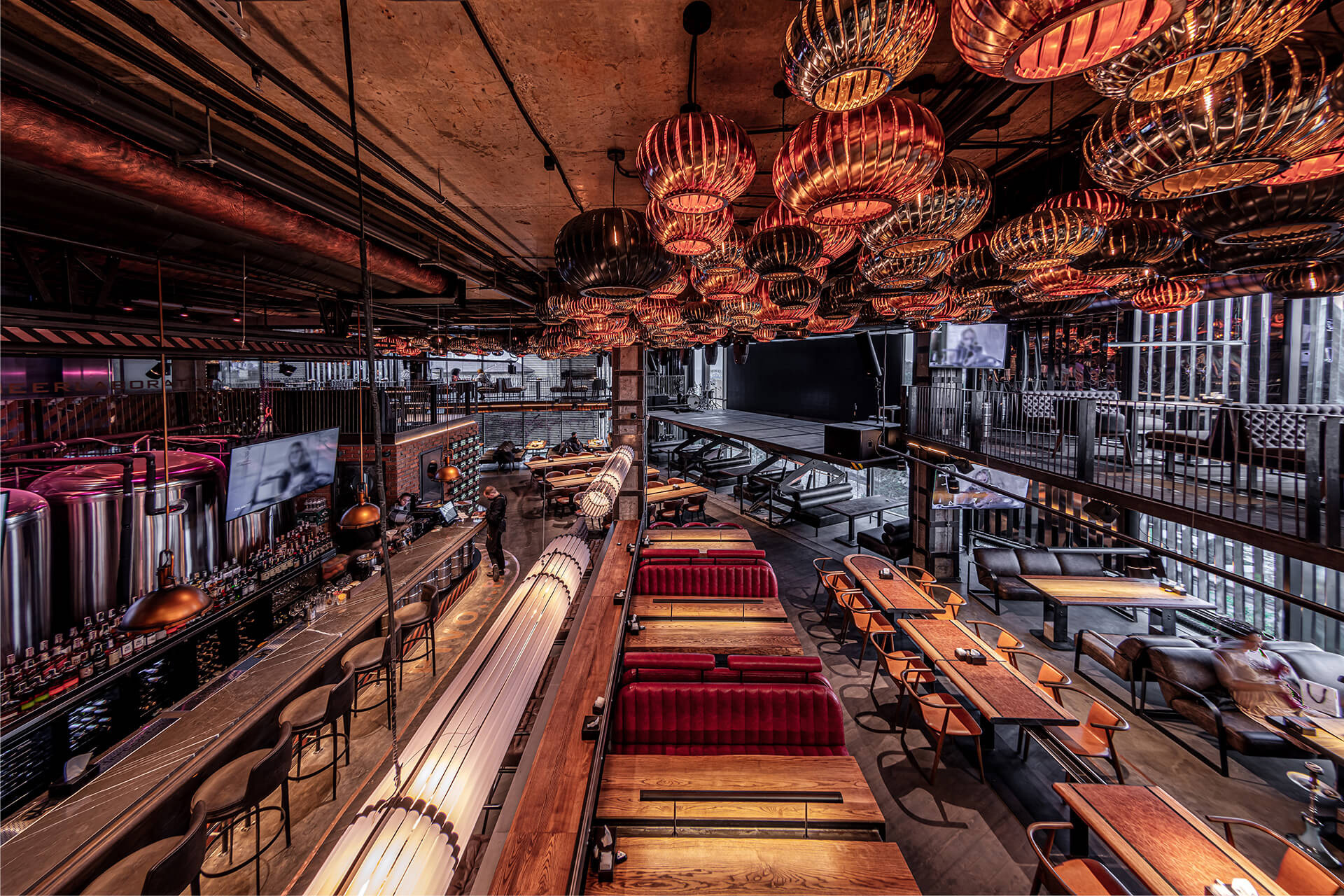
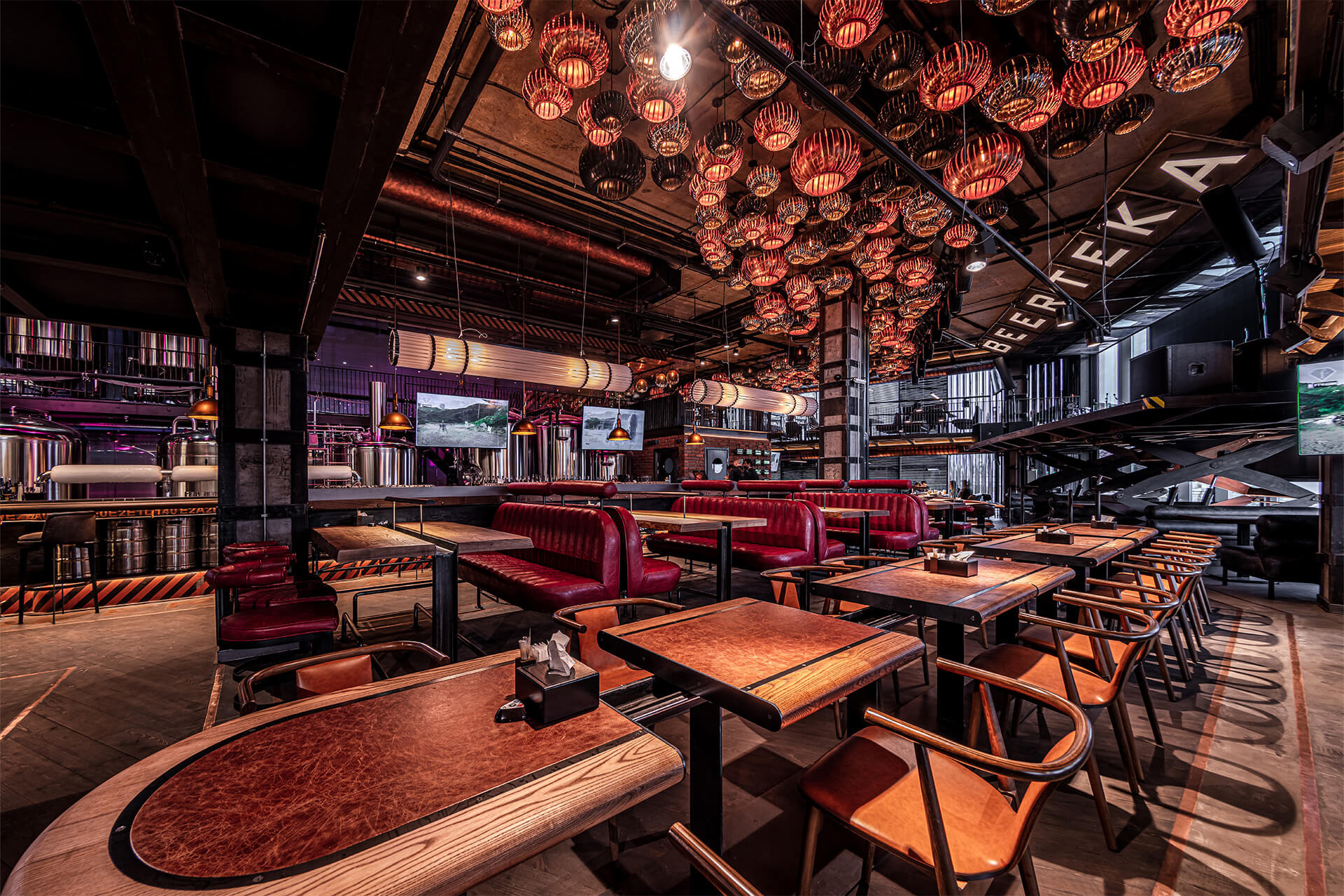
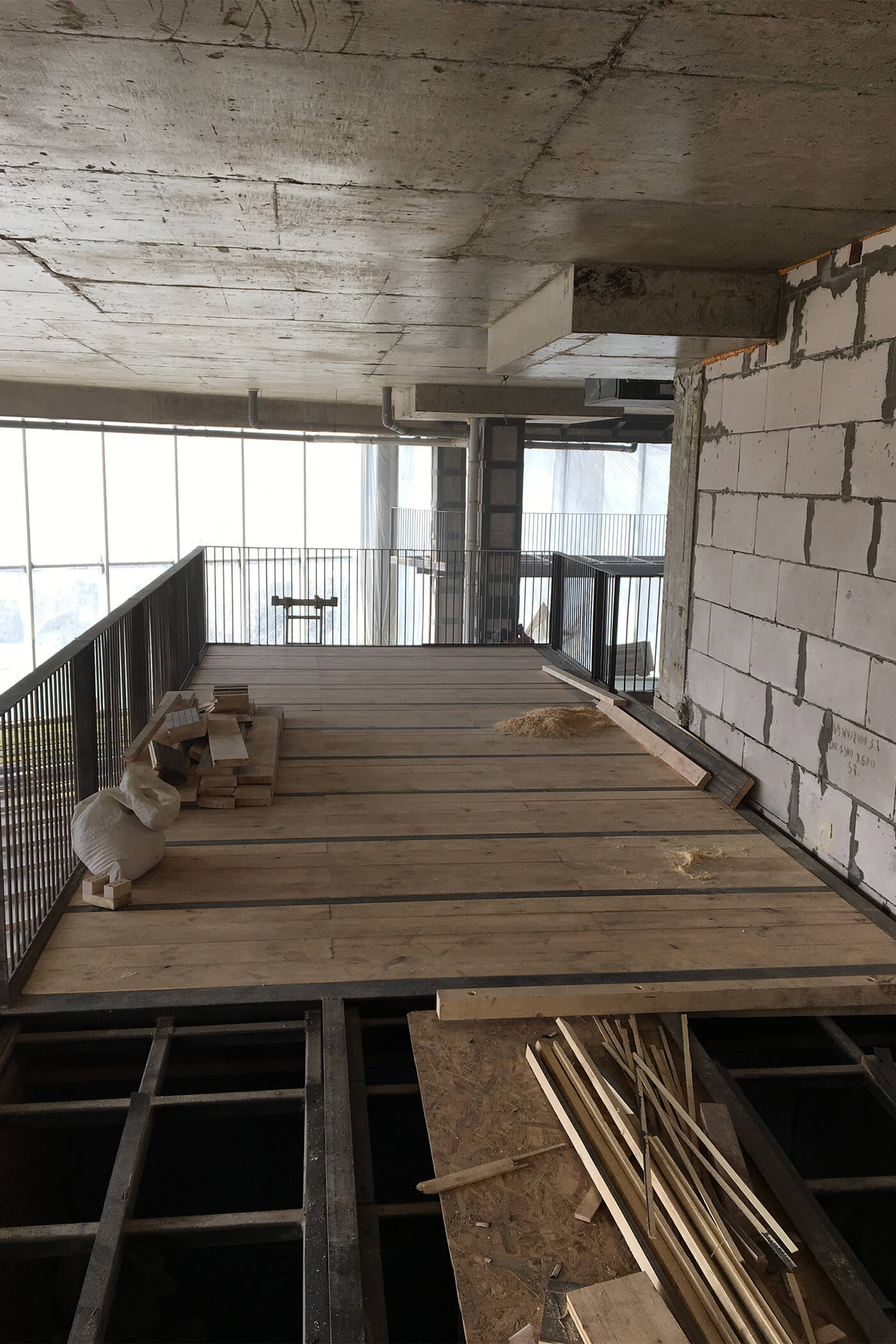
Важная особенность — архитектурная трансформируемость. Металлические антресоли и сцена на автомобильных подъёмниках позволяют мгновенно менять конфигурацию зала, адаптируя его под концерты, фестивали или камерные вечера.
Для нас этот проект стал примером того, как можно соединить сложнейшие инженерные решения с выразительной эстетикой, сохранив при этом абсолютную функциональность. BEERTEKA — это живое, динамичное пространство, где каждая деталь подчинена общей концепции, а сама концепция диктует форму, материал и атмосферу.
О проекте в цифрах
ОТ АРХИТЕКТУРЫ К ИНТЕРЬЕРУ
Нам повезло войти в проект еще на этапе проектирования самого здания. Это дало возможность сформировать пространство так, чтобы оно максимально эффективно работало на будущий интерьер. Beerteka — это не просто ресторан, это высокотехнологичная пивоварня с панорамным видом на город и море.

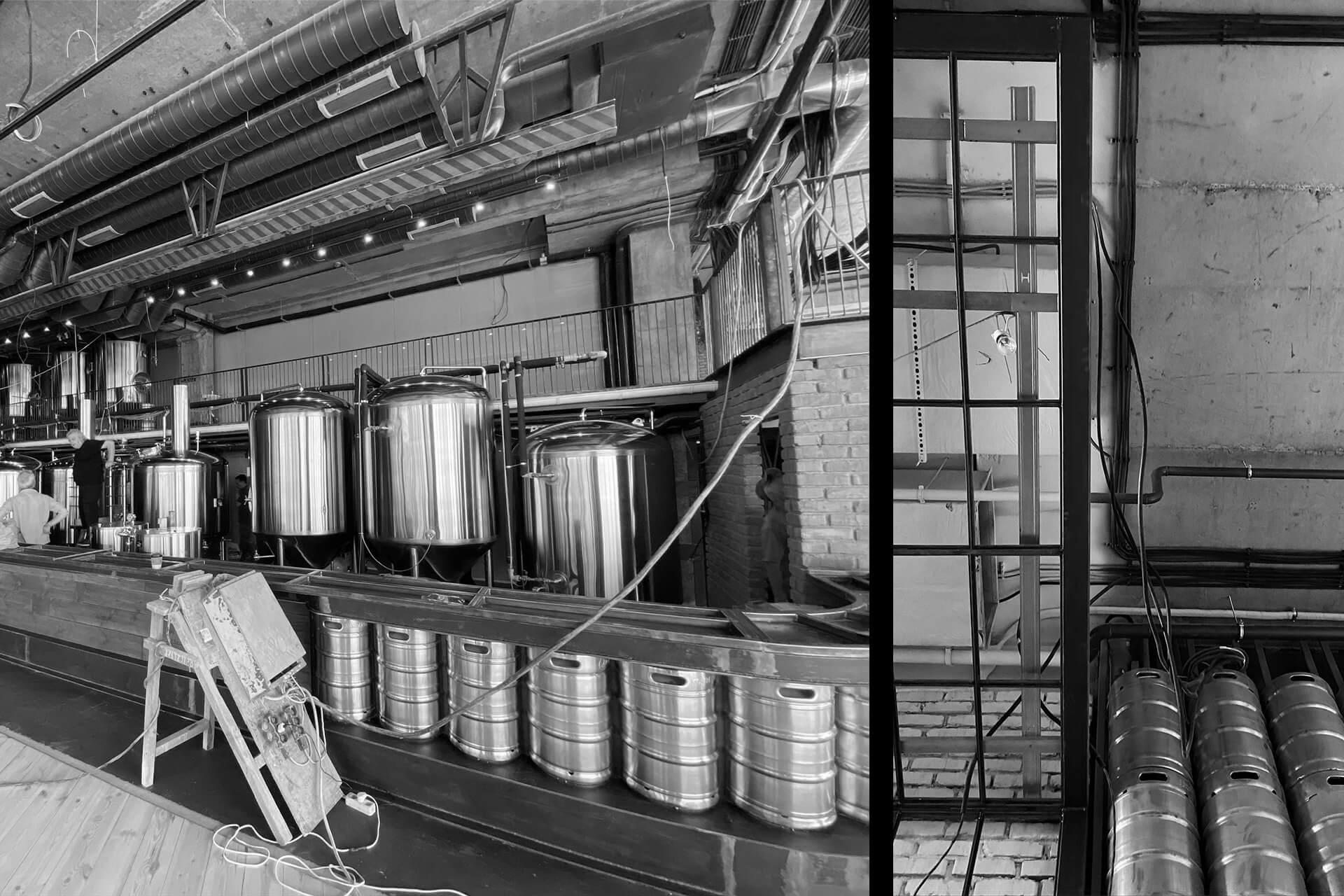

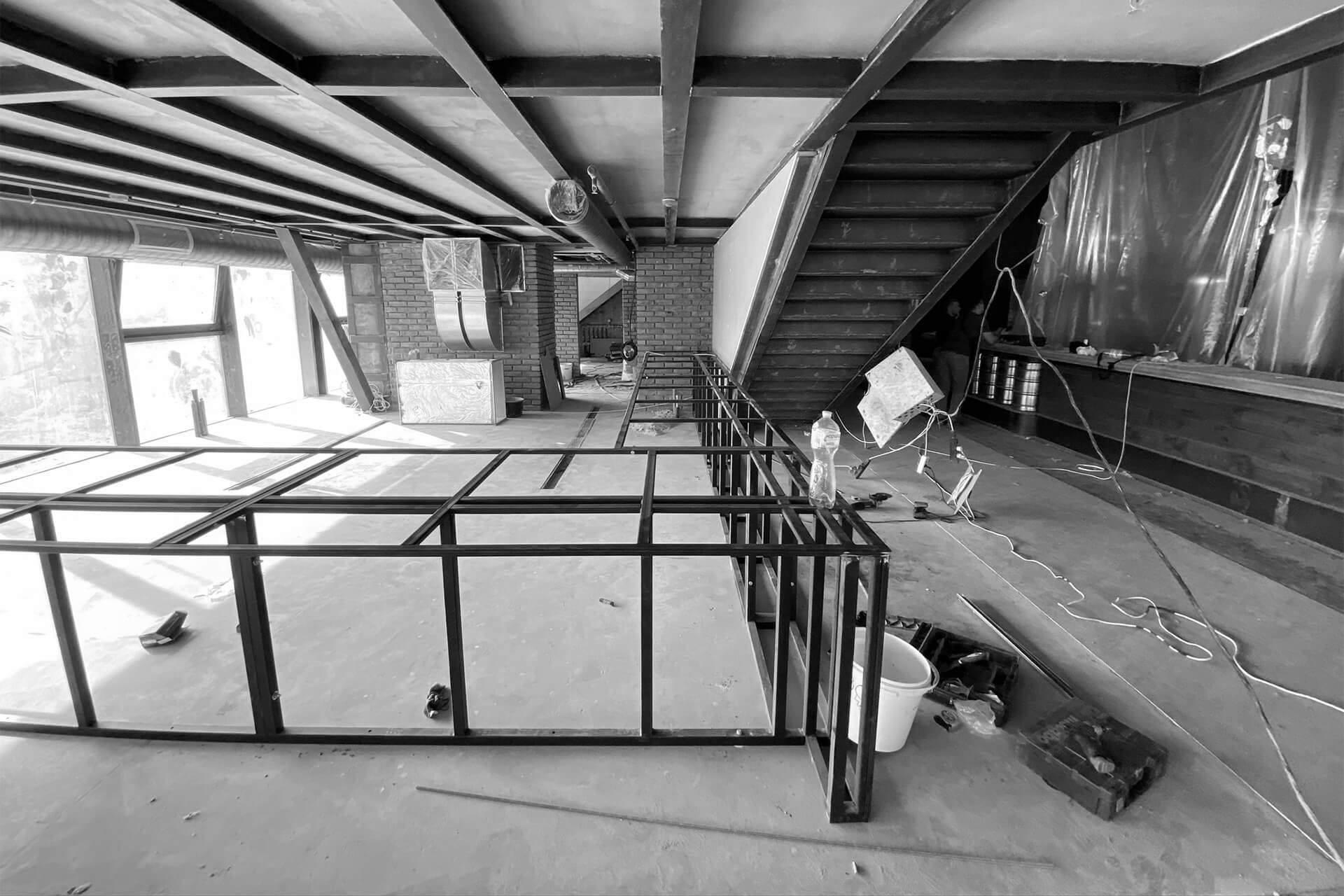

Для Beerteka рабочая документация стала ключевым звеном между концептом и безупречной реализацией. Полный комплект чертежей превратил дизайн в четкие инструкции для строителей, мебельщиков, специалистов по освещению и монтажников. Каждый кастомный элемент — от барной стойки и систем посадки до деталей освещения и стыков материалов — был проработан заранее, чтобы исключить неопределенность в процессе стройки.
Устранив необходимость принимать спонтанные решения на объекте, этот пакет чертежей помог контролировать бюджет, соблюдать сроки и сохранить целостность проекта на всех этапах реализации.
Step-by-step process that ensures flawless results

01.Workshop:
Синергия конструктива и технологии
Как мы уже говорили, мы зашли в проект на этапе проектирования здания, что позволило адаптировать архитектуру под задачи будущего интерьера.
Основной задачей стало размещение тяжелого пивоваренного оборудования: массивных варочных котлов и ЦКТ (цилиндро-конических танков). Расчетная нагрузка на эти участки достигает 4000 кг/м². В условиях готового ТЦ это потребовало бы сложного усиления конструкций, но благодаря тому, что мы вошли в проект до заливки перекрытий, нам удалось заранее спроектировать два пролета между колоннами под такие сверхтяжелые задачи.
Чтобы добиться максимального визуального эффекта, мы выставили 16 танков «лицом» к залу. Совместно с конструктором здания была разработана индивидуальная антресоль, выдерживающая 2000 кг/м². Применив метод террасирования, мы расположили бочки для созревания пива на верхнем уровне так, чтобы они не перекрывали друг друга. В итоге получилась сбалансированная композиция: два крупных варочных котла в центре, 2-тонные танки по бокам и 1-тонные емкости, возвышающиеся на антресоли.


Открытое производство и инженерия
Мы сделали пивоварню полностью открытой, хотя обычно процессы брожения изолируют. Глубокое изучение технологии позволило нам реализовать этот смелый замысел без потери качества продукта.
Еще одним вызовом стали агрессивные стоки от мойки баков реагентами. Их нельзя сбрасывать в общую канализацию, поэтому мы обустроили собственную систему очистки. Интересный опыт был с покрытием: первоначальный микроцемент не выдержал химического воздействия стоков, поэтому мы оперативно заменили его на специальную химически стойкую плитку.
Архитектурная «легкость» при тяжелых конструкциях
Задачей было создать яркое тусовочное пространство с двухуровневой посадкой и панорамным видом. Чтобы антресоли вдоль окон не выглядели громоздкими при пролете 7,8 м, мы разработали индивидуальную систему балок. В основе — мощные швеллеры №24–26, от которых идет постепенное сужение к деликатному профилю №12. Такая градация позволила сохранить несущую способность, но визуально сделала конструкцию почти воздушной.


Трансформация сцены
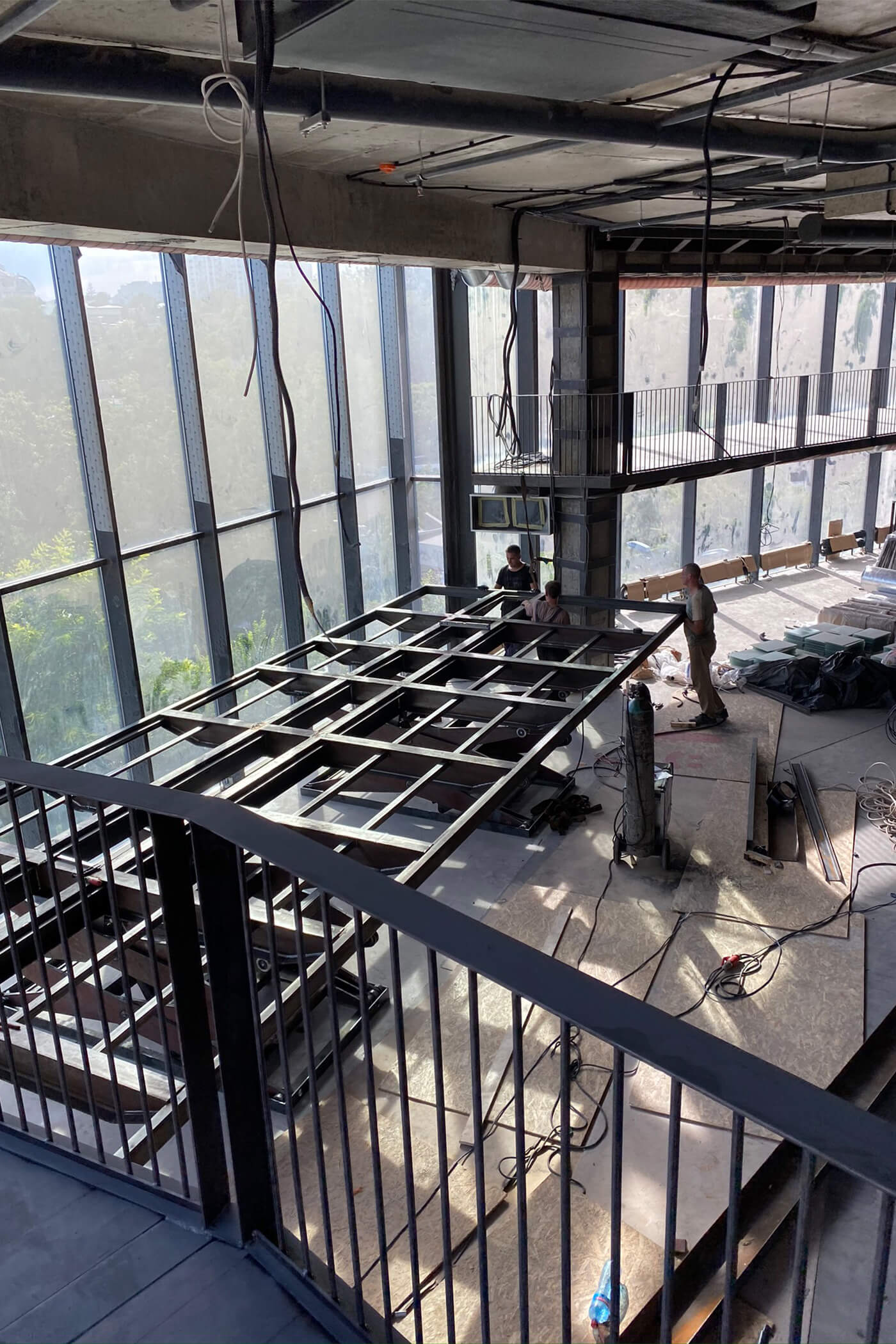
Центральный элемент зала — сцена, видимая со всех сторон. Чтобы она не пустовала в будни, мы сделали её подвижной при помощи ножничных гидравлических подъемников (аналогичных тем, что используются на СТО). Их для нас разработали в Днепре.
Наша сцена имеет три положения:
- Верхнее (в уровень с антресолью): для посадки гостей на самой сцене и открытия зоны диванов под ней.
- Среднее: для больших концертов и оптимального обзора.
- Нижнее (1,2 м): для фоновых выступлений.
Гидравлическая система (насосы и баки) скрыта под лестницей, а магистрали проведены по потолку нижнего этажа. Для безопасности система оснащена механическими замками.


02.Concept:
DESIGN CONCEPT AND AESTHETICS
The project’s style can be defined as a blend of Steampunk, Loft, Industrial, and Chic-Industrial. It is a curated mix of raw industrial elements, bold accents, and premium materials. A standout feature is our custom red sofa, an aesthetic tribute to the iconic 1959 Cadillac. One of the primary challenges was establishing a cozy, "authentic" feel within a brand-new space. Typically, breweries are housed in old factory buildings that come with a pre-existing history. In our case, we had to invent that history from scratch, as the building was constructed simultaneously with the restaurant—essentially starting as a blank reinforced concrete shell.
Our first priority was to set the right mood. We achieved this by leaving the raw concrete exposed and designing architecture that functions as the interior itself: mezzanines, decorative ceiling grids, hardwood flooring, and concrete inlaid with metal accents. To balance the industrial roughness, we introduced elements of "chic"—marble countertops, leather upholstery, and copper details that brought a sense of refinement and elegance to the entire project.
To further emphasize the production atmosphere, we integrated industrial machinery into the design. For instance, a hoist (telfer) is installed on the ceiling. For those unfamiliar, this is an electric winch that travels along a rail; it is remote-controlled and capable of lifting up to 8 tons. In our space, it is fully functional and used to move the "beer island" and kegs.
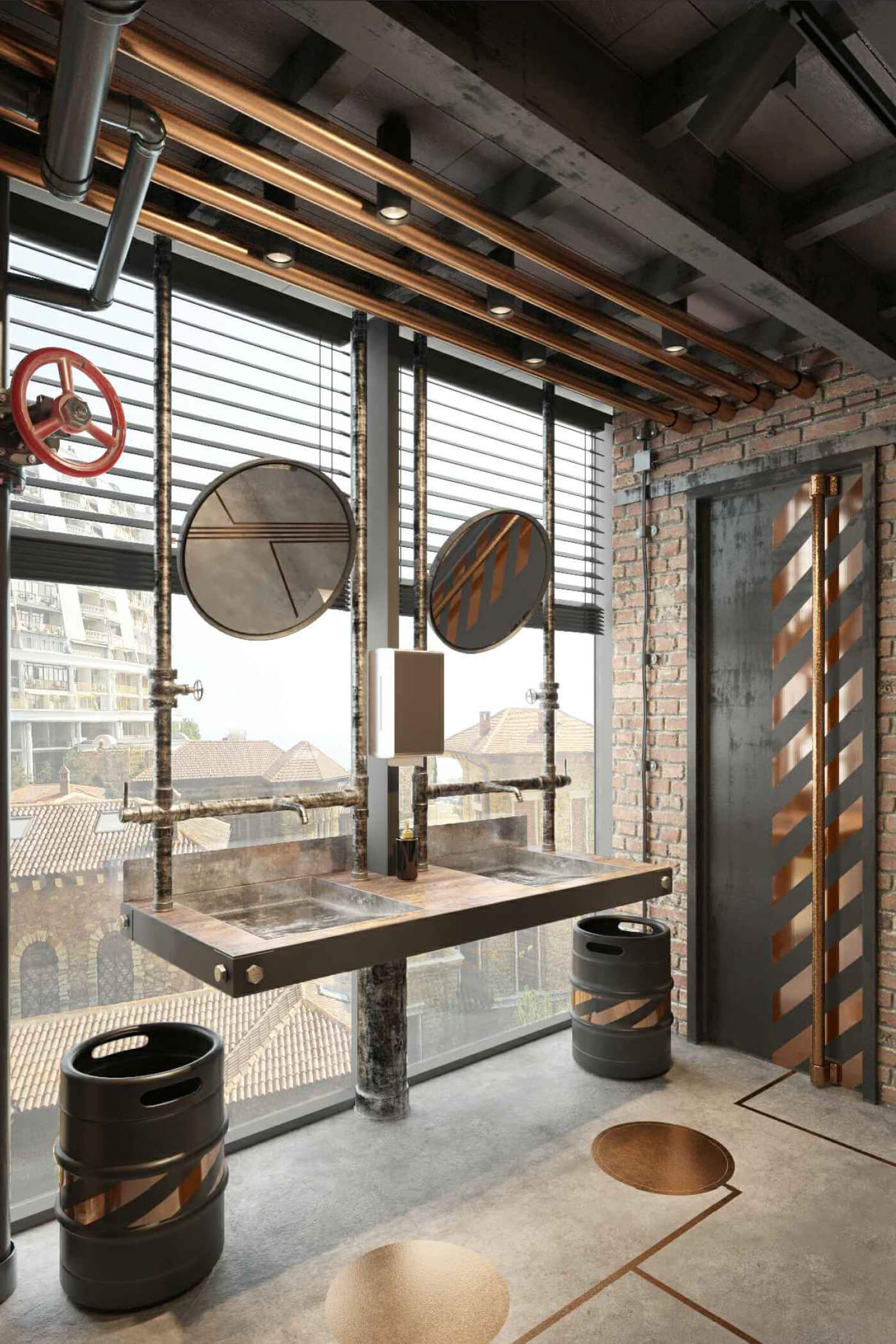
Exposed utilities are another vital part of the interior—we kept them all visible. It is often difficult to ensure that contractors install systems aesthetically, as they tend to run pipes diagonally or at awkward angles. We maintained strict oversight at every stage to ensure that every line was perfectly straight and intentional.
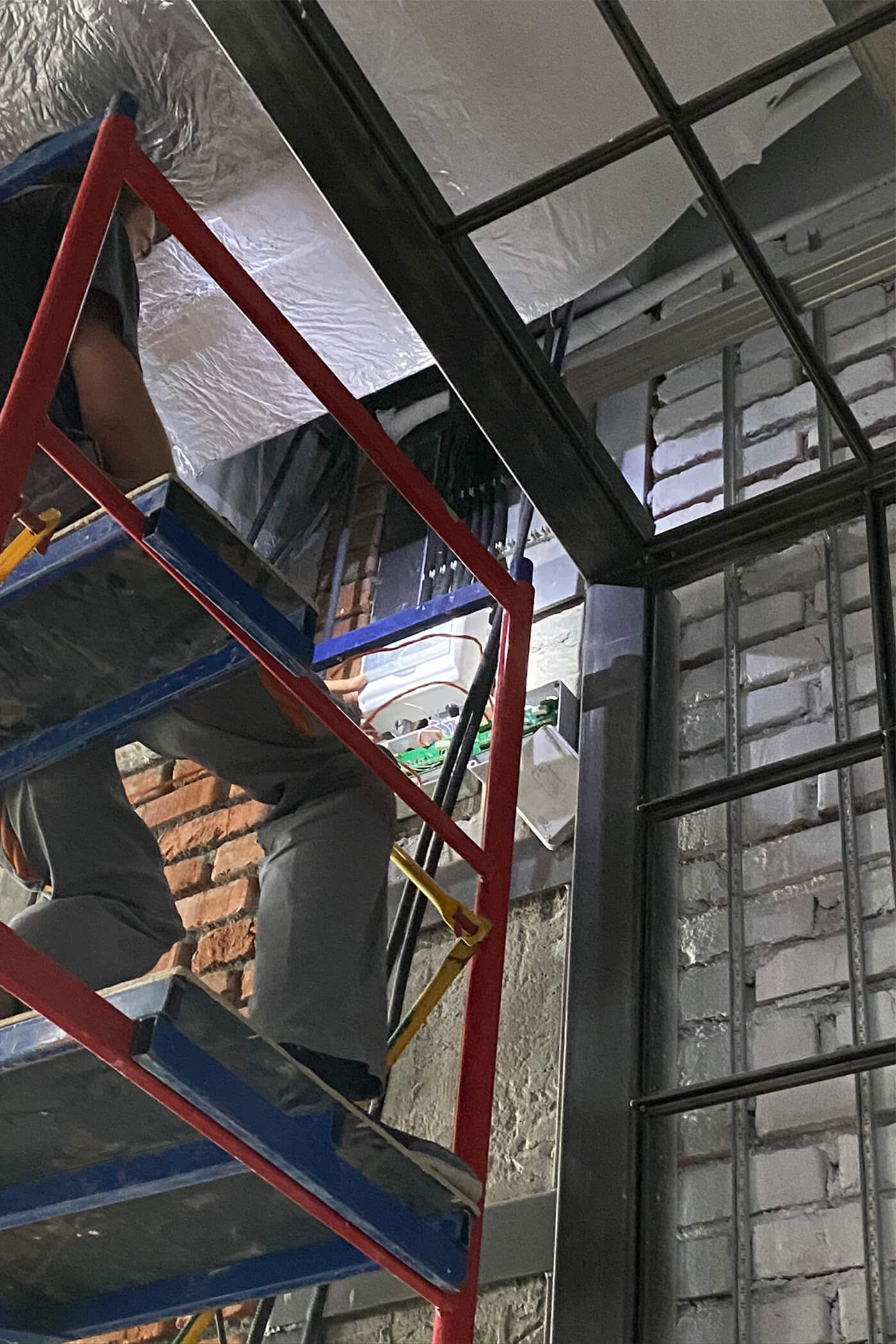
We were also fortunate to work with local partners on the electrical project. They developed a precise cable routing scheme, which we then refined to ensure all trays and guides aligned with our aesthetic vision. Ultimately, in this project, everything is the interior: the wiring, the mezzanines, the ventilation ducts, and even the fire suppression system.




03.Development:
GUEST JOURNEY AND INTERIOR SOLUTIONS
The layout was largely dictated by the fact that Beerteka is located on the third floor, with access provided via elevators or the main hall of the shopping center and cinema. The distance from the elevators to the main brewery space is approximately 25 meters, and our challenge was to design this path so that guests would traverse it with ease and curiosity. This corridor runs along the facade glazing, offering panoramic city views; however, it was crucial to establish the industrial aesthetic from the very first second. Upon entering, guests are greeted by an authentic forklift with raised forks that serves as the hostess station. This element has become so popular that it is constantly used as a signature photo zone.

Further along, guests enter a lobby with comfortable lounge seating. Behind the sofas, we installed a wall of beer kegs designed for direct guest engagement: a central copper strip displays the names of regular customers, birthday guests, or those who have set brewery records. Opposite the seating area is the massive "Beer Library." This 5-meter-high structure was built using five kilometers of smooth 12mm rebar and simple pine planks, housing thousands of bottles. Interestingly, we initially stocked it with full bottles, but due to direct sunlight during sunset, there was a risk of the beer spoiling. Consequently, one month before the opening, the entire team—from management to contractors—was mobilized to "liquidate" the beer while meticulously preserving the bottles and caps for the display.
Immediately following the lobby, the path takes a sharp left turn, as an evacuation staircase directly behind the keg wall prevented us from continuing along the facade. To keep this transit zone engaging, we installed glass-fronted refrigerators showcasing aged meats and exclusive craft beers. To ensure guests feel comfortable as they move deeper into the building, we installed a biodynamic skylight overhead. This lighting system automatically adjusts its color temperature and intensity to mirror the natural outdoor light, changing according to the weather and time of day.



DETAILS AND NEIGHBORLY COLLABORATION
A standout feature in this zone is the cloakroom, designed as bespoke metal lockers. The lacquered metal perfectly embodies the "industrial chic" aesthetic, reinforcing the overall concept. Opposite the lockers sits the "Beer Island"—a technologically complex station equipped with its own freon line for cooling. This allows the venue to significantly expand its offering with rare draught beers that maintain their peak quality in kegs.
Finally, the guest arrives in the main hall, where a large bar counter separates the restaurant area from the brewing zone. A critical phase of the project was managing the boundary between our space and the neighboring Multiplex cinema. Instead of solid walls, we installed a large glass partition. Since the cinema interior features a vibrant neon style, we turned this into a design advantage. The purple and pink neon from Multiplex reflects brilliantly off our stainless steel brewing tanks—an effect we further enhanced with our own RGB backlighting. This created a win-win scenario: cinema-goers get a glimpse of the impressive brewing process, while our guests enjoy a unique, ever-changing play of light and reflections.

04.Implementation:
ENGINEERING SOLUTIONS
The most formidable engineering challenges were related to HVAC (heating, ventilation, and air conditioning) and smoke extraction systems. Air conditioning at Beerteka is managed through high-capacity ducted units. Ventilating a massive 1,000 m² space with 6-meter ceilings is a significant task on its own, but the location’s layout added layers of complexity. Situated on the main facade, our unit shares its opposite wall with a cinema. This meant that connecting the brewery to the external ventilation equipment on the rear facade required a path that effectively "pierced" through the entire cinema complex.
Naturally, running ductwork through or even directly above the cinema halls was out of the question; the vibrations from the ventilation pipes are strictly unacceptable for a theater environment. Consequently, we devised an alternative route through the ground floor. We dropped the lines from Beerteka down to the first level, ran them along the entire length of the parking garage, and only then ascended to our rooftop equipment. According to calculations, the primary ducts had to be approximately 1500 x 700 mm, and that was only half of the problem.


The second major challenge was smoke extraction. As a shopping center is a high-hazard facility, we had to adhere to stringent fire safety regulations. The system consists of two mandatory components: fresh air intake and the smoke exhaust itself, which utilized a massive 2000 x 700 mm duct leading to powerful rooftop extraction fans.
We had to intelligently combine these systems, distributing both ventilation and smoke extraction across the entire ceiling. While the ventilation ducts lead downward, the smoke extraction lines go upward (utilizing the building's expansion joint). A critical aesthetic issue arose: with ceilings over 5 meters high, a 70 cm duct running beneath the slab created a visual barrier. A person standing on the mezzanine would find their view obstructed from the waist up by metalwork—negating the open feel of the space.
While we had some flexibility with the ventilation layout, smoke extraction parameters are rigidly dictated by fire codes. How did we solve this? We split the massive smoke extraction duct into six circular 315 mm pipes and added a dozen smaller pipes for ventilation. To give this composition a sense of rhythm and dynamics, we intentionally stylized them: some were painted, others finished in copper tones, and some left in thermal insulation to emphasize the industrial aesthetic.



Project showreel