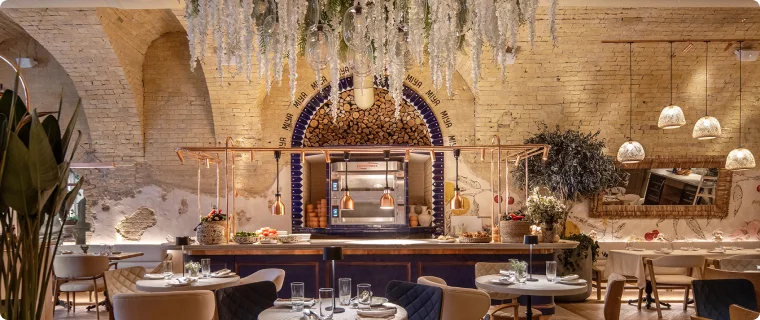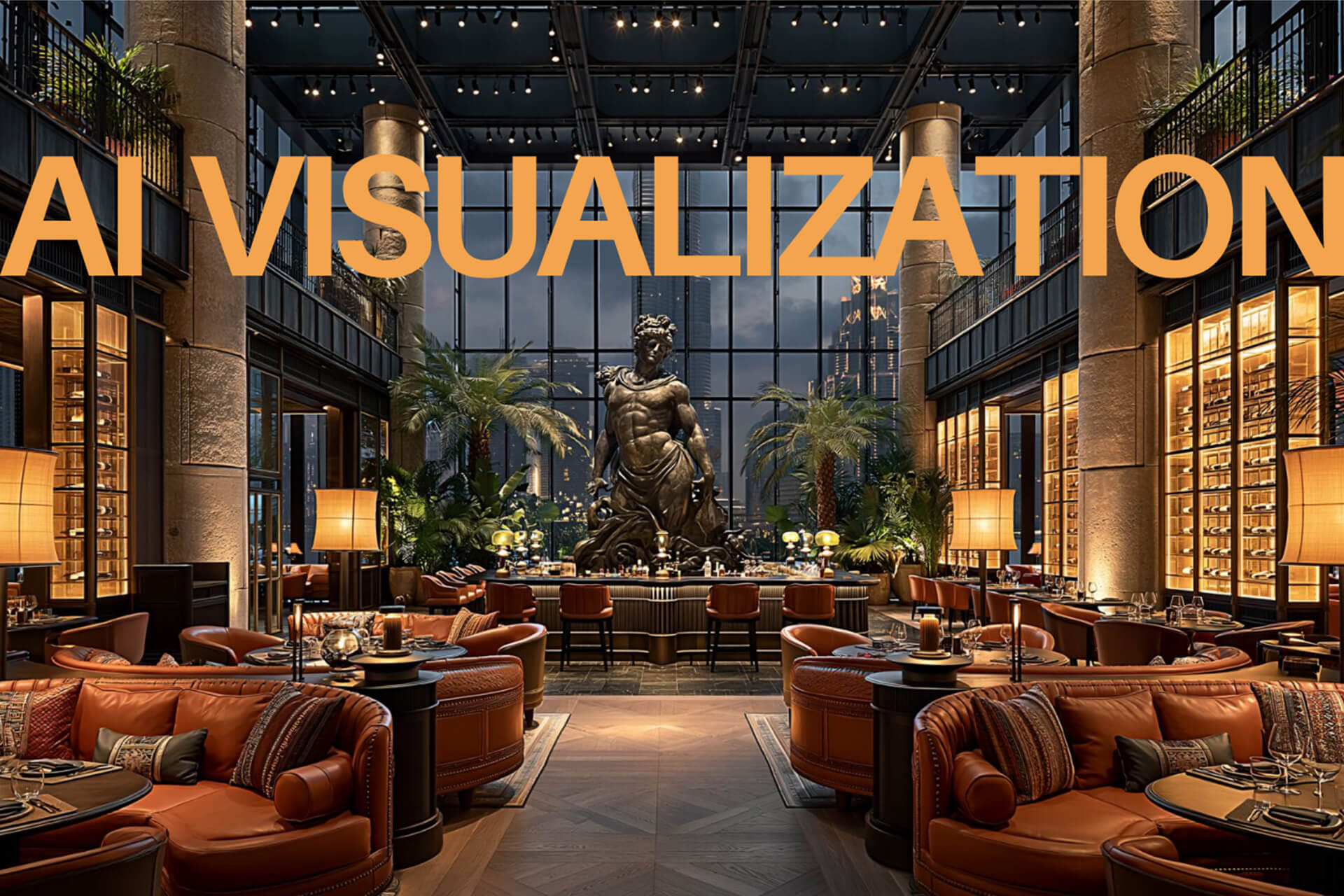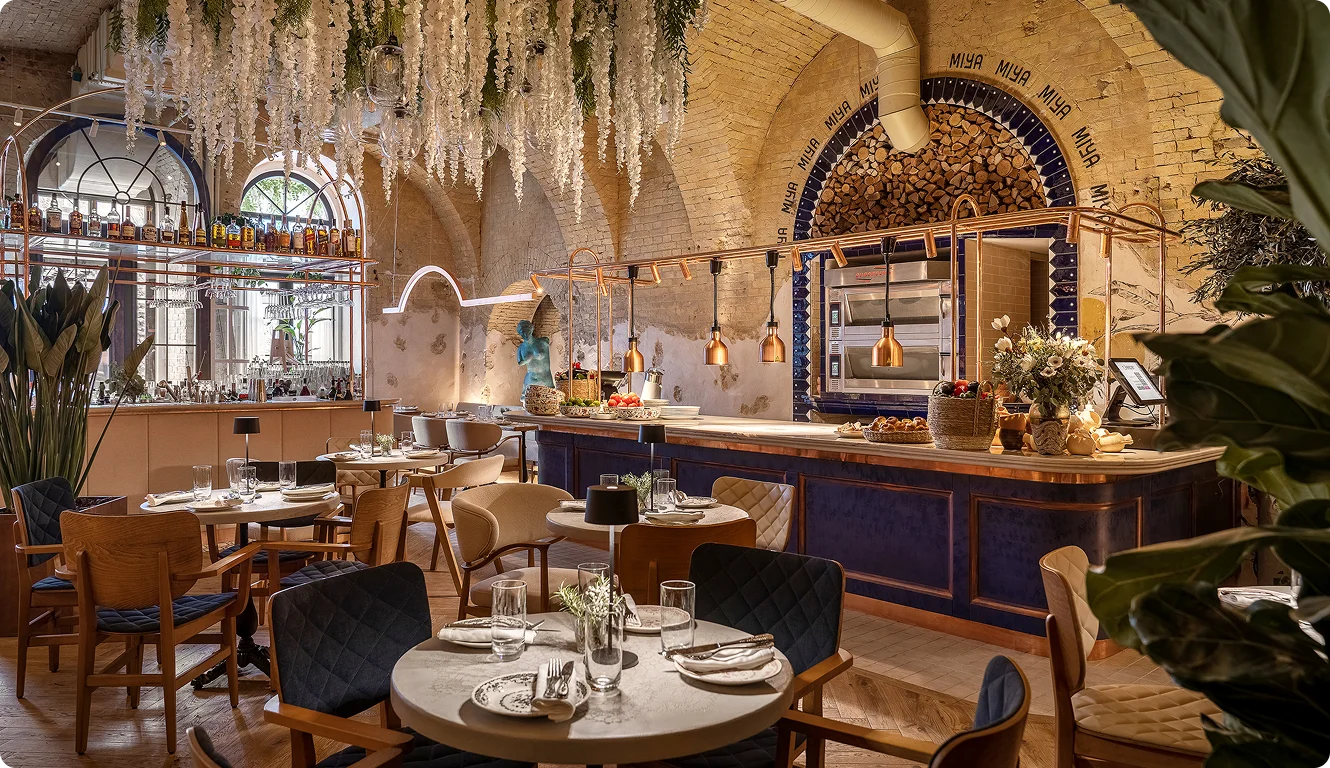
Every Space Tells a Story
A thoughtfully designed restaurant doesn’t start with selecting chairs or choosing a color palette — it starts with a story. Even before a single material or light fixture is chosen, the space must be grounded in a clear and well-defined concept. This underlying idea is what breathes life into the design. It forms the emotional foundation for every decision that follows and ensures consistency across all visual and tactile elements.
As interior designers, we work not just with aesthetics — we craft experiences. A successful restaurant space evokes specific emotions in its guests: comfort, curiosity, excitement, intimacy. And these feelings shouldn’t be accidental — they should be the result of deliberate design intent. That’s why we begin with one essential question: What should a guest feel the moment they step inside? Every aspect of the design stems from that answer, from layout to the smallest detail.
The story can originate from the brand’s cultural background, the chef’s personal journey, the character of the neighborhood, or even an abstract idea — like “urban jungle” or “nostalgic futurism.” What matters is that this concept becomes a creative compass guiding every design decision: from flooring materials and textural choices to the shape of the furniture, menu typography, or the hue of the wall lighting.
A well-told story, expressed through spatial design, doesn’t shout — it whispers. It allows guests to become immersed in an environment that feels natural, cohesive, and unforgettable. That’s what separates an ordinary interior from one that truly leaves a lasting impression.
Every Detail Aligned with the Story
Once the narrative is in place, it must become the filter for every subsequent decision. Everything — from layout and zoning to the selection of furniture, lighting, color palette, and even the smallest decorative elements—should serve the central idea. Design can’t be a random collection of beautiful objects — it must be an organic system where each detail strengthens the mood and message of the space. Chairs, upholstery, the shape of the bar counter, finishes, lighting style—all of it must be more than attractive; it must make sense within the concept.
If your interior speaks of modern urban minimalism, it can’t be cluttered with ornate chandeliers or classical columns without reason. If it’s about the warmth of home — perhaps even within a fine dining format—then materials, lighting, and textures should create a feeling of familiarity and comfort. Every piece is a building block in your story, and if even one of them feels off, your guests will sense the disconnect.
The Art of Seating: Where Every Chair Matters
When planning the floor plan and selecting furnishings, the golden rule is: every seat must feel premium. Regardless of where guests are seated, they should feel valued and comfortable. This is especially important for regulars, who often have preferences — yet well-thought-out layouts ensure no one feels shortchanged.
Great table design means both placement and furniture are comfortable, functional, and strategically considered. Diners come to enjoy themselves and feel taken care of — good seating plays a crucial part in that experience.
Function First: Behind-the-Scenes Efficiency
Even the most beautiful space can fall short if operations don’t run smoothly. Can servers navigate between tables easily? Can guests intuitively find the restrooms?
Interior design must support seamless workflows — for both guests and staff. Whether it’s a fine dining venue, a casual café, or a takeaway joint, efficient spatial planning ensures a smooth service rhythm, enhancing overall guest satisfaction.
Lighting That Speaks: Setting the Right Mood
Lighting plays a defining role in shaping the dining atmosphere. There are three essential lighting layers every restaurant should consider:
- Ambient Lighting: This is your base layer — the main source of light. It sets the general mood. Brighter lighting suits casual, fast-paced venues, while dimmer tones evoke intimacy and are ideal for fine dining or date nights.
- Task Lighting: Task lighting is functional. It ensures menus can be read easily, paths to the restroom are clear, and staff can perform their roles without hindrance. If guests need to pull out their phone light to see their food, something's gone wrong.
- Accent Lighting: These are your highlights — the drama, the focus. Use accent lights to showcase artworks, architectural features, or specialty décor. It adds a touch of theatre to the guest experience.
Scent as Strategy: Invisible Design That Guests Remember
What do your guests smell when they walk through the door? Is it a curated fragrance? The aroma of open-kitchen cooking? Seasonal hints like cinnamon or citrus?
Scent is a powerful emotional trigger — it connects to memory more deeply than visuals. A signature, subtle scent can anchor your brand and keep your restaurant in the minds of guests long after they’ve left.
It should complement the dining atmosphere, never overpower it. High-end restaurants like Michelin-starred Alinea in Chicago go so far as to integrate scent into the dining ritual itself, releasing spiced vapors during service to deepen the sensory experience.
Sound Design: Crafting a Sonic Atmosphere
Acoustics are critical to how a space feels. A well-designed restaurant strikes the right balance — not too loud, not eerily silent.
Overly noisy environments disrupt conversations and dining enjoyment. On the other hand, a too-quiet restaurant may feel awkward or impersonal. Diners want to socialize — your sound design should make that comfortable.
High ceilings, acoustic panels, and soft furnishings can help regulate sound levels. Consider how kitchen noise may travel into the dining room, especially in open-concept layouts.
Music is another powerful tool. Live piano, soft instrumentals, or curated playlists can subtly elevate the ambiance. Avoid tracks with aggressive lyrics or jarring transitions — music should enrich the space, not dominate it.
Heading 2
Heading 3
Lorem ipsum dolor sit amet, consectetur adipiscing elit, sed do eiusmod tempor incididunt ut labore et dolore magna aliqua. Ut enim ad minim veniam, quis nostrud exercitation ullamco laboris nisi ut aliquip ex ea commodo consequat. Duis aute irure dolor in reprehenderit in voluptate velit esse cillum dolore eu fugiat nulla pariatur.
Ordered list
- Item 1
- Item 2
- Item 3
Unordered list
- Item A
- Item B
- Item C